

Waking up with sharp hip stiffness can ruin your entire day, but learning how to stretch psoas while sleeping provides an effortless path to nocturnal recovery. Millions of active adults battle tight hip flexors, often unaware that poor sleep posture keeps these deep core muscles locked in a state of constant tension. Team Herz P1 is here to guide you through gentle nighttime alignment strategies and show you how to monitor your body’s recovery trends using the advanced Herz P1 smart ring.
Built to Last. Save Up to 69% Today.
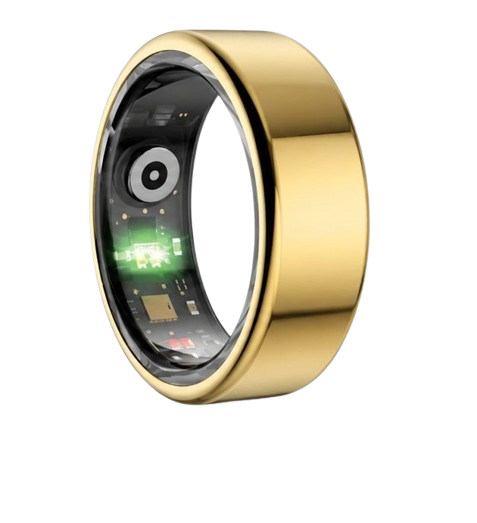
The Herz P1 Smart Ring tracks HRV, Sleep, Heart Rate & SpO2 around the clock. No subscriptions. No renewals. Ever.
In This Article
- Anatomical Positioning: Discover how to arrange your pelvis and limbs to gently lengthen the deep psoas muscle during your sleep cycles.
- Scientific Deep-Dive: Understand the biochemical link between core muscle tension, deep sleep preservation, and heart rate variability (HRV).
- Symptom Relief Protocols: Practical methods to address both anterior hip flexor tightness and lateral TFL irritation while resting.
- Biometric Data Tracking: How to utilize advanced wearable metrics to measure your physical recovery and optimize your training readiness.
How to Align Your Body to Stretch Your Psoas and Ease Hip Pain Overnight: A Step-by-Step Guide
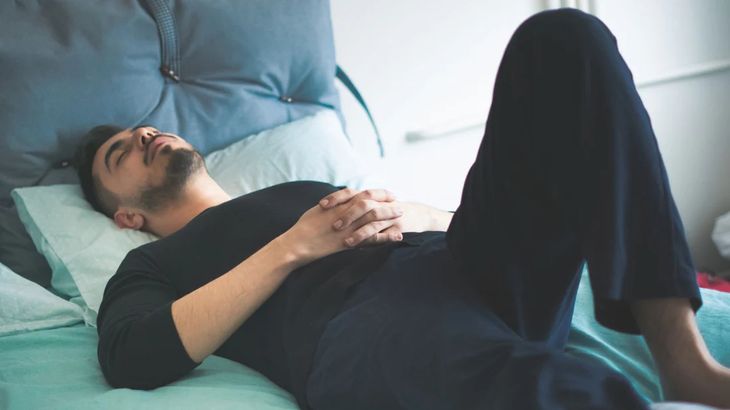
Before you begin your evening recovery routine, you need to set up your sleeping environment to allow your hip flexors to decompress.
You will need a supportive mattress, one or two medium-density supportive pillows, and a firm surface for a quick pre-sleep stretch.
Ensuring your core temperature is regulated and your body is relaxed will also improve the elasticity of your deep connective tissues.
-
Step 1: Perform a Gentle Pre-Sleep Semi-Active Bridge
Lie flat on your back on a firm mattress or a clean yoga mat before getting into your final sleeping position.
Bend both of your knees and place your feet flat on the floor, keeping them hip-width apart.
Slowly raise your hips toward the ceiling until your thighs and torso form a straight, diagonal line.
Hold this gentle bridge position for ten seconds to contract your glutes and naturally inhibit the tight psoas muscle.
Lower your hips slowly back to the surface, breathing out deeply as you release all the tension.
-
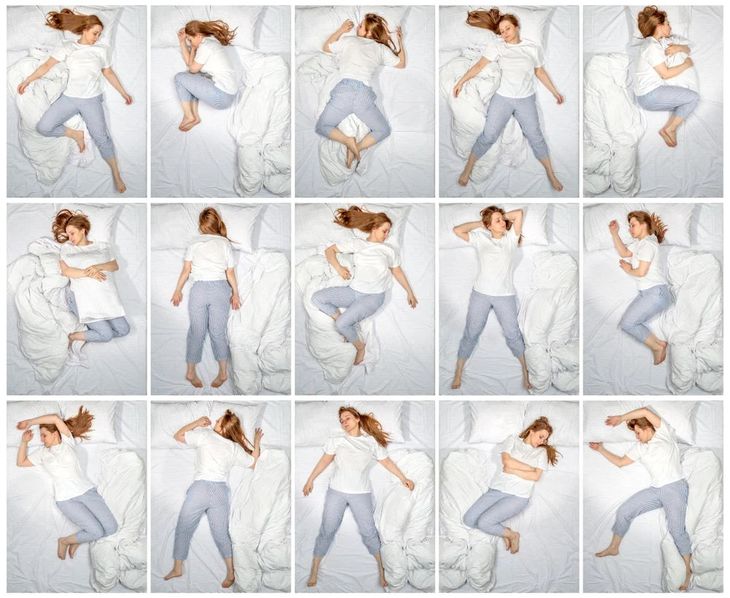
Step 2: Optimize Your Side-Sleeping Posture to Prevent Psoas Shortening
If you prefer sleeping on your side, you must prevent the top leg from dropping forward and rotating the pelvis.
Choose the best sleeping position for hip flexor pain by lying on your unaffected side first.
Draw both knees up slightly toward your chest, but do not tuck them so high that your lower spine rounds.
Place a thick, supportive pillow directly between your knees and ankles to keep your hips perfectly aligned.
This simple adjustment prevents the tensor fasciae latae (TFL) from pulling hard on your joint while sleeping.
-
Step 3: Utilize a Flat-Back Position with Lower Limb Elevation
For those who prefer lying flat on back, gravity can pull your lower spine into a deep arch.
This hyper-lordosis stretches the psoas aggressively and can trigger painful nighttime muscle spasms.
Place a large, contoured pillow under knees sleep setup to gently bend your joints.
By elevating your knees slightly, you instantly tilt your pelvis backward and flatten your lumbar spine.
This position maintains a neutral, passive stretch on the psoas while taking all stress off your lower back.
-
Step 4: Decompress with Targeted Pelvic Tilts
Once you are in your preferred position, you should engage in conscious pelvic tilting to relax your deep core.
Inhale deeply while gently pressing your lower back flat into your mattress.
Hold this contraction for three seconds to lengthen the posterior fibers of the hip joints.
Exhale slowly and let your pelvis return to its natural, neutral resting posture.
Repeat this simple movement ten times to signal to your nervous system that it is safe to let go of tension.
-
Step 5: Establish a Symmetrical Neck and Spine Alignment
A successful nighttime stretch depends entirely on your overall sleeping straight alignment from head to toe.
Ensure your head pillow is not too thick, as an elevated neck forces the entire spine out of neutral.
Use a thin support pillow under your neck to ensure your cervical spine aligns perfectly with your mid-back.
Keep your arms resting gently at your sides or folded loosely over your abdomen.
This full-body symmetry reduces general muscle bracing and lets the psoas relax deeply for the next eight hours.
While you focus on mastering these supportive sleeping positions, the Herz P1 smart ring works quietly in the background to track your physiological response.
By monitoring changes in your overnight resting heart rate and blood oxygen levels, the ring shows you exactly how well your body recovers from joint inflammation.
Check your recovery progress and optimize your sleep settings by exploring the Herz P1 smart ring today.
90-Day 100% Money-Back Guarantee
“The Herz Smart Ring helps me manage stress easily. It’s accurate, stylish, and lightweight—perfect for my busy life!”
— Jennifer P. | ✔ Verified Customer
- ✓ 6-Day Battery Life
- ✓ Detailed Sleep Analysis
- ✓ Fast 1-Hour Charging
- ✓ iOS & Android Ready
Questions? Call: 1-866-479-1629
The Biomechanical Relationship Between Sleep Architecture and Psoas Tension
The psoas major is one of the thickest and most powerful muscles in your entire body.
It originates at the lumbar spine, runs through the pelvis, and inserts directly into the lesser trochanter of the femur.
Because it connects your upper body directly to your lower body, its physical state dictates your overall posture.
According to research highlighted by the National Sleep Foundation, poor biomechanics during the night directly disrupt sleep architecture.
When the psoas is chronically short, it pulls the lower back into a state of hyper-lordosis while you try to rest.
This constant physical pull acts as a micro-stressor on your nervous system.
Your body interprets this physical tension as a sign of environmental danger or physical instability.
As a result, your brain struggles to enter deep slow-wave sleep and spends too much time in lighter sleep stages.
Deep sleep is the precise stage where cellular repair occurs and systemic inflammation is reduced.
By learning how to sleep with hip flexor pain, you break this exhausting loop and allow your body to heal.
Correct alignment ensures the psoas remains in a passive, relaxed state of gentle elongation.
This structural release reduces the physical feedback loop of discomfort that triggers nocturnal arousals.
You will experience fewer sudden awakenings and enjoy a more continuous, restorative sleep cycle.
Decoding Overnight Biometrics: What Your HRV and SpO2 Tell You About Inflammation
When you suffer from chronic hip flexor tension, your autonomic nervous system reacts by shifting into a sympathetic fight-or-flight state.
The American Heart Association notes that sustained physical stress can be tracked reliably through heart rate variability (HRV).
HRV is the tiny, millisecond-level variation in time between each of your consecutive heartbeats.
A higher HRV indicates a relaxed, adaptable nervous system that is ready to recover and rebuild tissues.
Conversely, a low HRV indicates that your body is actively battling physical stress, joint pain, or system-wide fatigue.
When you adopt a supportive sleep position for back pain, you remove the mechanical stress from your spine.
Your body responds to this relief with a measurable shift toward parasympathetic dominance.
Your overnight HRV score will begin to rise steadily over several days as your hip flexors adapt to the neutral posture.
Another critical metric to watch is your blood oxygen saturation, commonly referred to as SpO2.
Pain often causes shallow, rapid breathing during the night, which can cause temporary dips in your systemic oxygen levels.
Monitoring SpO2 ensures that your respiratory system is delivering adequate oxygen to your healing muscle fibers.
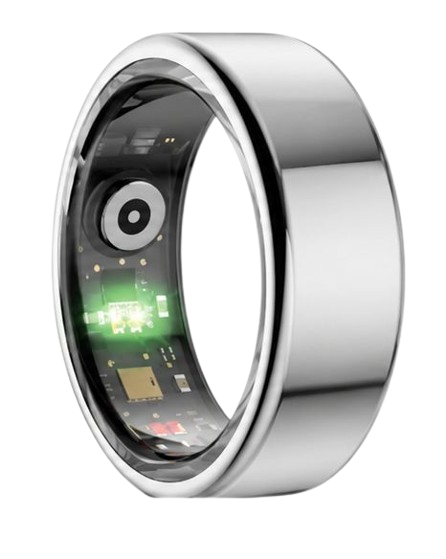
The Herz P1 smart ring features a highly accurate multispectral optical sensor array on its interior band.
It reads your pulse wave activity directly from the digital arteries of your finger, where blood flow is highly concentrated.
This allows the device to capture continuous, medical-grade biometric data with an incredibly low margin of error.
You can view these complex trends in clear, simple graphs within the free companion application every single morning.
The Role of the Tensor Fasciae Latae (TFL) and Lateral Hip Muscles in Sleep Comfort
Many individuals confuse deep psoas irritation with sleeping with tfl pain or general outer hip discomfort.
The tensor fasciae latae is a small muscle located on the lateral aspect of your hip joint.
It works closely with your psoas and gluteal muscles to stabilize your pelvis during daily movement.
When the psoas is tight, the TFL is forced to work twice as hard to maintain pelvic stability.
This muscular imbalance causes the TFL to become highly inflamed and tender to the touch.
If you sleep directly on a painful TFL, you compress the localized tissues and worsen the inflammatory response.
This is why understanding the correct sleeping with knees up angles is vital for complete recovery.
By elevating your limbs, you reduce the lateral pull on the iliotibial (IT) band and the associated outer hip structures.
Additionally, individuals with broader pelvic structures require a specialized sleeping position for bigger hips to maintain skeletal neutrality.
Without sufficient cushion height between the knees, a wide pelvis forces the upper thigh into deep adduction.
This severe angle exerts an ongoing, painful pull on both the psoas and the lateral hip stabilizing muscles.
Proper spacing with a contoured pillow resolves this mechanical issue and prevents lateral hip joint compression entirely.
Practical Application Guide: Optimizing Sleep and Training with Your Herz P1 App
Once you begin applying these targeted sleep positioning strategies, tracking your daily trends is the key to long-term success.
Each morning, open your free Herz P1 application on your mobile device to view your complete recovery dashboard.
Start by analyzing your Sleep Score, which combines deep sleep duration, REM sleep stages, and awake times into one metric.
If your deep sleep percentage rises above twenty percent, it indicates that your new sleep posture is successfully reducing physical pain.
Next, check your resting heart rate (RHR) trend line over the past seven days.
A downward trend in your resting heart rate suggests that systemic inflammation in your hip joints is resolving.
You can also use this data to plan your daily exercise intensity and active recovery sessions.
If your morning HRV score is exceptionally high, your body is fully prepared for a deeper, active psoas stretching routine.
If your HRV score is notably low, focus on gentle restorative yoga and passive pelvic elevation instead.
The military-grade steel construction of the Herz P1 is incredibly lightweight and weighs only a few grams.
Unlike a bulky, heavy smartwatch, you will barely feel the ring on your finger as you sleep.
This unparalleled comfort ensures that your sleep remains undisturbed by heavy bands or annoying screen lights.
You can wear it comfortably all day and all night, creating a seamless, twenty-four-seven biometric record.
Overcoming Common Obstacles: Smartwatches vs. Smart Rings for Hip Recovery
Many wellness enthusiasts attempt to track their sleep quality using traditional, bulky smartwatches.
However, wearing a heavy watch to bed often creates a series of unintended problems.
The thick casing can catch on your sheets when you try to change sleeping positions during the night.
This sudden physical snag can startle your nervous system and wake you up from a deep sleep cycle.
Furthermore, many smartwatches require daily charging, forcing you to choose between daytime tracking and nighttime monitoring.
The Herz P1 smart ring completely eliminates these frustrating issues with its sleek, ultra-thin profile.
With an exceptional six-day battery life, you only need to charge the device once a week for less than an hour.
Another major risk in the wearable market is the hidden cost of ongoing monthly app subscriptions.
Several major smart ring brands lock your personal health data behind expensive monthly paywalls.
At Team Herz P1, we believe that you should never have to pay a fee to access your own biological information.
Our companion application is completely free for a lifetime, with absolutely no monthly subscriptions required.
This commitment guarantees that you receive maximum value from your hardware investment without any recurring financial stress.
Frequently Asked Questions About Sleep Posture and Biometric Tracking
Is the Herz P1 smart ring fully waterproof?
Yes, the Herz P1 features a certified IP68 waterproof rating.
It is designed to withstand continuous water immersion up to fifty meters deep.
You can wear it safely while washing your hands, taking a hot shower, or swimming laps in a pool.
You never have to worry about removing the ring during your daily hygiene routines or water-based exercises.
How long does the battery last on a single charge?
The advanced lithium-polymer battery inside the Herz P1 lasts up to six days on a single charge.
It features a rapid-charging mechanism that takes the battery from zero to one hundred percent in under one hour.
This allows you to maintain continuous, uninterrupted tracking without any gaps in your sleep history.
Simply place it on the magnetic charging dock while you take a shower once a week to keep it fully powered.
Which finger is the best choice for wearing the ring?
We recommend wearing the Herz P1 on your index, middle, or ring finger for the most accurate sensor readings.
Your non-dominant hand is often the most comfortable choice for active, daily wear.
The skin on these fingers is thin enough to allow the optical sensors to read your arterial blood flow easily.
Ensure that the ring fits snugly without twisting excessively, but is not tight enough to restrict blood flow.
Does the Herz P1 store my health data offline?
Yes, the ring features local onboard storage that can hold up to seven days of biometric data offline.
If you go to bed without your smartphone nearby, the ring will continue to track your metrics perfectly.
Once you open the app near your phone, the ring will automatically sync all stored data via secure Bluetooth.
Your data is fully encrypted during transfer and is stored safely on your local device.
Should I sleep with a pillow under hips for back and psoas pain?
Sleeping with a lying flat on back posture can sometimes be enhanced by placing a thin pillow under your pelvis.
However, a thick sleeping with pillow under hips setup can actually worsen psoas tightness.
This elevation can push your hips into hyperextension, forcing the psoas to stay contracted all night.
Instead, we recommend placing a supportive pillow under knees sleep position to flatten the lower spine naturally.
This neutral angle provides the safest, most effective way to let your tight muscles rest and recover overnight.

Your Journey to Pain-Free Sleep Starts Now
Releasing a tight psoas requires consistent posture alignment and smart recovery tracking.
The Herz P1 Smart Ring offers the continuous biometric insights needed for lasting health improvements.
Ready to monitor your daily wellness? Explore the Herz P1 Smart Ring.
Call 1-866-479-1629 for personal sizing advice and custom wellness goals.
