

Understanding your average sleeping hrv by age is the single most effective way to evaluate your daily physiological recovery. Our team at Herz P1 designed this comprehensive guide to help you navigate your overnight hrv by age metrics so you can optimize your health, manage stress, and sleep deeper without bulky equipment.
Built to Last. Save Up to 69% Today.
The Herz P1 Smart Ring tracks HRV, Sleep, Heart Rate & SpO2 around the clock. No subscriptions. No renewals. Ever.
In This Article
- The Step-by-Step Recovery Guide: How to track, analyze, and optimize your overnight HRV values with accuracy.
- Clinical Reference Charts: Detailed breakdowns of expected autonomic metrics structured directly by age bracket.
- The Recovery Physiology: A scientific deep dive into autonomic balance, parasympathetic tone, and circadian recovery curves.
- Lifestyle Adaptation Strategies: Concrete biological adjustments you can apply to immediately elevate your sleep architecture.
- Device Compliance and Value: Why smart rings offer superior sleep compliance over heavy wristworn alternatives.
How to Track and Optimize Your Overnight HRV: A Step-by-Step Recovery Guide

To accurately capture your cardiac rhythms, you must prepare a stable environment for biometric tracking.
Biometric monitoring requires minimal physical disruption to deliver clean, uncorrupted signal baselines.
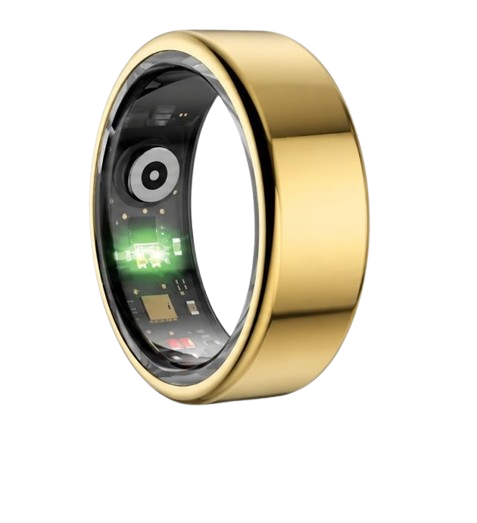
Before you begin tracking, ensure you have a highly sensitive PPG-based wearable device such as the Herz P1 Smart Ring.
-
Step 1: Ensure Correct Optical Sensor Contact
Select a finger that provides a snug but comfortable fit for your tracking ring.
We highly recommend the index or middle finger of your non-dominant hand for maximum signal density.
The optical PPG sensor must rest directly against the palmar side of your finger to prevent ambient light leakage.
If the device rotates freely during normal hand movement, the optical signal may degrade during deep sleep states.
-
Step 2: Maintain a Consistent Wind-Down Routine
Avoid heavy meals, vigorous athletic training, and cognitive overstimulation within three hours of sleep onset.
These intense activities artificially stimulate your sympathetic nervous system, lowering your cardiac variability.
We suggest keeping your bedroom temperature between 60 and 67 degrees Fahrenheit to promote rapid vasodilation.
Consistent environmental conditions allow your autonomic nervous system to transition smoothly into parasympathetic rest.
-
Step 3: Log Your Daily Physiological Stressors
Use the companion application to note significant recovery disruptors like late caffeine intake, intense exercise, or alcohol.
Even small amounts of alcohol can suppress your overnight parasympathetic activity for several hours.
Tracking these lifestyle variables helps you identify the direct triggers behind sudden baseline drops.
Over time, these annotations build a highly personalized blueprint of your physical recovery boundaries.
-
Step 4: Establish Your Baseline Over Fourteen Days
Your body has its own unique autonomic rhythm, so do not immediately compare your numbers to external statistics.
Wear your smart ring continuously for at least two weeks to allow the local algorithms to compute your rolling baseline.
This calibration period establishes a reliable physiological average that accounts for minor daily fluctuations.
Once established, look for deviations from this normal range rather than chasing an arbitrary numerical ceiling.
-
Step 5: Apply Dynamic Recovery Adjustments
When your morning dashboard reveals a significant drop in nightly metrics, reduce your training volume or intensive workload.
Focus on active recovery, deep breathing exercises, and early sleep hygiene protocols to support your system.
Conversely, high recovery scores indicate your autonomic pathways are primed for intense physical or cognitive challenges.
Aligning your daily efforts with your actual internal readiness prevents chronic burnout and physical overtraining.
The Herz P1 Smart Ring supports this tracking sequence automatically by recording your cardiovascular trends without manual activation.
Our advanced optical array tracks autonomic fluctuations in the background, syncing data seamlessly to your smartphone without any recurring app fees.

90-Day 100% Money-Back Guarantee
“The Herz Smart Ring helps me manage stress easily. It’s accurate, stylish, and lightweight—perfect for my busy life!”
— Jennifer P. | ✔ Verified Customer
- ✓ 6-Day Battery Life
- ✓ Detailed Sleep Analysis
- ✓ Fast 1-Hour Charging
- ✓ iOS & Android Ready
Questions? Call: 1-866-479-1629
Demystifying Your Nighttime HRV Chart by Age: What the Clinical Data Shows
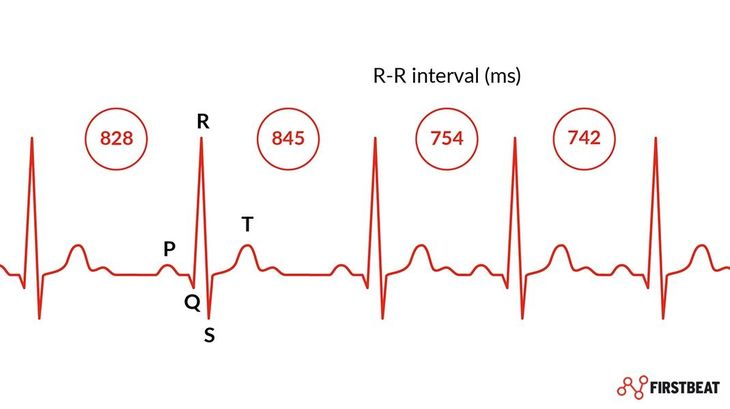
Every individual exhibits a unique cardiac signature, but clinical research reveals broad patterns across different demographic groups.
As you age, your natural autonomic nervous system pathways experience subtle structural and functional shifts.
These shifts directly influence the RMSSD (Root Mean Square of Successive Differences) values captured during overnight rest.
RMSSD represents the primary time-domain metric used to evaluate parasympathetic vagal activity during sleep.
Evaluating your average sleep hrv helps determine if your autonomic pathways are recovering properly from daily stressors.
Our research team has compiled clinical baseline ranges to help you evaluate your nightly performance.
| Age Range (Years) | Normal RMSSD Range (ms) | Autonomic Recovery Context |
|---|---|---|
| 20 – 29 | 45 – 85 ms | Highly resilient cardiovascular response, quick recovery from intense physical strain. |
| 30 – 39 | 38 – 72 ms | Balanced autonomic reactivity, highly sensitive to daily psychological work stress. |
| 40 – 49 | 28 – 58 ms | Gradual decline in vagal tone, requires active focus on structural sleep hygiene. |
| 50 – 59 | 22 – 46 ms | Lower baseline variance, critical to track sudden drops representing systemic fatigue. |
| 60 – 69+ | 15 – 35 ms | Reflects mature autonomic adaptation, recovery is slower but highly consistent. |
Achieving a good hrv while sleeping indicates that your vagus nerve is effectively signaling your heart to slow down and rebuild muscle tissue.
When you review your hrv during sleep dashboard, prioritize your personal trend lines over these broad population averages.
A consistent value on the lower end of the spectrum is often healthier than a highly erratic set of scores that swing wildly from night to night.
The Herz P1 Smart Ring visualizes these complex metrics in a clean, interactive graph designed for non-clinical users.
The Physiological Science: How Your Autonomic Nervous System Dictates Sleep Recovery
Your heart is not a mechanical metronome, and it should never beat with perfect, robotic uniformity.
The tiny millisecond variations between consecutive heartbeats reflect the continuous tug-of-war between two branches of your nervous system.
The sympathetic branch act as your body’s accelerator, preparing you for intense action, mental focus, and defense.
The parasympathetic branch serves as the internal braking system, driving digestion, repair, and tissue regeneration.
Understanding what is hrv during sleep allows you to evaluate how effectively your parasympathetic systems are taking control at night.
The National Sleep Foundation states that during deep slow-wave sleep stages, your vagal tone should ideally peak, causing your heart rate to drop and your cardiac variability to rise.
This nighttime drop in physical strain is essential for clearing metabolic waste from brain tissues and consolidating memory.
According to the American Heart Association, tracking nighttime heart rate variability provides a cleaner picture of your cardiovascular health than daytime measurements.
Daytime metrics are constantly disrupted by active talking, emotional shifts, coffee consumption, and physical movement.
Sleeping patterns provide a rare, highly controlled window where environmental interferences are almost completely eliminated.
This controlled window allows us to capture your true normal heart rate variability by age without active cognitive bias.
If your nervous system remains in a sympathetic-dominant state all night, your sleep quality will suffer.
This chronic lack of deep recovery is why you might wake up feeling exhausted, even after spending eight hours in bed.
Consistently monitoring your average hrv over several weeks can highlight early warning signs of systemic inflammation or pending illness.
By monitoring these critical trends, the Herz P1 Smart Ring helps you make proactive, data-informed lifestyle adjustments before exhaustion takes hold.
Practical Optimization: Translating Wearable Metrics into Lifestyle Interventions

Once you understand your overnight autonomic metrics, you can implement targeted changes to improve your scores.
The Herz P1 App acts as your personal health translator, converting complex mathematical trends into practical daily steps.
Begin by drinking an extra glass of water during the afternoon, as even mild dehydration can elevate your resting heart rate and suppress recovery.
Avoid heavy exposure to artificial blue light from mobile devices and computer screens for sixty minutes before retiring.
Blue light suppresses your brain’s natural melatonin production, disrupting your transition into deep, restorative sleep stages.
We also recommend dedicating five minutes to slow, diaphragmatic breathing once you are tucked into bed.
Inhaling for four seconds and exhaling for six seconds immediately stimulates the vagus nerve and lowers your heart rate.
You can quickly verify the effectiveness of this practice by checking your morning recovery chart.
Many Herz P1 users report a visible boost in their overnight recovery baselines after adopting this simple breathing routine.
Because our smart ring is crafted from lightweight, military-grade materials, it fits comfortably on your finger all night.
You can sleep naturally without the physical distraction of a bulky plastic smartwatch scratching your skin or snagging your bedsheets.
Overcoming the Bulky Wearable Trap: Comfort, Compliance, and Financial Transparency
Many health-conscious individuals struggle to track their sleep because typical smartwatches are heavy, boxy, and uncomfortable to wear in bed.
These large wrist devices frequently slide around during sleep, causing optical sensor misalignment and generating inaccurate, corrupted data.
They also require frequent charging, which often forces you to plug them in overnight, creating annoying gaps in your sleep logs.
Furthermore, many leading wellness tech companies trap your personal data behind expensive monthly subscription paywalls.
We believe you should never have to pay a recurring fee to view the biometric data your own body generates.
The Herz P1 Smart Ring solves all of these common frustrations with an elegant, subscription-free health companion.
Our smart ring is built with a highly durable, military-grade outer shell and a smooth, hypoallergenic inner resin lining.
The entire ring weighs less than five grams, making it feel almost weightless during your daily activities and night rest.
With an exceptional six-day battery life and ultra-fast charging, you can wear it almost continuously without worry.
Our comprehensive companion app is completely free for life, giving you full access to your sleep analysis, blood oxygen levels, and recovery trends.
Frequently Asked Questions About Overnight HRV Tracking
-
Is the Herz P1 Smart Ring waterproof?
Yes, the Herz P1 Smart Ring features a fully sealed, seamless design with a certified IP68 waterproof rating.
This means you can safely wear it while washing your hands, taking a shower, swimming in a pool, or relaxing in a hot tub.
Our military-grade outer shell protects the delicate internal sensors from high water pressure and moisture intrusion.
You can track your health continuously throughout your day without ever needing to take the ring off.
-
How long does the battery last on a single charge?
The Herz P1 Smart Ring is equipped with an optimized, energy-efficient micro-battery that provides up to six days of continuous use.
Our advanced power management system tracks your health signals around the clock without draining the battery rapidly.
When the battery runs low, simply place the ring on our sleek, compact magnetic charging dock.
The device charges from empty to one hundred percent in under one hour, making it incredibly convenient for busy lifestyles.
-
Which finger is best to wear the smart ring on?
We recommend wearing your smart ring on the index, middle, or ring finger of your non-dominant hand for the best optical performance.
These three fingers generally have larger blood vessels near the skin surface, which allows our optical PPG sensors to capture clean data.
Choose a finger where the ring fits securely but comfortably, without restricting blood flow or feeling too tight.
The ring should slide off easily with a little soap and warm water, but it should not slide around on its own during normal movement.
-
Does the ring store my biometric data offline?
Yes, the Herz P1 Smart Ring has built-in offline storage that can hold up to seven days of detailed health metrics.
You do not need to keep your smartphone nearby or connected to Bluetooth while you sleep or exercise.
The ring will continue monitoring your heart rate, sleep stages, stress levels, and blood oxygen in the background.
The next time you open our companion app, all your stored data will sync automatically in just a few seconds.
Conclusion
Your journey to optimized recovery starts with tracking the right biometrics.
The Herz P1 Smart Ring provides the clinical-grade tracking you need to make smart, proactive lifestyle choices every day.
Ready to monitor your health every day? Explore the Herz P1 Smart Ring and see if it fits your lifestyle. Call: 1-866-479-1629 — our team can help you advise on the correct ring size and set personalized health goals.
Note: Individual results may vary depending on individual health conditions, age, and lifestyle habits. This article is intended for general health reference purposes only.
