

Tracking your nighttime heart rate variability is the single most effective way to measure how your body recovers from daily physical and mental stress. Many health-conscious individuals wake up feeling exhausted despite getting eight hours of sleep because they lack clear physiological data. The Herz P1 Smart Ring solves this problem by continuously measuring your autonomic nervous system activity while you sleep. This guide will show you exactly how to interpret these critical recovery metrics so you can finally optimize your sleep and boost your daily energy levels.
Built to Last. Save Up to 69% Today.
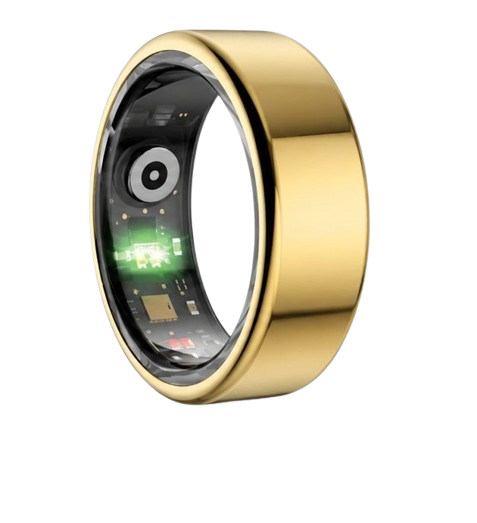
The Herz P1 Smart Ring tracks HRV, Sleep, Heart Rate & SpO2 around the clock. No subscriptions. No renewals. Ever.
In This Article
- Learn how to successfully establish your personal nocturnal tracking routine step by step.
- Discover the biological science behind autonomic nervous system recovery during the night.
- Compare average sleeping metrics across different age groups and fitness levels.
- Identify common tracking errors and sizing mistakes that compromise data accuracy.
How to Track Your Nighttime Heart Rate Variability: A Step-by-Step Guide

Before you begin tracking your autonomic nervous system activity, you must understand the basic prerequisites.
You will need a highly accurate biometric tracker designed specifically for overnight use.
Additionally, you should be committed to keeping a consistent sleep schedule for at least seven consecutive days.
This consistency allows the sensor to establish a clean, customized baseline score for your unique body.
-
Step 1: Choose the Best Wearing Location for Your Sensor Ring
Your blood vessels are highly concentrated near the base of your fingers, making them the perfect site for optical sensor readings.
We recommend wearing your tracking ring on your index, middle, or ring finger for maximum pulse volume detection.
The sensor pads must rest flat against the palm side of your hand to prevent light leakage from compromising the data.
Make sure the fit is snug enough to stay in place but comfortable enough to prevent localized swelling.
-
Step 2: Establish a Standard Bedtime and Wake-Up Cycle
Your autonomic nervous system relies heavily on consistent circadian rhythms to regulate metabolic repair processes.
Going to bed and waking up at the same general time stabilizes the timing of your sleep stages.
Irregular sleep timings can artificially skew your metrics by disrupting the natural transition into deep recovery states.
Aim for a sleep window that varies by no more than thirty minutes on both weekdays and weekends.
-
Step 3: Cool Down Your Bedroom Environment
Your body temperature must drop by a couple of degrees to initiate and sustain deep, restorative sleep cycles.
Keep your bedroom temperature between 60 and 67 degrees Fahrenheit to assist this natural cooling process.
An excessively warm room increases your overnight heart rate and lowers your overall parasympathetic activation.
A cooler room directly supports higher autonomic variability by reducing cardiovascular workload.
-
Step 4: Cut Off Stimulants and Alcohol Hours Before Bedtime
Alcohol and caffeine act as powerful chemical disruptors to your autonomic nervous system.
Avoid consuming caffeine within eight hours of your planned bedtime to ensure it fully clears your system.
Do not drink alcohol within four hours of sleep, as it elevates your resting heart rate and suppresses parasympathetic tone.
This dietary discipline allows your body to enter deep, restorative recovery cycles much faster.
-
Step 5: Practice a Relaxing Wind-Down Routine
Transitioning from a busy workday to a state of rest requires conscious physiological decompression.
Spend the final thirty minutes before sleep away from bright electronic screens and stressful work emails.
Engage in light stretching, read a physical book, or practice deep breathing exercises to stimulate your vagus nerve.
This active relaxation signals your brain that it is safe to enter a deep restorative state.
-
Step 6: Sync and Analyze Your Weekly Recovery Scores
Do not make drastic changes based on a single night of poor biometric numbers.
Open your companion app each morning to sync the stored data and view your calculated recovery score.
Focus on your rolling seven-day average to identify meaningful trends in your physical recovery.
Compare these weekly trends with your actual exercise volume and mental stress levels to make informed adjustments.
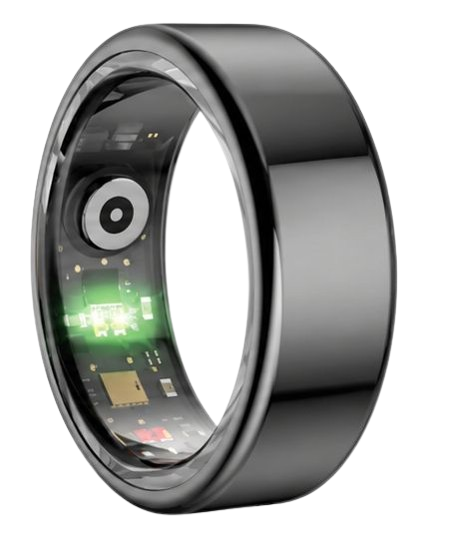
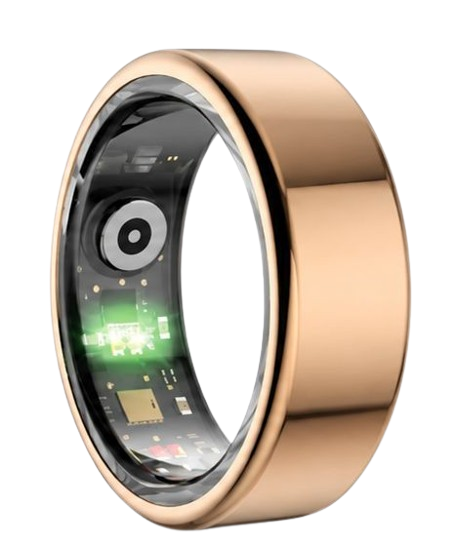
The Herz P1 Smart Ring is explicitly engineered to simplify this six-step tracking process.
Its ultra-lightweight, military-grade steel construction ensures you can wear it comfortably all night without disturbing your sleep.
The advanced multi-wavelength optical sensors capture your biometrics continuously, keeping you informed without requiring manual daily inputs.
Plus, our companion app is free for life, ensuring you never face subscription barriers while accessing your data.
The Science of Autonomic Regulation and Heart Rate Variability at Night
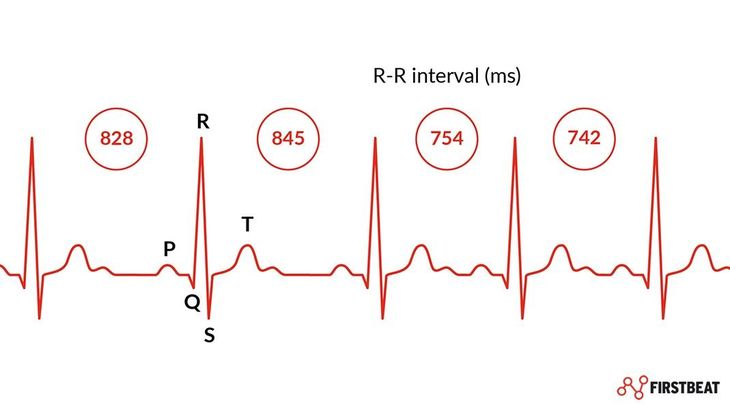
Your heart does not beat at a perfectly constant speed like a mechanical clock.
The small differences in time between consecutive heartbeats reflect the balance of your autonomic nervous system.
Your autonomic nervous system is split into the sympathetic branch and the parasympathetic branch.
The sympathetic branch acts as an accelerator, preparing your body for physical action or mental stress.
The parasympathetic branch acts as a brake, encouraging relaxation, digestion, and physiological cellular repair.
The behavior of your heart rate variability at night tells you how effectively this parasympathetic brake is functioning.
According to research published by the American Heart Association, a higher level of variability is a strong indicator of a healthy, adaptable cardiovascular system.
Conversely, a chronically low level of variability suggests your body remains stuck in a state of stress or physical exhaustion.
The National Sleep Foundation also confirms that deep sleep stages trigger the highest levels of parasympathetic activity.
By tracking these overnight fluctuations, you can easily evaluate your overall cardiovascular resilience and recovery quality.
Decoupling What is HRV During Sleep and Its Physiological Meaning
Many users who are new to biometric wearables ask what is hrv during sleep and why it is more reliable than daytime measurements.
During your waking hours, physical movement, emotional conversations, and digestive demands cause your heart rate to fluctuate constantly.
These daily factors create a lot of noise in your data, making it difficult to find a clean physiological baseline.
Nighttime provides a stable environment where your body is resting and free from external psychological and physical triggers.
Therefore, measuring hrv during sleep gives you a highly accurate, unbiased look at your autonomic nervous system’s health.
A strong and stable average sleep hrv shows that your body is successfully repairing muscles, managing inflammation, and restoring brain chemistry.
When your body fails to recover properly, your overnight heart rate stays elevated, and your millisecond variability drops significantly.
This decline is a clear warning sign that you might be overtraining, fighting an illness, or dealing with chronic stress.
Analyzing Average Sleeping HRV by Age and Establishing a Good Baseline
It is important to remember that heart rate variability is highly individual and naturally declines as you get older.
Comparing your personal scores with someone else’s can lead to unnecessary worry about your health.
Looking at the average sleeping hrv by age helps you understand how your numbers fit into a broader, healthy context.
Typically, younger adults show much higher average variability scores than older age groups due to natural aging in cardiovascular tissues.
You can use standard sleep number hrv by age charts to see where you stand relative to others in your demographic.
However, your main goal should always be to improve your own historical baseline rather than chasing someone else’s numbers.
Maintaining a good hrv while sleeping indicates that your autonomic nervous system is resilient and functioning well.
Using a modern, comfortable smart ring for overnight hrv tracking helps you monitor these trends easily over time.
| Age Range (Years) | Typical Male Range (ms) | Typical Female Range (ms) |
|---|---|---|
| 20 – 29 | 55 – 85 ms | 60 – 90 ms |
| 30 – 39 | 45 – 75 ms | 48 – 78 ms |
| 40 – 49 | 35 – 65 ms | 37 – 67 ms |
| 50 – 59 | 25 – 50 ms | 26 – 52 ms |
| 60+ | 15 – 35 ms | 16 – 36 ms |
As you can see, average baseline metrics vary widely, reinforcing the importance of tracking your own trends.
A lower baseline score in an older individual can still represent outstanding physiological health and autonomic resilience.
Consistently tracking your metrics helps you understand your body’s personal norms and respond effectively to sudden changes.
Practical Application: Navigating the Herz P1 App Dashboard

The Herz P1 App takes your complex overnight biometrics and displays them on a clean, easy-to-read daily dashboard.
When you wake up in the morning, simply open the app to automatically sync the data collected by your smart ring.
The app calculates a comprehensive recovery score based on your sleep stages, overnight heart rate, and autonomic variability.
A high recovery score indicates your body is well-rested and prepared for intensive training or demanding intellectual work.
If your score is low, the app will gently suggest active recovery, stretching, or prioritizing an early bedtime.
By aligning your daily activities with these real-time biological insights, you can protect yourself from physical burnout.
The lightweight design of the Herz P1 makes continuous monitoring easy, helping you build a healthier lifestyle step by step.
Overcoming Common Sizing and Tracking Pitfalls
Even highly advanced biometric devices can produce inaccurate numbers if they do not fit your finger correctly.
A ring that is too loose can rotate while you sleep, causing the optical sensors to lose contact with your skin.
This temporary loss of contact leads to gaps in your overnight data and inaccurate recovery calculations.
Conversely, a ring that is too tight can restrict blood flow, creating uncomfortable swelling during the night.
We provide a comprehensive sizing kit with every order so you can find your perfect fit before you start tracking.
We recommend wearing your preferred sizing ring for a full twenty-four hours to account for natural finger swelling.
Additionally, make sure to clean the inner sensor window weekly with a soft cloth to prevent dust and oils from blocking the optical signals.
These simple steps ensure your Herz P1 Smart Ring delivers reliable, high-quality biometric data every single night.
Frequently Asked Questions About Nighttime Biometric Tracking
We have compiled the most common questions from our users to help you get the most out of your tracking experience.
Is the Herz P1 Smart Ring waterproof?
Yes, the Herz P1 features a robust IP68 waterproof rating, making it highly resistant to dust and water exposure.
It is fully protected during daily handwashing, hot showers, intensive swim sessions, and accidental submersions.
You do not need to take the ring off when washing dishes or swimming in a pool.
This durable construction makes it easy to collect continuous, uninterrupted data in almost any environment.
How long does the battery last on a single charge?
The Herz P1 Smart Ring is equipped with an efficient battery that lasts up to six days on a single charge.
A full charge takes less than an hour, meaning you spend very little time waiting for your device to power up.
We recommend charging your ring for a few minutes while you shower to keep the battery topped off easily.
This quick routine ensures your ring is always ready to monitor your sleep without unexpected power cutoffs.
Which finger is best for accurate nighttime tracking?
The index finger is the top choice because it has strong blood vessels that provide clean, distinct optical signals.
However, the middle and ring fingers are also excellent alternatives if you prefer a different look or fit.
The most important factor is a secure, comfortable fit that prevents the ring from sliding around while you sleep.
Avoid wearing the ring on your thumb, as its unique shape makes it harder to maintain steady sensor contact.
Does the Herz P1 Smart Ring store biometric data offline?
Yes, the Herz P1 features built-in storage that can save up to seven days of biometric data offline.
You do not need to keep your smartphone nearby or leave your Bluetooth connection active overnight.
The ring will safely record your data and sync it automatically the next time you open the companion app.
This offline capability gives you peace of mind and keeps your sleeping environment free from unnecessary wireless signals.
90-Day 100% Money-Back Guarantee
“The Herz Smart Ring helps me manage stress easily. It’s accurate, stylish, and lightweight—perfect for my busy life!”
— Jennifer P. | ✔ Verified Customer
- ✓ 6-Day Battery Life
- ✓ Detailed Sleep Analysis
- ✓ Fast 1-Hour Charging
- ✓ iOS & Android Ready
Questions? Call: 1-866-479-1629
Conclusion
Optimizing your recovery starts with tracking the right biological signals while you rest.
The Herz P1 Smart Ring makes monitoring your sleep quality and autonomic health simple, reliable, and subscription-free.
Ready to monitor your health every day?
Explore the Herz P1 Smart Ring and see if it fits your lifestyle.
Call: 1-866-479-1629 — our team can help you advise on the correct ring size and set personalized health goals.
Note: Individual results may vary depending on individual health conditions, age, and lifestyle habits. This article is intended for general health reference purposes only.
