

In This Article
- Understanding High HRV: Learn exactly what a high heart rate variability score indicates about your nervous system.
- The Science of Recovery: Discover the biological mechanisms that control sympathetic and parasympathetic balance.
- Actionable Metrics: Unpack your personal data baseline to optimize physical performance and daily stress resilience.
- The Smart Ring Advantage: See how the subscription-free Herz P1 tracks these continuous changes with medical-grade accuracy.
Does a High HRV Score Really Mean You Are Healthy? Here Is What Science Says
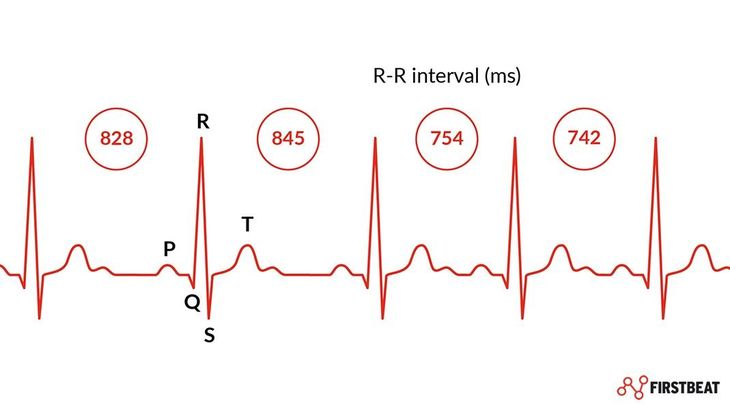
Heart rate variability, or HRV, measures the tiny fluctuations in time between each of your consecutive heartbeats.
You might assume your heart beats at a perfectly steady rhythm like a clock.
However, a healthy heart actually has constant microscopic irregularities in its timing.
This variability is controlled directly by your autonomic nervous system, which operates silently in the background.
When people search for the high hrv meaning, they are often looking to understand if their cardiovascular system is functioning at its absolute best.
In almost all cases, an elevated HRV score indicates a highly resilient cardiovascular system.
It shows that your body can quickly adapt to sudden physical, mental, or environmental demands.
Busy professionals, elite athletes, and health-conscious adults all monitor this metric to track their daily recovery levels.
This vital metric matters most during periods of intense work, high stress, or physical training.
Your nervous system constantly shifts between a state of action and a state of rest.
By tracking your heart rate variability, you can see exactly which state dominates your body at any given hour.
The physiological mechanism behind this metric resides primarily in your brain stem.
From there, the vagus nerve sends inhibitory signals directly to your heart, causing the intervals between beats to lengthen and vary.
If your heart rate variability is high, it means your parasympathetic system is actively promoting recovery and lowering stress.
But how much variability is normal, and what specific numbers should you look for on your tracker?
Typically, healthy adult HRV scores can range anywhere from 20 milliseconds to well over 100 milliseconds.
These numbers are highly individual and are heavily influenced by your age, biological sex, and current fitness level.
Understanding this balance helps you see why a high score is so highly sought after by health professionals.
When your autonomic system is balanced, your body is in a state of physiological readiness.
This means you have the energy reserves needed to handle unexpected stressful situations without burning out.
Conversely, a low score shows that your sympathetic nervous system is working overtime, leaving you physically depleted.
If you ignore these low readings, you run the risk of developing chronic fatigue and overtraining syndrome.
By tracking your heart rate variability daily, you can make proactive adjustments to your workload before problems arise.
For example, you might choose to take a rest day if your morning recovery score is unusually low.
This simple, data-driven decision can protect your immune system and prevent physical injury.
On days when your HRV is high, you can confidently push your limits during intense workouts or difficult work projects.
This helps you maximize your performance while keeping your body’s stress levels in check.
The optical sensors in the Herz P1 use advanced green and infrared light wavelengths to track these changes.
These light waves penetrate deep into the capillaries of your finger to detect the precise timing of each pulse.
This technology provides you with real-time feedback on how your daily choices impact your internal health.
It empowers you to take control of your well-being with clear, scientific data rather than relying on guesswork.
If you want to track this in real time, the Herz P1 Smart Ring monitors heart rate variability 24/7 — explore it here.
What Your HRV Score Actually Tells You — And How to Improve It
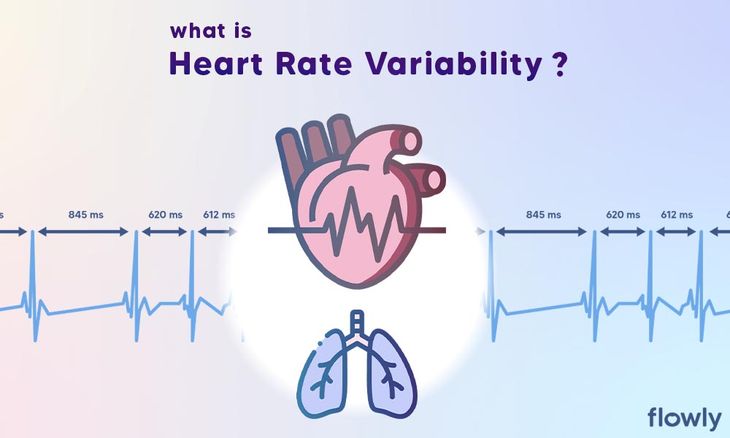
To truly comprehend heart rate variability, you must explore the delicate balance of your autonomic nervous system.
Your nervous system is divided into two primary branches: the sympathetic and the parasympathetic.
The sympathetic branch acts as your body’s gas pedal, activating your “fight-or-flight” survival response.
When you are stressed, your heart rate increases, and the timing between your beats becomes highly uniform.
This uniform spacing results in a low HRV score, indicating that your body is currently prioritizing immediate survival over recovery.
On the flip side, the parasympathetic branch acts as your body’s brake pedal, driving your “rest-and-digest” response.
When this branch is dominant, your heart rate slows down, and the timing between beats becomes highly varied.
This dynamic interplay explains the fundamental scientific difference when comparing high vs low hrv states.
A high score signifies that your body is in an optimal position to rebuild muscle, process stress, and restore vital energy.
Many people ask themselves should hrv be high or low during their daily routines.
The answer is that you generally want your HRV to remain as high as possible relative to your personal baseline.
According to research from the American Heart Association, a consistently elevated baseline is a powerful indicator of strong cardiovascular health.
If you are wondering what should your hrv be, you must understand that there is no universal golden number.
Your personal baseline is what matters most, as a score of 40 milliseconds might be excellent for one person but low for another.
The National Sleep Foundation emphasizes that your deepest recovery happens while you sleep.
During deep sleep, your parasympathetic nervous system should take full control of your physiology.
This nighttime shift allows your heart rate to drop and your heart rate variability to rise to its natural peak.
If you wake up feeling exhausted, your tracking data will likely show a significant dip in your overnight HRV.
By tracking these subtle trends over time, you can pinpoint exactly which habits are disrupting your sleep.
For example, drinking alcohol or eating a heavy meal close to bedtime can suppress your parasympathetic system for hours.
This suppression causes your heart rate to remain elevated and your HRV to stay unusually low all night.
With the Herz P1 Smart Ring, you can view these exact physiological changes directly on your smartphone screen.
The military-grade sensors on the Herz P1 capture these autonomic shifts with medical-grade accuracy.
This helps you make informed choices about your evening routine to protect your overnight rest.
The vagus nerve is the main highway of your parasympathetic nervous system, running from your brain stem to your vital organs.
When you take slow, deep breaths, you stimulate this nerve, which immediately slows your heart rate.
This simple physiological response is why deep breathing is such an effective tool for stress relief.
Over time, consistent vagal stimulation can raise your overall baseline heart rate variability.
This means your body becomes naturally more resilient to the daily stresses of work and family life.
Your sleep environment also plays a massive role in how well your autonomic system recovers overnight.
A room that is too warm or too noisy can trigger a mild stress response, keeping your sympathetic system active.
This prevents you from spending enough time in deep and REM sleep stages, which are crucial for physical and mental recovery.
During these stages, your brain clears out metabolic waste and your muscles repair themselves from daily wear.
If your sleep is disrupted, your Herz P1 sleep score will reflect a lack of quality rest.
The Herz P1 App breaks down your sleep stages into detailed visual charts, showing you exactly when you were in deep sleep.
This makes it easy to see how environmental changes, like adjusting your room temperature, improve your recovery.
By optimizing your sleep environment, you can actively support your parasympathetic nervous system and raise your HRV.
Is High Heart Rate Variability Good for Everyone?
When you ask is high hrv good, the general medical consensus is a resounding yes.
A high score typically means your heart is highly responsive to the silent commands of your brain.
However, there are rare exceptions where an abnormally high score can actually point to a health concern.
For instance, cardiac conditions like atrial fibrillation can cause the heart to beat in an erratic, unpredictable pattern.
This chaotic beating pattern can register on consumer wearables as an artificially high HRV score.
Additionally, conditions such as hyperthyroidism can cause sudden, erratic spikes in your autonomic activity.
To avoid confusion, it is essential to understand your personal ideal hrv baseline over several weeks.
A healthy heart has a rhythm that is varied yet still fundamentally stable and structured.
Establishing a clear baseline helps you identify what a truly healthy hrv looks like for your specific body.
If you notice a sudden, massive spike in your HRV without any lifestyle changes, it is always wise to consult a doctor.
For the vast majority of healthy adults, a higher score simply indicates great physical fitness and low stress.
It means your body is resilient, recovered, and fully prepared to tackle whatever challenges the day presents.
Those who exercise regularly and practice daily stress management consistently see their baseline scores rise over time.
This long-term upward trend is a clear sign that your cardiovascular system is becoming more efficient.
The Herz P1 Smart Ring makes it easy to track these subtle monthly trends without any confusing mathematical equations.
Our user-friendly companion app automatically calculates your unique baseline and flags any unusual deviations.
This ensures you always have a clear, accurate picture of your internal state without any guesswork.
It is important to remember that heart rate variability naturally declines as we get older.
This decline is a normal part of the aging process, reflecting a gradual reduction in autonomic flexibility.
Because of this, comparing your score to someone who is twenty years younger is not a helpful comparison.
Instead, you should focus entirely on how your current score compares to your own historical average.
Gender can also play a role in baseline differences, with men and women showing slightly different average ranges.
These biological variations are completely normal and do not mean one person is healthier than another.
Your tracker’s primary value is in highlighting trends and deviations from your unique personal norm.
A sudden, unexplained drop in your baseline can indicate that your body is fighting off an oncoming illness.
This gives you a valuable head start, allowing you to prioritize hydration, rest, and nutrition early.
On the other hand, a gradual, steady increase in your baseline is a clear sign of improving cardiovascular fitness.
This shows that your daily habits, like regular exercise and healthy eating, are successfully strengthening your heart.
The Herz P1 Smart Ring tracks these subtle changes over weeks and months, providing you with long-term trend data.
This long-term perspective is far more valuable than any single daily reading, helping you see the bigger picture of your health.
The Quantitative Science of Heart Rate Variability
To understand what your tracking device is actually measuring, it helps to look at the math behind the metrics.
Most advanced wearable sensors use two primary statistical methods to calculate heart rate variability.
The first method is called rMSSD, which measures the root mean square of successive differences between heartbeats.
This metric is highly sensitive to the immediate activation of your parasympathetic nervous system.
The second method is SDNN, which looks at the standard deviation of all normal-to-normal heartbeat intervals.
This metric is typically used to assess your overall autonomic balance over a full twenty-four-hour period.
The Herz P1 Smart Ring utilizes these exact scientific formulas to provide you with a simplified daily Stress Index.
| Metric Name | What It Measures | What High Values Indicate |
|---|---|---|
| rMSSD | Short-term variation between consecutive heartbeats in milliseconds. | Strong parasympathetic activity, excellent recovery, and low immediate stress. |
| SDNN | Overall variation across a longer, continuous tracking period. | Robust total autonomic health and high physical resilience to daily demands. |
| Stress Index | A proprietary calculation combining HRV and heart rate trends. | A lower score means your nervous system is in a calm, highly recovered state. |
By viewing these distinct metrics, you can gain a deeper understanding of your body’s daily physiological cycles.
For example, you might notice that your rMSSD spikes significantly during a relaxing meditation session.
This spike is a direct, scientific confirmation that your nervous system has successfully shifted into recovery mode.
On the other hand, a low SDNN over several days can warn you that physical fatigue is beginning to accumulate.
This serves as an early warning system, allowing you to adjust your routine before chronic exhaustion sets in.
How to Optimize Your HRV with the Herz P1 Smart Ring

Improving your heart rate variability is not about achieving a specific, arbitrary number on your screen.
Instead, it is about consistently making lifestyle choices that support your body’s natural recovery processes.
For sports enthusiasts, maintaining an optimal hrv is essential for achieving peak athletic performance.
If you train too hard without adequate rest, your HRV baseline will begin to decline steadily.
This downward trend is a clear warning sign that your muscles and nervous system are overtrained.
By monitoring these shifts, you can decide whether to schedule a hard workout or a gentle recovery day.
Many fitness trackers fail to provide clear, actionable insights, leaving users confused about their data.
The Herz P1 Smart Ring changes this by translating complex raw data into easy-to-understand metrics.
Our companion app provides a clear breakdown of your good hrv numbers based on your age and trends.
This allows you to see exactly where you stand and how your body is responding to your daily efforts.
To achieve your personal highest heart rate variability, you should focus on several key lifestyle areas.
First, prioritize consistent sleep schedules by going to bed and waking up at the same time every day.
This simple habit helps stabilize your circadian rhythm, allowing your parasympathetic system to fully activate at night.
Second, incorporate aerobic exercise, such as walking, running, or cycling, into your weekly routine.
Regular cardiovascular exercise strengthens your heart muscle and enhances your overall autonomic resilience.
Third, practice daily mindfulness or deep breathing exercises to help calm an overactive nervous system.
Just ten minutes of focused breathing can trigger an immediate rise in your heart rate variability.
Finally, pay close attention to your nutrition and hydration levels throughout the day.
Dehydration forces your heart to work harder, which naturally lowers your HRV and increases physical stress.
By tracking these daily habits alongside your Herz P1 data, you can build a highly personalized recovery blueprint.
To get the most accurate baseline readings, it is best to check your data at the same time every morning.
The Herz P1 automatically captures your most stable physiological data while you are asleep, avoiding daytime movement interference.
This overnight average provides the most reliable snapshot of your true autonomic recovery state.
When you wake up, simply sync your ring with the app to view your daily readiness score.
If your readiness score is low, consider modifying your plans for the day to avoid excessive physical strain.
For example, you could replace a high-intensity run with a relaxing, low-impact walk.
This allows your body to recover fully, preventing the accumulation of chronic fatigue.
If your score is high, it is an excellent day to challenge yourself with a difficult workout or a demanding project.
You can also use the real-time stress tracking feature during the day to monitor your reaction to work challenges.
If you notice a sudden spike in your stress levels, take a few minutes to practice slow, rhythmic breathing.
You will be able to see your stress index drop on the app as your parasympathetic system takes control.
This immediate feedback is a powerful tool for learning how to manage your body’s stress response in real time.
By making these small, data-informed adjustments, you can actively steer your body toward better health every single day.
Bulky Smartwatches vs. Smart Rings: Finding the Best Recovery Companion
Many people struggle to track their biometrics consistently because their wearable device is too uncomfortable to wear.
Bulky smartwatches can be heavy, hot, and highly disruptive to wear while you are trying to sleep.
If a device wakes you up in the middle of the night, it defeats the entire purpose of tracking your recovery.
Additionally, many popular health trackers lock your personal biometric data behind expensive monthly paywalls.
This means you must pay an ongoing subscription fee just to view the basic metrics your device has collected.
Team Herz P1 believes that you should own your health data completely, without any recurring costs or hidden fees.
The Herz P1 Smart Ring offers a lightweight, stylish, and highly comfortable alternative to heavy watches.
Crafted from military-grade steel, it is designed to withstand the wear and tear of active daily life.
It sits comfortably on your finger, allowing you to sleep peacefully while it silently monitors your heart rate variability.
Best of all, our companion app is entirely free for life, giving you full access to all your biometric trends.
This ensures you can track your health journey long-term without worrying about accumulating subscription costs.
Smartwatches often suffer from tracking inaccuracies because they slip and slide on your wrist during movement.
This movement creates signal gaps, making it difficult for the sensors to capture continuous, reliable data.
Because a smart ring fits snugly around the base of your finger, it remains stable even during vigorous exercise.
This stable fit allows the optical sensors to maintain constant contact with your skin, ensuring superior data quality.
Furthermore, many smartwatches require daily charging, which means you cannot wear them to sleep.
This leaves a massive gap in your health data, as overnight tracking is crucial for understanding recovery.
With a six-day battery life, the Herz P1 eliminates the hassle of daily charging entirely.
You can wear it continuously for nearly a week, capturing uninterrupted trends without any data gaps.
This constant tracking provides you with a much more complete and accurate picture of your overall well-being.
Many users also feel frustrated by subscription fees that lock their own personal health data behind a paywall.
We believe that health tracking should be accessible to everyone without any ongoing financial barriers.
By choosing the Herz P1, you gain full, lifetime access to all of your personal data at no extra cost.
This combination of advanced technology, exceptional comfort, and zero fees makes the Herz P1 the ultimate recovery companion.
Frequently Asked Questions About HRV & Smart Rings
Is the Herz P1 Smart Ring waterproof?
Yes, the Herz P1 Smart Ring is fully waterproof with an official IP68 rating.
This means it can withstand complete submersion in water up to a depth of 164 feet.
You can wear it safely while swimming in a pool, taking a hot shower, or washing your hands.
Its seamless protective outer shell is designed to keep all moisture away from the sensitive internal sensors.
How long does the battery of the Herz P1 last?
The Herz P1 Smart Ring features an exceptionally long-lasting battery that lasts up to 6 days on a single charge.
This long battery life eliminates the frustration of having to charge your tracking device every single day.
When the battery does run low, you can charge it fully in under 1 hour using the included magnetic charger.
This quick charging time ensures you never have to miss out on capturing important physiological data.
Which finger is best to wear the smart ring on?
The Herz P1 is optimized for the best biometric accuracy when worn on your index, middle, or ring finger.
These fingers have a dense network of blood vessels near the skin surface, making it easier for the optical sensors to read.
For the absolute best results, we recommend wearing the ring on your non-dominant hand.
This helps minimize temporary sensor movement and signal interference caused by heavy daily hand activities.
Does the Herz P1 store health data offline?
Yes, the Herz P1 Smart Ring features built-in local memory that can store up to 7 days of health data offline.
This means you do not need to keep your smartphone nearby or connected via Bluetooth at all times.
The ring will continue to track your heart rate, sleep stages, and HRV silently in the background.
Once you open the app near your phone, all your stored biometric data will sync automatically in seconds.
Embrace Your Health Journey Today
Ready to monitor your health every day? Explore the Herz P1 Smart Ring and see if it fits your lifestyle. Call: **1-866-479-1629** — our team can help you advise on the correct ring size and set personalized health goals.
Note: Individual results may vary depending on individual health conditions, age, and lifestyle habits. This article is intended for general health reference purposes only.
