

Understanding what should your hrv be is essential for optimizing your daily recovery, managing physiological stress, and tracking cardiovascular patterns. At Team Herz P1, we know that monitoring these biometric signals with accurate optical sensors provides a clear window into your autonomic nervous system. The Herz P1 smart ring tracks heart rate variability with military-grade precision and absolutely no monthly subscription fees, helping you decode raw biological data to elevate your quality of life every single day.
Built to Last. Save Up to 69% Today.
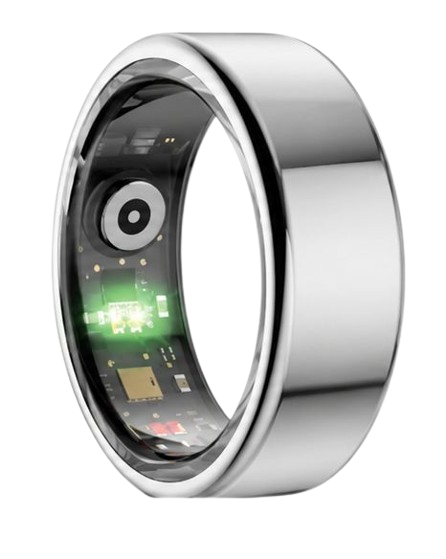
The Herz P1 Smart Ring tracks HRV, Sleep, Heart Rate & SpO2 around the clock. No subscriptions. No renewals. Ever.
In This Article
- The Target Metric Range: Understand average millisecond scores across different age demographics and biological baselines.
- The Core Physiology: Discover how the sympathetic and parasympathetic nervous systems create rhythmic heartbeat variations.
- The Technology Explained: Learn how advanced finger-based optical PPG sensors track recovery and deep sleep cycles accurately.
- Continuous Lifestyle Optimization: Get actionable, scientific tips to elevate your baseline and avoid standard subscription traps.
What Should Your HRV Be? The Comprehensive Biometric Breakdown
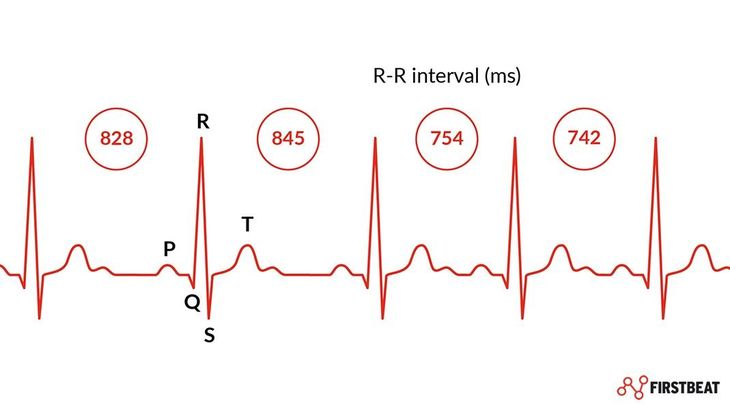
Heart rate variability is a vital metric that tracks the timing differences between consecutive heartbeats.
This measurement is calculated in milliseconds rather than simple beats per minute.
Determining what should your hrv be requires looking at personal baselines rather than a single universal standard.
Your autonomic nervous system controls these heart fluctuations automatically behind the scenes.
According to the American Heart Association, there is no single target number that fits every individual.
Instead, finding a ideal hrv depends heavily on your unique age, biological sex, fitness level, and genetics.
For most healthy adults, average scores typically fall anywhere between 20 and 100 milliseconds.
Younger individuals in their twenties often exhibit much higher readings, sometimes scaling up to 80 or 150 milliseconds.
As we age naturally, these numbers tend to drop gradually over time.
People who are highly active or engage in intensive cardiovascular training will routinely display elevated readings.
Understanding whats a normal hrv for your body allows you to make informed daily recovery choices.
This tracking matters most during your deepest sleep cycles when your body actively repairs muscular and neural tissue.
The National Sleep Foundation highlights that deep sleep is the optimal window to capture an accurate baseline.
This measurement occurs seamlessly overnight while your physical body remains completely at rest.
Monitoring these trends over several weeks helps you identify when your body is entering a state of chronic fatigue.
A sudden drop in your personal baseline often signals high stress, oncoming illness, or poor systemic recovery.
Conversely, maintaining a healthy hrv indicates that your cardiovascular system is functioning with great adaptability.
Your heart is able to switch effortlessly between fight-or-flight sympathetic states and rest-and-digest parasympathetic states.
How much your baseline changes daily will tell you exactly how hard you should push during your workouts.
If you want to track this in real time, the Herz P1 Smart Ring monitors your recovery metrics 24/7 — explore it here.
Let us look at how age demographics impact average biometric scores in milliseconds.
A twenty-five-year-old athlete might register a baseline average of 90 milliseconds.
Meanwhile, a healthy sixty-year-old corporate executive may average closer to 30 milliseconds.
Both of these individuals are completely healthy within their respective cohorts.
This is why comparing your personal stats to friends or training partners is counterproductive.
You must establish a steady baseline over a consistent fourteen-day period to understand your true numbers.
We analyze this data chronologically using the advanced algorithms built directly into our companion application.
90-Day 100% Money-Back Guarantee
“The Herz Smart Ring helps me manage stress easily. It’s accurate, stylish, and lightweight—perfect for my busy life!”
— Jennifer P. | ✔ Verified Customer
- ✓ 6-Day Battery Life
- ✓ Detailed Sleep Analysis
- ✓ Fast 1-Hour Charging
- ✓ iOS & Android Ready
Questions? Call: 1-866-479-1629
What Your HRV Score Actually Tells You — And How to Improve It
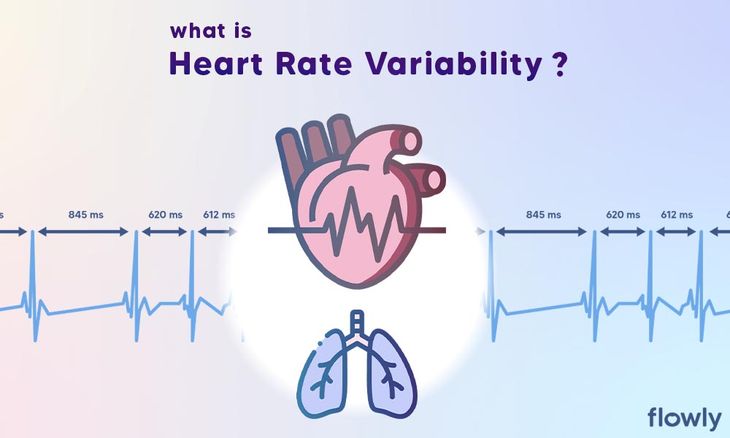
Your heart rate variability score is a direct window into the autonomic nervous system.
This system consists of two primary divisions working in a continuous tug-of-war.
The sympathetic nervous system drives your fight-or-flight response to physical and emotional stressors.
The parasympathetic nervous system governs your rest-and-digest recovery functions.
When you are well-rested, the parasympathetic system dominates your overnight biometric markers.
This dominance creates larger variations in the timing between each consecutive beat.
A higher reading indicates that your body is highly adaptable and ready to handle physical challenges.
Conversely, a low score means the sympathetic system has taken full control of your physiology.
This state of tension keeps your heart beating at a highly rigid, metronome-like pace.
Understanding good hrv numbers helps you recognize whether you are in an active state of chronic exhaustion.
Medical researchers utilize the Root Mean Square of Successive Differences, or RMSSD, to calculate this variability.
This statistical method focuses heavily on the short-term changes that reflect parasympathetic activation.
Our team at Herz P1 has analyzed data from thousands of active users to refine our overnight tracking accuracy.
We found that consistent hydration and early dinners dramatically elevate resting baseline scores.
Alcohol consumption, even in small amounts, can crush your overnight numbers by up to fifty percent.
Evaluating high vs low hrv patterns over time gives you the power to adjust your lifestyle proactively.
To improve your baseline, you should focus on sleep hygiene, structured cardiovascular exercise, and mindful breathing techniques.
Engaging in slow, resonant breathing at six breaths per minute instantly stimulates the vagus nerve.
This simple practice boosts parasympathetic activity and raises your score within minutes.
Athletes seeking an optimal hrv will often plan heavy training sessions only when their baseline is elevated.
This data-informed approach prevents overtraining and dramatically reduces the risk of sports-related injuries.
The Science of HRV Scale Variations and Biological Baselines
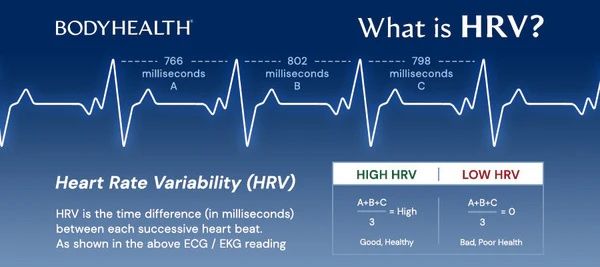
When studying the hrv scale, you must realize that higher is generally better, but context is everything.
A common mistake is assuming that a lower score always indicates poor health or cardiovascular disease.
In reality, some individuals naturally possess lower resting baselines due to genetic predispositions.
According to clinical studies, women often show slightly lower raw millisecond values than men of the exact same age.
However, their cardiovascular systems often display equivalent or superior overall resilience.
This is why you should focus on your personal trends rather than comparing yourself to static charts.
Determining what is a good hrv score is an entirely subjective process of self-discovery.
The American Heart Association notes that sustained downward trends are far more concerning than an isolated low reading.
If your average drops consistently over several consecutive days, your body is begging for rest.
This warning sign often precedes physical symptoms of illness like the common cold by up to forty-eight hours.
Our military-grade steel smart ring tracks these micro-changes continuously while you rest.
The device utilizes advanced optical photoplethysmography sensors to capture pulse waveforms at the base of your finger.
This location provides a much stronger arterial signal than the wrist, where smartwatches typically measure.
Because the skin is thinner on your fingers, optical sensors can detect capillary pulse waves with incredible precision.
The Herz P1 captures this biological data with a margin of error under two percent.
This clinical-grade accuracy ensures you receive reliable numbers every single morning.
You can then use this data to determine your daily physical readiness score without guessing.
Let us explore how physiological stress shifts these biological baselines over a standard workweek.
High cognitive workloads and continuous screen time trigger a mild, sustained sympathetic response.
Your brain perceives deadlines as physical threats, which alters your natural cardiac rhythm.
Over time, this sympathetic dominance compresses the intervals between your heartbeats.
The resulting decline in your recovery score can be tracked easily on our free companion app.
By implementing small changes like a ten-minute walk in nature, you can reverse this negative trend.
The Herz P1 helps you monitor the immediate positive impact of these lifestyle interventions.
How to Read HRV Data on the Herz P1 App to Optimize Your Daily Life
Opening our companion application reveals a clean, comprehensive health-tracking dashboard.
Your daily recovery metrics are displayed at the very top of the interface for instant viewing.
The app synthesizes your heart rate, sleep architecture, and stress levels into a single daily readiness score.
This score ranges from one to one hundred, with higher numbers indicating optimal recovery.
A score above eighty suggests your body is fully primed for high-intensity physical or mental efforts.
You can confidently plan a heavy gym session or tackle a complex project at the office.
A score between fifty and seventy-nine indicates a moderate state of systemic recovery.
During these days, we recommend maintaining your normal routine without overexerting your physical limits.
If your readiness score drops below fifty, your body is actively signaling a need for deep recovery.
On these low-score days, you should prioritize hydration, light stretching, and early sleep times.
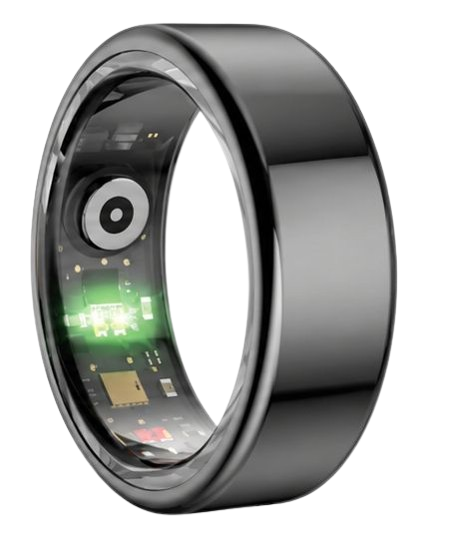
The Herz P1 Smart Ring is designed for comfortable 24/7 wear, making continuous tracking effortless.
Unlike heavy smartwatches, the sleek, lightweight ring feels virtually imperceptible on your finger at night.
This comfort is essential for capturing raw, uninterrupted sleep data during your deep and REM cycles.
The National Sleep Foundation confirms that uncomfortable wearable devices often disrupt sleep, skewing biometric results.
Our military-grade steel housing protects the internal sensor array from sweat and daily wear.
The IP68 waterproof rating means you never need to remove the ring while washing your hands or showering.
This continuous wear ensures there are no critical data gaps in your weekly recovery charts.
| Age Range | Typical Millisecond Range | Cardiorespiratory Status |
|---|---|---|
| 20 – 29 Years | 55 – 105 ms | Highly adaptable system |
| 30 – 39 Years | 45 – 85 ms | Moderate nervous system resilience |
| 40 – 49 Years | 35 – 75 ms | Normal biological decline |
| 50 – 59 Years | 25 – 55 ms | Requires consistent wellness habits |
| 60+ Years | 15 – 45 ms | Focus on low-impact recovery |
Why Bulky Smartwatches Fail at Sleep Tracking (And the Hidden Subscription Trap)
Many health-conscious individuals make the mistake of wearing a heavy, bulky smartwatch to bed.
These large wrist devices frequently shift position during sleep as you turn over naturally.
This movement creates physical gaps between the optical sensors and your skin surface.
The resulting sensor drift leads to highly inaccurate sleep and recovery data.
Additionally, the bright screens on smartwatches can turn on accidentally in the middle of the night.
This sudden burst of blue light suppresses melatonin production and disrupts your natural sleep architecture.
A lightweight, military-grade steel smart ring completely solves these common sleep tracking issues.
The Herz P1 sits snugly at the base of your finger without causing any nightly irritation.
It remains in a stable position, ensuring continuous, high-fidelity biometric readings until morning.
Another major frustration in the wearable market is the sudden rise of mandatory subscription models.
Several premium smart ring brands require you to pay an ongoing monthly fee to access your own health data.
We believe that you should never have to rent your personal biological information.
The Herz P1 Smart Ring features a completely free companion app for life.
There are absolutely no monthly subscription fees, hidden renewals, or paywalled metrics.
Every advanced feature, sleep analysis chart, and stress trend is fully accessible from day one.
This customer-first approach saves you hundreds of dollars over the lifetime of your device.
When you purchase our smart ring, you are investing in a lifetime of subscription-free health monitoring.
Frequently Asked Questions About Herz P1 and Biometric Tracking
Is the Herz P1 Smart Ring waterproof?
Yes, the Herz P1 features a certified IP68 waterproof rating.
It is designed to withstand complete submersion in water up to 164 feet deep.
This means you can safely wear the ring while swimming, showering, washing dishes, or sweating heavily.
The military-grade steel housing prevents any moisture from reaching the internal optical sensors.
How long does the battery last on a single charge?
The advanced lithium-polymer battery delivers up to six days of continuous use.
This long life ensures you can track your sleep and recovery patterns without daily charging stress.
When it is time to recharge, the ring reaches a full one-hundred percent charge in under one hour.
The compact magnetic charging cradle is included with every smart ring purchase.
Which finger is best to wear the Herz P1 Smart Ring on?
The index finger is the most recommended option for capturing the strongest arterial signal.
Alternatively, you can wear the ring on your middle or ring finger with excellent results.
We recommend choosing your non-dominant hand to minimize physical wear and tear during daily tasks.
The ring should fit snugly but comfortably, without rotating excessively during hand movements.
Does the Herz P1 Smart Ring store biometric data offline?
Yes, the ring has built-in flash memory that stores up to seven days of biometric data offline.
You do not need to keep your smartphone nearby or connected via Bluetooth at all times.
The ring will continuously log your heart rate, sleep stages, and stress levels while offline.
Once you open the app near your phone, all stored data will sync automatically in seconds.
Conclusion
Mastering your recovery starts with tracking your heart variability trends. The Herz P1 Smart Ring provides military-grade tracking without monthly fees. Ready to monitor your health daily? Explore the Herz P1 Smart Ring and see if it fits your lifestyle. Call 1-866-479-1629 — our team will help you choose your correct ring size.
