

Understanding your body’s subtle physiological shifts during sleep is the first step toward long-term vitality. If you are looking to track your Herz P1 smart ring data accurately, knowing your average sleeping respiratory rate is crucial for evaluating health trends. This guide will address your exact concerns regarding cardiorespiratory patterns and show you how to monitor your breathing fluctuations effortlessly.
Built to Last. Save Up to 69% Today.
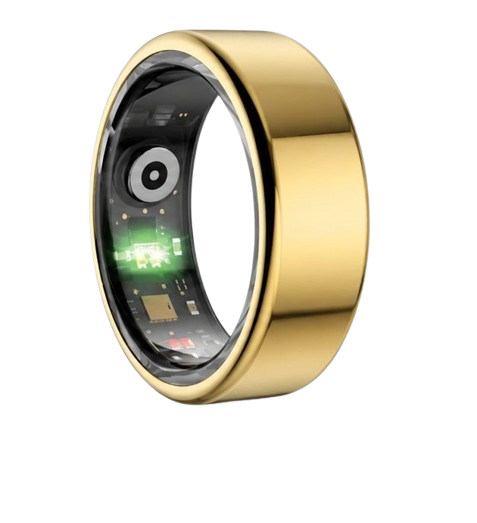
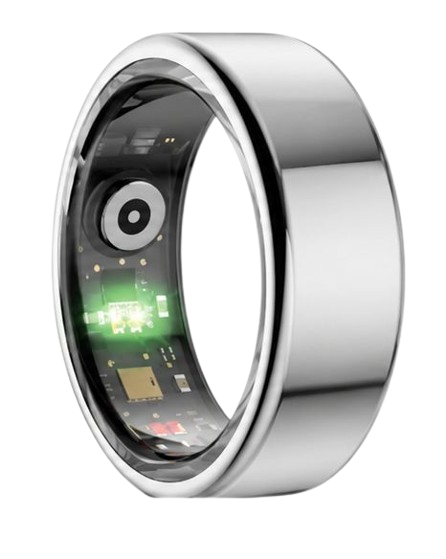
The Herz P1 Smart Ring tracks HRV, Sleep, Heart Rate & SpO2 around the clock. No subscriptions. No renewals. Ever.
In This Article
- How to Measure Respiration: A clear, step-by-step tutorial on logging your resting metrics accurately.
- Clinical Ranges & Physiology: Deep scientific analysis of normal breathing patterns and autonomic recovery.
- Practical Biometric Integration: How to utilize your overnight data to optimize your cardiorespiratory wellness.
- Overcoming Common Wearable Mistakes: Strategies to sidestep tracking errors and escape expensive app subscriptions.
How to Track and Optimize Your Sleeping Respiration Rate: A Practical Tutorial
Before you begin tracking your metrics, you will need a comfortable, high-precision wearable tracker like the Herz P1 Smart Ring and a synced smartphone.
You should also ensure your device is charged to avoid overnight data gaps.
Establishing a relaxing pre-sleep routine will help you achieve clean baseline records.
Step 1: Choose the Best Finger for Biometric Stability
Slip your military-grade steel ring onto your selected finger before preparing for sleep.
The index finger of your non-dominant hand typically offers the strongest pulse signal for tracking.
Make sure the ring fits snugly but does not restrict blood circulation or cause discomfort.
A loose ring may rotate during the night and disrupt the consistency of your data stream.
If the ring is too tight, it can alter natural vascular expansion and distort local optical readings.
A well-fitted ring remains stabilized on the finger pad, optimizing light penetration from the multispectral sensors.
Step 2: Calibrate Your Optimal Sleep Environment
Set your bedroom temperature to a cool, comfortable level to prevent physical overheating.
Ensure that your sleep space is dark and quiet to minimize sudden night-time awakenings.
Extreme room temperatures can cause physical stress and temporarily elevate your breathing patterns.
Creating a relaxing wind-down routine helps stabilize your autonomic nervous system before tracking begins.
This environmental calibration allows the multispectral sensors to capture your true resting baseline.
By removing external disturbances, you allow your respiratory rhythms to settle into a natural, steady state.
Step 3: Monitor Your Sleep Stages Automatically
Lie down comfortably and let your smart ring automatically recognize your transition into sleep.
Our advanced multi-wavelength PPG technology continuously measures blood volume variations at the base of your finger.
You do not need to press any start buttons or activate sleep modes manually.
The intelligent ring registers when your active motion drops and your heart rate stabilizes.
This automated detection ensures that your evening metrics are captured without any user effort.
The sensor array will safely record your breathing frequency across light, deep, and REM cycles.
Step 4: Retrieve and Review Your Respiration Trends
Upon waking in the morning, open the free companion app to initiate the syncing process.
The dashboard will compile your raw sleep architecture into readable charts within seconds.
Locate the specific respiration card to analyze your overnight breathing frequency.
Compare this number with your seven-day moving baseline to check for abnormal variations.
Consistent tracking will help you understand how your body reacts to daily physiological demands.
Visualizing these patterns over weeks allows you to identify subtle shifts before they impact your daily energy.
Step 5: Correlate Biometrics with Daily Lifestyle Choices
Log any evening activities like strenuous workouts, heavy meals, or late caffeine intake.
These lifestyle factors often lead to temporary spikes in your resting respiration metrics.
By connecting these events to your data, you can isolate true wellness anomalies from expected fluctuations.
Use these patterns to make informed adjustments to your daily schedules and evening routines.
This systematic approach empowers you to take complete control of your long-term cardiovascular health.
Sharing these recorded trends with a wellness professional can also provide valuable context for your long-term health journey.
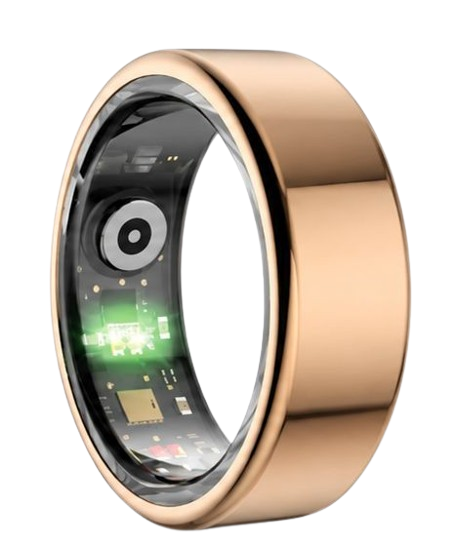
To make this tracking process completely seamless, we recommend using the Herz P1 Smart Ring to log your daily metrics.
Its lightweight, low-profile design ensures you can wear it all night without any discomfort or bulky watch straps.
With its high-durability military-grade exterior, you get clinical-grade tracking accuracy that stands up to your busy daily routine.
90-Day 100% Money-Back Guarantee
“The Herz Smart Ring helps me manage stress easily. It’s accurate, stylish, and lightweight—perfect for my busy life!”
— Jennifer P. | ✔ Verified Customer
- ✓ 6-Day Battery Life
- ✓ Detailed Sleep Analysis
- ✓ Fast 1-Hour Charging
- ✓ iOS & Android Ready
Questions? Call: 1-866-479-1629
The Science of Sleep Respiration: Why Your Nightly Breathing Rhythms Matter

Your breathing patterns during the night serve as a direct reflection of your central nervous system health.
Unlike your daytime respiration, which changes with speech, emotions, and physical effort, your sleeping rate is highly controlled.
For most healthy adults, a normal sleeping respiratory rate remains remarkably steady between twelve and twenty breaths per minute.
This stability is maintained by the respiratory center in your brain stem, which monitors carbon dioxide levels in your blood.
When you enter deep, non-rapid eye movement sleep, your body’s metabolic demands drop to their lowest daily levels.
Consequently, your average breaths per minute while sleeping will naturally settle at the lower end of your personal range.
Our research at Team Herz P1 shows that tracking these patterns provides early warnings of physical stress before you feel symptoms.
According to the National Sleep Foundation, even a small increase of two breaths per minute can indicate that your body is fighting off a mild infection.
By reviewing these metrics daily, you can identify hidden stressors and adapt your lifestyle to support optimal recovery.
Continuous monitoring allows you to build a highly personalized baseline of your cardiorespiratory wellness.
With this information, you can make intelligent adjustments to your diet, workouts, and evening wind-down habits.
Demographic Variations: Understanding Healthy Respiration Ranges Across Different Groups
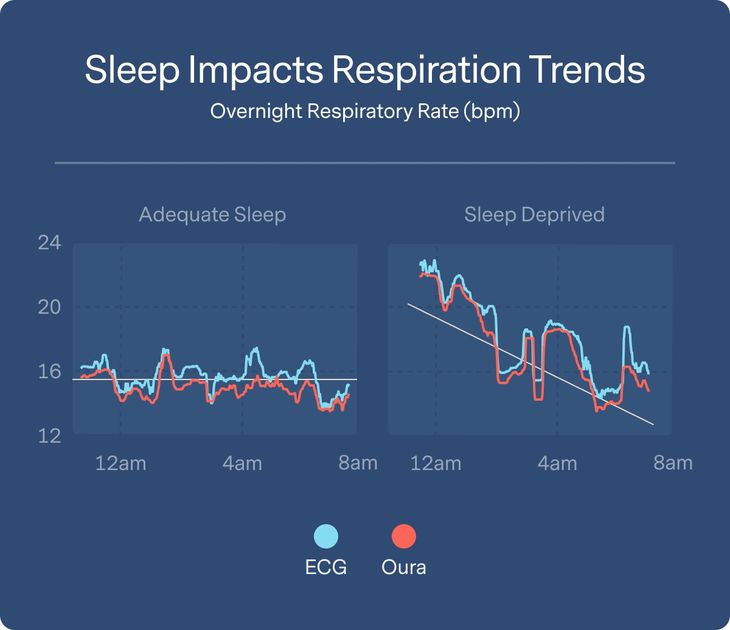
Physiological factors like age, biological sex, and physical fitness levels significantly influence your resting biometrics.
An elite endurance athlete will display a much lower normal respiration rate while sleeping than a sedentary individual.
Their highly conditioned heart and lungs can oxygenate tissues with far fewer breathing cycles per minute.
It is not uncommon for trained runners to maintain an average respiration rate while sleeping of just ten to twelve breaths per minute.
In contrast, seniors often show a slightly higher rate due to natural changes in lung elasticity over time.
Understanding these subtle demographic shifts will help you interpret your personal average breaths per minute sleep data with greater accuracy.
The table below outlines typical normal sleeping respiratory ranges to help you evaluate your own metrics.
| Age / Fitness Group | Normal Range (Breaths per Minute) | Physiological Characteristics |
|---|---|---|
| Endurance Athletes | 10 – 14 bpm | Excellent stroke volume, highly efficient lung capacity |
| Healthy Adults (18-64) | 12 – 20 bpm | Balanced autonomic function, steady carbon dioxide clearance |
| Older Adults (65+) | 15 – 22 bpm | Slightly reduced chest wall compliance, normal age adaptation |
By comparing your numbers against these demographic guidelines, you can gain a clearer understanding of your cardiorespiratory health.
Our multispectral PPG sensors are designed to account for these individual physiological variations.
By gathering data directly from the vascular-rich finger capillary bed, the smart ring delivers highly personalized health insights.
This customized tracking helps you avoid the anxiety of comparing your unique data against broad, generic averages.
How to Optimize Your Autonomic Recovery Using Respiration Insights
Interpreting your daily cardiorespiratory data does not have to be a complicated task.
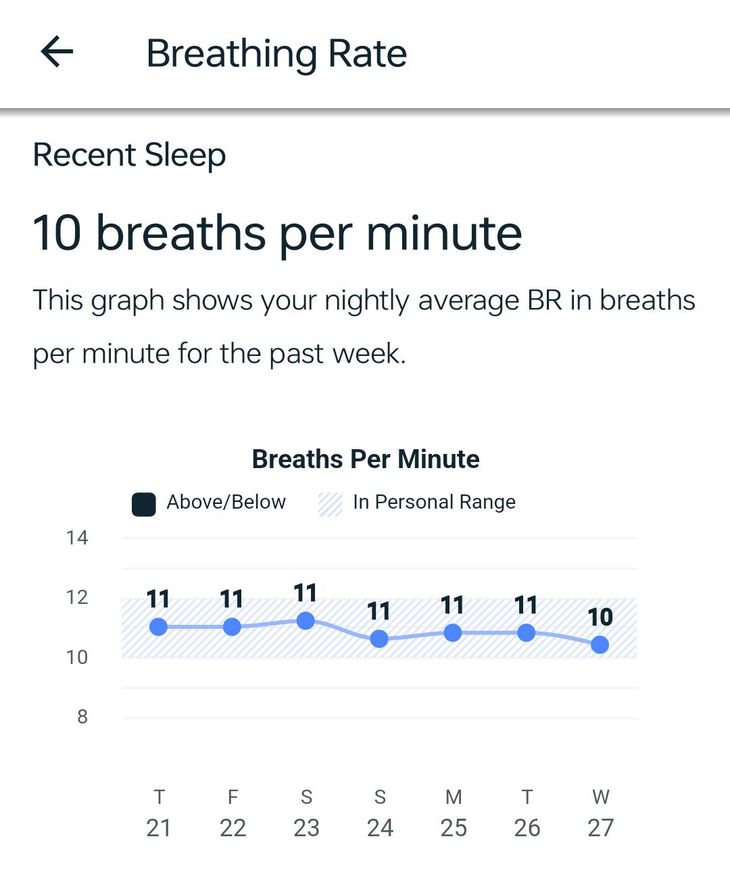
With our free lifetime application, you can view your normal sleeping breath rate trends represented in beautiful, simple charts.
When you notice your breathing rate rise above your baseline, it is a clear sign to prioritize active recovery.
You can adjust your evening habits by avoiding heavy exercise or screen exposure three hours before bed.
Additionally, cutting out late-night caffeine can stabilize your normal respiration rate for adults sleeping within forty-eight hours.
Our active users report that simple deep-breathing exercises before sleep can lower their resting metrics.
A lower sleeping respiration rate directly translates to deeper, more restorative sleep cycles.
This allows you to wake up feeling genuinely refreshed, energized, and ready to tackle your professional goals.
Over time, these minor evening adjustments accumulate to produce significant improvements in your cardiovascular endurance.
By using your biometric feedback to guide your habits, you transform passive tracking into proactive wellness management.
Our Team Herz P1 experts are always available to help you interpret these trends and set sustainable wellness goals.
How to Avoid Inaccurate Respiration Tracking and Save on Fees
Many individuals make the mistake of wearing a bulky, heavy smartwatch to monitor their overnight biometrics.
These oversized devices easily shift during sleep, causing the optical sensors to lose contact with the skin.
This displacement results in highly inaccurate metrics and frustrating data gaps on your dashboard.
Furthermore, many premium smart rings on the market lock your long-term health history behind expensive monthly app paywalls.
We believe that your personal health data should belong to you without any recurring subscription fees.
If you wear our military-grade steel ring, you will receive highly accurate metrics with zero monthly costs forever.
Our device captures your average brpm while sleeping using state-of-the-art optical sensors that rest comfortably on your finger.
This ensures you can track your health consistently without worrying about sudden subscription renewals.
The sleek, ultra-thin profile of the Herz P1 ring ensures it stays perfectly aligned with your skin throughout the night.
This reliable physical contact eliminates the data dropouts that frequently plague heavier wrist-worn trackers.
By choosing a dedicated ring, you protect both your sleep comfort and your hard-earned wellness budget.
Frequently Asked Questions About Sleep Respiration
Is the Herz P1 Smart Ring waterproof?
Yes, our premium ring features an IP68 waterproof rating, making it completely safe for swimming, showering, and daily hand washing.
It can withstand continuous submersion up to one hundred and sixty-four feet without any water damage to the internal sensors.
This rugged construction means you never have to remove your ring when washing dishes or swimming laps in the pool.
How long does the ring battery last?
The highly efficient battery lasts up to six full days on a single fast charge.
You can charge the device from zero to one hundred percent in under one hour using the included magnetic cradle.
This rapid charging cycle ensures that you rarely have to go without your health monitoring ring.
Which finger is best to wear the smart ring on?
We recommend wearing the ring on your index or middle finger of your non-dominant hand for the most accurate biometrics.
These fingers provide the most stable blood flow patterns for our optical sensors to read.
However, the ring will still collect reliable data on any finger that provides a snug, secure fit.
Does the Herz P1 store health data offline?
Yes, the ring features seven days of local offline storage to safeguard your tracking history.
Your accumulated biometric data will automatically sync to your smartphone the next time the app connects via Bluetooth.
This means you can leave your phone in another room overnight and still capture every single sleeping breath.
Conclusion: Your Subscription-Free Cardiorespiratory Health Ally
Tracking your sleeping respiratory metrics is a powerful way to monitor your cardiovascular wellness and recovery.
By understanding your normal ranges, you can easily identify warning signs of stress and adjust your habits accordingly.
With its military-grade steel construction, long battery life, and zero monthly subscription fees, the Herz P1 is your ideal sleep companion.
Ready to monitor your health every day? Explore the Herz P1 Smart Ring and see if it fits your lifestyle. Call: 1-866-479-1629 — our team can help you advise on the correct ring size and set personalized health goals.
