

Do you wake up feeling completely exhausted even after spending eight full hours in bed? Understanding your average brpm while sleeping can finally solve this frustrating mystery. By tracking your nightly breathing rate, you can pinpoint the exact sleep disruptions that drain your daily energy. The Herz P1 Smart Ring continuously monitors your physiological metrics to provide a clear, real-time map of your recovery. Let us dive deep into what your breathing rate reveals about your body.
Built to Last. Save Up to 69% Today.
The Herz P1 Smart Ring tracks HRV, Sleep, Heart Rate & SpO2 around the clock. No subscriptions. No renewals. Ever.

In This Article
- Physiological Baselines: Discover what the clinical average for nighttime breaths per minute means.
- The 5W2H Blueprint: Learn the exact mechanics, locations, and triggers of your respiratory system.
- Expert Sleep Architecture: Track how breathing rates adapt throughout REM and deep sleep cycles.
- Actionable Lifestyle Hacks: Find out how to read and respond to sudden respiratory deviations using smart rings.
What Is the Average BRPM While Sleeping? A Complete Physiological Overview

Your average brpm while sleeping stands for breaths per minute during your nightly rest cycle.
This metric is one of the most reliable indicators of your baseline cardiorespiratory health.
Understanding your unique normal sleeping respiratory rate helps you spot underlying physiological issues early.
Physiologists define this rate as the number of full chest rise and fall cycles completed in sixty seconds.
Healthy adults typically experience a lower respiration rate when their bodies enter a state of deep rest.
During these hours, the parasympathetic nervous system takes full control of your bodily functions.
This shift naturally slows your heart rate, relaxes your blood vessels, and decreases your breathing frequency.
But who exactly needs to monitor this vital sign closely?
Busy professionals, fitness enthusiasts, and individuals suffering from daytime fatigue benefit immensely from tracking this trend.
By knowing your baseline, you can immediately identify when your body is fighting off an infection or struggling with stress.
When does this data point become most critical?
It matters most during the late hours of the night when external distractions are completely eliminated.
This allows your wearable device to capture your clean, uninterrupted biological baseline.
Where does this physiological regulation actually occur?
The control center sits within the medulla oblongata and pons of your brainstem.
These structures constantly monitor carbon dioxide and oxygen levels in your bloodstream.
They send rapid nerve impulses to your diaphragm and intercostal muscles to dictate your breathing pace.
Why does monitoring this signal matter so much for your longevity?
A sustained elevation in your breathing rate can serve as an early warning sign for autonomic nervous system strain.
How does a digital device accurately read this signal without a chest strap?
Advanced smart rings utilize high-precision multi-wavelength photoplethysmography (PPG) sensors.
These sensors shine light into the microvascular bed of your finger to track blood volume changes.
As your chest expands and contracts, the pressure wave subtly modulates your heart rate in a process called respiratory sinus arrhythmia.
The device algorithms filter this signal to calculate your exact average breaths per minute while sleeping with medical-grade accuracy.
But how much or how many breaths are considered healthy during sleep?
For most healthy adults, a normal reading ranges between twelve and twenty breaths per minute.
However, the sweet spot for a sleeping adult often sits tightly between twelve and fifteen breaths per minute.
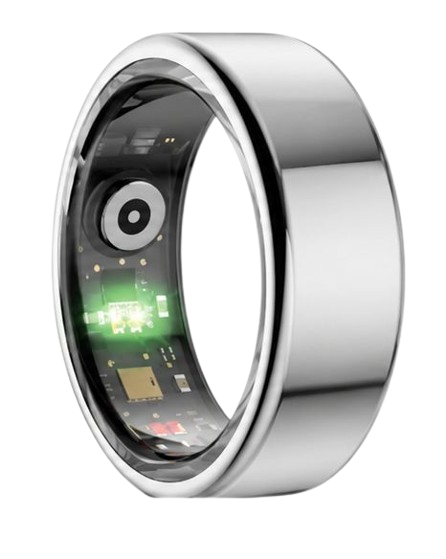
If you want to track this in real time, the Herz P1 Smart Ring monitors your respiratory metrics 24/7 — explore it here.
90-Day 100% Money-Back Guarantee
“The Herz Smart Ring helps me manage stress easily. It’s accurate, stylish, and lightweight—perfect for my busy life!”
— Jennifer P. | ✔ Verified Customer
- ✓ 6-Day Battery Life
- ✓ Detailed Sleep Analysis
- ✓ Fast 1-Hour Charging
- ✓ iOS & Android Ready
Questions? Call: 1-866-479-1629
The Physiological Mechanics of Nighttime Respiration Trends
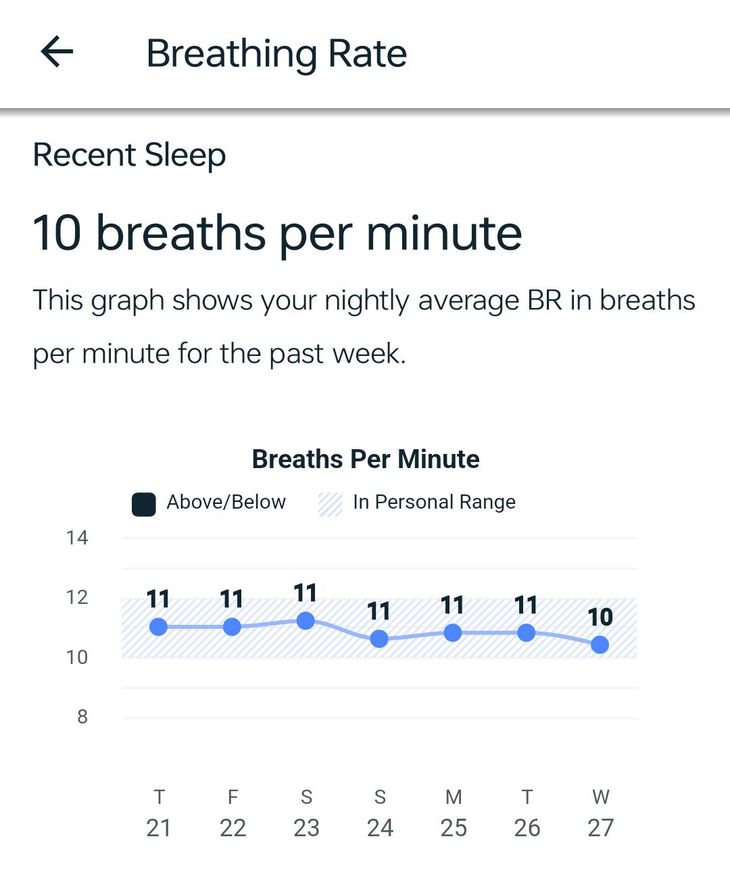
To fully grasp your breathing trends, we must examine how sleep stages influence your autonomic nervous system.
Your normal respiration rate while sleeping is not a flat line throughout the night.
During light sleep (Stage N1 and N2), your breathing slows down gradually in a rhythmic pattern.
When you transition into deep slow-wave sleep (Stage N3), your metabolic rate drops to its lowest level.
In this phase, your breathing becomes incredibly stable and regular.
Your body prioritizes tissue repair, cell growth, and immune system rejuvenation.
Consequently, your average respiration rate while sleeping reaches its absolute lowest point during deep sleep.
The situation changes dramatically when you enter Rapid Eye Movement (REM) sleep.
During REM, your brain becomes highly active, mirroring your waking state.
Your dreams are vivid, and your voluntary muscles undergo temporary paralysis.
This neurological shift causes your breathing to become irregular, rapid, and shallow.
Your respiratory rate may spike and drop unpredictably during this phase.
Clinical guidelines from the National Sleep Foundation confirm that these fluctuations are completely normal.
They are simply natural characteristics of healthy, active sleep architecture.
However, if your baseline rate remains elevated across all sleep stages, your heart may be working overtime.
The American Heart Association highlights a strong correlation between elevated resting respiratory rates and early cardiovascular strain.
This is where the Herz P1 Smart Ring provides immense value to your daily wellness routine.
Its advanced multispectral optical sensors track these subtle changes across every single sleep stage.
The companion app translates these complex biological patterns into a simple, easy-to-read daily sleep score.
You can see exactly how much time you spent in REM, deep, and light sleep phases.
This allows you to understand if your breathing remains steady or fluctuates abnormally during the night.
By monitoring these cycles, you gain clear, objective proof of your body’s recovery quality.
Identifying Anomalies: High vs. Low Breathing Rates While Asleep
What happens when your device alerts you to a sudden shift in your nighttime breathing?
Let us look at what a high average breaths per minute sleep score actually indicates.
If your rate consistently exceeds twenty breaths per minute, your body is likely under physiological stress.
Common culprits include acute illnesses, such as a developing fever, flu, or respiratory infection.
Your immune system increases metabolic demands, forcing your lungs to work harder to oxygenate your tissues.
Environmental factors, such as a hot bedroom or high humidity, can also drive your respiratory rate upward.
Lifestyle choices play an equally significant role in altering your breathing patterns.
Consuming alcohol close to bedtime relaxes your upper airway muscles, causing shallower breaths and a faster rate.
Chronically high stress levels trigger your sympathetic nervous system, leaving you in a mild fight-or-flight state all night.
This keeps your heart rate elevated and prevents your breathing from settling into a deeply restorative rhythm.
On the other hand, what does a low normal sleeping breath rate tell us?
A rate below twelve breaths per minute is often a sign of superior physical conditioning.
Endurance athletes frequently exhibit highly efficient cardiorespiratory systems.
Their hearts pump more blood per beat, and their lungs transfer oxygen with remarkable efficiency.
Thus, their resting respiratory rates can naturally settle into a low, steady zone without any oxygen deprivation.
However, abnormally low rates combined with poor blood oxygen saturation (SpO2) require close attention.
If your breathing drops significantly and your SpO2 levels plunge, you may be experiencing sleep apnea events.
The brainstem detects these drops and triggers brief, subconscious wake-ups to restore oxygen flow.
This process ruins your sleep quality, leaving you exhausted, irritable, and unfocused the next day.
By tracking your breathing rate alongside SpO2 and Heart Rate Variability (HRV), the Herz P1 Smart Ring offers a complete view of your autonomic health.
It helps you connect the dots between your daytime choices and your nighttime recovery trends.
Utilizing Sleep Breathing Data to Optimize Your Lifestyle

Acquiring physiological data is only useful if you know how to apply it to your daily routine.
Let us explore how you can use your normal respiration rate for adults sleeping baseline to make better lifestyle choices.
First, use your weekly trends to evaluate your true workout recovery needs.
If your respiratory rate remains elevated the night after a heavy workout, your muscles are still recovering.
You should consider a light active recovery session rather than pushing through another high-intensity workout.
Second, monitor how your diet affects your body’s ability to relax.
Try eating your last meal at least three hours before going to bed.
Check your app the next morning to see if your respiratory rate dropped faster than usual.
You will likely find that lighter dinners lead to a much calmer, more stable sleeping breathing rate.
Third, implement a simple ten-minute breathing exercise before sleep to calm your nervous system.
Use slow, deep diaphragmatic breathing to activate your vagus nerve and lower your heart rate.
The Herz P1 App will visually confirm the positive impact of this practice on your nighttime charts.
You will see a faster transition into deep sleep and a highly stable respiratory baseline.
The key to capturing this high-quality data is consistent, round-the-clock wear.
The Herz P1 Smart Ring is specifically engineered for maximum comfort during 24/7 wear.
Unlike heavy smartwatches, its sleek, lightweight design ensures you will barely feel it on your finger at night.
Its smooth inner lining prevents skin irritation, even when your hands expand naturally during sleep.
This allows you to build an uninterrupted, highly accurate map of your long-term health trends.
Bypassing Biometric Wearable Gaps and Subscription Traps
Many consumers make the mistake of wearing a bulky, heavy smartwatch to bed to track their sleep.
These large devices frequently shift during the night as you roll over in bed.
This movement creates physical gaps between the sensor and your skin, leading to inaccurate readings.
Furthermore, smartwatches must be charged almost every single day, leaving gaps in your weekly data trend lines.
The Herz P1 Smart Ring solves this problem by resting securely at the base of your finger.
This location contains a dense network of blood vessels, ensuring highly reliable signal quality.
Another major frustration in the wearable market is the hidden cost of ongoing monthly subscriptions.
Several premium brands require you to pay a monthly fee just to access your own biometric data.
We believe your personal health data belongs to you, and you should never have to pay to view it.
The Herz P1 App is completely free for life, with no subscriptions, paywalls, or hidden charges.
You gain full access to detailed sleep staging, HRV tracking, and respiratory analysis forever.
This makes the Herz P1 a highly cost-effective, long-term investment in your health and longevity.
Frequently Asked Questions About Smart Rings
Is the Herz P1 Smart Ring waterproof?
Yes, the Herz P1 features an IP68 waterproof rating, certifying safe use in water up to 164 feet deep.
You can confidently wear it while washing your hands, taking a hot shower, swimming laps, or relaxing in a sauna.
How long does the battery last on a single charge?
The advanced lithium-polymer battery delivers up to 6 days of continuous tracking on a single charge.
When the battery runs low, the ring charges fully in under 1 hour using the included magnetic charging dock.
Which finger is best to wear the Herz P1 on for accuracy?
We recommend wearing the smart ring on your index, middle, or ring finger for the most accurate readings.
Ensure the inner sensor bumps sit snugly against the palm side of your finger to maintain constant skin contact.
Does the ring store my biometric data offline if my phone is away?
Yes, the Herz P1 has built-in storage that safely holds up to 7 days of raw biometric data offline.
Your data will sync automatically as soon as the ring reconnects to your smartphone’s Bluetooth.
Conclusion: Unlock Deeper Wellness Insights Today
Monitoring your sleeping breathing rate is one of the easiest ways to optimize your overall health.
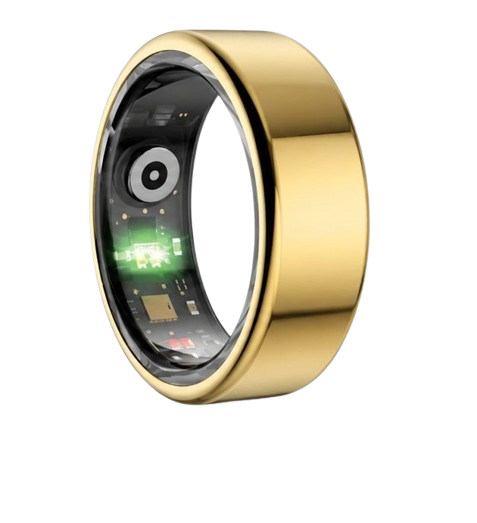
Ready to monitor your health every day? Explore the Herz P1 Smart Ring and see if it fits your lifestyle.
Call: 1-866-479-1629 — our team can help you advise on the correct ring size and set personalized health goals.
Note: Individual results may vary depending on individual health conditions, age, and lifestyle habits. This article is intended for general health reference purposes only.
