

Monitoring your average breaths per minute while sleeping is one of the most powerful ways to check your cardiorespiratory health. Our team at Herz P1 designed the Herz P1 Smart Ring to track these quiet signals automatically, providing you with deep data without any monthly subscription fees. If you have ever woken up feeling exhausted despite spending eight hours in bed, tracking your average breaths per minute sleep ranges can help you find out exactly why your sleep quality is suffering.
Built to Last. Save Up to 69% Today.
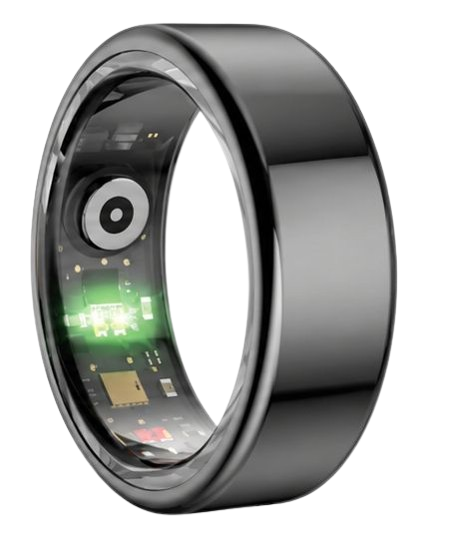
The Herz P1 Smart Ring tracks HRV, Sleep, Heart Rate & SpO2 around the clock. No subscriptions. No renewals. Ever.
In This Article
- How to Monitor Sleep Breathing Rate: Step-by-step guidance on setting up, wearing, and analyzing cardiorespiratory data.
- Understanding Sleep Respiratory Averages: Decoding the normal resting ranges and identifying baseline shifts.
- The Science of Breath & Sleep Stages: Analyzing how deep, REM, and light sleep stages change respiratory trends.
- Actionable Lifestyle Interventions: Expert-backed tips to optimize oxygen delivery and breathing efficiency overnight.
How to Track Your Average Breaths per Minute Sleep Metrics: A Step-by-Step Guide

Tracking your nighttime ventilation requires high-precision biometric sensors that sit snugly against the skin.
You will need a reliable sleeping breath rate monitor, such as a biometric smart ring, and its paired mobile companion application.
Ensure your device is fully charged and that you have established a consistent sleep window before starting this optimization protocol.
-
Step 1: Secure an Optimal Finger Fit
Place your biometric tracking ring on your index or middle finger for the most accurate signal quality.
The digital arteries on these fingers are closer to the surface, allowing optical sensors to read your blood volume pulse clearly.
Ensure the ring does not spin freely, as a loose fit can create motion artifacts that distort your breath tracking data.
If the ring feels too tight and restricts circulation, move it to a smaller finger to maintain accurate capillary flow.
-
Step 2: Calibrate Your Baseline Over Seven Nights
Wear your smart tracking ring consistently for at least one full week without changing your typical bedtime routine.
Your body has a unique physiological baseline, and your device needs several nights of data to calculate your personal averages.
During this calibration phase, avoid alcohol or intense physical workouts right before going to bed.
This consistent environment ensures your initial average brpm while sleeping data reflects your true resting state.
-
Step 3: Analyze Morning Biometric Summaries
Open your paired health application every morning to review the previous night’s breath rate charts.
Look for the overall range, noting whether your metrics fell within the standard clinical parameters of 12 to 20 breaths per minute.
Pay attention to any sudden spikes or prolonged drops in your breathing frequency throughout the night.
Write down any external factors, like room temperature or late-night meals, that might correlate with these visual data shifts.
-
Step 4: Identify Deviations and Physiological Stressors
Check your sleep data for any nights where your breathing rate deviated by more than one or two breaths from your baseline.
A elevated breath rate often points to physiological stressors like an oncoming cold, high mental anxiety, or poor air quality.
A lower-than-average breath rate may indicate deep physical recovery or the influence of sedating substances.
Use these regular observations to understand how your daytime choices directly influence your nocturnal recovery patterns.
-
Step 5: Adjust Your Sleeping Environment and Habits
If your nighttime breathing data looks erratic, make small, deliberate changes to your bedroom setup.
Try lowering your room temperature to between 60 and 67 degrees Fahrenheit to encourage deep, stable ventilation.
Consider using a cool-mist humidifier to keep your airway hydrated and reduce breathing resistance.
Run these environmental trials for five nights while monitoring your sleep charts to see if your respiratory patterns stabilize.
The Herz P1 Smart Ring makes this entire self-tracking process completely seamless by monitoring your cardiorespiratory metrics 24/7.
Because the Herz P1 requires no monthly subscription, you have lifetime access to your detailed historical charts and trends.
You can view your daily, weekly, and monthly averages directly inside the free mobile app to track your wellness progress over time.
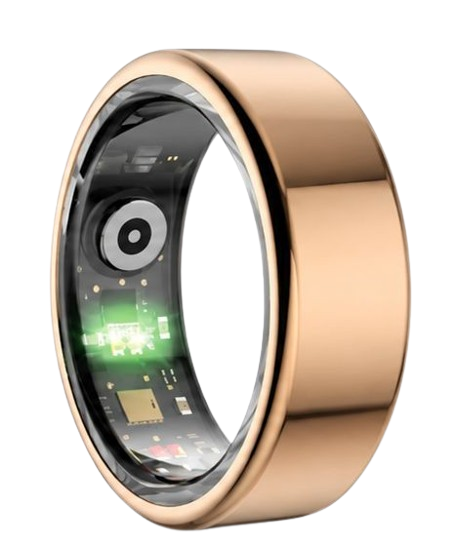
90-Day 100% Money-Back Guarantee
“The Herz Smart Ring helps me manage stress easily. It’s accurate, stylish, and lightweight—perfect for my busy life!”
— Jennifer P. | ✔ Verified Customer
- ✓ 6-Day Battery Life
- ✓ Detailed Sleep Analysis
- ✓ Fast 1-Hour Charging
- ✓ iOS & Android Ready
Questions? Call: 1-866-479-1629
What Your Sleeping Respiration Rate Ranges Tell You About Cardiorespiratory Health
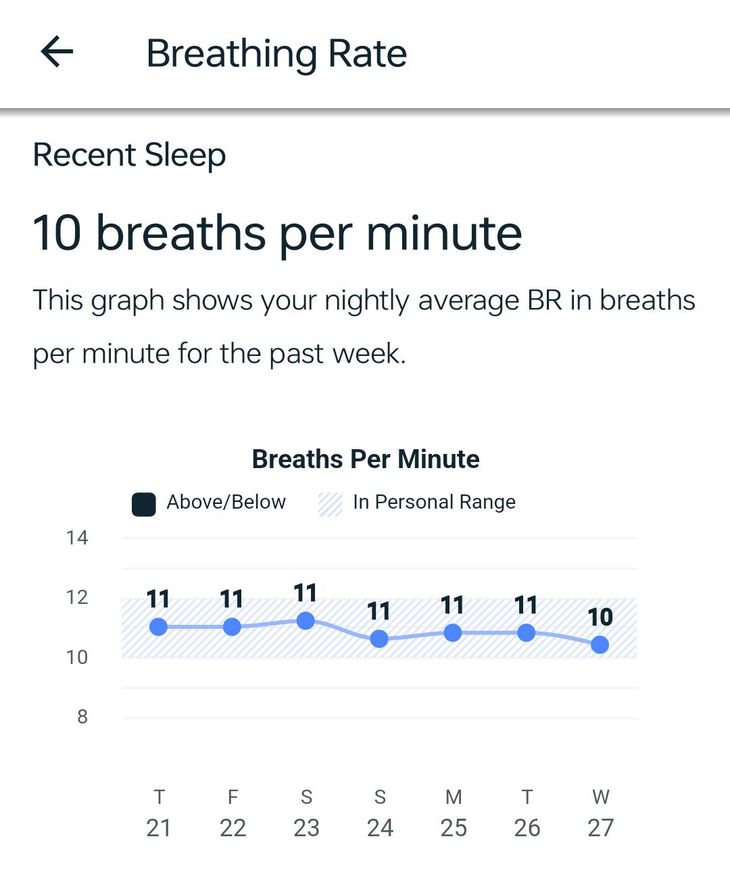
A normal resting breathing frequency reflects a balanced and well-functioning autonomic nervous system.
For most healthy adults, a normal sleeping respiratory rate ranges from 12 to 20 breaths per minute.
This frequency can change slightly based on your age, physical fitness, and general heart health.
According to clinical studies, well-conditioned athletes often show a normal sleeping breath rate closer to the lower end of this range.
This efficiency happens because their cardiorespiratory system is highly optimized to deliver oxygen with less physical effort.
Conversely, consistently high breathing rates during rest may suggest your body is working harder to maintain proper oxygenation.
Let us review the standard reference ranges for overnight respiratory rates to see where your numbers fall.
| Respiratory Range (BRPM) | Clinical Classification | Primary Health Indicators |
|---|---|---|
| Below 12 BRPM | Low (Bradypnea) | Deep recovery, high athletic conditioning, or potential influence of sedative substances. |
| 12 to 20 BRPM | Normal Range | Stable cardiovascular function, balanced nervous system, and healthy lung ventilation. |
| Above 20 BRPM | Elevated (Tachypnea) | Early immune response, acute stress, poor sleeping environment, or respiratory fatigue. |
When analyzing your own sleep charts, remember that a single night’s deviation is rarely a cause for concern.
Instead, focus on your rolling average over several weeks to spot meaningful trends and shifts.
The American Heart Association notes that sustained changes in resting vitals are often the first signs of physical strain.
The Herz P1 Smart Ring tracks your normal respiration rate while sleeping with medical-grade optical sensors, making it easy to identify these subtle trends early.
Anatomy of Sleep Architecture: How REM and Deep Sleep Impact Your Breath Rate
Your breathing patterns are not completely uniform throughout the night; they change as you transition between different sleep stages.
During deep slow-wave sleep, your brain activity slows down, and your autonomic nervous system enters a highly parasympathetic state.
This shift causes your breathing to become highly rhythmic, predictable, and remarkably stable.
During this restorative stage, your body focuses on tissue repair, muscle growth, and cellular detoxification.
Your resting heart rate drops, and your normal respiration rate for adults sleeping reaches its quietest, most regular state.
This stable breathing pattern helps your muscles recover deeply after a day of physical activity.
In contrast, rapid eye movement (REM) sleep introduces a completely different breathing pattern.
During REM sleep, your brain is highly active as you experience vivid dreams and consolidate daily memories.
This mental activity triggers erratic, shallow, and fast breathing patterns that can resemble your waking state.
Your heart rate and blood pressure also fluctuate rapidly during these active dreaming windows.
Because of this natural physiological variability, your average respiration rate may show temporary spikes during REM cycles.
The National Sleep Foundation explains that these dramatic breathing shifts are a normal, healthy part of sleep architecture.
Advanced wearables, like the Herz P1, use these distinct cardiorespiratory fluctuations to accurately map your sleep stages every single night.
The Physiology Behind Sudden Spikes in Sleep Breathing Rates
If you notice a sudden jump in your average respiration rate while sleeping, your body is likely responding to an internal or external trigger.
One of the most common causes of an elevated respiratory rate is an active immune response.
When your immune system fights off a virus, your body temperature rises and your metabolic demands increase.
To support this increased defense activity, your lungs must work faster to deliver vital oxygen to your cells.
You may notice this respiratory rise on your smart ring app a day or two before you feel any physical symptoms.
By paying attention to these early warnings, you can prioritize rest and hydration before a cold fully takes hold.
Psychological stress and mental anxiety from your workday can also cause your nighttime breathing rates to rise.
When you go to bed stressed, your sympathetic nervous system remains highly active, releasing cortisol and adrenaline into your bloodstream.
These hormones keep your body in a low-grade fight-or-flight state, which prevents you from entering deep, restful sleep stages.
This physiological state keeps your heart rate elevated and increases your average breaths per minute sleep metrics.
Using a lightweight smart ring helps you spot these stress patterns early, so you can adjust your routine and protect your recovery.
How to Read and Apply Sleep Ventilation Data on the Herz P1 App

The companion application for the Herz P1 Smart Ring turns complex biometric numbers into clear, easy-to-understand charts.
When you open your sleep dashboard, you will see a detailed graph showing your breath rate changes over the course of the night.
The app highlights your overall range and automatically calculates your average breathing rate for the entire sleep session.
It also compares your nightly stats against your personal 14-day baseline to help you spot any unusual trends.
This long-term context is incredibly valuable, as it helps you see beyond minor nightly fluctuations.
By reviewing these trends, you can easily track how lifestyle changes directly improve your nighttime recovery.
You can also use this data to optimize the timing and intensity of your daily physical workouts.
If your morning app summary shows an elevated respiratory rate and a lower-than-average Heart Rate Variability (HRV), your body is still recovering.
On these recovery days, consider swapping a high-intensity workout for a restorative walk or some gentle stretching.
Conversely, when your breath rate is stable and your HRV is high, your body is primed for physical challenge.
This personalized, data-driven approach to training helps you build physical fitness while preventing chronic fatigue or overtraining.
Because the Herz P1 is designed for 24/7 wear, it acts as a reliable wellness advisor that keeps you in sync with your body’s needs.
Practical Lifestyle Interventions to Optimize Your Nighttime Breathing
If you want to improve your nighttime breathing and oxygen levels, start by optimizing your sleeping position.
Sleeping flat on your back can cause your tongue and soft palate to relax against the back of your throat.
This physical relaxation can narrow your airway, creating breathing resistance and raising your overnight respiratory rate.
To keep your airway open and stable, try sleeping on your side or using a supportive, contoured pillow.
Many users notice an immediate stabilization in their breathing charts simply by making this quick change.
This simple structural adjustment can significantly reduce breathing effort and help you wake up feeling more refreshed.
Another highly effective habit is to avoid heavy meals, alcohol, and caffeine in the hours leading up to bedtime.
Digesting a large meal requires extra blood flow to your stomach, which increases your resting metabolic rate and raises your breathing speed.
Alcohol also relaxes the muscles in your airway, which can lead to shallow, fragmented breathing and lower oxygen levels.
Try to finish your last meal at least three hours before bed, and swap late-night alcohol for a soothing herbal tea.
These digestive adjustments take the physical load off your body, allowing it to enter deep, restorative sleep much faster.
Tracking these changes with a smart ring lets you see exactly how your evening choices improve your sleep quality.
Common Sizing and Wearable Pitfalls: Smartwatches vs. Smart Rings
Many people try to track their sleep metrics using a bulky smartwatch, but this often leads to frustrated nights and inconsistent data.
Smartwatches are relatively heavy and can easily shift on your wrist when you toss and turn in bed.
This movement can create gaps between the optical sensors and your skin, resulting in missing or inaccurate breathing data.
Additionally, wearing a large, rigid watch to bed can feel uncomfortable and disrupt your natural sleep patterns.
Many users also struggle with smartwatch battery life, often finding their device is dead when they need it most.
Charging a smartwatch every single day can quickly become an annoying chore that leads to missing sleep logs.
Choosing a lightweight smart ring, like the Herz P1, easily solves these common wearable challenges.
The Herz P1 is crafted from military-grade steel, making it incredibly durable while weighing just a few grams.
Its slim, ergonomic design curves naturally around your finger, ensuring consistent skin contact without feeling tight or bulky.
This stable, secure fit allows the optical sensors to capture highly accurate cardiorespiratory data all night long.
Additionally, the Herz P1’s highly efficient battery lasts up to six days on a single charge and power-ups in under an hour.
By choosing a smart ring, you get a highly comfortable, subscription-free device that tracks your health without getting in the way.
Frequently Asked Questions About Sleep Respiration and the Herz P1
Is the Herz P1 Smart Ring waterproof?
Yes, the Herz P1 features a full IP68 waterproof rating, meaning it can withstand water submersion up to 164 feet deep.
You can comfortably wear the ring while washing your hands, showering, swimming laps, or relaxing in a hot bath.
The seamless, medical-grade inner lining completely seals and protects the delicate internal sensors from moisture damage.
How long does the ring’s battery last on a single charge?
The Herz P1 delivers up to six days of continuous, reliable battery life under normal tracking conditions.
When the battery does run low, you can charge it back to 100% in under one hour using the included magnetic charging dock.
This rapid charging capability means you can quickly power up your ring during your morning shower and never miss a night of sleep data.
Which finger is the best option to wear my smart ring on?
For the highest biometric accuracy, we recommend wearing the Herz P1 on your index or middle finger.
These fingers have a robust network of superficial capillaries, which allows the optical sensors to read your pulse and blood oxygen easily.
You can also wear the ring on your ring finger if that offers a more comfortable and secure fit.
Can the Herz P1 store my health data offline when my phone is away?
Yes, the Herz P1 features built-in storage that can securely save up to seven days of biometric data offline.
You do not need to keep your smartphone next to your bed or leave Bluetooth on while you sleep.
The next time you open the companion app, your stored sleep and breathing data will sync automatically in just a few seconds.
Conclusion: Empower Your Sleep Journey with Real Biometric Insights
Monitoring your sleep respiratory trends is a powerful and proactive way to protect your long-term health.
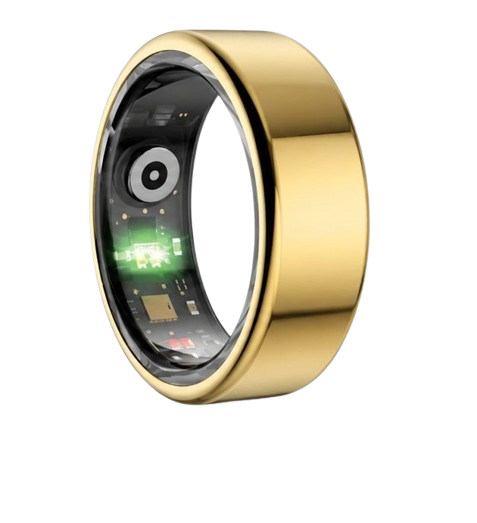
The Herz P1 Smart Ring makes this tracking simple, comfortable, and completely subscription-free.
Ready to monitor your health every day?
Explore the Herz P1 Smart Ring and see if it fits your lifestyle.
Call: 1-866-479-1629 — our team can help you advise on the correct ring size and set personalized health goals.
