

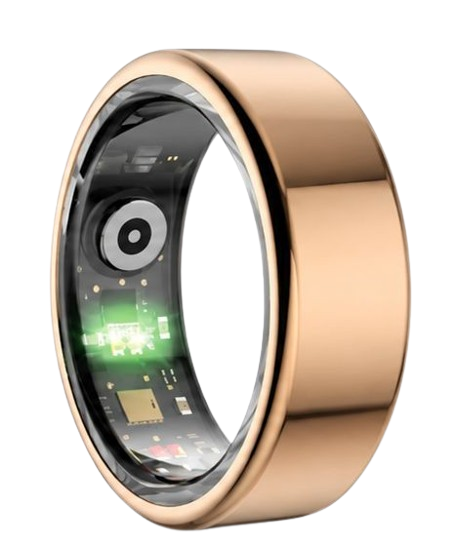
Discovering a low breathing rate while sleeping can feel deeply unsettling when reviewing your overnight health metrics. At Team Herz P1, we understand how tracking these nocturnal biometric shifts is crucial for optimizing your recovery and long-term respiratory health. The advanced Herz P1 Smart Ring continuously monitors your night-time oxygen saturation, heart rate variability, and respiration to illuminate hidden physiological patterns without stressful monthly fees or intrusive, bulky smartwatch screens.
Built to Last. Save Up to 69% Today.
The Herz P1 Smart Ring tracks HRV, Sleep, Heart Rate & SpO2 around the clock. No subscriptions. No renewals. Ever.
In This Article
- How to Monitor Safely: Follow a structured five-step diagnostic setup to precisely measure your nocturnal oxygen trends.
- Scientific Analysis: Explore the primary physiological and neurological triggers behind slow sleep respiration.
- Risk Identification: Distinguish high-performance athletic adaptation from pathological sleep apnea indicators.
- Practical Mitigation: Adjust lifestyle variables and sleep postures using real-time smart ring analytics.
How to Track and Optimize Your Nightly Respiration: A Step-by-Step Guide

Monitoring your nightly respiration trends is the first proactive step toward identifying potential breathing disruptions.
This guide will teach you how to gather clean, clinical-grade biometric data directly from home.
By learning this simple protocol, you can pinpoint exactly when your respiration patterns alter during sleep.
Prerequisites / What You’ll Need
To begin this tracking routine, you will need a highly accurate sleeping breath rate monitor.
You also need to maintain a highly consistent bedtime schedule for at least three consecutive nights to stabilize your base metabolism.
Finally, ensure your sleeping environment remains at a stable temperature of sixty-eight degrees Fahrenheit to minimize thermal stress.
-
Step 1: Secure a Snug Biometric Fit
Optical sensors require absolute contact with your skin to avoid measuring ambient light noise.
You should place your tracker on your index or middle finger where blood vessels are closest to the surface.
The ring must fit tightly enough that it does not slide, but comfortably enough to prevent throbbing.
This physical foundation ensures your raw night data is fully accurate.
-
Step 2: Calibrate Your Daytime Baseline
You need to record your breathing patterns while resting quietly awake for ten minutes before sleeping.
This step establishes your physiological norm under waking conditions.
Most healthy adults will register a resting speed of twelve to twenty breaths per minute.
Any deviations overnight will be measured against this starting baseline.
-
Step 3: Track the Nocturnal Shift Across Sleep Stages
Launch your tracking application as you prepare to close your eyes.
The system will actively map your respiratory sleep rate as you transition into deep sleep.
Your breathing should naturally drop to its lowest frequency during slow-wave sleep stages.
If the rate drops below ten breaths per minute, note if this occurs alongside high heart rate variability.
-
Step 4: Cross-Reference Oxygen Saturation Levels
Open your wellness application the following morning to review your blood oxygen saturation logs.
A safe physiological drop in breathing rate should never cause your blood oxygen to drop below ninety-five percent.
If you observe oxygen levels dipping below ninety percent, your tissues are not receiving adequate oxygen.
This critical comparison helps distinguish healthy rest from obstructive oxygen desaturation.
-
Step 5: Document and Compare Weekly Trends
Do not panic over a single night of unusual sleep data.
You should compile your respiratory scores over seven consecutive nights to spot actual clinical trends.
Log any external variables like evening alcohol intake, intense training sessions, or elevated workplace stress.
Consistent trends of low breathing rates should be shared directly with your primary care physician.
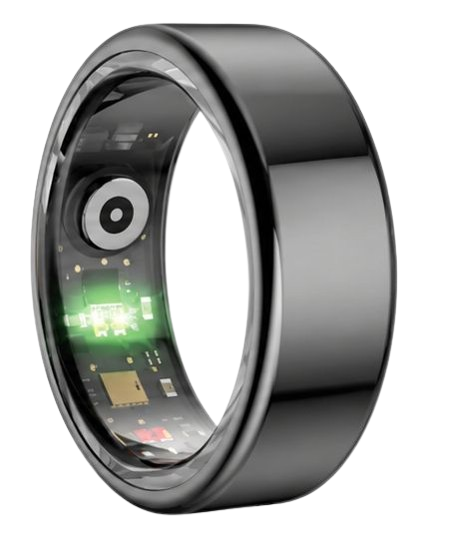
To automate this precise step-by-step process, we developed the military-grade Herz P1 Smart Ring.
Our ring features advanced multispectral optical sensors to track your respiratory rate and blood oxygen with medical-level accuracy.
You will receive clear daily trends in our free mobile app without ever facing a monthly subscription charge.
Discover how the Herz P1 Smart Ring simplifies your night-time health tracking today.
90-Day 100% Money-Back Guarantee
“The Herz Smart Ring helps me manage stress easily. It’s accurate, stylish, and lightweight—perfect for my busy life!”
— Jennifer P. | ✔ Verified Customer
- ✓ 6-Day Battery Life
- ✓ Detailed Sleep Analysis
- ✓ Fast 1-Hour Charging
- ✓ iOS & Android Ready
Questions? Call: 1-866-479-1629
Deciphering the Science of Low Nocturnal Respiratory Rates
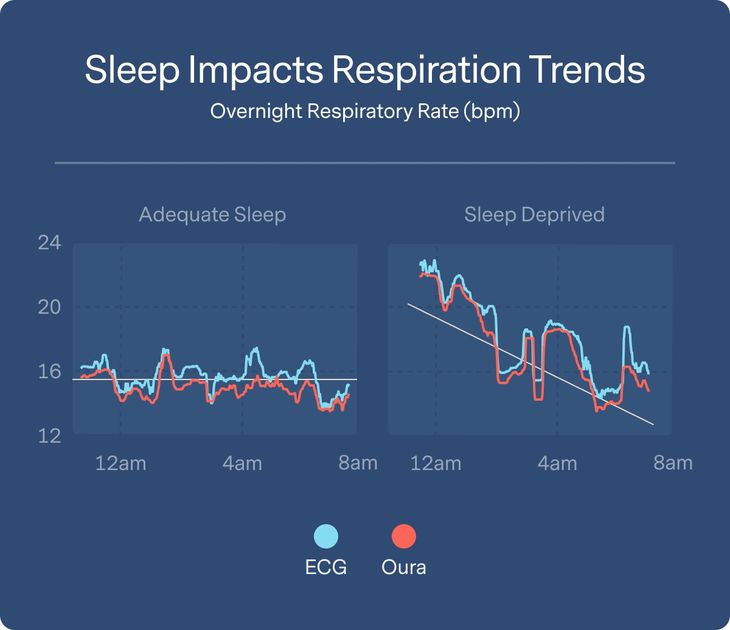
Understanding sleep physiology requires looking past simple daytime cardiovascular and breathing numbers.
When you enter sleep, your metabolic rate drops dramatically to allow cellular rebuilding.
This section explores the neurological and physical processes that dictate your nocturnal breathing speed.
Is Your Sleeping Breath Rate Safe or Concerning?
You might wonder: is 12 breaths per minute normal for a sleeping adult?
According to clinical data, a typical average sleeping respiratory rate ranges between twelve and twenty cycles per minute.
When your breathing falls below twelve breaths, doctors often refer to this nocturnal slowdown as bradypnea.
An average sleep brpm of ten to eleven is generally considered safe if your tissues remain fully oxygenated.
However, rates that consistently touch eight or nine breaths per minute demand a closer look at your neurological health.
Our team recommends checking whether these low numbers are stable or accompanied by sudden, gasping wake-ups.
Key Causes Behind Low Breaths Per Minute in Sleep
To understand what causes low respiratory rate, we must look at both lifestyle factors and health issues.
A primary driver of low breaths per minute during sleep is exceptional cardiovascular conditioning.
Highly trained athletes possess stronger heart muscles that deliver oxygen with remarkable systemic efficiency.
This high conditioning means their metabolic demand drops significantly lower during deep rest.
Conversely, consuming central nervous system depressants like sleep aids or alcohol before bed also slows your breathing.
These substances dull the brain’s natural response to rising carbon dioxide levels.
In rarer cases, neurological signaling issues in the brainstem can fail to prompt regular diaphragmatic movement.
Evaluating Nocturnal Risks and Identifying When Action is Required

Recognizing the boundary between healthy sleep slow-down and life-disrupting respiratory risks is essential.
Medical organizations emphasize that nocturnal breathing trends reflect your underlying autonomic nervous system balance.
Let us look at how the heart and respiratory organs interact during your deepest sleep stages.
Physiological vs. Pathological Bradypnea
The National Sleep Foundation states that healthy slow breathing indicates a state of deep parasympathetic recovery.
In this restorative state, your body’s cellular systems focus entirely on muscle tissue repair.
The American Heart Association notes that your resting pulse also slows in harmony with your breathing.
This healthy balance is known as physiological bradypnea and leaves you feeling refreshed the next day.
Pathological bradypnea, however, occurs when the body fails to draw enough oxygen to sustain vital organs.
This dangerous state triggers a major stress response, flooding your system with cortisol and interrupting deep recovery.
Understanding Sleep Apnea and Structural Breathing Issues
If you experience sudden pauses in your breathing, you may be dealing with obstructive sleep apnea.
This condition occurs when the soft tissues in your throat collapse and physically block your airway.
Wearing a dedicated sleep apnea ring can help you track these dangerous blockages by highlighting oxygen drops.
These blockages force your brain to briefly wake up to resume regular breathing.
These constant micro-awakenings prevent you from getting high-quality REM and deep sleep stages.
Over time, chronic oxygen drops put significant stress on your cardiovascular system, increasing long-term health risks.
How to Use Herz P1 Biometric Insights to Optimize Sleep Quality
Using physiological tracking technology can transform how you manage your daily energy levels.
The Herz P1 companion application provides a clear view of your autonomic recovery score every morning.
By connecting these numbers with your daily activities, you can build a highly customized sleep routine.
Navigating the Daily Respiratory Trends on Your Dashboard
Your morning dashboard displays a comprehensive breakdown of your previous night’s sleep stages.
You can instantly view your heart rate variability alongside your overnight respiration trends.
The application highlights any moments where your breathing rate dipped below your personal baseline.
You can easily track these changes over weeks to see if your body is adapting well to new routines.
Our clear visual graphs allow you to spot patterns without sorting through complex scientific spreadsheets.
Implementing Lifestyle Adjustments to Elevate Your Oxygen Levels
If your sleep data shows a pattern of shallow breathing, consider adjusting your sleeping position.
Sleeping on your side is clinically proven to prevent airway collapse compared to sleeping on your back.
You should also avoid eating heavy meals within three hours of bedtime to prevent diaphragm pressure.
Try incorporating ten minutes of slow diaphragmatic breathing before turning off the lights.
These small changes help train your nervous system to maintain stable, rhythmic breathing through the night.
Avoiding Common Pitfalls in Nocturnal Biometric Monitoring
Even the most advanced biometric sensors can produce misleading results if used incorrectly.
Understanding typical errors in sleep tracking can save you unnecessary worry and expense.
Let us look at the design choices and pricing models that often disrupt the user experience.
The Danger of Relying on Bulky Wrist Wearables at Night
Many people find wearing a heavy smartwatch to bed highly uncomfortable.
Large watches often slide around on your wrist when you toss and turn at night.
This movement creates gaps between the sensor and your skin, leading to inaccurate data readings.
These gaps can show up as false drops in your breathing rate, causing unnecessary anxiety.
A lightweight, military-grade steel ring provides a much more secure and comfortable fit for sleep tracking.
The Hidden Financial Burden of Subscription-Based Health Trackers
Several major smart ring brands require a monthly app subscription to access your basic health data.
This means your device essentially stops working unless you pay an ongoing fee year after year.
At Team Herz P1, we believe you should own your health data completely from the start.
Our companion application is entirely free to use, ensuring you never face hidden fees or paywalls.
This commitment makes detailed health tracking both highly accurate and affordable for the long term.
Nocturnal Respiration and Herz P1 Technology FAQ
We believe in providing transparent, factual information about our tracking technology.
Here are clear answers to the most common questions our support team receives from users.
Is the Herz P1 Smart Ring waterproof?
Yes, the Herz P1 Smart Ring features a robust IP68 waterproof rating.
This rating ensures the ring can withstand continuous water submersion up to one hundred and sixty-four feet deep.
You can confidently wear your ring while swimming, showering, or washing your hands without damaging the internal sensors.
How long does the battery last on a single charge?
Our smart ring delivers up to six full days of battery life under normal monitoring conditions.
The device features an ultra-fast charging system that goes from empty to full in less than one hour.
This means you spend less time waiting for your device to charge and more time tracking your sleep.
Which finger is best to wear the Herz P1 Smart Ring on?
We recommend wearing the ring on your index, middle, or ring finger of your non-dominant hand.
These fingers have the ideal vascular structure for our optical sensors to read blood flow clearly.
Ensure the sensor bump on the inside of the ring sits flat against the palm side of your finger.
Does the Herz P1 Smart Ring store my biometric data offline?
Yes, the ring includes local memory that securely stores up to seven days of health data offline.
You do not need to keep your phone nearby or connected to Bluetooth throughout the night.
Your stored data will sync automatically the next time you open the mobile application.
Conclusion: Take Charge of Your Nightly Recovery Journey
Monitoring your nightly respiration trends is a powerful way to understand your body’s recovery patterns.
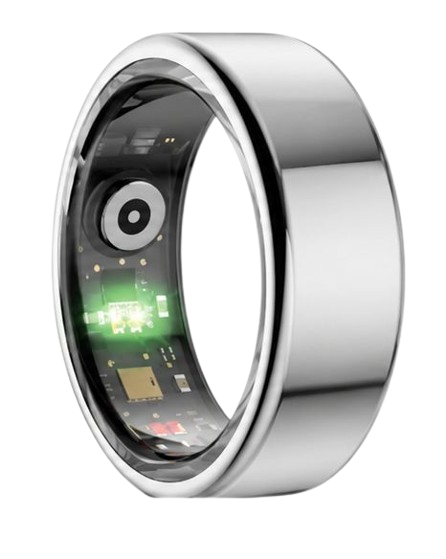
The Herz P1 Smart Ring offers a highly comfortable, subscription-free path to tracking these vital signs.
With clinical accuracy and a durable steel frame, it is the perfect companion for your health journey.
Ready to monitor your health every day? Explore the Herz P1 Smart Ring and see if it fits your lifestyle. Call: 1-866-479-1629 — our team can help you advise on the correct ring size and set personalized health goals.
