

Understanding how many breaths per minute is normal while sleeping is critical to protecting your long-term cardiovascular health. If you struggle with daytime fatigue, wake up gasping for air, or feel constantly exhausted despite spending eight hours in bed, tracking these subtle nocturnal signals can reveal hidden respiratory struggles. The Herz P1 smart ring monitors your sleep patterns, heart rate variability, and oxygen saturation continuously without any monthly fees to help you reclaim your energy.
Built to Last. Save Up to 69% Today.
The Herz P1 Smart Ring tracks HRV, Sleep, Heart Rate & SpO2 around the clock. No subscriptions. No renewals. Ever.
In This Article
- Nocturnal Respiration Baselines: Discover the biological numbers that define healthy sleep.
- The Physiology of Sleep Breathing: Learn how autonomic control stabilizes your airways overnight.
- Cardiorespiratory Metrics: Explore how blood oxygen levels, heart rate, and respiration interact.
- Smart Sensor Analysis: Unpack the optical technology used to monitor your wellness metrics quietly.
How Many Breaths per Minute is Normal While Sleeping? The Clinical Baseline

Your resting respiration rate is a vital biometric indicator that reflects your overall pulmonary and cardiovascular efficiency.
For a healthy adult, a normal sleeping respiratory rate typically ranges from 12 to 20 breaths per minute.
This range represents the average breaths per minute while sleeping when your body is in a state of rest.
During deep non-rapid eye movement sleep, your body requires less active oxygen delivery to major skeletal muscle groups.
This biological shift naturally causes your breathing rate to slow down and become highly structured.
In contrast, rapid eye movement sleep brings vivid dreams and sporadic autonomic nervous system activation.
This phase often causes your breathing pattern to fluctuate and speed up for short intervals.
Understanding your normal respiration rate while sleeping can help you identify chronic sleep fragmentation early.
If your sleep respiratory values consistently exceed 20 breaths per minute, your body may be working overtime to oxygenate your tissues.
Conversely, an average respiration rate while sleeping that drops below 12 breaths per minute could point to physiological anomalies.
Our autonomic respiratory center resides in the medulla oblongata and pons within the brainstem.
This command center receives continuous feedback from central chemoreceptors sensitive to carbon dioxide accumulation.
When carbon dioxide levels rise slightly, the brainstem sends immediate electrical signals to your diaphragm to initiate inhalation.
The National Sleep Foundation emphasizes that subtle deviations from these base sleep metrics often precede visible physical symptoms.
The American Heart Association also notes a clear relationship between elevated nocturnal breathing rates and increased cardiovascular strain.
By capturing these fluctuations early, you can take control of your long-term cardiac and pulmonary wellness.
If you want to track this in real time, the Herz P1 Smart Ring monitors your breathing rate, oxygen saturation, and sleep stages 24/7 — explore it here.
90-Day 100% Money-Back Guarantee
“The Herz Smart Ring helps me manage stress easily. It’s accurate, stylish, and lightweight—perfect for my busy life!”
— Jennifer P. | ✔ Verified Customer
- ✓ 6-Day Battery Life
- ✓ Detailed Sleep Analysis
- ✓ Fast 1-Hour Charging
- ✓ iOS & Android Ready
Questions? Call: 1-866-479-1629
How Smart Sensors Track Sleep Architecture and Respiratory Cycles

Modern wearable sensors do not physically measure airflow entering your nose or mouth.
Instead, they utilize a clinical technique known as photoplethysmography to infer your average breaths per minute sleep.
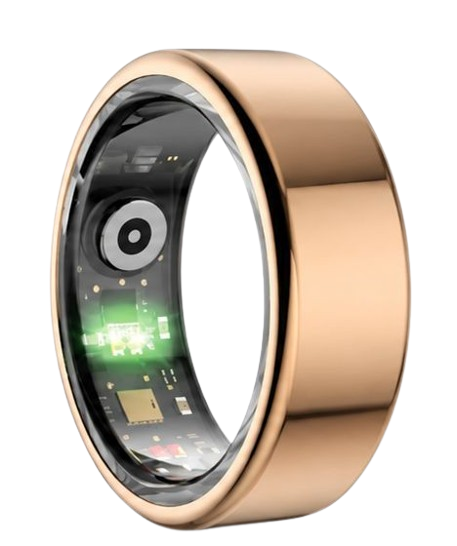
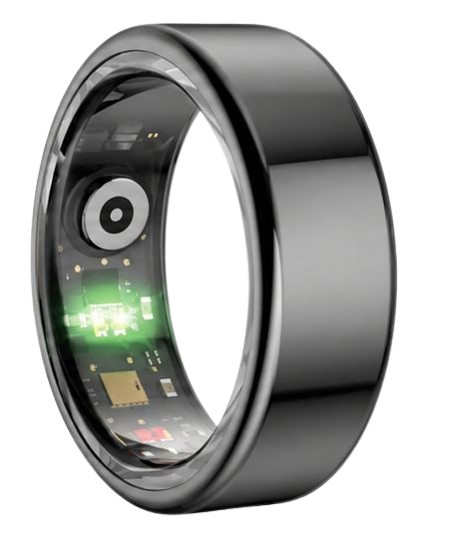
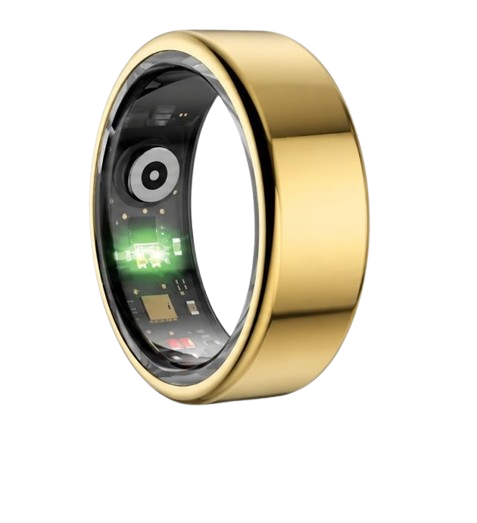
The Herz P1 Smart Ring features a highly sensitive optical sensor array located on the palmar side of your finger.
This surface contains a dense network of superficial capillaries that swell and contract with every heartbeat.
As blood pulses through these capillaries, the ring’s multi-wavelength optical sensors emit light into the skin tissue.
The sensor then measures the exact amount of light absorbed or reflected back to the photodiode.
Your respiratory cycles naturally modulate your heart rate through a physical process called respiratory sinus arrhythmia.
When you inhale, your heart rate speeds up slightly to optimize blood oxygenation.
When you exhale, your heart rate slows down to conserve cardiovascular energy.
By analyzing these micro-variations in your heart rhythm, the Herz P1 can determine your normal sleeping breath rate with incredible precision.
The National Sleep Foundation validates that this cardiac-linked respiratory tracking mirrors traditional chest-strap measurements.
Our device runs advanced digital filtering algorithms to isolate clean blood volume pulses from motion artifacts.
This means your occasional toss-and-turn movements during the night will not skew your structural breathing calculations.
The result is a highly reliable sleep report that displays your exact breathing metrics hour by hour.
You can identify exactly when your body shifts from light sleep into restorative deep sleep.
This continuous monitoring acts as an early warning system for your autonomic health.
What Your Respiration Rates Say About Daily Stress and Recovery

Your night-time respiration rate does not operate in a physiological vacuum.
It is intimately connected to your autonomic nervous system balance and daily stress loads.
When you experience chronic daytime stress, your sympathetic nervous system remain active long after you turn off the lights.
This sympathetic dominance keeps your body in a subtle “fight or flight” state during sleep.
Consequently, your normal respiration rate for adults sleeping may increase toward the upper limits of the healthy range.
This sustained elevation prevents your body from dropping into deep, physically restorative sleep phases.
When you prioritize active stress management, your parasympathetic branch takes the lead at night.
This shift encourages your muscular system to relax, allowing your diaphragm to expand and contract smoothly.
This relaxed state leads to your ideal breaths per minute while sleeping, which usually hovers between 12 and 15 bpm.
The American Heart Association emphasizes that high nocturnal respiration rates often correlate with lowered heart rate variability.
A lower heart rate variability indicates that your heart is less responsive to physiological recovery demands.
By tracking these metrics side-by-side, you can see how daytime stressful events impact your sleep structure.
Our research shows that physical exhaustion, late-night alcohol intake, and high bedroom temperatures can also drive respiration up.
If you observe a sudden spike in your respiratory rate, it is often a sign that your body is fighting off a subclinical illness.
The Herz P1 Smart Ring presents this cardiorespiratory correlation clearly inside its companion app.
This presentation makes it easy to spot trends and adjust your sleep hygiene habits accordingly.
By observing these patterns, you can make informed decisions to optimize your physical recovery.
The Practical Guide to Reading Sleep Data on the Herz P1 App
Navigating your biometric data should never feel like deciphering complex medical jargon.
The Herz P1 companion app simplifies your overnight metrics into intuitive, visual dashboards.
When you open the app each morning, you are greeted by an overall Sleep Quality Score.
This unified score is calculated by weighing your sleep duration, sleep stages, heart rate variability, and respiratory consistency.
Below this score, you will find a dedicated section for your Sleep Respiration Rate.
The app displays your average breaths per minute alongside a timeline of your overnight breathing patterns.
You can easily see if your breathing became shallow or erratic during specific sleep cycles.
The interface also overlays your blood oxygen saturation trends onto your respiratory graph.
If your oxygen saturation remains steady between 95% and 100%, your respiratory cycles are working effectively.
A sudden drop in oxygen levels matching an irregular breathing segment suggests minor airway obstruction.
The app flags these specific events as “Oxygen Drops” so you can keep a close eye on potential breathing anomalies.
Furthermore, the Herz P1 allows you to export your data trends over weeks or months into a clean report.
This report is incredibly useful to share with your personal trainer, wellness coach, or family doctor.
By viewing your long-term data trends, you can easily verify if your new evening meditation routine is actually lowering your resting respiration.
The app runs completely locally and stores up to seven days of historical data directly on the ring without a smartphone nearby.
This local storage ensures you never lose vital sleep insights, even if you travel without your phone.
Overcoming Common Wearable Mistakes and Comfort Pain Points
Many individuals struggle to track their sleep metrics because traditional wearables are physically uncomfortable.
Bulky smartwatches often pinch the skin, catch on bedsheets, or cause excessive sweating overnight.
This physical irritation can disrupt your natural sleep architecture and artificially elevate your respiration.
The Herz P1 Smart Ring addresses this problem with its lightweight, military-grade stainless steel construction.
Weighing only 3 grams, the ring is incredibly sleek and comfortable to wear to bed.
You will barely notice it on your finger, allowing you to sleep in your preferred position without disruption.
Another major frustration with traditional wearables is their short battery life.
Having to charge a smartwatch every single night defeats the entire purpose of overnight biometric tracking.
The Herz P1 features an optimized battery that lasts up to six days on a single charge.
When the battery eventually runs low, it charges fully in under an hour using the included magnetic dock.
We have also eliminated the predatory monthly subscription models favored by other smart ring brands.
Many competitors lock your deep biometric analyses behind an expensive monthly paywall.
With the Herz P1, you pay once for the hardware and receive lifetime access to the entire app features.
This means your sleep monitoring remains affordable, transparent, and entirely under your control.
We believe that access to personal health metrics should be a fundamental right, not an ongoing subscription service.
Comparative Analysis: Sleep Tracking Accuracy Across Platforms
Understanding how different devices measure your vitals helps you make an informed decision for your health.
The table below outlines key features and specifications across major wearable categories.
| Metric / Feature | Herz P1 Smart Ring | Bulky Smartwatches | Traditional Chest Straps |
|---|---|---|---|
| Battery Longevity | 6 full days of continuous use | 1 to 2 days maximum | Typically replaceable cell batteries |
| Ongoing Subscription Fees | $0 — Lifetime Free App | Varies (many lock sleep features) | No fee (limited app features) |
| Overnight Wearing Comfort | Ultra-lightweight (3g), non-intrusive | Heavy, prone to catch on sheets | Constricting elastic band around chest |
| Waterproof Rating | IP68 certified (safe for swimming) | IP67 or variable water resistance | Splashproof only (not for swimming) |
This comparison demonstrates why the Herz P1 has become a popular choice for busy, health-conscious professionals.
It provides clinical-grade sleep diagnostics without compromising your physical comfort or pocketbook.
Frequently Asked Questions About Sleep Respiration
Is the Herz P1 Smart Ring waterproof?
Yes, the Herz P1 features a robust IP68 waterproof rating that allows for continuous submersion.
You can wear it safely while swimming, showering, washing your hands, or sweating during intense workouts.
Our military-grade steel outer shell protects the delicate internal sensors from high water pressure and moisture.
You do not need to take the ring off during your daily routines, which ensures continuous tracking.
How long does the battery last on a single charge?
The optimized battery inside the Herz P1 provides up to six days of continuous 24/7 biometric tracking.
This impressive longevity is achieved through smart power-saving sensor protocols and Bluetooth Low Energy connection.
When you need to recharge, the ring charges from zero to one hundred percent in under one hour.
You can quickly charge it while taking a morning shower to ensure you never miss any valuable sleep metrics.
Which finger is best to wear the Herz P1 smart ring on?
We recommend wearing the Herz P1 on your index, middle, or ring finger for the most accurate sensor readings.
The blood vessels in these specific fingers are closer to the skin surface, which optimizes the PPG light reflection.
You should choose a finger where the ring fits snugly but comfortably without spinning freely during normal hand movements.
Our complimentary sizing kit makes it easy to find the perfect fit before finalizing your ring size.
Does the Herz P1 store my health data offline?
Yes, the ring contains a secure onboard memory module that stores up to seven days of biometric data offline.
You do not need to keep your smartphone nearby or connected to Bluetooth during the night to record your sleep.
The next time you open the companion app, the ring will automatically sync your stored data to your phone.
This local storage feature gives you complete freedom to disconnect from screens while protecting your sleep environment.
Conclusion
Monitoring your nocturnal breathing is a powerful step toward reclaiming your energy, physical recovery, and cardiovascular wellness.
The subscription-free Herz P1 Smart Ring offers continuous, clinical-grade sleep insights packaged inside a beautiful military-grade ring.
Ready to monitor your health every day? Explore the Herz P1 Smart Ring and see if it fits your lifestyle. Call: 1-866-479-1629 — our team can help you advise on the correct ring size and set personalized health goals.
Note: Individual results may vary depending on individual health conditions, age, and lifestyle habits. This article is intended for general health reference purposes only.
