

If you are an elite competitor or a dedicated fitness enthusiast, finding your weekly average hrv over 100 can feel like achieving a gold medal in physiological recovery. Understanding what this benchmark truly means for your cardiac conditioning, systemic stress, and daily energy reserves requires looking at precise biometric science. At Herz P1, we know that decoding these complex body signals is the key to preventing burnout, and our team has created this comprehensive guide to help you evaluate your conditioning with absolute confidence.
Built to Last. Save Up to 69% Today.
The Herz P1 Smart Ring tracks HRV, Sleep, Heart Rate & SpO2 around the clock. No subscriptions. No renewals. Ever.

In This Article
- The Core Science: Discover why having an HRV over 100 is typically a sign of elite cardiovascular efficiency.
- Physiological Mechanisms: Learn how the autonomic nervous system influences your high resting metrics.
- Athletic Conditioning: Explore the relationship between physical training, recovery speed, and high readings.
- Wearable Tech Insights: See how optical sensors in smart rings track heart rate variability.
Is Having an HRV Over 100 Healthy for Athletes? The Science Explained
Heart rate variability, or HRV, measures the specific time differences in milliseconds between consecutive heartbeats.
This metric serves as a direct window into your autonomic nervous system.
For most healthy adults, average resting HRV scores range between 20 and 60 milliseconds.
However, highly conditioned athletes frequently exhibit a baseline hrv over 100.
To understand who should care about this, we must look at runners, cyclists, lifters, and anyone undergoing heavy physical conditioning.
These individuals require precise data to manage their recovery timelines and avoid overtraining.
The best time to analyze these scores is during sleep, when external mental stressors are entirely minimized.
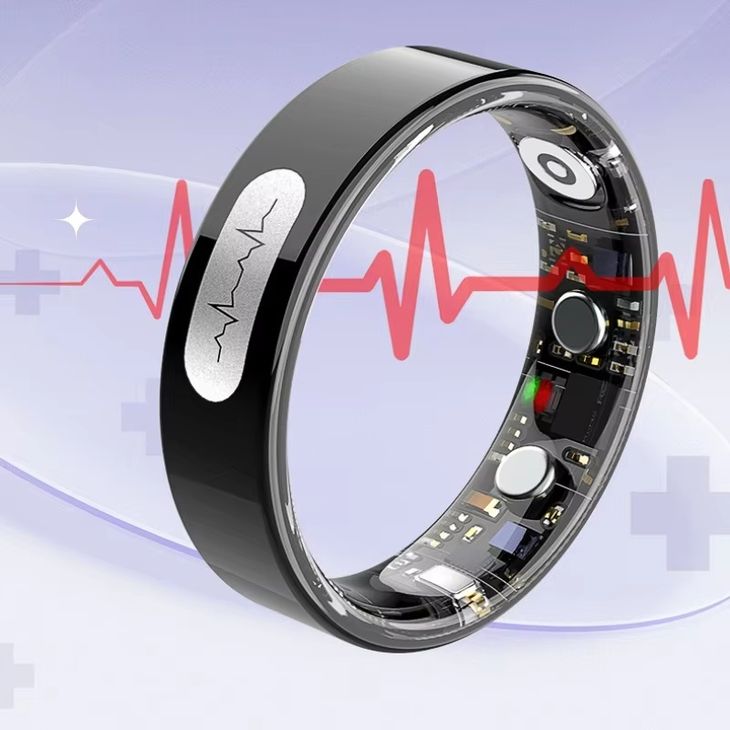
This tracking occurs directly on the skin via advanced photoplethysmography sensors embedded in smart rings.
The primary reason a high score happens is due to parasympathetic nervous system dominance.
A strong vagal tone slows the heart rate and allows for significant variation between beats.
Physiologically, a highly trained heart does not tick like a rigid metronome.
Instead, it adapts dynamically to every micro-demand of respiration, which produces highly variable intervals.
Quantitatively, achieving a baseline value this high means your cardiovascular system is exceptionally resilient.
If you want to track this in real time, the Herz P1 Smart Ring monitors heart rate variability 24/7 — explore it here.


90-Day 100% Money-Back Guarantee
“The Herz Smart Ring helps me manage stress easily. It’s accurate, stylish, and lightweight—perfect for my busy life!”
— Jennifer P. | ✔ Verified Customer
- ✓ 6-Day Battery Life
- ✓ Detailed Sleep Analysis
- ✓ Fast 1-Hour Charging
- ✓ iOS & Android Ready
Questions? Call: 1-866-479-1629
The Physiology of a High HRV Resting Score and Athletic Performance
To truly understand your heart, you must analyze how the sympathetic and parasympathetic pathways interact.
The American Heart Association notes that higher variability generally reflects a healthy, adaptable cardiovascular system.
When you maintain a high hrv resting score, it indicates your body is highly efficient at regulating systemic stress.
For athletes, this represents an expanded capacity to handle intense training volumes without burning out.
In endurance sports, competitors naturally develop the highest heart rate variability baselines due to structural cardiac remodeling.
Their left ventricles become larger and more compliant, pumping more blood with far fewer beats per minute.
This structural change increases resting stroke volume and allows the parasympathetic vagus nerve to exerts superior control.
If you regularly observe an hrv 120 resting average, your system is operating with incredible metabolic efficiency.
This state means you can aggressively attack high-intensity workouts with minimal risk of overtraining.
However, baseline biometrics are highly individual, and tracking your specific trends is far more important than comparing scores to others.
Many active individuals observe their peak values, such as an hrv over 100 while sleeping, because the body is actively repairing muscle tissue and restoring cognitive energy.
During the deep stages of non-REM sleep, the brain actively downregulates sympathetic drive to promote physical cellular repair.
Using the Herz P1 Smart Ring allows you to capture these critical sleep trends without wearing a heavy, glowing screen on your wrist.

Decoupling the Data: Can Your Heart Rate Variability Be Too High?
A highly common question among biohackers and endurance competitors is: can your hrv be too high?
In most athletic scenarios, a elevated score is a badge of superior aerobic conditioning.
Yet, there are rare occasions where an abnormally high reading points to physiological anomalies rather than peak fitness.
For example, if you see an unexpected spike to an hrv 200 when your typical baseline is 70, it might not indicate superhuman recovery.
Instead, sudden, massive spikes can occasionally point to cardiac arrhythmias, such as premature atrial contractions.
When the heart experiences ectopic beats, the time intervals between pulses become extremely irregular.
Consumer wearable algorithms may misinterpret this irregular rhythm as a highly favorable resting variability score.
This is why you must pay attention when you observe a much higher hrv than normal without any changes in your training or recovery protocols.
If you ask yourself why does my hrv fluctuate so much, the answer often relates to hidden stressors or recovery imbalances.
For instance, acute alcohol intake, dehydration, or subclinical infections will cause your resting scores to plummet.
Conversely, a sudden dramatic spike accompanied by a abnormally low resting heart rate can occasionally signal overreaching or autonomic fatigue.
To make sense of these complex dynamics, you must evaluate the relationship of high vs low hrv over a multi-week rolling average.
The Herz P1 Smart Ring automatically establishes your personal baseline over a 14-day tracking period.
By comparing your nightly readings against this established baseline, the companion app filters out temporary anomalies to deliver accurate, actionable insights.
How to Leverage Your Herz P1 App Data for Peak Conditioning
Unlocking the full power of your biometric data requires translating daily numbers into smart training adjustments.
When you open the Herz P1 companion app, look first at your morning recovery score.
If your heart rate variability is trending above your personal baseline, your nervous system is fully prepared for a high-intensity session.
This is the perfect day to execute heavy squats, high-intensity interval training, or long endurance runs.
Conversely, if your resting score drops significantly below your baseline, your autonomic nervous system is fighting off stress.
On these low-recovery days, we advise pivoting to active recovery, light stretching, or complete resting cycles.
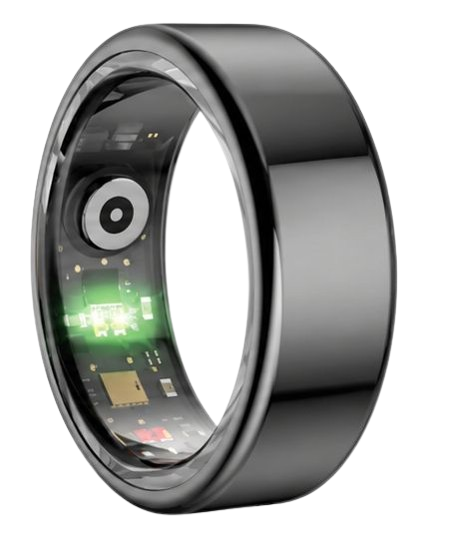
The Herz P1 Smart Ring makes tracking these patterns effortless because of its ultra-lightweight, 3.5-gram military-grade steel construction.
Unlike bulky smartwatches that pinch the wrist and require daily charging, the Herz P1 slips onto your finger and runs for 6 continuous days.
This long-lasting battery life ensures you never miss a critical night of sleep stage data.
The ring utilizes green, red, and infrared optical sensors to monitor your blood oxygen saturation (SpO2) and heart rate variations every five minutes.
By capturing these metrics continuously, the app provides a highly comprehensive map of your daily cardiovascular stress.
Overcoming Risks: Common Wearable Pitfalls and Hidden Costs
Many wellness seekers purchase expensive health trackers only to abandon them due to physical discomfort or unexpected fees.
Wearing a heavy smartwatch to bed frequently disrupts sleep architecture, which defeats the purpose of sleep tracking.
Additionally, many premium smart rings on the market require ongoing monthly app subscriptions to access your personal data.
At Team Herz P1, we believe your health data belongs entirely to you, which is why our companion app is free for a lifetime.
There are no hidden monthly fees, paywalled metrics, or surprise renewal charges to worry about.
Another common mistake is choosing a fragile tracker that cannot withstand the daily wear and tear of gym sessions.
The Herz P1 is built from military-grade steel and carries an IP68 waterproof rating, making it completely safe up to 164 feet of water depth.
Whether you are sweating through a heavy lifting session, swimming laps, or showering, the ring remains securely on your finger.
Frequently Asked Questions About Heart Rate Variability
Is the Herz P1 Smart Ring fully waterproof?
Yes, the Herz P1 features a certified IP68 waterproof rating that allows for continuous submersion up to 164 feet.
You can wear it safely while swimming laps, taking hot showers, or relaxing in the sauna without interrupting your health tracking.
How long does the ring battery last on a single charge?
The Herz P1 delivers a reliable 6-day battery life under standard 24/7 monitoring conditions.
When the battery runs low, the ring fully recharges in under 1 hour using the included rapid magnetic charging dock.
Which finger is best for tracking accuracy?
We recommend wearing the Herz P1 on your index, middle, or ring finger of your non-dominant hand for the highest signal quality.
The index finger generally contains the highest density of superficial blood vessels, which optimizes the accuracy of the optical sensors.
Does the Herz P1 Smart Ring store biometric data offline?
Yes, the ring features local memory capable of securely storing up to 7 days of raw biometric data offline.
Once you open the companion app, the ring automatically syncs all stored metrics to your smartphone via Bluetooth.
Conclusion
An HRV score over 100 is a powerful indicator of elite athletic recovery and autonomic health.
The key to optimizing this metric is tracking your long-term resting trends with medical-grade precision.
Ready to monitor your health every day?
Explore the Herz P1 Smart Ring and see if it fits your lifestyle.
Call: 1-866-479-1629 — our team can help you advise on the correct ring size and set personalized health goals.
Note: Individual results may vary depending on individual health conditions, age, and lifestyle habits. This article is intended for general health reference purposes only.
