

Finding an overnight hrv 200 reading on your dashboard can feel both exciting and confusing. Many active individuals worry whether such a high number indicates peak cardiovascular recovery or an underlying medical concern. If you want to demystify your body’s heart signals without paying expensive subscription fees, the Herz P1 Smart Ring provides precise, clinical-grade tracking to help you understand your resting heart rate variability trends overnight.
Built to Last. Save Up to 69% Today.
The Herz P1 Smart Ring tracks HRV, Sleep, Heart Rate & SpO2 around the clock. No subscriptions. No renewals. Ever.
In This Article
- Demystifying an HRV of 200: Learn whether a score of 200 ms is normal, high, or a sign of superior health.
- Autonomic Nervous System Science: Understand parasympathetic vs sympathetic systems and RMSSD trends.
- Sensors and Biometric Accuracy: Explore how optical smart rings monitor capillary pulse waves.
- Actionable Recovery Planning: Discover how to use your daily biometric data to structure workouts and rest.
- Overcoming Tracking Pitfalls: Solve sizing issues and eliminate hidden monthly subscription app costs.
Is an HRV of 200 Normal or Too High for Rest? Here Is What the Data Says

Heart rate variability, commonly known as HRV, measures the slight time variations between consecutive heartbeats.
A resting hrv 200 reading represents a highly dynamic and flexible autonomic nervous system.
To understand this value, we must look at the millisecond variations between each individual pulse peak.
Most consumer wearables calculate this number using a mathematical formula called the root mean square of successive differences.
For a typical adult, normal resting values usually cluster within the range of 20 to 80 milliseconds.
When you record a resting HRV that consistently reaches 200 ms, you are in an exceptionally high bracket.
This phenomenon is most frequently observed in elite endurance athletes who train their hearts for extreme efficiency.
These individuals develop strong heart muscles and high stroke volumes through rigorous aerobic conditioning.
Their resting heart rates are often very low, sometimes dropping into the high 30s or low 40s.
A low resting heart rate allows more time between beats, which naturally increases the potential for higher variance.
This high variance is controlled by the vagus nerve, which acts as the main pathway of your parasympathetic nervous system.
The vagus nerve releases a neurotransmitter called acetylcholine to actively slow down your heart rhythm during rest.
When this rest-and-digest system is highly active, your heart rate accelerates slightly when you inhale and slows when you exhale.
This natural rhythm is known as respiratory sinus arrhythmia and is a strong indicator of cardiovascular health.
According to clinical studies published by the American Heart Association, a robust vagal tone helps protect against stress and inflammation.
However, we must also consider whether such a high number can sometimes indicate a potential clinical issue.
In rare cases, a sudden jump to a resting hrv of 200ms can be caused by cardiac electrical abnormalities.
Conditions such as premature atrial contractions or atrial fibrillation can cause the heart to beat at highly irregular intervals.
If a wearable sensor measures these chaotic, irregular beats, it will interpret them as an incredibly high HRV score.
This is why you must always evaluate your high metrics alongside your physical symptoms and overall energy levels.
If you feel lightheaded, short of breath, or experience chest tightness, a clinical electrocardiogram is necessary.
If you are asymptomatic, energetic, and fully rested, then a high score is almost always a sign of peak recovery.
The National Sleep Foundation highlights that deep sleep is the optimal window for measuring your true baseline recovery.
During these deep sleep cycles, physical movement is minimal and your sympathetic fight-or-flight drive is completely quiet.
This quiet state provides the cleanest data for optical sensors to capture your true parasympathetic activity.
This is where high-precision smart rings excel compared to older wrist-worn fitness trackers.
If you want to track this in real time, the Herz P1 Smart Ring monitors cardiac metrics 24/7 — explore it here.
90-Day 100% Money-Back Guarantee
“The Herz Smart Ring helps me manage stress easily. It’s accurate, stylish, and lightweight—perfect for my busy life!”
— Jennifer P. | ✔ Verified Customer
- ✓ 6-Day Battery Life
- ✓ Detailed Sleep Analysis
- ✓ Fast 1-Hour Charging
- ✓ iOS & Android Ready
Questions? Call: 1-866-479-1629
What Your HRV Score Actually Tells You — And How to Analyze It

Analyzing your personal data requires a clear understanding of high vs low hrv and what they mean for your body.
A low score typically indicates that your body is currently experiencing physical, emotional, or environmental stress.
This stress forces your sympathetic nervous system to take control, keeping your heart beating at a rigid, uniform pace.
When this happens, your body is prioritizing immediate survival or adaptation over deep recovery and cell repair.
Conversely, a high score demonstrates that your nervous system is relaxed, balanced, and ready to take on new challenges.
Seeing an hrv over 100 is a common target for biohackers and health-conscious individuals.
It proves that your daily lifestyle habits, such as clean nutrition, regular exercise, and good sleep, are working.
But when your score reaches a 200 hrv, you might wonder if there is an upper limit to this benefit.
People frequently ask can your hrv be too high during periods of deep relaxation.
The simple answer is that a high score is exceptionally healthy as long as it aligns with your normal baseline.
Our bodies are highly unique, and there is no single target number that fits every individual.
A healthy young athlete might naturally maintain a baseline around 150 ms, making a peak of 200 ms perfectly normal.
However, an older adult with a typical baseline of 30 ms would find a sudden spike to 200 ms highly unusual.
This is why you should focus on your personal weekly trends rather than comparing your scores to other people.
A smart ring helps you establish this crucial baseline by tracking your metrics continuously over several weeks.
By establishing this baseline, you can easily spot when a high number is a true reflection of recovery.
It also helps you identify whether your body is overcompensating for high stress by forcing parasympathetic dominance.
This overcompensation, known as parasympathetic overshoot, can occur after extreme endurance events like marathons.
During a parasympathetic overshoot, your nervous system forces your heart to slow down dramatically to protect your cardiovascular system.
Your wearable will record a very high score, but you will feel heavy, sluggish, and physically exhausted.
This is why pairing your quantitative data with qualitative self-reflection is the key to successful health tracking.
The Herz P1 Smart Ring provides these detailed historical trends without any monthly paywalls, making tracking simple and affordable.
The Science of Optical Sensors: How Wearables Track Overnight Cardiac Signals

To trust these high biometric readings, we must understand the technology that captures them overnight.
Most modern consumer wearables use optical sensors to perform photoplethysmography.
These sensors project light into your skin and measure the light absorption changes caused by blood pulses.
Each time your heart beats, a wave of blood rushes through your local capillaries, absorbing more light.
By measuring the precise timing between these blood waves, the device calculates your pulse rate intervals.
The location of these optical sensors plays a massive role in the overall accuracy of your data.
Smart rings are worn on the finger, where the digital arteries are highly accessible and close to the skin.
This location provides a remarkably strong and clean signal compared to wrist-worn devices.
Smartwatches must read blood flow through the top of the wrist, where bone and tendon structures can block the light.
Furthermore, watches easily shift and slide when you turn over in bed, causing major motion artifacts.
These motion errors can lead to missed pulse waves and highly inaccurate heartbeat interval calculations.
If a device misses a beat, it will record an artificially long interval, resulting in a false higher hrv than normal score.
This can mislead you into believing you are fully recovered when your body is actually under stress.
A stable, snug-fitting smart ring avoids these issues by staying in perfect contact with your skin all night.
This continuous contact is vital for tracking an hrv over 100 while sleeping with absolute confidence.
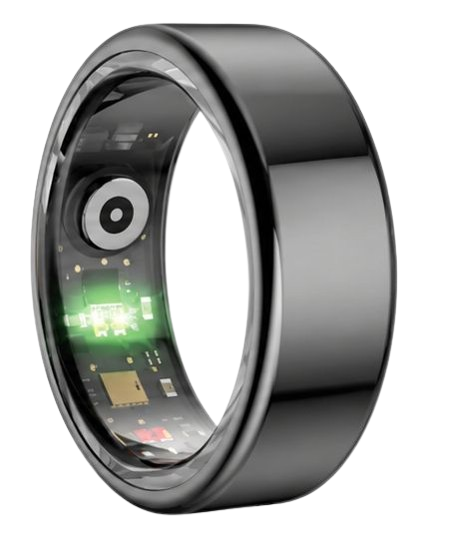
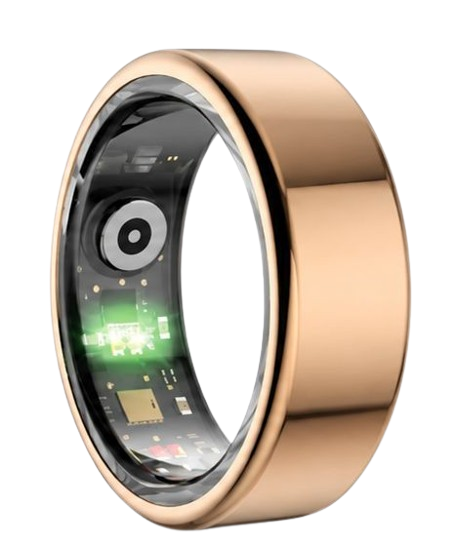
Our Team Herz P1 engineers designed the ring with three high-performance, multispectral LED sensors.
These sensors utilize green, red, and infrared light wavelengths to penetrate the skin at optimal depths.
The infrared light is particularly effective because it is highly sensitive to oxygenated hemoglobin levels.
This allows the ring to monitor both your cardiac intervals and your blood oxygen saturation, or SpO2.
An advanced 3-axis accelerometer works alongside the optical sensors to filter out any minor hand movements.
This hardware combination results in a tracking system with an incredibly low margin of error under 2%.
You can sleep peacefully knowing that every peak, dip, and wave is being recorded with clinical-grade precision.
Practical Application: Reading Your Recovery Data to Plan Your Day
Establishing your baseline is only the first step toward optimizing your daily physical wellness.
The real value comes from applying this biometric data to your daily exercise and recovery routines.
Every morning, the Herz P1 App automatically syncs with your ring to compile your overnight metrics.
It translates your heart rate, sleep quality, and cardiac variability into a single recovery score.
If your dashboard shows an is hrv of 200 good rating, your body is ready for peak performance.
This is the perfect day to tackle your most challenging workouts, like high-intensity interval training.
Your nervous system is highly resilient, meaning it can handle deep physical stress and bounce back quickly.
If your daily reading sits closer to a stable hrv 100, you are in a balanced, healthy zone.
This indicates a reliable baseline that supports steady-state cardio, moderate resistance training, or busy workdays.
When your recovery score climbs slightly to an hrv 120, your body is showing excellent adaptation to recent workouts.
You can use these positive trends to safely push your fitness boundaries without risking overtraining.
On the other hand, a sudden drop below your typical weekly average is a clear warning sign from your body.
A low recovery score indicates that your sympathetic nervous system is working hard to combat fatigue or stress.
If you push through a heavy workout on a low-recovery day, you risk injuring yourself or weakening your immune system.
Instead, you should modify your plans by opting for a restorative yoga session or a light walk.
This data-informed approach helps you prevent burnout, reduce chronic stress, and maintain consistent fitness progress.
The Herz P1 Smart Ring makes this entire process effortless by giving you clear, actionable advice every single morning.
Overcoming Smart Ring Tracking Pitfalls and the Hidden Costs of Wearables
While smart rings are incredibly powerful tools, many users fall into common tracking mistakes that ruin their data.
The most frequent error is wearing a ring that is either too loose or too tight on the finger.
A loose ring will rotate during the night, causing the optical sensors to lose contact with your digital arteries.
This can lead to massive data gaps and prevent the device from recording your true overnight metrics.
Without steady contact, your device cannot capture your highest heart rate variability during deep sleep states.
To prevent this, Team Herz P1 provides a free, highly detailed plastic sizing kit with every single order.
We recommend wearing a sample sizer ring for a full 24 hours to observe how your finger expands and contracts.
Your fingers naturally swell at night and during warm weather, which can affect the overall fit.
The perfect size should feel snug but comfortable, allowing you to slide the ring off without painful pulling.
Another major mistake is wearing heavy, bulky smartwatches to bed for sleep tracking purposes.
These large watches often press uncomfortably into your skin, causing sweating and waking you up overnight.
They also require daily charging, which frequently results in users leaving their devices on the charger overnight.
This completely defeats the purpose of tracking your continuous, long-term sleep architecture trends.
The Herz P1 Smart Ring is crafted from military-grade steel and weighs a mere 3.5 grams for ultimate comfort.
It offers a sleek, lightweight profile that feels completely weightless on your finger while you rest.
Additionally, many wearable brands trap your health data behind expensive monthly app subscription paywalls.
They expect you to pay an ongoing fee just to view the biometric data that your body generated.
We believe that health tracking should be accessible, transparent, and completely free of recurring costs.
The Herz P1 requires absolutely no monthly subscription, giving you lifetime access to all app features for free.
By choosing a durable, subscription-free smart ring, you invest in a lifetime of health tracking without any hidden costs.
Frequently Asked Questions About Biometric Smart Rings
Is the Herz P1 Smart Ring waterproof?
Yes, the Herz P1 Smart Ring features a premium IP68 waterproof rating.
It is fully certified for continuous submersion in water up to 164 feet deep.
You can safely wear it while swimming laps, taking hot showers, or relaxing in a steam sauna.
The hermetically sealed outer shell protects the delicate internal sensors from any moisture damage.
How long does the Herz P1 battery last on a single charge?
The Herz P1 is equipped with a highly optimized battery that lasts up to 6 full days of continuous use.
This long battery life is made possible by our ultra-efficient, power-saving biometric sensors.
When the battery runs low, the included magnetic charging cradle charges the ring to 100% in under 1 hour.
This fast charging cycle makes it incredibly easy to maintain a seamless, 24/7 tracking routine.
Which finger is best to wear my smart ring on for the best accuracy?
We highly recommend wearing the smart ring on your index finger for the most accurate biometric readings.
The middle finger and ring finger are also excellent choices if you prefer a different fit or style.
These fingers contain prominent digital arteries close to the skin surface, which provides highly stable PPG signals.
Avoid wearing the ring on your thumb or pinky finger, as these locations can result in degraded tracking quality.
Does the Herz P1 store health data offline when my phone is away?
Yes, the smart ring features built-in offline storage that holds up to 7 days of continuous biometric data.
You can confidently go for a run, swim, or sleep without keeping your smartphone nearby.
The moment you open the Herz P1 App, all your offline data will sync automatically to your dashboard.
This ensures you never lose a single minute of valuable cardiac, sleep, or stress metrics.
Conclusion
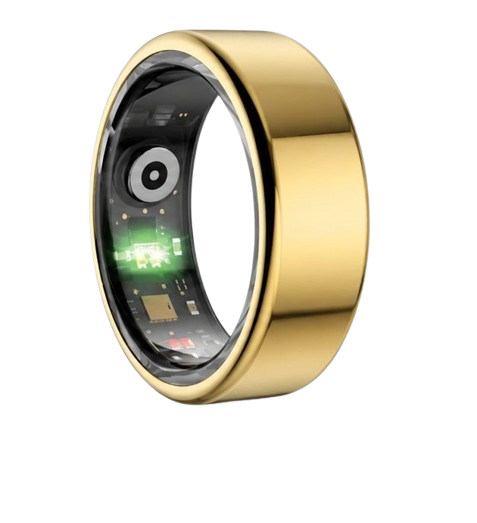
The Herz P1 Smart Ring is your ultimate subscription-free health companion.
Decode your body’s sleep and heart signals with clinical-grade accuracy.
Explore the Herz P1 Smart Ring today to fit your lifestyle. Call 1-866-479-1629 to consult on ring sizing and set your personal health goals.
