

Your body undergoes a profound metabolic shift during overnight rest, leaving many to wonder exactly how low should your heart rate get when you sleep. While a low resting pulse is often a sign of cardiovascular efficiency, extreme drops can sometimes raise medical questions. Fortunately, Team Herz P1 is here to guide you through sleep bradycardia limits, normal vital trends, and how our subscription-free smart ring helps you monitor your heart health effortlessly every single night.
Built to Last. Save Up to 69% Today.
The Herz P1 Smart Ring tracks HRV, Sleep, Heart Rate & SpO2 around the clock. No subscriptions. No renewals. Ever.
In This Article
- Defining Normal Sleep Ranges: Understand the safe physiological boundaries of overnight heart rates.
- How Smart Rings Track: Unveil the optical sensor mechanics that map your nocturnal biology.
- Safety and Red Flags: Distinguish healthy drops from potential cardiovascular warning signs.
- Practical Application: Learn to use biometric trends to transform your lifestyle, diet, and recovery.
Does Your Heart Rate Drop Safely While You Sleep?
Understanding the physiological mechanics of your heart during rest is the first step toward optimizing your health.
Your sleep heart rate is the average number of times your heart beats per minute while you are fully asleep.
This metric affects every individual, serving as a direct indicator of your autonomic nervous system balance.
This metabolic adjustment occurs primarily during the late-night hours when physical demands are at their absolute lowest.
Inside your body, this process is managed by the sinoatrial node, which receives regulatory signals from your vagal nerve.
The primary reason for this decrease is parasympathetic nervous system dominance during sleep cycles.
Your body actively downregulates stress hormone production and relaxes vascular walls to facilitate deep cell recovery.
But exactly how low does heart rate go when sleeping before it warrants attention?
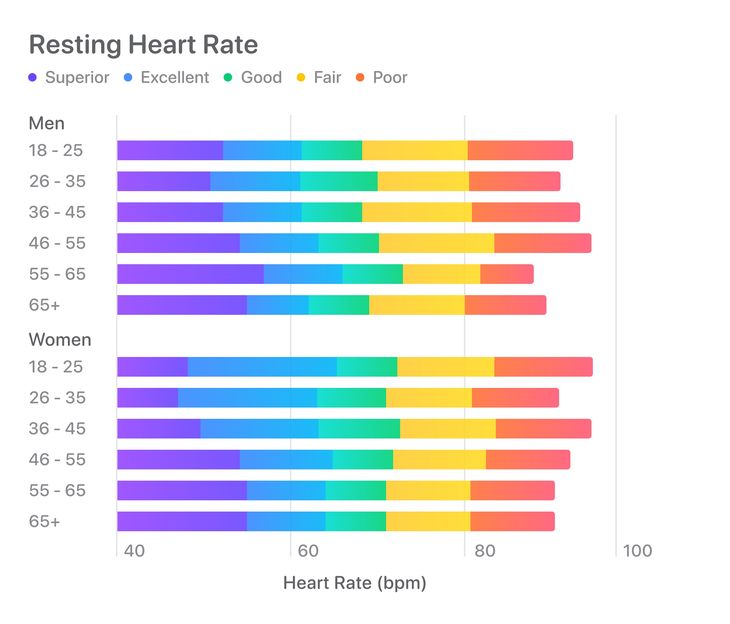
For most healthy adults, a normal sleep pulse rate ranges between 40 and 60 beats per minute.
A healthy resting heart rate drop sleeping should measure between 10% and 20% lower than your waking resting rate.
If you have a daytime resting rate of 65 beats per minute, your sleeping rate might drop to around 52 to 58 beats per minute.
Highly active individuals and trained athletes regularly experience a much lower nocturnal pulse.
For these conditioned individuals, a consistent sleeping heart rate 40 beats per minute is highly common.
Their larger stroke volume allows their heart to pump blood more efficiently with fewer beats.
However, if you are not highly active, a sleeping heart rate 50 beats per minute is still perfectly safe and indicates stable recovery.
Understanding these quantitative ranges allows you to separate normal recovery from potential cardiac warning signs.
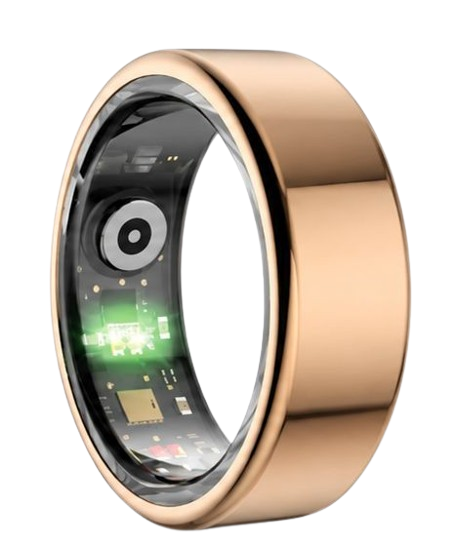
If you want to track this in real time, the Herz P1 Smart Ring monitors your heart metrics 24/7 — explore it here.
90-Day 100% Money-Back Guarantee
“The Herz Smart Ring helps me manage stress easily. It’s accurate, stylish, and lightweight—perfect for my busy life!”
— Jennifer P. | ✔ Verified Customer
- ✓ 6-Day Battery Life
- ✓ Detailed Sleep Analysis
- ✓ Fast 1-Hour Charging
- ✓ iOS & Android Ready
Questions? Call: 1-866-479-1629
How Optical Sensors Decode Sleep Heart Rate
To understand your cardiovascular trends, it is crucial to examine how modern wearables measure your vitals.
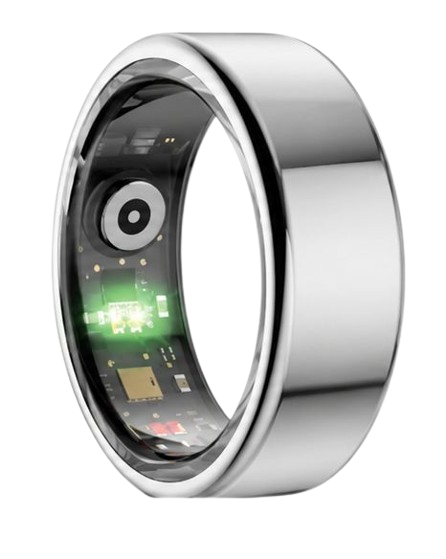
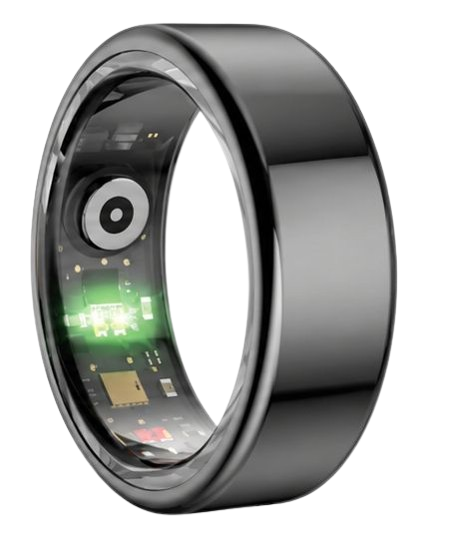
The Herz P1 Smart Ring uses advanced photoplethysmography (PPG) technology to track your vascular changes.
These multispectral optical sensors emit specific light wavelengths through your skin tissue.
The red, green, and infrared lights penetrate your subcutaneous blood vessels at the base of your finger.
As your heart beats, blood volume in your capillaries expands and contracts, changing light absorption.
The smart ring’s photodetector measures these microscopic variations in light reflection to calculate your pulse.
This process is highly accurate because the digital arteries in your fingers are closer to the skin surface than those in your wrist.
This direct arterial access is why the Herz P1 tracks vital signals with clinical-grade accuracy.
Our engineering team has optimized these sensors to register even the most subtle pulse fluctuations.
The sensors easily identify why your heart rate lower when sleeping compared to your active afternoon hours.
During deep sleep stages, blood flow stabilizes, resulting in very clean wave patterns on the sensor.
This stable state allows the ring to document your absolute lowest heart rate during sleep with absolute precision.
The Herz P1 processes this raw data through advanced algorithms to filter out minor hand movements.
This ensures that your overnight trends are free from false spikes or missed beats.
By delivering clean data, we help you understand your nervous system’s recovery without guesswork.
Decoding Sleep Architecture: Deep, REM, and Light Sleep
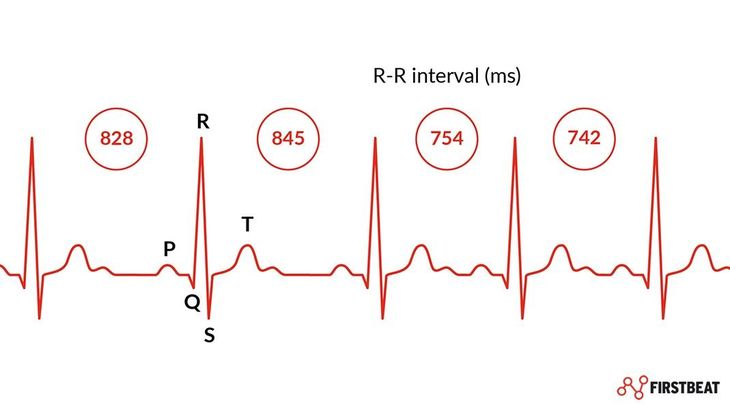
Your nighttime pulse is heavily influenced by the structured phases of your sleep architecture.
Sleep is not a single state of static rest, but rather a sequence of distinct, repeating cycles.
Each cycle consists of light sleep, deep sleep, and Rapid Eye Movement (REM) sleep.
During the initial stages of light sleep, your brain waves slow down and your muscles relax.
This muscle relaxation signals your cardiovascular system to begin easing its workload.
You will observe a noticeable drop in heart rate while sleeping as you transition deeper.
Once you enter deep slow-wave sleep, your body prioritizes tissue repair and immune system strengthening.
Your parasympathetic nervous system reaches peak activity during this highly restorative deep sleep stage.
As a result, your blood pressure lowers, your breathing becomes highly regular, and your pulse stabilizes.
This deep sleep window is when your heart muscle receives its own essential recovery and rest.
Following deep sleep, your brain transitions into the active state of REM sleep.
During REM sleep, your brain activity patterns closely resemble those of your waking hours.
Vivid dreams occur, causing sudden, brief surges in both blood pressure and respiration rates.
This neurological activity causes your heart rate to fluctuate rapidly, sometimes spiking for short intervals.
The Herz P1 Smart Ring maps these architectural shifts by monitoring your vitals every five minutes.
This detailed tracking allows our app to accurately separate healthy fluctuations from sleep disturbances.
When is a Low Sleep Heart Rate Cause for Concern?
While a low overnight pulse is generally a sign of health, certain thresholds require careful monitoring.
If you notice your heart rate drops to 40 when sleeping, your first step should be self-assessment.
The American Heart Association advises that a low sleeping pulse is safe if it is asymptomatic.
This means you must evaluate how you feel during your waking hours.
If you experience chronic daytime fatigue, frequent dizziness, or unexplained fainting, a low heart rate could indicate an issue.
Pathological sleep bradycardia can sometimes stem from underlying electrical pathways in the heart.
Conditions such as sick sinus syndrome or heart block can prevent the heart from pacing itself correctly.
Additionally, an underactive thyroid gland, also known as hypothyroidism, can systematically slow your metabolism.
Nutrient deficiencies, high electrolyte imbalances, and certain medications can also drive your sleeping pulse down.
If you are a non-athlete and your sleeping pulse consistently stays below 40 bpm, consulting a physician is wise.
A medical professional can perform an electrocardiogram to verify your heart’s electrical health.
Team Herz P1 emphasizes that our smart ring is a wellness tracking tool, not a diagnostic device.
The value of the Herz P1 lies in providing you with weeks of clean, continuous trend data to share with your doctor.
This historical record is far more useful to a cardiologist than a single, brief clinical measurement.
Practical Application: How to Utilize Sleep Heart Rate for Fitness Recovery
Monitoring your nocturnal heart rate trends provides direct feedback on your daily lifestyle choices.
The time it takes for your heart rate to reach its lowest point during the night is highly telling.
In a fully rested state, your heart rate should drop to its lowest point during the first half of your sleep.
This trend is often referred to as a “hammock” curve, representing optimal cardiovascular recovery.
If your heart rate drops only right before you wake up, it is known as a “downward slope” pattern.
A downward slope suggests that your body spent most of the night digesting food or clearing toxins.
Consuming alcohol within a few hours of bedtime is the most common cause of this delayed recovery.
Late-night workouts can also keep your sympathetic nervous system active, delaying your overnight pulse drop.
By analyzing these patterns, you can optimize your schedule for better recovery and performance.
Our users frequently use these insights to adjust their dinner times and evening wind-down routines.
We have compiled a general guideline of overnight cardiac dipping patterns to help you interpret your data.
| Dipping Pattern | Nocturnal Heart Rate Trend | Primary Causes & Interpretation |
|---|---|---|
| The Hammock Curve | Pulse drops rapidly after sleep onset and stays low. | Optimal recovery, low evening stress, healthy diet habits. |
| The Downward Slope | Pulse drops slowly, reaching its lowest point just before waking. | Late meals, alcohol intake, or high evening caffeine consumption. |
| The Hill Pattern | Pulse drops, spikes in the middle of the night, then drops again. | Disrupted sleep, nightmares, sleep apnea, or alcohol clearing the body. |
By identifying these trends, you can easily tweak your daily habits for immediate sleep improvements.
The Herz P1 App displays these daily curves in a clear, easy-to-read graphical format.
You do not need any medical training to understand when your heart is working too hard.
Consistent tracking helps you establish a highly personalized baseline over several weeks.
Our military-grade steel ring is designed for comfortable, 24/7 wear, making continuous tracking effortless.
You will barely feel the lightweight ring on your finger as you drift off to sleep.
Overcoming Risks: Smartwatch Fatigue vs. Smart Ring Comfort
Many wellness seekers purchase bulky smartwatches only to abandon them after a few weeks.
Wearing a heavy, warm watch to bed can actively disrupt your sleep and cause skin irritation.
The protruding sensors on smartwatches can also press uncomfortably into your wrist bone.
Additionally, most full-featured smartwatches require daily charging, which usually happens overnight.
This charging routine completely prevents you from collecting valuable sleep heart rate data.
The Herz P1 Smart Ring solves these common compliance issues with its sleek, ultra-lightweight design.
Constructed from military-grade steel, it is incredibly durable yet weighs almost nothing on your finger.
You can wear it continuously for up to 6 days without ever needing to place it on its charger.
This continuous battery life ensures you never miss a single minute of nocturnal heart rate monitoring.
Furthermore, we believe that you should not have to pay a monthly subscription to access your own health data.
Many popular smart rings charge high monthly fees just to unlock your basic sleep charts.
The Herz P1 companion app is completely free for life, with absolutely no hidden fees or paywalls.
We support your health journey with a generous 2-year warranty and a 90-day money-back guarantee.
This commitment ensures you can test our clinical-grade sensors completely risk-free.
Frequently Asked Questions about Sleep Heart Rate and Herz P1
Our wellness team has gathered the most common questions regarding sleep heart rates and the Herz P1 Smart Ring.
Yes, the Herz P1 is fully certified with an IP68 waterproof rating.
This military-grade construction allows the ring to be submerged in water up to 164 feet deep.
You can safely wear it while swimming laps, relaxing in a hot tub, or taking your morning shower.
The sealed steel shell ensures that moisture never damages the delicate optical sensors inside.
The Herz P1 features a long-lasting battery that operates for up to 6 days on a single charge.
This extended battery life allows you to track a full week of sleep metrics without interruption.
When the battery runs low, the ring charges fully from 0% to 100% in under 1 hour.
The compact magnetic USB charging base is highly portable and convenient for travel.
We recommend wearing the smart ring on your index, middle, or ring finger for the best results.
These fingers have prominent digital arteries that run close to the skin surface.
This anatomical structure allows our multispectral light sensors to easily detect blood volume changes.
Ensure the inner sensor nodes are aligned flat against the palm side of your finger.
Yes, the Herz P1 features built-in flash storage that holds up to 7 days of biometric data offline.
You do not need to keep your phone nearby or leave Bluetooth active while you sleep.
The ring will automatically record your heart rate, HRV, and sleep stages throughout the night.
All recorded data will automatically sync to your app the next time you establish a connection.
Take Charge of Your Cardiovascular Sleep Trends
Monitoring your overnight heart rate trends is a powerful window into your overall physical recovery. The subscription-free Herz P1 Smart Ring provides the precise, military-grade insights you need without any hidden fees. Ready to monitor your health every day? Explore the Herz P1 Smart Ring and see if it fits your lifestyle. Call: 1-866-479-1629 — our team can help you advise on the correct ring size and set personalized health goals.
