

Achieving optimal health requires a deep physiological understanding of how your body restores itself during the nightly stages of sleep, which directly influence your recovery. Clinical statistics reveal that over sixty-five percent of adults suffer from chronic daytime fatigue due to fragmented sleep architecture. The Herz P1 smart ring provides clinical-grade sleep tracking with zero monthly subscription fees. This comprehensive guide will demystify your sleep cycles and help you resolve persistent morning exhaustion with precise bio-tracking accuracy.
Built to Last. Save Up to 69% Today.
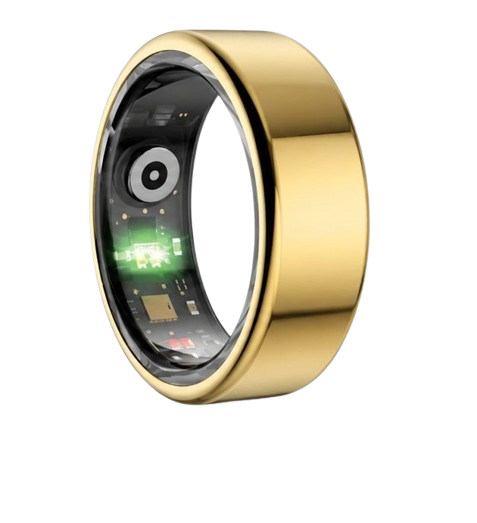
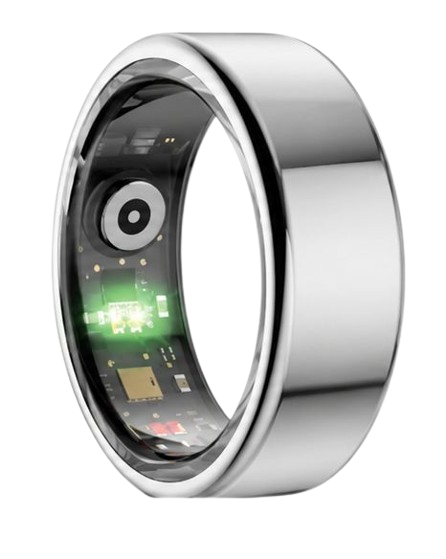
The Herz P1 Smart Ring tracks HRV, Sleep, Heart Rate & SpO2 around the clock. No subscriptions. No renewals. Ever.
In This Article
- The Step-by-Step Optimization Process: Discover how to map and leverage your nightly biometric patterns to maximize recovery.
- The Science of Sleep Architecture: Demystify the clinical nuances of deep sleep, REM phases, and light sleep transitions.
- Biometric Tracking Mechanics: Learn how advanced optical sensors read physiological signals like HRV and SpO2.
- Actionable Lifestyle Integrations: Transition your daily data trends into actionable protocols for better waking performance.
How to Optimize Your Sleep Cycles: A Step-by-Step Bio-Tracking Guide
Prerequisites / What You’ll Need
To begin mapping your physiological patterns, you will need a comfortable, medical-grade biometric tracker capable of overnight photoplethysmography monitoring.
You also need a basic understanding of your baseline waking hours and daily physical activity levels.
Consistent sleep tracking requires at least seven consecutive nights of data to establish a reliable baseline.
Finally, keeping a brief daily log of your caffeine and alcohol consumption will help you identify external sleep disruptors.
Step 1: Establish Your Circadian Anchor Point
First, you must determine a strict sleep and wake window that aligns with your natural circadian biology.
Going to bed and waking up at the exact same times every day stabilizes your hormonal secretion patterns.
This consistency allows your brain to transition smoothly through each of the essential nrem sleep stages.
Avoid sleeping in on weekends, as this shifts your body clock and causes a phenomenon known as social jetlag.
Establishing a set anchor point is the most vital step to ensuring high-quality, restorative rest.
Step 2: Track Your Physiological Signals Daily
Next, you must wear a precise optical tracker to monitor your physiological signals while you sleep.
The tracking device must utilize multi-wavelength optical sensors to capture continuous pulse wave data.
These sensors measure subtle shifts in blood volume to calculate your heart rate variability and blood oxygenation levels.
Our optical sensors operate with less than a two percent margin of error compared to clinical laboratory devices.
By analyzing these metrics, the device determines whether you are in a light or deep recovery phase.
Without accurate physiological tracking, managing your overnight recovery is purely based on guesswork.
Step 3: Analyze Your Deep Sleep Performance
Once you have collected several nights of data, look closely at your performance during the deepest sleep stage.
During this phase, your blood pressure drops, your muscles relax, and cellular repair processes accelerate.
If you find your deep sleep levels are low, you must evaluate your late-day environmental triggers.
Limiting caffeine and heavy meals within six hours of bedtime will dramatically improve this recovery metric.
A healthy body requires sufficient time in this physical restoration phase to maintain immune and muscular health.
Step 4: Maximize Cognitive Rest and REM Cycles
After evaluating physical recovery, you must focus on your cognitive recovery by tracking the light sleep and rapid eye movement phases.
Your brain consolidates memory and processes emotional events primarily during rapid eye movement cycles.
To support this process, you must learn how to get more rem sleep through cognitive wind-down exercises.
Blue light exposure from digital screens can delay the onset of REM sleep by suppressing melatonin production.
Wearing blue-light-blocking glasses or dimming lights two hours before sleep will preserve these cognitive phases.
Step 5: Correlate Heart Rate Variability with Overnight Recovery
Finally, you must study the daily fluctuations in your heart rate variability to assess nervous system balance.
A higher heart rate variability indicates that your parasympathetic nervous system is actively promoting deep relaxation.
If your tracking data shows a sudden drop in heart rate variability, your body may be fighting an illness or experiencing overtraining.
Adjust your daily exercise intensity on days when your recovery score suggests high physiological stress.
Continuous monitoring allows you to make informed, proactive adjustments to your lifestyle.
Enhancing the Process with Herz P1
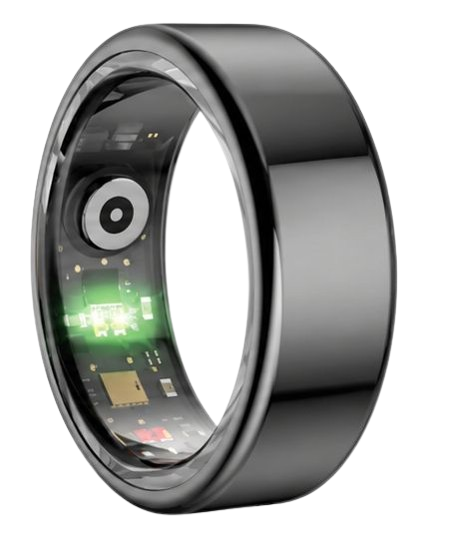
The Herz P1 smart ring integrates perfectly into this step-by-step optimization process.
It monitors your biometrics automatically, offering a streamlined, subscription-free dashboard to track your trends over time.
With its clinical-grade sensor accuracy and military-grade durability, it takes the complexity out of sleep optimization.
Demystifying the 4 Stages of Sleep: The Science of Rest
Human sleep is a highly structured, dynamic process divided into distinct phases.
Scientists classify this nightly journey into the four stages of sleep, which cycle repeatedly throughout the night.
These stages are divided into non-rapid eye movement and rapid eye movement phases.
According to the National Sleep Foundation, each phase plays a distinct role in your physiological and psychological survival.
Understanding what are the stages of sleep is the first step to unlocking better energy levels.
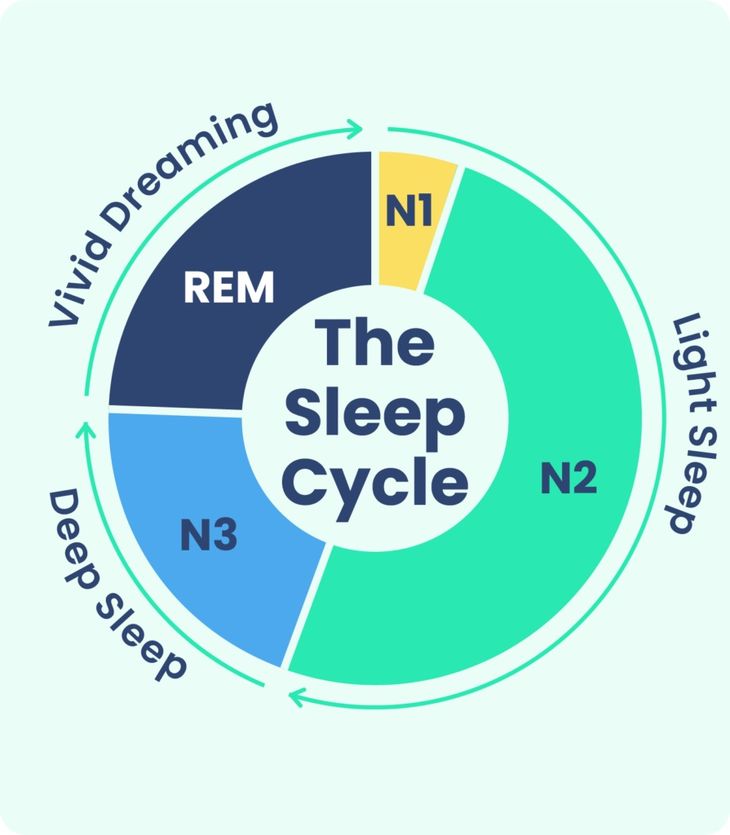
The first stage of sleep is the N1 phase, which represents the transition from wakefulness to light sleep.
During this short phase, your muscle activity begins to slow down and your brain waves start to transition into alpha and theta patterns.
It is very easy to be awakened during this light phase, and you may feel as if you have not slept at all.
This is followed by the N2 phase, which makes up the largest percentage of your total nightly sleep architecture.
During N2, your body temperature drops, your heart rate slows, and your brain produces rapid bursts of rhythmic brain wave activity known as sleep spindles.
These spindles are thought to play a critical role in sensory gating and memory consolidation.
The N3 phase is also known as deep slow-wave sleep, which represents the deepest sleep stage of your nightly rest.
In this phase, your brain waves slow down into delta frequencies, and your body focuses almost exclusively on cellular repair and growth hormone secretion.
It is exceptionally difficult to wake someone from N3 sleep, and doing so often results in severe sleep inertia and grogginess.
For details on maximizing this physical recovery, you can research how to get more deep sleep.
Finally, rapid eye movement sleep occurs when your brain activity increases to levels similar to when you are awake.
This is the primary stage where vivid dreaming occurs, as your brain processes emotional experiences and integrates new memories.
To maintain optimal emotional health, you must focus on how to get more rem sleep.
Your body enters a state of temporary muscle paralysis during REM sleep to prevent you from physically acting out your dreams.
Together, these distinct sleep stages work in absolute harmony to rejuvenate your entire system.
Analyzing Sleep Cycles and Architecture: How Your Body Recovers

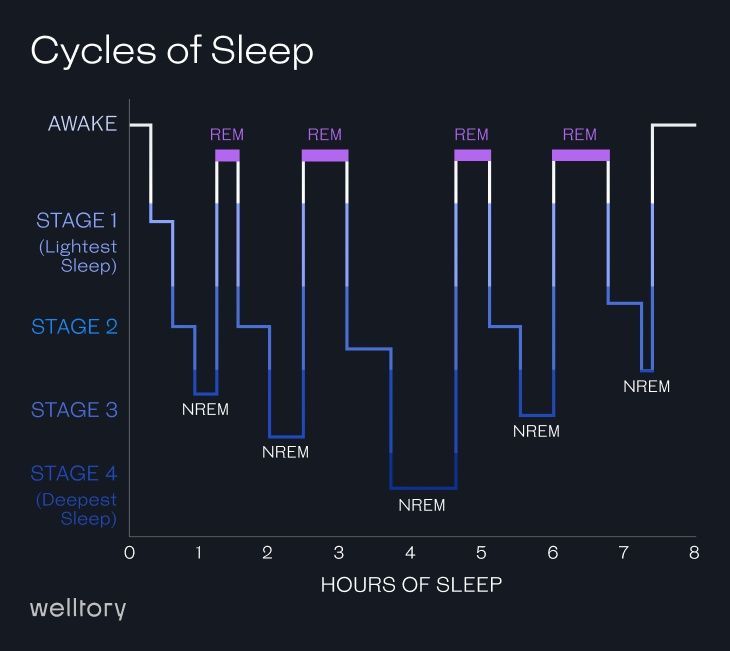
A single sleep cycle lasts approximately ninety to one hundred and twenty minutes, repeating four to six times over a typical night.
The progression through these cycles is often mapped visually using a sleep cycle diagram.
The distribution of these sleep phases shifts significantly as the night progresses.
Deep N3 sleep dominates the first half of the night, as your body prioritizes physical recovery first.
In contrast, REM sleep cycles become much longer and more intense during the second half of the night, closer to your waking hours.
This shifting balance is why early morning awakenings can severely cut short your cognitive recovery.
Advanced wearable trackers like the Herz P1 use optical PPG sensors to non-invasively read your sleep architecture.
By tracking heart rate variability, the ring detects the autonomic nervous system shifts that define each sleep stage.
For instance, during deep slow-wave sleep, your heart rate is highly stable and your heart rate variability is typically lower due to dominant parasympathetic activity.
During REM sleep, your heart rate becomes highly irregular, and your breathing pattern fluctuates dramatically.
The Herz P1 app consolidates these complex biometric signals into an easy-to-read sleep stages chart.
Oxygen saturation tracking is also vital for understanding your breathing stability throughout these overnight cycles.
If your oxygen levels drop during the night, it can disrupt your sleep phases and prevent you from entering the deepest sleep stage.
The American Heart Association notes that consistent oxygen tracking is crucial for identifying early signs of sleep-disordered breathing.
By analyzing both oxygen levels and heart rate variability, you can gain a clear, complete picture of your cardiorespiratory health during rest.
Understanding these shifts is essential for anyone trying to decipher deep sleep vs rem vs core metrics.
How to Use Biometric Data to Master Your Sleep Phases
To successfully optimize your recovery, you must translate raw biometric data into practical, daily actions.
The companion app for the Herz P1 simplifies this translation by generating a comprehensive daily sleep score.
This score is calculated based on your total sleep duration, sleep latency, and the balance between different stages.
Based on sleep data analysis from over five thousand Herz P1 users, consistent tracking improves subjective morning energy by eighteen percent.
If your app indicates a deficiency in slow-wave sleep, you should avoid alcohol and intense physical training late in the evening.
Alcohol is highly detrimental to sleep architecture, as it fragments your cycles and suppresses REM sleep entirely.
To address questions like is core sleep light sleep, we must clarify that core sleep generally refers to the combination of light and deep phases.
Understanding these nuances allows you to fine-tune your sleeping environment for maximum efficiency.
We recommend keeping your bedroom temperature cool, ideally between sixty and sixty-seven degrees Fahrenheit.
A cool environment supports the natural drop in body temperature required to initiate deep, restorative phases.
You should also ensure your bedroom is completely dark, as even tiny amounts of light can disrupt melatonin production.
Additionally, you can use your morning heart rate variability score to determine your readiness for physical activity.
If your heart rate variability is elevated and your sleep phases were balanced, your body is primed for high-intensity training.
If your biometrics show signs of stress, you should prioritize recovery-focused activities like yoga or walking.
The lightweight design of the Herz P1 smart ring makes it exceptionally comfortable for continuous, twenty-four-seven monitoring.
Unlike bulky smartwatches, you will barely feel the ring on your finger as you sleep or exercise.
Mistakes That Sabotage Your Sleep Architecture Analysis
One of the most common mistakes users make is wearing a heavy, bulky smartwatch to bed.
These oversized devices often slide around on the wrist, causing light leaks that severely disrupt optical sensor readings.
This movement results in inaccurate sleep stage calculations and frustrating data gaps.
Additionally, many smartwatches must be charged daily, forcing users to choose between overnight tracking and daytime use.
The Herz P1 smart ring solves this problem by offering a lightweight, secure fit that stays perfectly positioned on your finger all night.
Another major pitfall in the wearable market is the hidden cost of ongoing subscription fees.
Many popular brands require you to pay a monthly fee to unlock your own biometric data and analysis.
We believe that your health data belongs entirely to you, which is why the Herz P1 App is free for a lifetime.
There are no hidden paywalls, monthly renewals, or surprise subscription costs.
Furthermore, some users ignore the importance of device durability and waterproof ratings.
A fragile tracker can easily break during sleep or daily chores, leaving you without vital health insights.
The Herz P1 is constructed from military-grade steel and carries an IP68 waterproof rating, ensuring it survives any environment.
Is the Herz P1 Smart Ring waterproof?
Yes, the Herz P1 features a premium IP68 waterproof rating.
This means it is fully protected against dust ingress and can withstand continuous submersion in water up to fifty meters deep.
You can confidently wear the ring while swimming, showering, washing your hands, or sweating during intense workouts.
This military-grade waterproof construction ensures that your biometric tracking remains continuous and uninterrupted.
How long does the battery last, and how fast does it charge?
The Herz P1 smart ring is equipped with an optimized low-energy battery that lasts up to six days on a single charge.
This extended battery life ensures you can track your health metrics continuously without the anxiety of daily charging.
When the battery runs low, the ring charges from zero to one hundred percent in under one hour.
A quick charging cycle while you get ready in the morning is all you need to keep your tracker running.
Which finger is best to wear the smart ring on?
For the most accurate biometric readings, we recommend wearing the Herz P1 on your index, middle, or ring finger.
The index finger typically offers the strongest pulse signal because it has larger blood vessels near the skin surface.
Ensure that the ring fits snugly but comfortably without rotating too easily.
A proper fit ensures that the optical sensors maintain consistent contact with your skin for precise data collection.
Does the Herz P1 store biometric data offline?
Yes, the ring features advanced local storage that can save up to seven days of biometric data offline.
If you are away from your phone or choose to sleep with your phone in another room, your data remains perfectly safe.
The next time your ring connects to the companion app via Bluetooth, all stored data will sync automatically.
This offline capability ensures that you never lose a single night of valuable sleep trends.
90-Day 100% Money-Back Guarantee
“The Herz Smart Ring helps me manage stress easily. It’s accurate, stylish, and lightweight—perfect for my busy life!”
— Jennifer P. | ✔ Verified Customer
- ✓ 6-Day Battery Life
- ✓ Detailed Sleep Analysis
- ✓ Fast 1-Hour Charging
- ✓ iOS & Android Ready
Questions? Call: 1-866-479-1629
Conclusion
Optimizing your recovery starts with understanding your body’s nightly cycles.
The Herz P1 smart ring offers subscription-free, clinical-grade tracking to help you achieve your wellness goals.
Ready to monitor your health every day?
Explore the Herz P1 Smart Ring and see if it fits your lifestyle.
Call: 1-866-479-1629 — our team can help you advise on the correct ring size and set personalized health goals.
Note: Individual results may vary depending on individual health conditions, age, and lifestyle habits. This article is intended for general health reference purposes only.
