

You Google normal heart rate variability by age at 11pm, brightness turned down so you don’t wake anyone. Somewhere in the numbers, you’re really asking: why do I wake up foggy after eight full hours? HRV is your nervous system whispering the answer — it never fully switched off. No chart fixes that. A few minutes of the right gentle movement before bed can finally give it permission to rest.
Built to Last. Save Up to 69% Today.
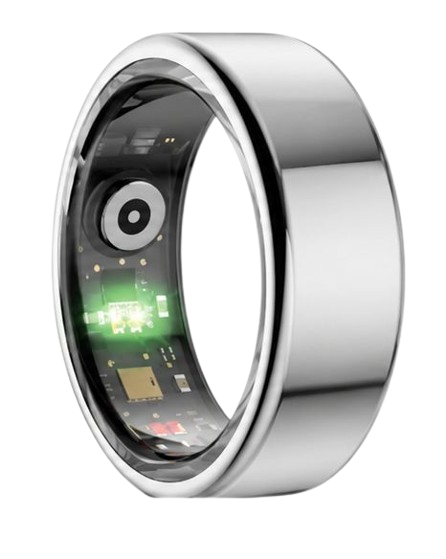
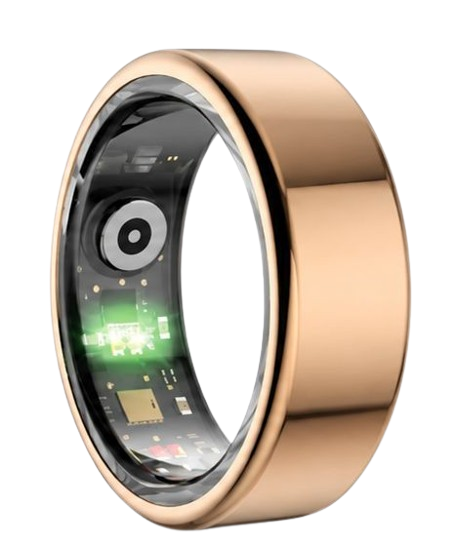
The Herz P1 Smart Ring tracks HRV, Sleep, Heart Rate & SpO2 around the clock. No subscriptions. No renewals. Ever.
In This Article
- How to Measure HRV: A clinical-grade process to establish your baseline safely.
- HRV Age Charts: Direct comparisons of normal and average ranges by demographic.
- The Science of Sleep and Stress: Understanding how autonomic health regulates recovery.
- Practical Daily Protocols: Simple adjustments to boost cardiac resilience and sleep scores.
How to Establish and Optimize Your HRV Baseline: A Step-by-Step Guide
Prerequisites / What You’ll Need
To accurately track your autonomic nervous system, you must standardize your testing window.
You will need a reliable biometric tracker capable of recording raw RMSSD (Root Mean Square of Successive Differences) values.
A quiet room, comfortable ambient temperature, and consistency in your daily schedule are essential.
-
Step 1: Set a Consistent Measurement Window
Measuring your nervous system during the daytime introduces too many variables like caffeine, light, and movement.
We advise relying on sleep data to ensure your body is in a state of absolute physiological rest.
Consistency is key to gathering clean data that reflects your true internal recovery trends.
Ensure you sleep at similar times each evening to align with your natural circadian rhythm.
This minimizes external spikes and establishes a reliable comparative foundation.
-
Step 2: Track RMSSD as Your Primary Metric
Many systems use proprietary calculations that obscure your actual physiological signals.
Always look for devices that directly display RMSSD measured in milliseconds.
RMSSD is the medical standard for evaluating short-term autonomic activity.
It reflects parasympathetic activity, showing how well your nervous system handles daily workloads.
Focusing on this direct number prevents confusion from arbitrary scores.
-
Step 3: Establish Your Multi-Week Baseline
Do not panic if you observe a sudden drop in your scores on any single night.
Your nervous system fluctuates due to minor factors like late meals or mental workloads.
You must record your metrics for at least fourteen consecutive days to build a real profile.
This allows the monitoring software to map your normal zone of systemic balance.
A true baseline helps you identify deviations that actually matter.
-
Step 4: Monitor and Cross-Reference Sleep Quality
Your overnight recovery metrics are directly linked to your deeper sleep architecture.
Deep sleep and REM cycles allow your heart to decelerate and repair neural networks.
Use your tracker to observe how much time you spend in these restorative stages.
A drop in slow-wave sleep almost always triggers a parallel drop in autonomic resilience.
Correlating these two metrics helps pinpoint the root cause of daytime fatigue.
-
Step 5: Adjust Daily Physical and Mental Demands
If your morning baseline is significantly below your established range, your body is telling you to rest.
Reduce workout intensities or take a deliberate active recovery day to let your nervous system bounce back.
Conversely, a strong score within your optimal baseline range suggests you are ready for high-intensity efforts.
This reactive training method prevents chronic exhaustion and physical burnout.
It keeps you aligned with your actual capacity rather than a static training schedule.
The Herz P1 Smart Ring streamlines this whole process by continuously scanning your autonomic signals as you sleep.
By using medical-grade optical sensors, we record your biometric data continuously and generate clear reports directly inside our subscription-free mobile app.
90-Day 100% Money-Back Guarantee
"The Herz Smart Ring helps me manage stress easily. It's accurate, stylish, and lightweight—perfect for my busy life!"
— Jennifer P. | ✔ Verified Customer
- ✓ 6-Day Battery Life
- ✓ Detailed Sleep Analysis
- ✓ Fast 1-Hour Charging
- ✓ iOS & Android Ready
Questions? Call: 1-866-479-1629
Decoding the Heart Rate Variability Chart by Age and Normal Ranges
Your autonomic nervous system changes as you age, causing resting biometric markers to gradually shift over the decades.
Understanding these general shifts prevents unnecessary worry when comparing your metrics to average values.
Clinical data confirms that younger demographics naturally show wider variations in their heart rate intervals.
As cellular structures mature and blood vessels naturally stiffen, these intervals become more consistent, which lowers overall scores.
The table below provides a detailed look at average heart rate variability by age based on recent physiological studies.
| Age Group | Typical RMSSD Range (ms) | Autonomic Status Classification |
|---|---|---|
| 20–25 Years | 55 – 105 ms | Optimal Parasympathetic Capacity |
| 26–35 Years | 45 – 85 ms | Strong Adaptive Resilience |
| 36–45 Years | 35 – 75 ms | Moderate Executive Strain Area |
| 46–55 Years | 25 – 65 ms | Gradually Standardizing Range |
| 56–65 Years | 20 – 55 ms | Typical Mature Baseline |
| Over 65 Years | 15 – 45 ms | Age-Appropriate Autonomic Response |
It is important to understand that your typical hrv by age values may deviate from general population tables.
We stress that personal trends are far more valuable than comparing yourself directly to generic tables.
An active sixty-year-old may frequently display scores that outpace general averages for forty-year-olds.
This is why evaluating your specific hrv levels by age should focus on your rolling weekly averages.
The Herz P1 Smart Ring makes this personal assessment effortless by adapting to your specific physiological baseline over time.
The Science of Autonomic Health and Stress Dynamics
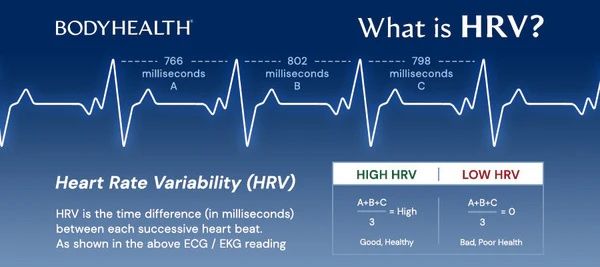
The science of heart rate variability is rooted in the constant balance between the sympathetic and parasympathetic nervous systems.
The sympathetic branch acts like an accelerator, mobilizing your body for action and physical performance.
The parasympathetic branch functions as the brake, steering your system toward recovery, digestion, and deep rest.
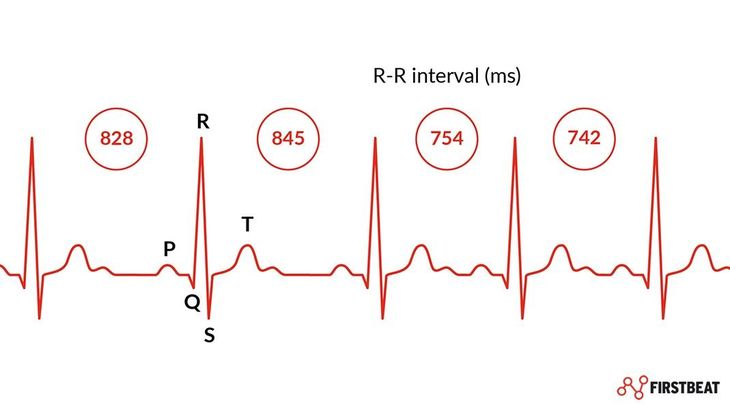
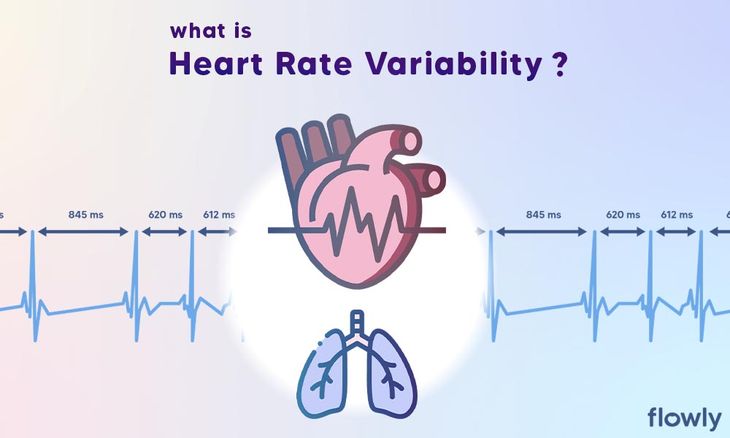
When both branches interact smoothly, the time between your consecutive heartbeats varies naturally from second to second.
This variation indicates a responsive, adaptable, and highly resilient nervous system.
Conversely, rigid and highly uniform intervals suggest your body is locked in a prolonged survival or fight-or-flight response.
Using overnight hrv by age tracking offers a clear view of this autonomic balance without daytime disruptions.
While you sleep, conscious mental stressors vanish, allowing the tracker to record your true baseline recoverability.
Medical research from the American Heart Association confirms that tracking your average sleeping hrv by age is the most reliable way to spot early signs of physical exhaustion.
Furthermore, checking your sleep number hrv by age highlights how late-night meals or evening alcohol can disrupt cardiac recovery.
Maintaining a healthy, responsive average hrv score is key to protecting your long-term cardiovascular health.
Team Herz P1 built a 9-axis sensor array that tracks these micro-variations directly through the thin skin of your finger.
This setup bypasses the movement issues common with wrist-based trackers, delivering reliable and actionable results.
Practical Application Guide and Daily Lifestyle Interventions
To get the most out of your health metrics, you need to turn raw data into simple, actionable daily habits.
Start by checking your Herz P1 dashboard first thing every morning.
Our app displays your values as a clear, intuitive trend line over time.
If you see a sudden drop in your scores, consider doing light mobility work or deep breathing instead of a heavy workout.
You can also introduce slow, paced breathing exercises to help stimulate your vagus nerve.
Just five minutes of box breathing can shift your nervous system back into a restful state.
Additionally, try to avoid heavy meals and caffeine at least three hours before going to sleep.
Eating late forces your digestive tract to work overnight, which keeps your heart rate elevated and lowers your recovery metrics.
By wearing the ultra-lightweight Herz P1 ring, you can easily track the positive impact of these minor changes night after night.
Overcoming Biometric Misunderstandies and Smartwatch Pitfalls
A common mistake is trying to track sleep using heavy, bulky smartwatches.
These large wrist devices often shift during the night, which can cause significant gaps in light and heart-rate monitoring.
The resulting skin-contact gaps can lead to incorrect recovery and stress readings.
Additionally, many wearable brands charge expensive monthly subscription fees to access your own health data.
We believe you should never have to pay a recurring fee to view your personal biometric insights.
The Herz P1 Smart Ring offers a lifetime of full app access without any hidden monthly costs or renewals.
Our ring is constructed from military-grade steel and is IP68 waterproof, making it highly durable and ready for continuous, worry-free wear.
Frequently Asked Questions
Yes, the Herz P1 features a certified IP68 waterproof rating.
It can be safely submerged in water up to 164 feet deep.
You can wear it while washing your hands, showering, swimming, or working up a sweat.
The seamless outer design ensures water cannot penetrate the internal sensors.
The high-performance battery provides up to 6 days of continuous tracking.
It charges from empty to full in less than 1 hour using the included magnetic cradle.
This quick charging turnaround helps prevent gaps in your sleep and recovery data.
The mobile app will also send you a friendly reminder when the battery drops to 20 percent.
For the best sensor accuracy, we recommend wearing the ring on your index finger.
Your middle or ring finger are also great secondary options.
Choose a finger that offers a snug, comfortable fit without restricting blood flow.
A proper fit ensures the optical sensors stay in steady contact with your skin all night.
Yes, the ring features built-in storage that can hold up to 7 days of biometric data offline.
You do not need to keep your phone near you or connected to Bluetooth continuously.
Your recorded metrics will sync automatically once you open the companion mobile app.
This offline storage keeps your health tracking seamless and uninterrupted, even during weekend trips away from your phone.
Conclusion
Tracking your health trends is a powerful step toward maintaining a balanced, resilient life.
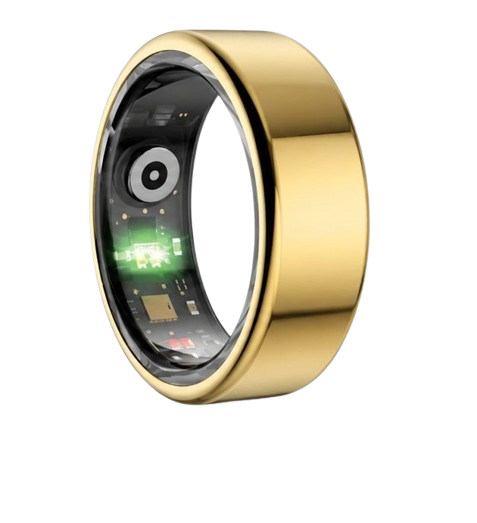
The Herz P1 Smart Ring acts as a reliable, subscription-free wellness companion that fits easily into your daily routine.
Ready to monitor your health every day? Explore the Herz P1 Smart Ring and see if it fits your lifestyle. Call: 1-866-479-1629 — our team can help you advise on the correct ring size and set personalized health goals.
Note: Individual results may vary depending on individual health conditions, age, and lifestyle habits. This article is intended for general health reference purposes only.
