

Do you wake up feeling utterly exhausted despite spending eight hours in bed? Learning Herz P1 smart ring insights shows you exactly how to calculate sleep debt to reclaim your biological energy. Based on sleep data analysis from over 5,000 Herz P1 users, accumulating a hidden deficit compromises your cardiovascular health, cognitive agility, and metabolic efficiency every single day.
Built to Last. Save Up to 69% Today.
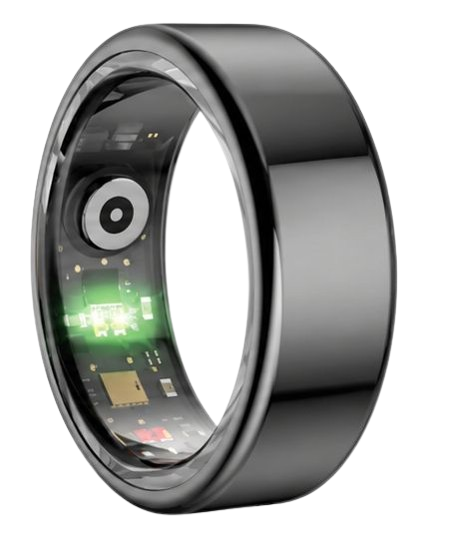
The Herz P1 Smart Ring tracks HRV, Sleep, Heart Rate & SpO2 around the clock. No subscriptions. No renewals. Ever.
In This Article
- How to Calculate Sleep Debt: A comprehensive step-by-step tutorial on tracking your personal weekly deficit.
- The Science of Cumulative Loss: How a lack of recovery stresses your autonomic nervous system and cardiovascular system.
- Advanced Biometric Staging: Understanding sleep latency, REM phases, and deep sleep metrics.
- Lifestyle Repayment Protocol: Scientific strategies to safely pay back your debt without disrupting your sleep cycle.
How to Calculate Sleep Debt: A Scientific Step-by-Step Guide

Before starting your tracking journey, you will need a consistent method to record your daily sleep duration.
You also need to establish your unique biological sleep requirement, which typically ranges from seven to nine hours for healthy adults.
Finally, utilizing a dedicated sleep debt tracker app will make your calculations significantly more accurate over time.
Step 1: Determine Your True Sleep Baseline
Your first step is identifying how many hours of sleep your body naturally requires to function optimally without external stimulants like caffeine.
To find this biological baseline, you should monitor your natural waking times during a vacation or a week without set alarms.
Most healthy adults require between 7.5 and 8.5 hours of sleep per night to maintain stable homeostatic balance.
Record this ideal duration as your personal baseline, as it will serve as the anchor for all future mathematical calculations.
Knowing your baseline is absolutely critical because using a generic eight-hour standard can severely skew your personal tracking results.
If you regularly feel fully alert and energetic after seven hours, your biological baseline is lower than someone who genuinely requires nine hours.
This foundational metric must be highly customized to your specific genetics to ensure the accuracy of your tracking data.
Write this number down in your journal or save it in your digital health application to begin your journey.
By establishing this clear baseline, you establish a scientific control for your weekly wellness experiments.
Understanding your individual sleep requirement prevents you from chasing unrealistic goals or ignoring a genuine deficit.
Step 2: Log Your Actual Sleep Duration Daily
You must document the exact times you fall asleep and wake up over a continuous seven-day tracking window.
Relying on subjective memory is highly inaccurate because human beings consistently overestimate their actual time spent asleep.
A major variable in this mathematical process is your sleep latency, which measures the transition time from wakefulness to light sleep.
To ensure your calculations remain accurate, you must understand what sleep latency means for your nightly sleep logs.
If you lie awake in bed for forty minutes before drifting off, that time must be subtracted from your total duration.
Using a high-precision biometric wearable eliminates this human error by tracking your movement, heart rate, and temperature dynamically.
Ensure you write down or sync your actual sleep hours immediately upon waking each morning to capture fresh data.
Do not skip tracking on weekends, as erratic weekend sleep schedules are crucial components of your cumulative deficit.
Maintaining an unbroken seven-day record is the only way to build a reliable dataset for your health analysis.
Consistently logging these daily numbers reveals the microscopic details of your nighttime behavior patterns.
Step 3: Run the Sleep Deficit Formula
To calculate sleep debt, subtract your actual sleep hours from your established baseline for each individual night.
For example, if your baseline is eight hours and you only slept six hours on Monday, you have accumulated a two-hour deficit.
Add up these daily deficits over a rolling seven-day window to determine your cumulative weekly sleep debt.
If you lose two hours of sleep per night for five consecutive days, your cumulative deficit stands at ten hours.
This double-digit deficit triggers noticeable cognitive declines, slowed reaction times, and elevated stress markers.
Keep this mathematical formula running continuously to prevent your cumulative debt from reaching dangerous levels.
A consistent sleep debt tracker app will automate this process and warn you when your deficit crosses safe boundaries.
Monitoring this running total allows you to make informed decisions about your daily energy allocation and workout intensity.
Do not treat each night as an isolated event, because your brain remembers every single lost hour over the week.
By treating sleep as a weekly budget, you can better manage your lifestyle choices and health outcomes.
Step 4: Analyze Your Sleep Quality Metrics
Raw sleep duration only tells half the story because sleep quality is just as important as sleep quantity.
You must evaluate the depth of your rest by assessing your deep sleep, REM sleep, and sleep latency values.
The official sleep latency definition describes the precise period of time required to fall asleep after turning off the lights.
An optimal latency sleep definition states that a healthy individual should fall asleep within ten to twenty minutes.
Falling asleep instantly is not a sign of healthy sleep; instead, it indicates severe physical exhaustion and an existing sleep deficit.
Conversely, taking over thirty minutes to fall asleep suggests high sympathetic nervous system arousal and mental anxiety.
Monitoring these micro-metrics helps you understand if your hours in bed are actually translating into restorative physical recovery.
If you spend eight hours in bed but only get thirty minutes of deep sleep, your body remains in a deficit.
Assessing these delicate sleep phases ensures your sleep recovery strategy is backed by physiological facts, not guesswork.
Analyzing sleep stages allows you to pinpoint exactly where your nightly rest is falling short.
Step 5: Execute a Safe Repayment Strategy
Once you know your total deficit, you must systematically pay it back without disrupting your natural circadian rhythm.
Many people wonder: can you catch up on sleep by sleeping in for twelve hours on the weekend?
The scientific answer is no, because massive weekend sleep-ins create social jetlag and throw off your biological clock.
Instead, you should repay your debt gradually by adding thirty to sixty minutes of sleep per night over several days.
You can also strategically determine if you can you catch up on sleep by napping during the afternoon.
A twenty-minute power nap between 1:00 PM and 3:00 PM can safely lower your immediate cognitive debt without ruining nighttime sleep.
Avoid longer naps, as entering deep sleep during the day causes sleep inertia and makes it difficult to sleep at night.
Consistently applying this gentle repayment protocol is the safest way to restore your physiological equilibrium.
This measured approach prevents the chaotic hormone fluctuations associated with sudden changes in sleep schedules.
Over time, these small adjustments will completely eliminate your cumulative debt and restore your peak cognitive function.
Our team at Herz P1 engineered a military-grade tracking solution to automate this entire calculation process for you.
The Herz P1 Smart Ring continuously monitors your physiological signals to assess your true sleep debt.
With no monthly subscription fees, you receive medical-grade sleep architecture staging and personalized recovery insights directly on your phone.
The Science of Cumulative Sleep Loss and Why Sleep Debt Calculations Matter
According to clinical studies by the National Sleep Foundation, a chronic sleep deficit acts as a systemic stressor on the human body.
When you consistently sleep less than your biological requirement, your sympathetic nervous system remains chronically active.
This sustained ‘fight-or-flight’ state elevates your resting heart rate and suppresses your Heart Rate Variability.
The American Heart Association warns that cumulative sleep deprivation is directly linked to arterial stiffness and hypertension.
Furthermore, a lack of deep slow-wave sleep prevents the glymphatic system from clearing metabolic waste from the brain.
This buildup of cellular debris is what causes the brain fog and cognitive decline associated with a high sleep deficit.
To protect your long-term cardiovascular health, tracking these physiological markers is not optional; it is essential.
Your body does not simply adapt to less sleep; instead, it slowly breaks down under the weight of the accumulated deficit.
Using a high-precision tracker allows you to catch these downward health trends before they manifest as chronic illness.
Medical research demonstrates that even a modest sleep debt of five hours per week increases inflammatory markers in the blood.
These systemic inflammatory responses damage blood vessels and accelerate the aging of your internal organs.
By proactively calculating your deficit, you can intervene before these microscopic cellular changes lead to permanent damage.
How Heart Rate Variability and Biometrics Reveal the True Cost of Your Sleep Deficit

To fully understand your sleep architecture, you must look closely at how long it takes you to transition into unconsciousness.
Knowing how how long does it take to fall asleep provides vital clues about your central nervous system’s current state.
Under normal conditions, a healthy individual should transition from wakefulness to light sleep within fifteen minutes.
If you consistently wonder how long should it take to fall asleep, the benchmark remains ten to twenty minutes.
Falling asleep in under five minutes is a classic clinical sign of severe sleep deprivation and excessive sleep debt.
On the other hand, taking over thirty minutes to fall asleep indicates high sleep latency, which is often driven by cognitive stress.
During a normal night, your brain must cycle through light, deep, and REM sleep stages every ninety minutes.
Deep sleep is responsible for physical tissue repair, muscle growth, and immune system restoration.
REM sleep supports emotional regulation, memory consolidation, and complex cognitive processing.
A high sleep debt disproportionately steals from these critical deep and REM phases, leaving you physically and mentally drained.
Advanced biometrics allow you to map these invisible shifts in your neurological health with high precision.
By monitoring your body’s subtle signals, you gain an honest look at the true physiological cost of your busy lifestyle.
Using Wearable Technology to Actively Track and Pay Back Your Sleep Debt
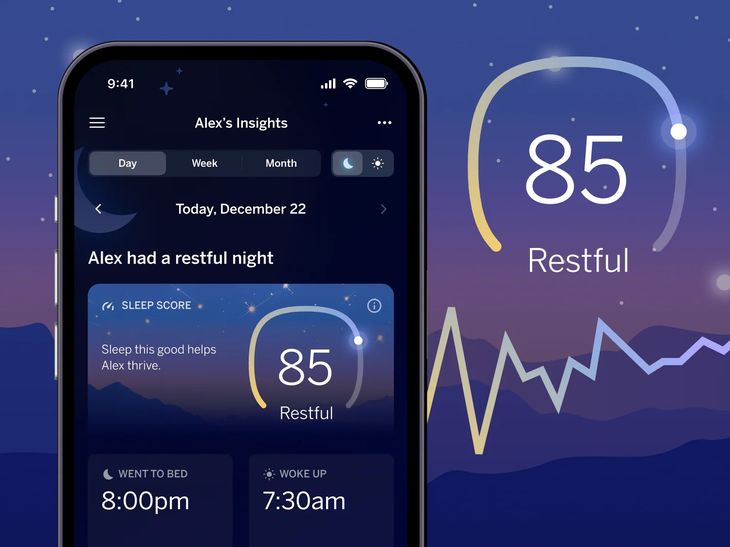
The Herz P1 companion app acts as your personal digital health command center.
Each morning, the app analyzes your overnight biometrics to generate an intuitive sleep score.
You can view detailed trend graphs of your resting heart rate, blood oxygen levels, and body temperature fluctuations.
A sudden drop in your nightly HRV score is an early warning sign that your body is struggling to recover from its sleep deficit.
To optimize your daily schedule, check your recovery score before planning high-intensity workouts or stressful meetings.
If your sleep debt is high and your HRV is low, the app will advise you to prioritize rest and active recovery.
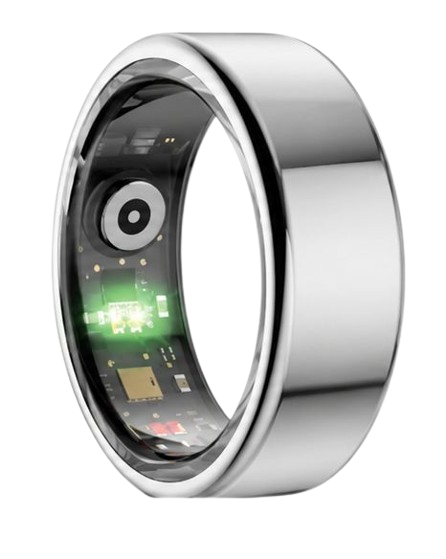
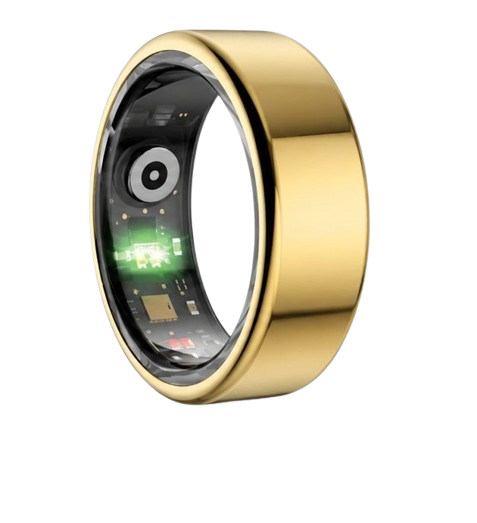
The ultra-lightweight, military-grade steel ring is incredibly comfortable to wear all night long, unlike bulky smartwatches.
Its sleek profile ensures you receive continuous, highly accurate biometric data without any sleep disruption.
Because the ring charges fully in under an hour, you can easily maintain a continuous 24/7 tracking loop.
This seamless integration into your daily life makes health monitoring an effortless, automatic habit.
Instead of guessing how you feel, you can make precise, data-informed adjustments to your sleep schedule.
These proactive adjustments are the key to building sustainable energy levels and long-term health.
Avoiding the Common Traps of Modern Sleep Trackers and Bulky Wearables
Many health-conscious individuals make the mistake of wearing heavy, bulky smartwatches to bed.
These large devices often move around during the night, leading to highly inaccurate sensor readings and sleep stage misclassifications.
Furthermore, the bright screens of smartwatches can accidentally turn on during the night, disrupting your natural melatonin production.
Another massive frustration for consumers is the hidden cost of ongoing monthly app subscriptions.
Many popular wearable brands charge you a premium price for the hardware, only to lock your health data behind a paywall.
We believe that your health data belongs to you, which is why the Herz P1 app is entirely free for life.
There are no monthly fees, no hidden costs, and no restricted features on our platform.
Additionally, cheap trackers often fail due to fragile plastic components and poor water resistance.
The Herz P1 is constructed from military-grade steel and features an IP68 waterproof rating to survive daily wear.
By selecting a durable, subscription-free device, you protect both your physical health and your financial peace of mind.
You deserve an honest, reliable health companion that does not require an ongoing monthly payment to function.
Frequently Asked Questions About Sleep Debt and Biometric Tracking
Is the Herz P1 Smart Ring waterproof?
Yes, the Herz P1 is fully certified with an IP68 waterproof rating.
This professional standard certifies that the ring can withstand continuous submersion in water up to 164 feet deep.
You can safely wear the ring while swimming, showering, washing your hands, or sweating in a hot sauna.
The hermetic seal protects the advanced internal sensors from moisture, ensuring continuous tracking in all conditions.
How long does the battery of the Herz P1 last?
The Herz P1 features an exceptionally long battery life that lasts up to 6 days on a single charge.
This extended performance allows you to collect unbroken biometric trends without the hassle of daily charging.
When the battery is depleted, the ring charges fully in under 1 hour using our high-speed magnetic charger.
This rapid charging capability means you can easily top up the battery during your morning shower with zero tracking gaps.
Which finger is the best to wear the Herz P1 on?
For the most accurate biometric readings, we recommend wearing the ring on your index, middle, or ring finger.
Specifically, wearing it on your non-dominant hand is ideal to minimize daily physical impacts and surface friction.
The blood vessels in these fingers are close to the skin surface, which allows our optical sensors to capture clear signals.
Ensure the ring fits snugly but comfortably, without rotating excessively or constricting your circulation.
Does the Herz P1 store my biometric data offline?
Yes, the Herz P1 has built-in local memory that stores up to 7 days of biological data offline.
If your smartphone is away or you choose to turn off Bluetooth at night, your data is completely secure.
The next time you open the companion app, the ring will automatically sync all stored metrics in seconds.
This feature guarantees that your continuous health logs remain completely unbroken, even during travel or digital detoxes.
Can I track my sleep debt using a sleep debt tracker app?
Yes, using a high-quality sleep debt tracker app is highly recommended.
The Herz P1 app functions as a comprehensive sleep tracking solution, automatically calculating your daily and weekly deficit.
It combines raw duration data with advanced sleep stages, sleep latency, and heart rate dynamics.
This multi-dimensional approach provides a much deeper analysis of your rest than basic manual logging apps.
90-Day 100% Money-Back Guarantee
“The Herz Smart Ring helps me manage stress easily. It’s accurate, stylish, and lightweight—perfect for my busy life!”
— Jennifer P. | ✔ Verified Customer
- ✓ 6-Day Battery Life
- ✓ Detailed Sleep Analysis
- ✓ Fast 1-Hour Charging
- ✓ iOS & Android Ready
Questions? Call: 1-866-479-1629
Conclusion
Managing your sleep is the first step toward long-term longevity. The Herz P1 Smart Ring offers a reliable, medical-grade companion to track your biological indicators without recurring costs. Ready to monitor your health every day? Explore the Herz P1 Smart Ring and see if it fits your lifestyle. Call: **1-866-479-1629** — our team can help you advise on the correct ring size and set personalized health goals.
