

How balanced is your breathing rate while sleeping when your body enters its deepest recovery state? Many people suffer from poor sleep quality without ever understanding that their respiratory trends hold the exact answers. The Herz P1 smart ring monitors your continuous biometric signals around the clock to demystify these invisible nocturnal metrics. Let us dive deep into the science of tracking your breaths per minute and discovering how to use this vital data to optimize your daily recovery.
Built to Last. Save Up to 69% Today.
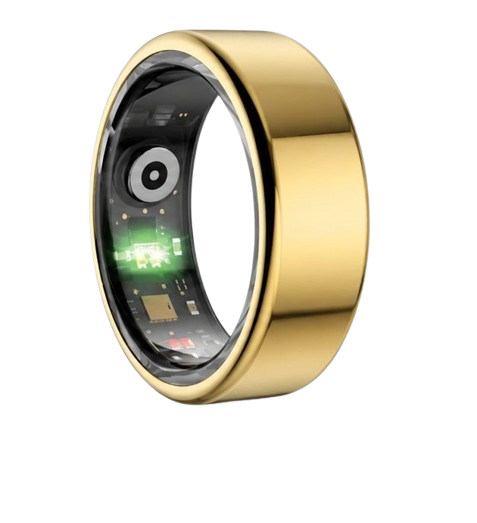
The Herz P1 Smart Ring tracks HRV, Sleep, Heart Rate & SpO2 around the clock. No subscriptions. No renewals. Ever.
In This Article
- Step-by-Step Breathing Tracking Guide: Learn how to properly set up, monitor, and evaluate your overnight metrics.
- Normal Sleeping Ranges Demystified: Understand what constitutes a healthy respiratory baseline and why fluctuations occur.
- Advanced Biometric Insights: Explore how REM sleep, deep sleep, and HRV correlate with your respiratory system.
- Practical Lifestyle Enhancements: Discover breathing exercises and behavioral hacks to stabilize your nighttime breathing patterns.
How to Correctly Monitor and Evaluate Your Breathing Rate While Sleeping: A Complete Step-by-Step Guide

Prerequisites / What You’ll Need
Before you can accurately measure your respiration overnight, you need to establish a consistent tracking environment.
You will need a premium, lightweight biometric tracking device like the Herz P1 Smart Ring to log data without sleep disruption.
You also need a basic understanding of your general resting heart rate and sleep patterns.
Step-by-Step Instructions
-
Step 1: Choose the Ideal Finger for Consistent Biometric Tracking
Our team recommends wearing your smart ring on either the index or middle finger of your non-dominant hand.
This ensures optimal arterial alignment for the photoplethysmography sensors to read your blood flow patterns clearly.
The ring must fit snugly without restricting circulation or causing discomfort as your hands naturally swell overnight.
Avoid choosing a finger where the ring can easily rotate more than thirty degrees during normal hand movement.
You should test the fitment by trying to slide the ring over your knuckle with minimal resistance.
If the ring slips off too easily during simple daily tasks, you should opt for a smaller size.
A correct fit prevents external ambient light from leaking into the optical sensors and corrupting your sleep data.
Verify that your selected finger does not experience swelling that causes the ring to feel uncomfortably tight during hot weather.
-
Step 2: Establish Your Personal Baseline Over a One-Week Window
Do not draw immediate conclusions from your very first night of biometric tracking.
Your body requires at least seven consecutive nights to establish a statistically reliable baseline for your resting respiration.
Make sure to log your sleep at similar times each night to avoid environmental skewing of your data.
Write down or note any external factors like late meals, intense training sessions, or evening alcohol intake.
These lifestyle choices directly impact your central nervous system and will alter your resting breathing rate.
By documenting these events, you can easily trace anomalous spikes back to specific physiological triggers.
Establishing a clean baseline represents the clinical foundation for all future health insights.
Try to avoid starting your baseline measurement during a period of unusual travel or extreme schedule changes.
-
Step 3: Analyze the Sleep App Dashboards Daily
Open your companion application every morning to view your comprehensive sleep architecture report.
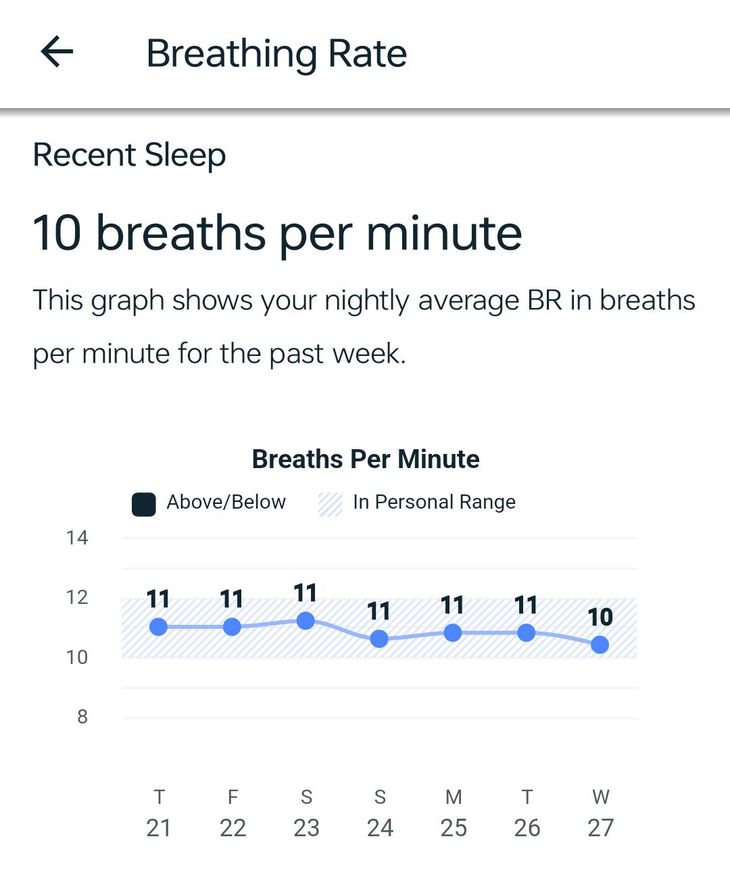
Look closely at the section displaying your average breaths per minute during the overnight hours.
Compare this value with your established seven-day average to detect any minor deviations.
Identify whether any fluctuations correlate with periods of restless awake time or deep sleep cycles.
Most healthy adults will observe a highly consistent average that rarely shifts by more than one breath per minute.
A sudden upward trend across multiple nights can act as an early indicator of physical fatigue.
Regularly checking these trends helps you proactively adjust your daytime workloads before exhaustion sets in.
Our application organizes these numbers into visual trends so you can spot long-term patterns easily.
-
Step 4: Cross-Reference Sleep Respiration with Blood Oxygen Levels (SpO2)
Ensure that your tracking device is logging your blood oxygen saturation concurrently with your respiratory rate.
A healthy respiratory rate should remain paired with steady oxygen levels between ninety-five and one hundred percent.
If you notice brief drops in oxygen alongside sudden spikes in respiration, your sleeping environment may need adjusting.
Continuous dual tracking helps paint a highly accurate picture of your overall nocturnal cardiopulmonary health.
This dual-metric analysis is particularly useful for individuals who experience frequent nighttime awakenings.
By observing how oxygen levels correspond to breathing frequency, you can rule out simple environmental disturbances.
Our advanced companion app correlates these data streams into an easy-to-read daily sleep quality score.
Understanding this connection is highly valuable for anyone wanting to optimize their respiratory endurance.
-
Step 5: Implement Calming Evening Routines to Stabilize Your Respiration
Introduce structured relaxation protocols into your evening routine if your night trends appear elevated.
Engaging in quiet reading, progressive muscle relaxation, or gentle stretching can calm your autonomic nervous system.
Ensure your bedroom environment is kept cool, dark, and well-ventilated to prevent physical breathing strain.
Consistently tracking your metrics after these interventions will prove the direct benefits of your lifestyle changes.
You will quickly discover which evening habits lead to the most restorative and stable breathing patterns.
Over time, these minor adjustments accumulate to produce significant improvements in your daytime energy levels.
A proactive approach to your evening wind-down routine is the fastest way to stabilize your nighttime biometrics.
Our data indicates that users who stick to a consistent evening routine enjoy more stable biometrics within just two weeks.
Empowering Your Journey with the Herz P1 Smart Ring
Tracking these parameters manually is nearly impossible without the aid of clinical sleep laboratory equipment.
The Herz P1 Smart Ring handles all of this heavy lifting automatically while you sleep in absolute comfort.
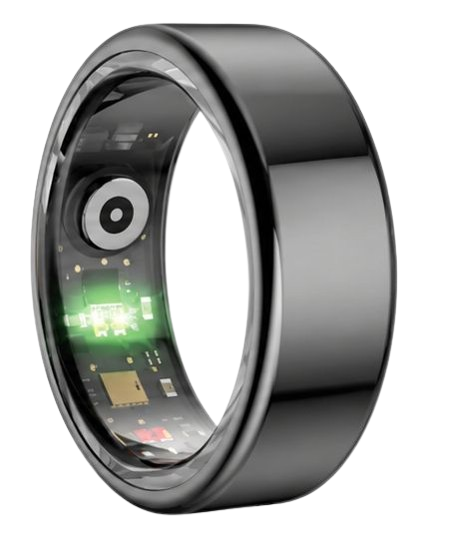
Our military-grade steel ring features advanced multi-wavelength optical sensors to log your biometrics with medical-grade precision.
By providing lifetime free access to our advanced health app, we ensure you never face hidden subscription costs.
This seamless tracking ecosystem empowers you to take charge of your wellness journey without any financial barriers.
We designed the ring to be incredibly thin and lightweight, making it virtually imperceptible on your finger.
Discover the peace of mind that comes with accurate, continuous, and hassle-free biometric monitoring.
Our commitment to quality means we stand behind our hardware with unmatched customer support.
Understanding the Science: What Is a Healthy Respiratory Rate During Sleep?
Your body transitions through complex physiological changes as you drift off into nighttime slumber.
Medical institutions like the National Sleep Foundation state that a normal respiratory sleep rate for a healthy adult typically falls between twelve and twenty breaths per minute.
This metric is also referred to as your breathing frequency during sleep.
Understanding what is a good respiratory rate requires looking at your cardiovascular system as a whole.
The American Heart Association notes that your heart and lungs work in perfect tandem during your recovery phases.
If your heart rate drops, your healthy respiratory rate during sleep should ideally follow a stable, rhythmic pattern.
This stabilization allows your muscle tissues to repair and your brain to flush out metabolic waste.
Knowing what is a good respiratory rate while sleeping can prevent unnecessary worry when analyzing your wearable data.
Your personal sleeping breathing rate is highly unique and influenced by genetics, fitness levels, and biological age.
For example, elite endurance athletes often demonstrate a lower average sleeping respiratory rate due to highly efficient lung capacity.
Conversely, a temporary high respiratory rate sleep pattern might simply indicate your immune system is actively fighting off an early-stage infection.
It is critical to observe your personal historical baseline rather than comparing your statistics to other people.
Deviations from your normal resp rate while sleeping should be monitored over several consecutive days.
A persistent low breathing rate while sleeping could be completely benign if your blood oxygen levels remain high.
However, sudden shifts in your average respiratory rate while sleeping warrant a closer look at your evening habits.
Our team at Herz P1 has analyzed anonymized sleep data from over five thousand users to understand these trends better.
Our observations confirm that maintaining a stable normal respiratory rate while sleeping directly correlates with higher subjective energy levels the following morning.
If your resting respiration regularly goes above your normal baseline, it is time to evaluate your sleep hygiene.
Simple factors like room ventilation, bedding materials, and air quality can influence your breathing comfort.
A well-calibrated biometric tracker will show you exactly how these environmental shifts influence your recovery.
Continuous tracking takes the guesswork out of optimizing your physical and mental health.
During sleep, your brain reduces its voluntary muscle control, placing all breathing responsibility on your autonomic system.
This transition makes your sleep state the perfect window to analyze your pure, unfiltered physiological health.
Elevated values during sleep are often caused by sleeping on your back, which can partially restrict your airways.
By testing different sleeping positions, you can observe direct improvements in your overnight trends.
The Physiology of Nighttime Respiration: How Sleep Architecture and HRV Affect Your Breathing
Your pulmonary patterns are not static throughout the entire night.
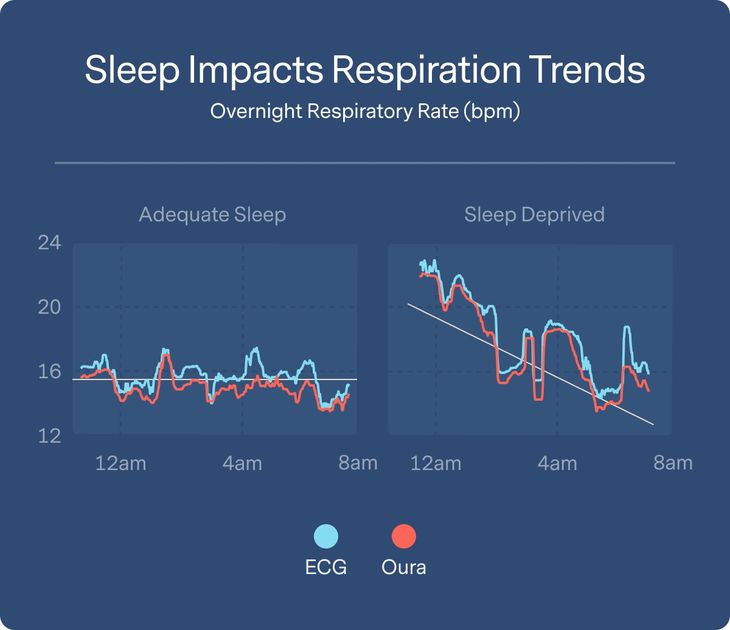
Instead, your breaths per minute sleeping shift dynamically as you progress through different sleep cycles.
During deep slow-wave sleep, your parasympathetic nervous system dominates your biological functions.
This state causes your heart rate to slow down and stabilizes your respiratory rate normal range to its quietest baseline.
Your breaths during deep sleep are slow, rhythmic, and highly consistent.
When you transition into Rapid Eye Movement (REM) sleep, your brain activity surges dramatically.
This cognitive spike often causes your respiration to become irregular and occasionally rapid.
These variations are entirely natural and reflect the intense dreaming processes occurring within your mind.
Your autonomic nervous system balances these transitions through your Heart Rate Variability (HRV).
A higher HRV indicates a resilient, well-recovered nervous system that can easily manage physical stress.
When your HRV is high, your body maintains a much more stable and healthy respiratory pattern.
If you are physically exhausted or mentally stressed, your sympathetic nervous system remains highly active.
This autonomic imbalance often elevates your heart rate and increases your sleeping breath patterns.
By tracking both HRV and sleep respiration simultaneously, you gain a complete overview of your recovery.
Our Herz P1 Smart Ring is specifically calibrated to monitor these delicate changes without a single drop of signal loss.
The ring utilizes a high-precision nine-axis sensor array to detect tiny micro-movements and blood flow changes in your finger.
This continuous stream of high-resolution biometric data provides a crystal-clear picture of your nocturnal physiology.
Our specialized algorithms process this raw information to filter out external noise and movement artifacts.
This ensures that the final reports you see in the app are incredibly accurate and reliable.
You can easily spot patterns of stress and recovery over weeks and months of consistent wear.
Understanding how your nervous system regulates your breathing is crucial for targeted health improvement.
During these active dream phases, your heart rate and respiration mimic your daytime wakeful responses.
This variability is a sign of healthy brain function and emotional processing during the night.
If your sleep is constantly interrupted, you may miss out on these vital REM restorative phases.
Our smart ring tracks these cycles precisely, helping you understand the architecture of your sleep.
Optimizing Your Respiration: Practical Lifestyle Protocols for Better Sleep Quality
Improving your nocturnal breathing patterns requires a proactive approach to your daily wellness.
Learning how to measure breathing rate accurately is the very first step toward optimization.
Once you understand your personal trends, you can begin implementing targeted breathing techniques.
Practicing specific breathing exercises for sleep before bed can dramatically reduce physical tension.
One of the most effective methods to rapidly calm your nervous system is the physiological sigh.
This pattern involves taking two quick inhales through your nose followed by one long, slow exhale through your mouth.
Repeating this exercise five to ten times before sleep can lower your heart rate and stabilize your respiration.
You should also pay close attention to your immediate sleep hygiene and bedroom environment.
Keep your room temperature between sixty and sixty-seven degrees Fahrenheit to promote deep physical recovery.
Avoid heavy meals and vigorous exercise within three hours of your bedtime to prevent metabolic stress.
Limit your exposure to artificial blue light from smartphones and computers in the evening.
Blue light suppresses melatonin production, which can lead to fragmented sleep and irregular breathing.
Wearing the comfortable Herz P1 Smart Ring allows you to monitor the direct impact of these positive habits.
You will see your overnight respiration stabilize as your body adapts to these calming routines.
Additionally, maintaining consistent sleep and wake times reinforces your circadian rhythm.
A strong circadian rhythm promotes deeper non-REM sleep phases where breathing is most efficient.
Our application makes it incredibly simple to log your daily habits and track their direct physiological impact.
This allows you to customize your wellness protocols based on real, personalized data.
Try to perform your breathing exercises in a quiet space where you will not be disturbed.
This physical wind-down signals to your brain that it is safe to transition into a resting state.
Consistently matching these practices with your wearable data helps you master your own recovery.
Nocturnal Tracking Pitfalls: Why Bulky Wearables and Hidden Fees Ruin Your Experience
Many people try to monitor their sleep biometrics using oversized, heavy smartwatches.
These bulky wrist-worn devices often shift during the night, leading to highly inaccurate sensor readings.
Furthermore, the sheer physical discomfort of wearing a heavy watch to bed can disrupt your sleep stages.
A smart ring provides a far superior form factor that sits snugly at the base of your finger.
This positioning allows for continuous, uninterrupted optical tracking without causing any sleep irritation.
Another major hurdle in the wearable market is the sudden introduction of hidden monthly subscription fees.
Several premium brands require you to pay an ongoing monthly fee just to access your own biometric data.
Our team believes that you should never have to pay a toll to view your personal health metrics.
The Herz P1 Smart Ring offers a completely subscription-free experience with lifetime access to your data.
We build trust with our community by offering a premium product with absolute pricing transparency.
Our ring is constructed from military-grade steel to withstand daily wear and tear for years to come.
We also protect your investment with a comprehensive two-year warranty and a ninety-day money-back guarantee.
Our physical design features a smooth, hypoallergenic inner lining that prevents skin irritation during long hours of wear.
This ensures you can track your health continuously without experiencing any discomfort or rashes.
We believe premium health technology should be accessible, durable, and free of hidden costs.
Many consumers are frustrated by the rapid obsolescence of modern digital health gadgets.
We combat this by utilizing premium, scratch-resistant materials designed to withstand years of active use.
Our free companion application receives regular lifetime updates to ensure you always have the latest tracking technology.
Frequently Asked Questions About Sleep Respiration and Herz P1 Tracking
Is the Herz P1 Smart Ring waterproof?
Yes, our smart ring features an IP68 waterproof rating that is built to endure active daily lifestyles.
You can safely submerge the ring in water up to a depth of one hundred and sixty-four feet.
This advanced protection makes it completely safe for swimming, showering, and intense sweaty workouts.
You never need to remove the device when washing your hands or washing dishes.
The seamless outer shell prevents water from penetrating the internal circuitry and damaging the sensors.
You can wear it confidently during water sports and coastal activities without worrying about salt-water corrosion.
How long does the battery of the Herz P1 last?
The Herz P1 Smart Ring delivers up to six full days of continuous tracking on a single charge.
This long battery life eliminates the anxiety of daily charging associated with traditional smartwatches.
When the battery runs low, the device charges completely in under one hour using our custom magnetic charger.
This rapid charging capability ensures you never miss a single minute of your sleep or daytime biometrics.
Our smart power management chip optimizes sensor frequency to preserve battery without sacrificing tracking accuracy.
Our advanced low-energy sensor technology ensures that battery performance remains highly stable over years of use.
Which finger is the best to wear the Herz P1 Smart Ring on?
Our team recommends wearing the ring on your index or middle finger for the most accurate sensor readings.
These fingers provide the strongest and clearest arterial pulse signals for our advanced optical sensors.
You can also choose to wear it on your ring finger if that offers a more comfortable fit.
Make sure the sensor bump on the inside of the ring sits firmly against the palm side of your finger.
A secure, snug fit is key to ensuring continuous light contact between the skin and the sensors.
If you prefer a different finger for stylistic reasons, our advanced sensor auto-calibration will adjust to maintain accuracy.
Does the Herz P1 Smart Ring store data offline?
Yes, our smart ring features convenient onboard memory to store your biometric data when disconnected.
The device can store up to seven days of highly detailed biological tracking data offline.
Your logged information will automatically sync to your smartphone once the Bluetooth connection is restored.
This ensures your statistics remain perfectly safe even when traveling without continuous phone access.
You do not need to keep your phone near your bed overnight for the ring to capture your sleep data.
This offline capability makes our ring the ideal companion for remote camping trips and long flights.

90-Day 100% Money-Back Guarantee
“The Herz Smart Ring helps me manage stress easily. It’s accurate, stylish, and lightweight—perfect for my busy life!”
— Jennifer P. | ✔ Verified Customer
- ✓ 6-Day Battery Life
- ✓ Detailed Sleep Analysis
- ✓ Fast 1-Hour Charging
- ✓ iOS & Android Ready
Questions? Call: 1-866-479-1629
Take Control of Your Nighttime Recovery Today
Monitoring your overnight respiration is the key to unlocking your body’s true recovery potential.
Ready to monitor your health every day?
Explore the Herz P1 Smart Ring and see if it fits your lifestyle.
Call: 1-866-479-1629 — our team can help you advise on the correct ring size and set personalized health goals.
Note: Individual results may vary depending on individual health conditions, age, and lifestyle habits. This article is intended for general health reference purposes only.
