

Understanding your body’s monthly fluctuations can feel like decoding a complex puzzle, which is why many women ask, does your temperature rise before your period? According to clinical research, subtle shifts in basal body temperature serve as vital biological indicators of hormonal transitions. By tracking these micro-changes with precision tools like the Herz P1, you can unlock valuable health insights and proactively manage your overall wellness.
Built to Last. Save Up to 69% Today.
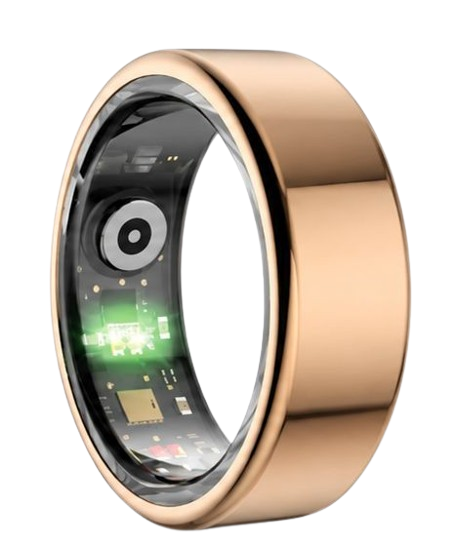
The Herz P1 Smart Ring tracks HRV, Sleep, Heart Rate & SpO2 around the clock. No subscriptions. No renewals. Ever.
In This Article
- The Baseline Truth: Explore the exact physiological timeline of your temperature shifts.
- Hormonal Drivers: Discover how progesterone alters your resting metabolic state.
- Smart Sensing Tech: Learn how smart rings measure dermal temperature compared to traditional methods.
- Wellness Optimization: Read our practical application guide to optimize daily training and recovery based on cycle trends.
Does Your Temperature Rise Before Your Period? The Physiological Facts Explained

Yes, your body temperature does indeed rise before your period starts.
This natural thermal increase is a direct result of hormonal shifts during your menstrual cycle.
Specifically, this change affects individuals who experience regular, ovulatory menstrual cycles.
The thermal rise occurs during the luteal phase, which is the period between ovulation and menstruation.
In a standard 28-day cycle, you will observe this temperature elevation starting around day 15.
This phenomenon takes place within the hypothalamus, which acts as the brain’s internal thermostat.
The shift happens because the corpus luteum releases high levels of the hormone progesterone immediately after ovulation.
Progesterone acts directly on the hypothalamus to raise your set-point temperature.
The quantitative increase is subtle but highly consistent, typically ranging between 0.5 and 1.0 degree Fahrenheit.
This elevated state persists for roughly 10 to 14 days until hormone levels begin to recede.
If pregnancy does not occur, your progesterone levels drop sharply right before your period begins.
Consequently, you might wonder, does your body temperature drop before period?
The answer is yes, as this sudden drop signals the onset of your menstrual flow.
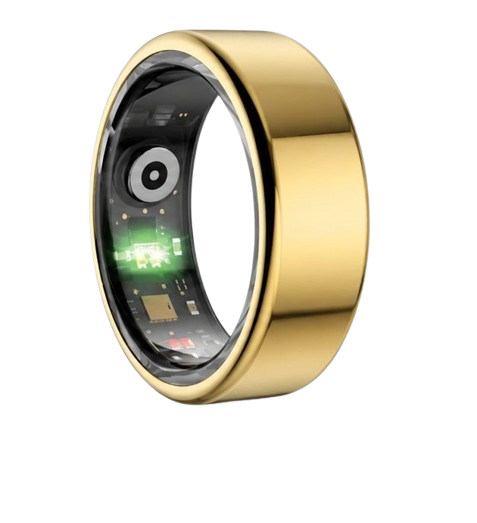
If you want to track this in real time, the Herz P1 Smart Ring monitors skin temperature fluctuations 24/7 — explore it here.
90-Day 100% Money-Back Guarantee
“The Herz Smart Ring helps me manage stress easily. It’s accurate, stylish, and lightweight—perfect for my busy life!”
— Jennifer P. | ✔ Verified Customer
- ✓ 6-Day Battery Life
- ✓ Detailed Sleep Analysis
- ✓ Fast 1-Hour Charging
- ✓ iOS & Android Ready
Questions? Call: 1-866-479-1629
The Endocrinology of Your Thermal Cycle: How Progesterone Controls Temperature Shifts
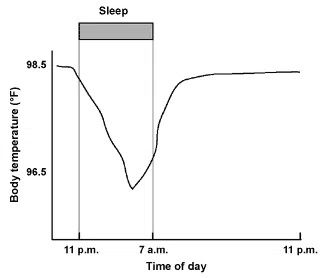
To fully comprehend this pattern, we must look at the endocrine system’s delicate feedback loops.
The menstrual cycle is divided into two primary halves: the follicular phase and the luteal phase.
During the follicular phase, estrogen remains the dominant hormone in your reproductive system.
Estrogen keeps your metabolic rate steady and maintains a lower baseline body temperature.
Once ovulation occurs, the ruptured follicle transforms into a temporary endocrine gland called the corpus luteum.
This gland immediately begins secreting progesterone to prepare the uterine lining for a potential pregnancy.
Progesterone is highly thermogenic, meaning it naturally stimulates heat production in your tissues.
This hormonal surge alters the relationship between your baseline body temperature and menstrual cycle phases.
As progesterone warms your body, your resting heart rate may also rise slightly to support a higher metabolic demand.
According to clinical researchers, this endocrine shift can also influence your autonomic nervous system and reduce heart rate variability (HRV).
Many women experience subtle disturbances in their sleep quality during this high-temperature phase.
The National Sleep Foundation reports that elevated core temperatures can make it harder to fall asleep and stay asleep.
This thermal shift explains why premenstrual insomnia is a common complaint among cycling individuals.
Understanding the link between body temperature and menstruation helps you anticipate these physical changes.
Instead of feeling frustrated by sudden fatigue, you can recognize it as a natural biological response.
By keeping a close eye on these shifts, you gain agency over your physical comfort and training capacity.
The Herz P1 Smart Ring utilizes clinical-grade thermal sensors to log these microscopic shifts automatically while you sleep.
Basal Body Temperature vs. Skin Temperature: How Smart Rings Track Your Cycle

For decades, tracking basal body temperature required waking up at the exact same minute every single morning.
You had to place a sensitive thermometer under your tongue before moving, speaking, or sitting up in bed.
Any slight movement or minor change in your morning schedule could easily disrupt the accuracy of your readings.
Fortunately, modern wearable technology has completely revolutionized the field of temperature cycle tracking.
Instead of relying on oral measurements, advanced smart rings monitor distal skin temperature continuously overnight.
This continuous sampling method provides a much more robust data set than a single morning snapshot.
Smart rings use ultra-precise Negative Temperature Coefficient (NTC) thermistors to measure skin temperature at the base of your finger.
Your finger contains a dense network of blood vessels that closely mirror your internal core thermal trends.
By analyzing hours of sleep data, the ring filters out short-term spikes caused by moving blankets or room temperature shifts.
The result is a highly stabilized daily temperature curve that reveals your true hormonal baseline.
This method allows you to track your basal temp during period phases without manual effort.
You no longer have to stress about alarm clocks or immediate morning measurements.
The Herz P1 Smart Ring handles this complex mathematical modeling quietly in the background.
It records your biometrics at regular intervals, ensuring a high-fidelity representation of your underlying physiology.
Decoding Your Thermal Curve on the Herz P1 App to Optimize Wellness
Once your smart ring gathers your daily thermal data, the real magic happens inside the companion app.
The app translates complex numerical patterns into a clean, easy-to-read biological map.
By analyzing your bbt throughout cycle, the app helps you identify your specific fertile window.
You will see a clear, step-like increase in your thermal chart right after your ovulation cycle temperature peak.
This visualization allows you to plan your activities around your body’s natural energy cycles.
For example, during the lower-temperature follicular phase, your body is highly resilient to physical stress.
This is the optimal time to schedule high-intensity workouts, heavy strength training, or demanding work projects.
Conversely, when your temperature rises during the luteal phase, your cardiovascular strain increases slightly.
Your body requires more recovery time, and your resting heart rate may trend upward.
Recognizing these patterns allows you to shift toward active recovery, yoga, and extra sleep.
The Herz P1 App also tracks your daily Heart Rate Variability (HRV) and Sleep Score alongside your temperature.
When these three metrics align, you get an incredibly accurate picture of your overall readiness.
This holistic approach ensures you never push yourself to the point of exhaustion or burnout.
Our user data shows that individuals who align their lifestyle with their biological phases report a major boost in energy.
| Cycle Phase | Physiological Indicators | Optimal Wellness Focus |
|---|---|---|
| Follicular Phase | Lower body temperature, higher HRV, steady resting heart rate. | High-intensity workouts, heavy lifting, starting new mental challenges. |
| Ovulation | Brief temperature dip followed by a sharp, sustained thermal rise. | Peak energy window, ideal for social activities and intense cardio. |
| Luteal Phase | Elevated body temperature, lower HRV, higher resting heart rate. | Active recovery, stress management, prioritization of restorative sleep. |
Common Pitfalls in Smart Wearable Choices: Why Rings Outperform Watches
Many people make the mistake of purchasing a heavy, bulky smartwatch to track their nightly biometrics.
Wearing a massive screen on your wrist can easily disrupt your sleep architecture.
Furthermore, watches often slip out of place during the night, leading to highly inaccurate data collection.
The continuous light emission from screen notifications can also interfere with your melatonin production.
In contrast, a sleek smart ring sits comfortably and securely at the base of your finger all night long.
Another major trap in the wearable market is the hidden ongoing cost of monthly app subscriptions.
Several leading brands force you to pay a recurring fee just to view your own health data.
We believe your personal health metrics should never be held behind a paywall.
The Herz P1 App is completely free for lifetime, with absolutely no subscription fees or hidden costs.
Additionally, some wearable devices are fragile and susceptible to water damage during simple household tasks.
The Herz P1 is constructed from military-grade steel, ensuring maximum durability for years to come.
With a certified IP68 waterproof rating, you can wear it safely in the shower, pool, or sauna.
We stand behind this build quality by offering an industry-leading 2-year warranty on every ring.
This complete package ensures you get a worry-free tracking experience that fits your active lifestyle perfectly.
Frequently Asked Questions About Temperature Tracking and Wearables
Is the Herz P1 Smart Ring waterproof?
Yes, the Herz P1 is completely IP68 waterproof and built to survive depths up to 164 feet.
You can confidently wear it while swimming, washing dishes, showering, or relaxing in the sauna.
Its robust, military-grade steel exterior ensures that moisture never breaches the internal electronics.
How long does the battery last on the Herz P1?
The smart ring features an ultra-efficient battery that lasts up to 6 full days on a single charge.
This long-lasting battery life eliminates the daily charging anxiety associated with traditional smartwatches.
When it is time to power up, the ring charges fully from empty to 100% in under 1 hour.
Which finger is the best option to wear the smart ring on?
For the absolute best biometric accuracy, we recommend wearing the Herz P1 on your index finger.
Your index finger contains highly accessible blood vessels that allow the optical sensors to read your pulse clearly.
However, the middle finger and ring finger are also excellent, highly accurate alternatives if you prefer.
Does the Herz P1 Smart Ring store data offline?
Yes, the ring has secure onboard memory that stores up to 7 days of raw health data offline.
You do not need to keep your smartphone nearby or connected via Bluetooth at all times.
The next time you open the free app, all your stored metrics will automatically sync and update.
Conclusion: Your Path to Data-Driven Health Empowerment
Tracking your temperature is a powerful way to master your cycle.
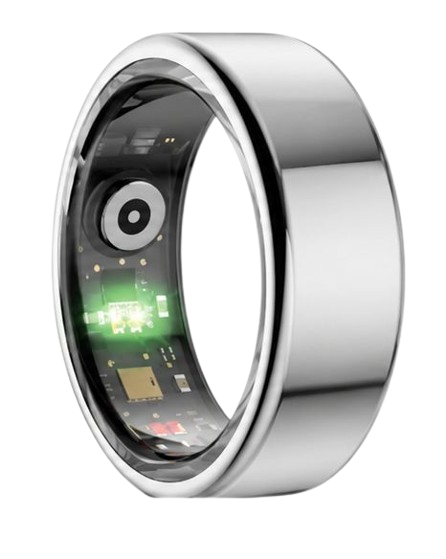
The subscription-free Herz P1 makes this effortless and accurate every single day.
Ready to monitor your health?
Explore the Herz P1 Smart Ring.
Call: 1-866-479-1629 — our team can advise on correct ring sizes and set health goals.
*Note: Individual results may vary depending on individual health conditions, age, and lifestyle habits. This article is intended for general health reference purposes only.
