

Understanding why you feel hot or whether does body temperature rise at night is crucial for mastering your sleep hygiene. Many people wake up drenched in sweat, wondering if their internal thermostat is malfunctioning. By examining your daily biometric patterns with a highly accurate wearable device like the Herz P1 Smart Ring, you can decode these thermal signals and optimize your sleep environment. Recent physiological studies show that nighttime temperature fluctuations correlate directly with your overall sleep quality and cardiovascular recovery.
Built to Last. Save Up to 69% Today.
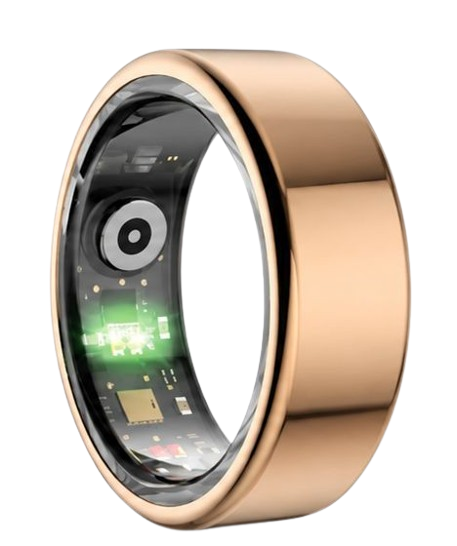
The Herz P1 Smart Ring tracks HRV, Sleep, Heart Rate & SpO2 around the clock. No subscriptions. No renewals. Ever.
In This Article
- Core vs. Skin Temp: Learn why your skin feels hot even as your core temperature drops during sleep.
- Circadian Regulation: Understand how your biological clock controls daily temperature fluctuations.
- Lifestyle Triggers: Discover how alcohol, late meals, and stress artificially raise your nighttime temperature.
- Biometric Tracking: See how the subscription-free Herz P1 Smart Ring maps these critical thermal trends.
Does Body Temperature Rise at Night? Here’s What the Research Says
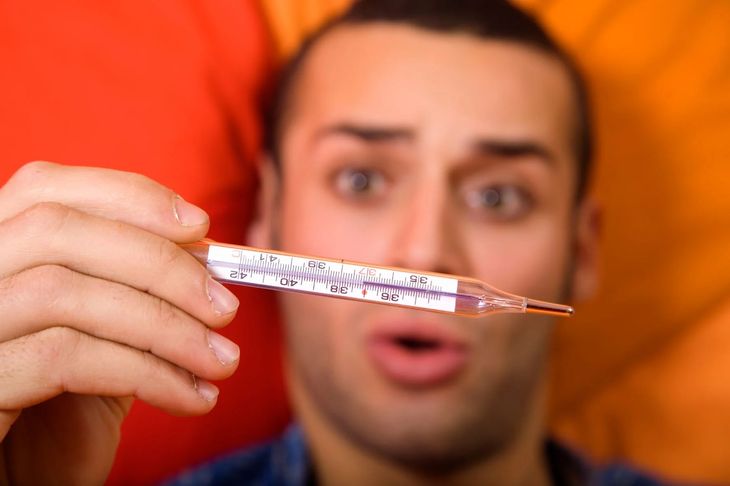
Many individuals ask if does body temperature rise at night when they wake up feeling overly warm.
The answer to this question requires looking at the difference between your internal organs and your skin surface.
Your core body temperature actually drops as you fall into a deep sleep state.
However, your skin temperature rises because your blood vessels dilate to push heat out from your center.
This biological heat-dumping process affects every healthy adult during their normal sleep cycle.
It typically begins in the late evening as your body prepares for rest.
This thermal shift occurs primarily in your hands, feet, and face, where blood vessels are closest to the skin.
The brain initiates this process to cool your internal organs and protect your metabolic systems.
By dilating your peripheral blood vessels, your body allows heat to radiate off your skin into your bedsheets.
A normal nocturnal drop in core temperature is about 1 to 2 degrees Fahrenheit.
Conversely, your skin temperature can rise by several degrees during this vasodilation phase.
This is why you might feel physically hot even though your internal organs are cooling down.
If your bedroom is too warm, this radiant heat cannot escape, leading to night sweats and sleep disruption.
Understanding these thermal dynamics is crucial for anyone seeking to improve their daily recovery.
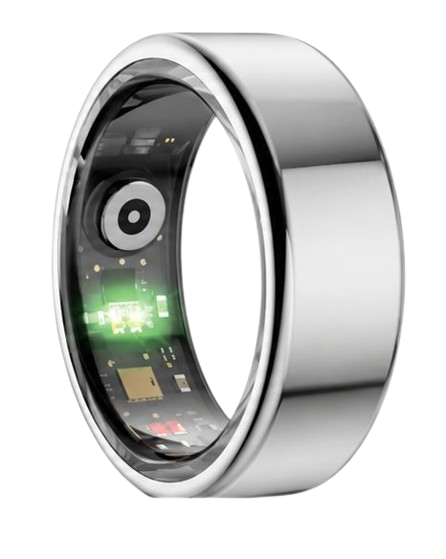
If you want to track this in real time, the Herz P1 Smart Ring monitors these shifts 24/7 — explore it here.
90-Day 100% Money-Back Guarantee
“The Herz Smart Ring helps me manage stress easily. It’s accurate, stylish, and lightweight—perfect for my busy life!”
— Jennifer P. | ✔ Verified Customer
- ✓ 6-Day Battery Life
- ✓ Detailed Sleep Analysis
- ✓ Fast 1-Hour Charging
- ✓ iOS & Android Ready
Questions? Call: 1-866-479-1629
The Science of Nighttime Thermal Dynamics: Core vs. Skin Temperature
Understanding the difference between core and skin temperature is key to identifying sleep disruptions.
The medical community, including the National Sleep Foundation, relies heavily on tracking these dual thermal markers.
Your core organs must cool down for your brain to transition into deep, restorative sleep stages.
This core cooling is regulated by your biological clock, which operates on a strict 24-hour cycle.
Meanwhile, your peripheral skin acts as a heat radiator to facilitate this internal cooling.
If this delicate heat-exchange process is blocked, your sleep architecture becomes fragmented and light.
This is why many people experience frequent awakenings during the first half of the night.
Keeping your bedroom temperature between 60 and 67 degrees Fahrenheit supports this natural radiation.
Our team at Herz P1 has analyzed thousands of sleep data sets to understand how thermal shifts impact sleep.
We consistently see that a failure to shed core heat leads to a lower sleep score.
Tracking skin temperature during sleep provides direct clues about how well your body transitions into deep sleep.
By observing these trends, you can make intelligent adjustments to your evening routine.
Why Your Skin Feels Warmer While Your Core Cools Down
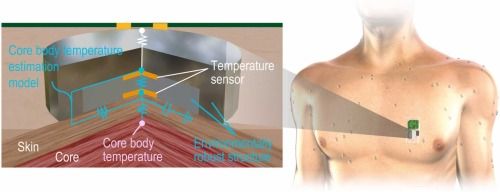
During the onset of sleep, your body initiates a process called distal vasodilation.
This process widens the blood vessels in your extremities to increase blood flow.
Because more warm blood flows to your skin, the surface temperature of your hands and feet goes up.
This is why you may observe that your skin temperature dip sleeping is replaced by a warm flush.
Your core organs transfer their heat to your blood, which then releases it through your skin.
This is a healthy biological response designed to lower your internal operating temperature.
However, if your skin cannot release this heat due to heavy blankets, you will feel uncomfortably hot.
This trapped heat signals to your brain that the environment is too hostile for deep sleep.
Consequently, your body may trigger a stress response, elevating your heart rate and keeping you awake.
Using a lightweight, highly conductive smart ring allows you to monitor these subtle skin temperature changes without adding bulk.
The Herz P1 Smart Ring tracks these micro-fluctuations in skin temperature with medical-grade accuracy.
How the Hypothalamus Directs Your Nocturnal Thermoregulation
The hypothalamus acts as your body’s main thermostat and sits deep within your brain.
It receives constant temperature data from thermal receptors located all over your skin and core.
When the sun sets, your hypothalamus detects the change in light and begins secreting melatonin.
This hormone not only makes you sleepy but also signals the hypothalamus to lower your thermal set point.
The brain then directs your autonomic nervous system to begin cooling your core.
This natural circadian rhythm body temperature drop is essential for physical recovery.
If your circadian rhythm is disrupted by blue light, your hypothalamus delays this cooling process.
This delay explains why late-night screen time makes you feel restless and physically warm in bed.
Understanding how your hypothalamus operates helps you design a better evening wind-down routine.
By keeping your schedule consistent, you support your brain’s natural thermal programming.
Monitoring these circadian patterns with a dedicated tracker helps you identify when your biological clock is out of sync.
We engineered the Herz P1 to help you identify these exact circadian shifts without any complex setup.
Crucial Factors That Elevate Your Nighttime Temperature
While natural cooling is ideal, many daily factors can disrupt this process and cause nighttime spikes.
An elevated nocturnal temperature often points to underlying physiological stress or lifestyle triggers.
When your body has to work harder to digest food or process toxins, it generates excess metabolic heat.
This metabolic heat prevents your core from reaching its optimal cool state for deep recovery.
Additionally, mental stress triggers the release of cortisol, which keeps your nervous system highly active.
This high activation keeps your blood vessels constricted, blocking the natural heat-dumping process.
As a result, your body temperature remains elevated throughout the entire night.
By identifying these elevation factors, you can take proactive steps to protect your sleep quality.
Our team recommends reviewing your daily habits alongside your biometric trends to find patterns.
Often, making simple adjustments to your evening routine can dramatically lower your overnight thermal load.
Let us look closer at how hormones, stress, and food intake affect your nighttime temperature.
Hormonal Shifts, Stress, and Metabolic Processes
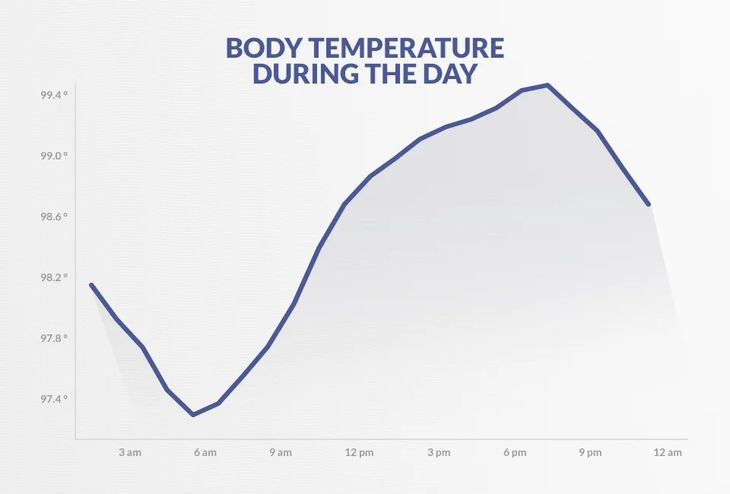
Hormones play a massive role in regulating your daily and monthly thermal patterns.
For women, progesterone levels rise during the luteal phase of the menstrual cycle, raising baseline temperature.
This hormonal shift can cause a notable increase in nocturnal warmth and lead to sleep disruptions.
Additionally, high stress levels during the day cause your adrenal glands to flood your system with cortisol.
This hormone increases your heart rate and elevates your metabolic rate, producing more internal heat.
Your body remains in a fight-or-flight state, which completely halts the natural cooling process.
This is why high workday stress directly correlates with feeling hot and restless in bed.
By tracking your body temperature fluctuations during the day, you can spot these stress-induced spikes.
The Herz P1 Smart Ring helps you connect the dots between your daytime stress and your night temperature.
Our subscription-free app displays these relationships clearly, helping you manage your daily stress load.
Lifestyle Triggers: Alcohol, Late Meals, and Sleep Environments
What you consume in the hours leading up to bedtime has a direct impact on your thermal regulation.
Drinking alcohol close to sleep is one of the most common causes of nighttime temperature spikes.
While alcohol may make you feel sleepy, it causes rapid vasodilation and raises your skin temperature.
This disruption of alcohol body temperature sleep patterns prevents your core from cooling down.
Similarly, eating a large meal late at night forces your digestive system to work overtime.
This digestive work increases your metabolic rate and elevates your internal heat production.
An unsuitable sleep environment, such as a poorly ventilated room, further compounds these internal heat spikes.
Your body cannot radiate heat effectively if the surrounding air is already warm and humid.
To prevent this, we recommend avoiding heavy meals and alcohol for at least three hours before bed.
Using breathable bedding made of natural fibers also supports your body’s natural heat-shedding processes.
The Herz P1 app tracks how these lifestyle changes directly improve your nighttime recovery score.
How to Leverage Your Thermal Data with the Herz P1 Smart Ring
Tracking your biological data is only useful if you know how to apply those insights to your life.
The Herz P1 Smart Ring acts as your personal digital health assistant, gathering data silently as you live.
Equipped with highly sensitive optical sensors, it captures continuous biometric signals from your finger.
This continuous tracking reveals patterns that simple spot-checks would completely miss.
By examining these patterns, you can see exactly when your body temperature drops or rises each night.
The ring’s military-grade steel construction ensures it is durable enough to withstand daily wear.
Its lightweight design means you will never feel distracted or uncomfortable while wearing it to bed.
Unlike bulky smartwatches, the Herz P1 sits naturally on your finger, ensuring optimal sensor contact.
This constant contact is crucial for maintaining a high level of accuracy throughout the sleep cycle.
Let us explore how you can use this accurate thermal data to improve your daily wellness.
Reading Basal Temperature Trends on the Free App
The Herz P1 companion app provides a clear, comprehensive dashboard of your daily biometrics.
When you wake up, your temperature data syncs automatically to your smartphone via Bluetooth.
The app displays your skin temperature trends relative to your personal baseline.
This baseline is established over your first few days of wearing the smart ring.
Instead of showing confusing raw numbers, the app highlights variations like +0.5 or -0.3 degrees.
This makes it incredibly easy to see if your body temperature drops at night as expected.
A consistent overnight drop indicates that your body is successfully entering deep, restorative sleep.
If the app shows your temperature remains elevated, it prompts you to consider potential triggers.
These insights help you make informed decisions about your evening habits without any guesswork.
Best of all, this advanced data analysis is completely free for life with no monthly fees.
Optimizing Your Sleep Hygiene and Training Load
You can use your Herz P1 thermal data to fine-tune both your sleep environment and your workouts.
If you notice your skin temperature spike, you can experiment with lower thermostat settings.
You can also track how different pajama materials affect your overnight thermal recovery.
Furthermore, temperature data serves as a powerful indicator of your physical recovery from exercise.
An elevated nighttime temperature often signals that your muscles are still recovering from a hard workout.
If your temperature remains high, it may be wise to schedule a lighter training day.
This prevents overtraining and protects your cardiovascular system from excessive strain.
By listening to these thermal cues, you can optimize your training schedule for maximum efficiency.
The Herz P1 gives you the exact data you need to balance high-intensity exercise with deep rest.
This balanced approach is the key to achieving long-term fitness goals without burning out.
Smart Ring Comfort vs. Bulky Smartwatches: Overcoming Sleep Tracking Barriers
Many individuals try to track their sleep using bulky, screen-heavy smartwatches.
However, these large devices often create more sleep disruption than they actually track.
A heavy watch can press uncomfortably into your wrist or snag on your bedsheets as you turn.
The bright screen of a smartwatch can also turn on accidentally, flashing blue light into your eyes.
This light exposure instantly disrupts your brain’s melatonin production, raising your nighttime temperature.
Furthermore, smartwatches require frequent charging, often forcing you to leave them on the charger overnight.
This charging routine results in massive gaps in your sleep history, rendering your trends useless.
The Herz P1 Smart Ring completely solves these common sleep tracking barriers.
Crafted from military-grade steel, it is incredibly lightweight and measures only a few millimeters thick.
It sits flush against your finger skin, where blood flow is highly concentrated and easy to read.
This placement allows our advanced optical sensors to gather high-fidelity data without causing irritation.
With a 6-day battery life, you only need to charge the Herz P1 once a week for under an hour.
This long battery life ensures you never miss a single night of critical sleep staging or thermal tracking.
Choosing the Herz P1 means prioritizing both maximum comfort and continuous, reliable data accuracy.
Frequently Asked Questions About Nighttime Body Temperature
To help you understand your device and physiological signals better, we have compiled the most common questions.
These answers will help you maximize your health tracking experience with the Herz P1 Smart Ring.
Is the Herz P1 Smart Ring waterproof?
Yes, the Herz P1 features a certified IP68 waterproof rating, making it completely dustproof and highly water-resistant.
It can withstand continuous submersion in water up to 164 feet deep without experiencing any damage.
This high level of protection means you can safely wear your ring while swimming, showering, washing dishes, or sweating during workouts.
You never have to worry about removing the ring during your daily activities, ensuring truly continuous 24/7 tracking.
How long does the battery last on the Herz P1?
The Herz P1 is engineered with advanced power-saving technology that delivers up to 6 days of continuous battery life.
This long-lasting performance is maintained even with continuous heart rate, sleep, and skin temperature monitoring enabled.
When the battery does run low, you can charge the ring back to 100% capacity in under 1 hour using our fast magnetic charger.
This rapid charging capability means you can easily top up the battery while taking a quick morning shower.
Which finger is the best to wear the smart ring on?
For the highest level of biometric sensor accuracy, we recommend wearing the Herz P1 on your index finger.
The index finger has a highly concentrated network of blood vessels near the skin surface, making it ideal for optical tracking.
If you prefer a different fit, the middle and ring fingers are also excellent alternatives that yield highly reliable data.
We provide a free sizing kit with every purchase to help you find the perfect fit for your chosen finger.
Does the Herz P1 store my biometric data offline?
Yes, the Herz P1 contains built-in storage that can safely save up to 7 days of biometric data offline.
This means you do not need to keep your smartphone nearby or connected to Bluetooth at all times.
The ring will continuously track your sleep, heart rate, and temperature while you are away from your phone.
As soon as you open the free app near your ring, all stored offline data will sync automatically to your dashboard.
Conclusion: Unlock Deeper Health Insights
Monitoring your thermal trends is the key to deep, restorative sleep.
The subscription-free Herz P1 Smart Ring offers the military-grade reliability and accuracy you need to optimize your health.
Ready to monitor your health every day? Explore the Herz P1 Smart Ring and see if it fits your lifestyle.
Call: 1-866-479-1629 — our team can help you advise on the correct ring size and set personalized health goals.
Note: Individual results may vary depending on individual health conditions, age, and lifestyle habits. This article is intended for general health reference purposes only.
