

How quickly your heart recovers after exercise is one of the most powerful indicators of your overall cardiovascular health and biological age. If you want to check your post workout recovery heart rate and evaluate cardiac cooling efficiency on fitness trackers, understanding the standard 1 minute heart rate recovery chart by age will give you critical clarity on your cardiorespiratory fitness. By utilizing the ultra-precise, subscription-free Herz P1 smart ring to track your daily physical stress, sleep, and heart rate dynamics, you can gain immediate, actionable feedback on your heart’s efficiency and overall physiological longevity without any recurring monthly fees.
Built to Last. Save Up to 69% Today.
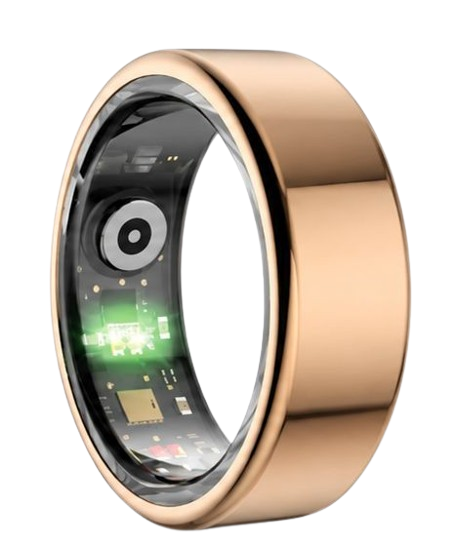
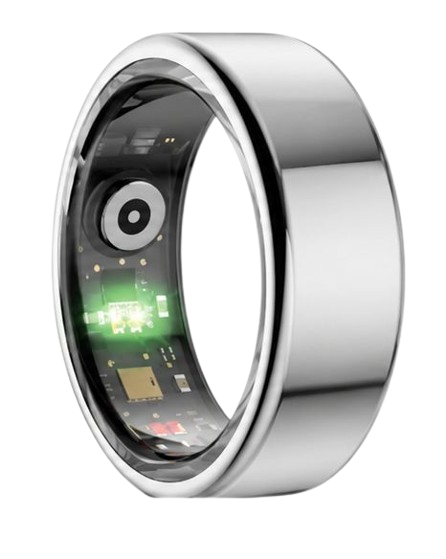
The Herz P1 Smart Ring tracks HRV, Sleep, Heart Rate & SpO2 around the clock. No subscriptions. No renewals. Ever.
In This Article
- Measuring Your Heart Rate Recovery: A clear, five-step guide to calculating your recovery baseline manually or automatically.
- Age-Graded Recovery Charts: In-depth visual and numerical breakdowns showing where your cardiovascular system ranks by decade.
- The Science of Cardiac Cooling: How vagal tone, the parasympathetic nervous system, and HRV interact to dictate physical resilience.
- Overcoming Data Pitfalls: Identifying tracking errors, addressing bad device placement, and choosing the right tech without hidden fees.
How to Measure Your One Minute Recovery Heart Rate: A Step-by-Step Guide
Measuring your heart rate recovery requires a structured approach to ensure the numbers you collect are accurate, repeatable, and biologically meaningful.
To evaluate your cardiac cooling efficiency correctly, you must isolate your peak cardiovascular exertion from your rest period.
Prerequisites / What You’ll Need
You will need a reliable tracking device or a stopwatch to count your pulse manually.
Ensure you are in a safe, open space where you can safely transition from intense physical movement to complete, seated stillness.
Make sure you have not consumed heavy stimulants or energy drinks within three hours of this test, as they artificially alter your cardiac cooling speed.
-
Step 1: Warm Up and Reach Your Peak Heart Rate
Perform a continuous cardio activity such as running, cycling, or jumping jacks for at least ten minutes.
Gradually increase your pace until you reach a high intensity, aiming for approximately 80% to 90% of your estimated maximum heart rate.
Maintaining this intensity for at least two minutes ensures your cardiovascular system is fully taxed before you begin recovery tracking.
Keep a close eye on your tracking device to note your peak beats per minute right before you stop moving.
-
Step 2: Stop All Physical Activity Instantly
The very moment you reach your peak exertion, cease all movement and immediately sit down in a comfortable chair.
Do not pace around, bend over, or engage in deep, forced hyperventilation as this will disrupt your natural recovery curves.
Keep your hands resting gently on your lap and focus on slow, natural nasal breathing to allow your nervous system to transition smoothly.
Initiate your timer or stopwatch the exact second your feet stop moving.
-
Step 3: Note Your Peak Heart Rate Immediately
Record the exact heart rate shown on your tracker at the zero-second mark of your rest period.
If you are measuring manually, count your radial pulse for the first six seconds and multiply by ten to establish this baseline.
This starting number represents your peak exertion value, which serves as the anchor point for your calculation.
Any delay in capturing this number will skew your final calculation and make your recovery look slower than it actually is.
-
Step 4: Remain Seated and Measure Again at Exactly 60 Seconds
Sit completely still without speaking, moving your limbs, or looking at distracting phone notifications for the next minute.
Allow the timer to run continuously until it hits exactly the one-minute mark.
Record your heart rate at this precise moment to find your post-workout cooling number.
This second metric reveals how aggressively your parasympathetic nervous system stepped in to put the brakes on your heart.
-
Step 5: Calculate the Difference and Check the Charts
Subtract your one-minute resting heart rate from your peak active heart rate to find your one minute recovery heart rate.
For example, if your peak heart rate was 170 BPM and your one-minute post-exercise heart rate is 140 BPM, your recovery score is 30 BPM.
Compare this raw value against the age-graded baseline data to find out what is a good heart rate recovery for your demographic.
Consistently logging this number once per week helps you see if your training is actively making your heart more resilient.
While manual measurements are highly valuable, tracking these metrics on your own every single day can quickly become a tedious chore.
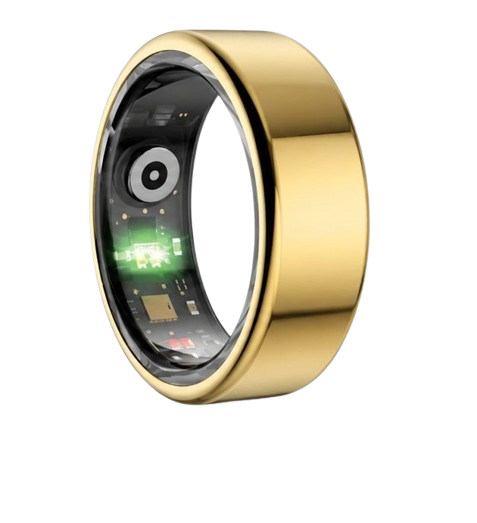
The Herz P1 Smart Ring solves this by offering continuous, automatic biometric tracking right from your finger.
The ring’s medical-grade optical sensors record your physical exertion peaks and resting transitions automatically, mapping your long-term fitness trends to our free, subscription-free health app so you never have to worry about running timers or writing down numbers again.
90-Day 100% Money-Back Guarantee
“The Herz Smart Ring helps me manage stress easily. It’s accurate, stylish, and lightweight—perfect for my busy life!”
— Jennifer P. | ✔ Verified Customer
- ✓ 6-Day Battery Life
- ✓ Detailed Sleep Analysis
- ✓ Fast 1-Hour Charging
- ✓ iOS & Android Ready
Questions? Call: 1-866-479-1629
The Heart Rate Recovery Chart by Age: Analyzing Cardiac Cooling Efficiency
Your raw recovery score is only half of the story because your cardiovascular system naturally undergoes shifts as you blow out more birthday candles.
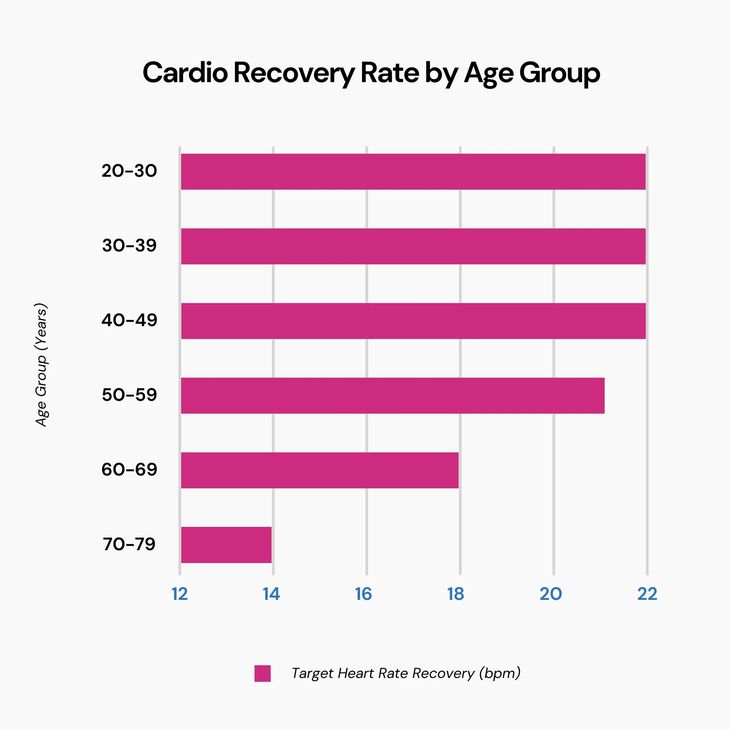
To help you see where you stand, we have compiled a definitive reference table showing normal and exceptional cardiac cooling metrics across different decades of life.
By reviewing a verified cardio recovery rate chart, you can benchmark your score against thousands of healthy adults.
| Age Group | Elite Recovery (BPM) | Good Recovery (BPM) | Average / Normal (BPM) | Poor / High Risk (BPM) |
|---|---|---|---|---|
| 20 – 29 Years | > 35 BPM | 25 – 35 BPM | 18 – 24 BPM | < 12 BPM |
| 30 – 39 Years | > 32 BPM | 23 – 32 BPM | 16 – 22 BPM | < 12 BPM |
| 40 – 49 Years | > 30 BPM | 21 – 30 BPM | 15 – 20 BPM | < 12 BPM |
| 50 – 59 Years | > 28 BPM | 19 – 28 BPM | 13 – 18 BPM | < 11 BPM |
| 60+ Years | > 25 BPM | 17 – 25 BPM | 12 – 16 BPM | < 10 BPM |
As you can see, hitting a cardio recovery 30 bpm is an outstanding result for almost any age group.
An elite score indicates a highly responsive nervous system that can easily pivot away from intense stress and back toward a state of calm growth.
If your numbers fall into the average range, there is absolutely no need to worry as you can easily boost this metric through regular aerobic exercise.
However, if your score consistently sits below 12 beats per minute, it could indicate that your heart is struggling to calm down after a physical load.
The Physiology of One Minute Recovery: Vagal Tone and the Autonomic System

To truly understand why your heart rate drops after a run, you have to look closely at the autonomic nervous system.
During a high-intensity workout, your sympathetic nervous system is fully in charge, pumping adrenaline through your body to raise your blood pressure and heart rate.
The moment you stop exercising, your brain’s vagus nerve must immediately fire to release acetylcholine, which commands your heart’s sinus node to slow down.
This rapid shift is known as vagal tone reactivation, and it serves as a key measure of your overall cardiorespiratory fitness.
According to the American Heart Association, a slow or sluggish recovery suggests that your body remains stuck in a high-stress, fight-or-flight state long after the actual work is done.
This persistent stress can wear down your blood vessels and increase your long-term cardiovascular risks over time.
By monitoring these subtle changes, you can catch early warning signs of overtraining, poor sleep, or chronic stress before they impact your daily life.
A sudden drop in your recovery rate can be a clear signal that your body is currently fighting off an illness or dealing with hidden exhaustion.
Pairing this metric with your resting heart rate vo2 max levels will give you a comprehensive picture of your heart’s physical capacity.
The highly sensitive optical sensors of the Herz P1 Smart Ring work continuously to monitor these exact physiological shifts.
Unlike bulky wrist-worn trackers that struggle to read blood flow through thick skin and hair, the ring’s finger-based PPG sensor reads directly from the rich capillary beds of your digital arteries with an incredibly small margin of error.
Optimizing Your Cardio Recovery with Advanced Lifestyle Interventions
Improving your heart’s recovery speed is entirely possible through consistent, smart lifestyle adjustments.
Engaging in regular zone-2 aerobic exercises, such as light jogging or cycling, is one of the fastest ways to build up your vagal tone and heart capacity.
Focusing on daily hydration and proper electrolyte balance also plays an incredibly vital role in maintaining your overall blood volume and cardiac efficiency.
If you notice that your cardio recovery decreased over the course of a week, it is usually a sign that you need to schedule a dedicated rest day.
Paying close attention to your sleep quality is equally critical, as your autonomic nervous system relies on deep sleep to repair muscle tissue and restore your neural balance.
To help you track these sleep stages, the Herz P1 tracks your REM, Deep, and Light sleep stages with pinpoint accuracy, giving you a daily recovery score that tells you exactly how ready your body is to tackle another workout.
By checking your daily metrics, you can easily find your personal sweet spot and avoid the common trap of overtraining.
With a little time and consistent effort, you will likely see your heart rate recovery numbers steadily climb as your heart muscle grows stronger and more efficient.
This positive trend will also help you reach your peak max vo2 levels over your next few months of active training.
Common Mistakes in Tracking Cardiac Cooling and How to Avoid Them
One of the most common mistakes fitness enthusiasts make is relying on heavy, uncomfortable smartwatches to track their physiological data during sleep.
These bulky devices often shift around on your wrist during the night, leading to missing data gaps and highly inaccurate sleep readings.
If you are frustrated by a tracker that fails to log your recovery metrics, you might wonder why is cardio recovery not updating on your current device.
Often, this issue is caused by a poor sensor fit or a loss of skin contact during your training transitions.
Another major pain point in the wearable market is the hidden cost of ongoing monthly app subscriptions.
Many popular brands lock your sleep stages, HRV trends, and recovery history behind expensive monthly paywalls.
At Team Herz P1, we believe that your personal health data belongs entirely to you, which is why our companion app is free for life with absolutely zero subscription fees.
Constructed from ultra-durable, military-grade steel and protected by an IP68 waterproof rating, the Herz P1 Smart Ring is built to withstand sweat, swims, and daily drops without missing a single beat.
This lightweight, comfortable design ensures you can track your heart rate, stress levels, and recovery curves around the clock with zero physical distraction.
Frequently Asked Questions About Heart Rate Recovery
Conclusion
Monitoring your 1-minute heart rate recovery is one of the most effective ways to track your long-term cardiac cooling trends and overall nervous system health.
The subscription-free Herz P1 Smart Ring provides the ultimate blend of comfort, accuracy, and military-grade durability to help you meet your daily health goals.
Ready to monitor your health every day? Explore the Herz P1 Smart Ring and see if it fits your lifestyle. Call: 1-866-479-1629 — our team can help you advise on the correct ring size and set personalized health goals.
Note: Individual results may vary depending on individual health conditions, age, and lifestyle habits. This article is intended for general health reference purposes only.
