

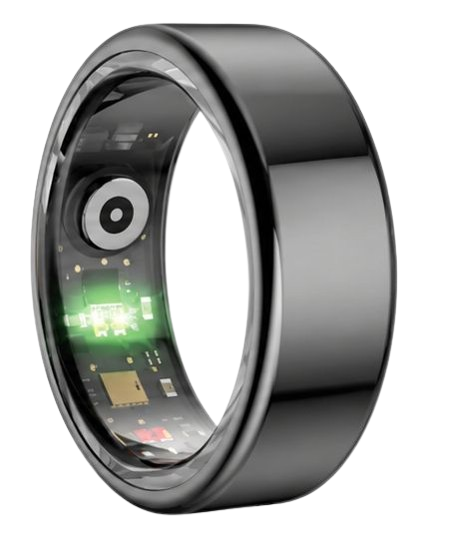
Understanding your cardiovascular health starts with tracking your post-exercise vitals using a comprehensive cardio recovery rate chart to benchmark your heart’s efficiency. According to the Journal of the American Heart Association, individuals with poor heart rate recovery face up to a 68% higher risk of cardiovascular events over a ten-year period. By tracking these vital metrics with the Herz P1 Smart Ring, you can accurately monitor your autonomic nervous system and pinpoint cardiovascular patterns without expensive medical bills or bulky tracking gear.
Built to Last. Save Up to 69% Today.
The Herz P1 Smart Ring tracks HRV, Sleep, Heart Rate & SpO2 around the clock. No subscriptions. No renewals. Ever.
In This Article
- Step-by-Step Guide: How to accurately measure and check your cardio recovery at home.
- Medical Interpretation: What normal post-workout heart rate drops tell us about nervous system health.
- Comprehensive Charts: Comparing cardio recovery rate norms by both age and gender.
- Data Troubleshooting: Addressing common hardware and application tracking issues.
How to Measure and Improve Your Heart Rate Recovery: A Step-by-Step Guide
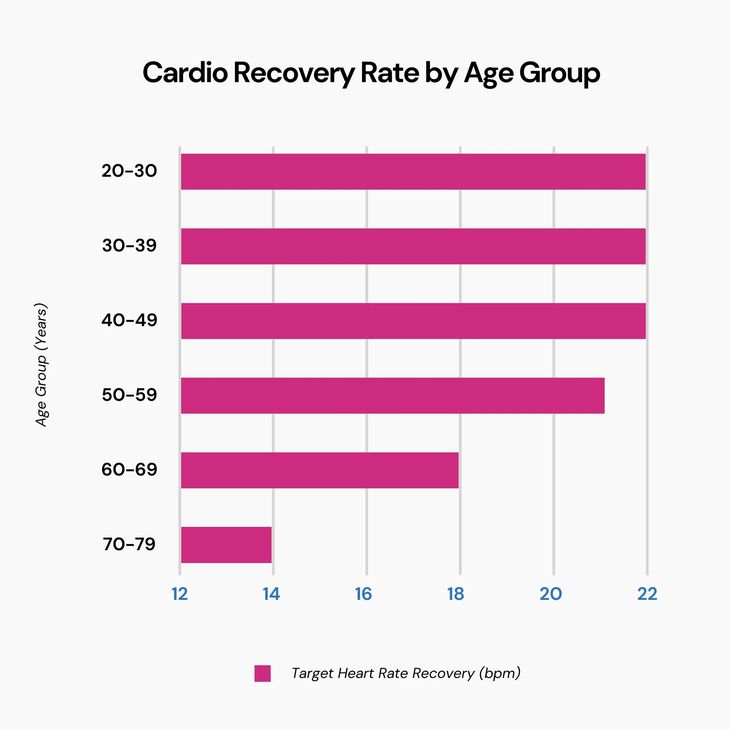
Your heart rate recovery is a direct reflection of how fast your autonomic nervous system can rebound from physical exertion.
To measure this metric accurately, you need minimal tools but highly precise timing and physical conditions.
Ensuring your measurement process is highly standardized will allow you to track real progression over time.
-
Step 1: Perform a Warm-up and Elevate Your Pulse to Peak Training Zone
To begin, you need to engage in a cardiovascular workout that pushes your heart rate into a moderate-to-high intensity zone.
Aim to sustain this physical activity for at least ten to fifteen minutes so that your circulatory system is fully engaged.
You can use running, cycling, rowing, or intense calisthenics to elevate your pulse to its target training threshold.
Keep a close eye on your intensity to make sure you do not feel lightheaded or excessively fatigued during this phase.
-
Step 2: Cease Exercise and Record Your Peak Heart Rate Immediately
The moment you complete your high-intensity interval, you must immediately stop all movement and note your exact heart rate.
This initial number represents your peak exercise pulse, which serves as the baseline for your recovery calculation.
Do not sit down or lay flat on your back immediately, as this can artificially accelerate your initial heart rate drop.
Instead, remain standing or walk very slowly in a small circle while preparing to start your timer.
-
Step 3: Keep Completely Still and Monitor Your Heart Rate at the One-Minute Mark
Start a precise sixty-second countdown timer the exact moment you stop exercising and keep your upper body still.
Once sixty seconds have elapsed, record your heart rate again to determine your immediate recovery efficiency.
This value is used to calculate your 1 minute heart rate recovery chart by age comparison score.
A quick drop during this first minute indicates robust vagal nerve activation and an efficient parasympathetic system.
-
Step 4: Continue Monitoring and Record Your Pulse at the Two-Minute Mark
Keep your timer running for another sixty seconds without resuming any physical movement or speaking.
At exactly one hundred and twenty seconds post-exercise, read and write down your final heart rate value.
This allows you to calculate what is a good 2-minute recovery heart rate based on your demographic profile.
Monitoring this second minute provides critical data about how well your system maintains its calm, restorative state.
-
Step 5: Calculate the Difference and Compare Your Values Against the Recovery Scale
Subtract your one-minute and two-minute heart rate numbers from your peak exercise heart rate to get your recovery scores.
For example, if your peak heart rate was 170 BPM and your one-minute recovery heart rate was 140 BPM, your drop is 30 BPM.
Compare your resulting calculation with a standardized what is a good heart rate recovery database.
Consistently recording these numbers weekly helps you visualize your overall aerobic conditioning improvements.
Manually tracking these phases can be incredibly tedious, especially when you are exhausted right after a grueling workout.
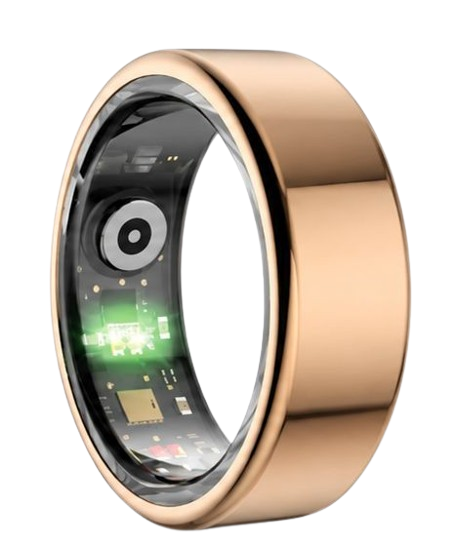
The Herz P1 Smart Ring automates this entire process by continuously scanning your capillary bed at the base of your finger.
Our multispectral optical array logs your exact workout peaks and maps your precise recovery curve directly to your phone without manual button presses.
90-Day 100% Money-Back Guarantee
“The Herz Smart Ring helps me manage stress easily. It’s accurate, stylish, and lightweight—perfect for my busy life!”
— Jennifer P. | ✔ Verified Customer
- ✓ 6-Day Battery Life
- ✓ Detailed Sleep Analysis
- ✓ Fast 1-Hour Charging
- ✓ iOS & Android Ready
Questions? Call: 1-866-479-1629
The Physiological Science Behind a Cardio Recovery Rate Chart
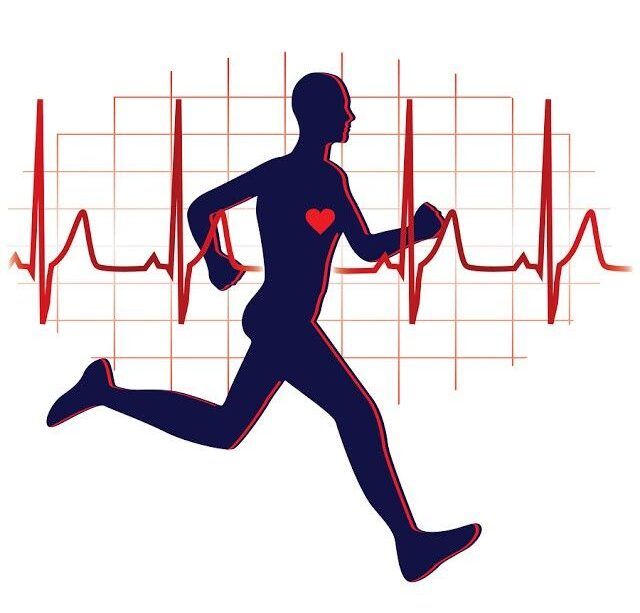
Every single beat of your heart is heavily influenced by the delicate balancing act of your autonomic nervous system.
When you are exercising, your sympathetic nervous system acts like a car’s gas pedal, pumping adrenaline and raising your pulse.
The moment you stop exercising, your parasympathetic nervous system must step in to apply the physiological brakes.
Vagal nerve activation releases acetylcholine, which immediately signals the sinoatrial node in your heart to slow its pacing.
A sluggish recovery curve shows that your body is having a hard time switching out of its stressful “fight-or-flight” state.
Medical studies indicate that a slow recovery drop points to chronic sympathetic dominance, which is often caused by overtraining or lack of sleep.
We look at this rate of change to judge cardiorespiratory fitness and verify if your muscle tissue is getting enough oxygen.
Our research team has observed that a drop of cardio recovery 30 bpm within the first minute is a strong sign of great athletic conditioning.
On the flip side, seeing your cardio recovery decreased over several consecutive workouts is a warning sign that your body might be overtrained.
This slow drop can also happen if you are fighting a hidden infection, highly stressed, or severely dehydrated.
To accurately track these autonomic shifts, the Herz P1 tracks Heart Rate Variability (HRV) and Blood Oxygen Saturation (SpO2) using specialized optical sensors.
This medical-grade accuracy helps you spot autonomic fatigue long before it turns into chronic physical exhaustion or injury.
Understanding Your Recovery Metrics Across Age and Gender Benchmarks

Cardiovascular metrics are never a one-size-fits-all measurement, as age and gender both influence how quickly your heart rate drops.
As we get older, our blood vessels naturally stiffen, and our vagal nerve response gradually slows down.
Biological sex also plays a role because baseline chamber sizes and stroke volumes differ between men and women.
The chart below outlines standard one-minute heart rate recovery ranges for various age groups and physical fitness levels.
| Age Group | Excellent Recovery (BPM Drop) | Good Recovery (BPM Drop) | Poor Recovery (BPM Drop) |
|---|---|---|---|
| 20–29 Years | > 35 BPM | 25 to 34 BPM | < 18 BPM |
| 30–39 Years | > 32 BPM | 22 to 31 BPM | < 15 BPM |
| 40–49 Years | > 29 BPM | 19 to 28 BPM | < 13 BPM |
| 50–59 Years | > 26 BPM | 16 to 25 BPM | < 11 BPM |
| 60+ Years | > 22 BPM | 12 to 21 BPM | < 10 BPM |
An excellent recovery rate is highly correlated with a superior resting heart rate vo2 max ratio.
The more oxygen your heart can process with each contraction, the less stress it faces during intense physical exertion.
If you fall into the poor recovery category, your cardiovascular system may be working much harder than it needs to.
Improving these baselines requires consistent aerobic exercise in zone two to build up your heart’s stroke volume.
As your heart muscle strengthens, you will see your baseline shift toward elite max vo2 levels.
Using these metrics lets you customize your training intensity to match your heart’s actual recovery speed.
This data-driven approach keeps you from overworking your heart and helps you design smarter, more effective workouts.
Optimizing Your Daily Heart Recovery Patterns with Smart Technology
Having medical data is only useful if you know how to apply those numbers to your daily lifestyle choices.
By monitoring your cardiovascular trends on the Herz P1 application, you can easily map out your recovery trends over time.
Our app visually plots your daily cardiovascular stress and highlights any positive or negative recovery patterns.
If you see your recovery metrics improving, it means your heart is adapting well to your current training volume.
If your recovery numbers start to drop, you can quickly adjust your training intensity to prevent fatigue.
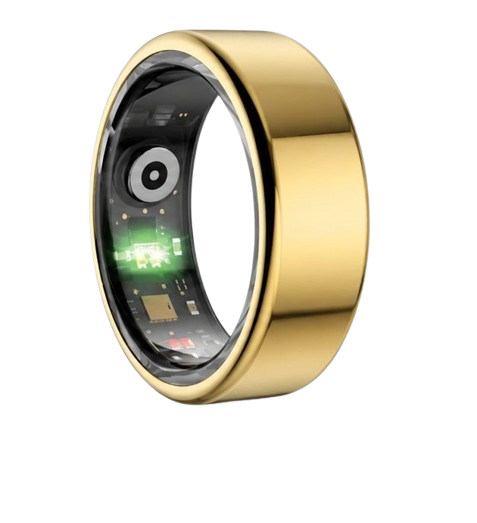
The Herz P1 Smart Ring’s lightweight, ultra-slim design makes it comfortable to wear 24/7 without getting in your way.
Unlike bulky smartwatches that pinch your wrist and irritate your skin, this sleek ring is practically unnoticeable.
This continuous contact ensures the sensors capture clean, uninterrupted heart rate and oxygen saturation data.
You can wear the ring while you sleep, work, or train to build a highly accurate, long-term health baseline.
Having access to this continuous data lets you make proactive adjustments to your sleep schedule, hydration, and training load.
Common Pitfalls in Heart Recovery Tracking and How to Avoid Them
Many fitness enthusiasts make the mistake of wearing a heavy, bulky smartwatch to monitor their sleep and recovery cycles.
These oversized wrist devices easily shift out of place during the night, leading to inaccurate sensor readings and data gaps.
The constant movement of a loose watch band makes it difficult for optical sensors to capture a clean capillary pulse.
Additionally, many smartwatch brands lock your personal health data behind expensive monthly app subscription fees.
Paying a recurring monthly fee just to view your own heart rate and sleep metrics can feel incredibly frustrating.
We believe your personal health data should belong to you completely, without any hidden paywalls or ongoing fees.
The Herz P1 companion app is 100% free for life, giving you full access to all your biometric trends without any subscriptions.
Sometimes users get confused when they notice their why is cardio recovery not updating status inside third-party health applications.
This issue is usually caused by outdated software sync permissions or minor Bluetooth connection drops.
Using our dedicated companion app solves this problem by keeping your ring and phone synced instantly and securely.
By choosing a dedicated, subscription-free health tracker, you can avoid these common headaches and enjoy accurate, hassle-free monitoring.
Frequently Asked Questions About Cardio Recovery and Smart Rings
-
Is the Herz P1 Smart Ring waterproof?
Yes, the Herz P1 is fully IP68 waterproof, allowing you to submerge it up to 164 feet without damaging the internal electronics.
You can wear it while swimming laps, taking hot showers, washing dishes, or relaxing in the sauna.
-
How long does the battery last on a single charge?
The ring features an optimized battery that lasts up to 6 full days of continuous health tracking on a single charge.
When the battery is low, it takes less than one hour to fully recharge using our custom fast-charging dock.
-
Which finger is the best option to wear the smart ring on?
We recommend wearing the Herz P1 on your index, middle, or ring finger for the most accurate sensor contact.
Make sure the ring fits snugly without twisting easily, as this keeps the sensors aligned with your capillary blood vessels.
-
Does the ring store my biometric data offline when my phone is away?
Yes, the Herz P1 has built-in local memory that securely stores up to 7 days of health data offline.
The moment your ring reconnects to your phone, all your stored metrics sync automatically to your app dashboard.
Conclusion
Measuring your cardiac recovery patterns is the ultimate way to track your long-term heart health and physical fitness.
The Herz P1 Smart Ring provides accurate, subscription-free tracking to help you monitor your recovery trends without any monthly fees.
Ready to monitor your health every day? Explore the Herz P1 Smart Ring and see if it fits your lifestyle. Call: 1-866-479-1629 — our team can help you advise on the correct ring size and set personalized health goals.
Note: Individual results may vary depending on individual health conditions, age, and lifestyle habits. This article is intended for general health reference purposes only.
