

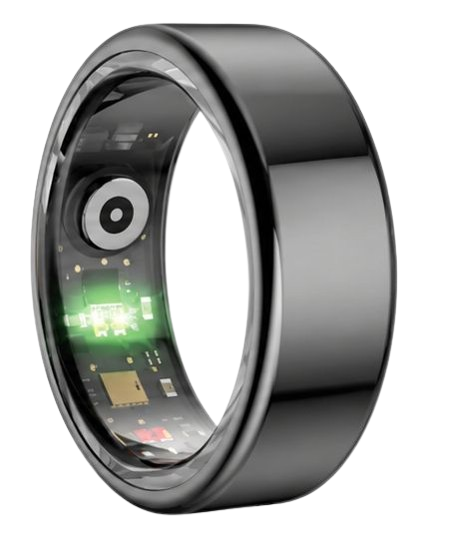
When your body temperature climbs during an illness, you might notice your pulse racing and wonder: does a fever make your heart rate go up? This physiological shift is a direct defense mechanism that occurs as your immune system mobilizes to fight off pathogens. Monitoring these shifts in real time is simple with the Herz P1 smart ring. Our advanced wearable tracks continuous temperature and cardiac fluctuations without any ongoing monthly fees.
Built to Last. Save Up to 69% Today.
The Herz P1 Smart Ring tracks HRV, Sleep, Heart Rate & SpO2 around the clock. No subscriptions. No renewals. Ever.
In This Article
- The Physiological Root Cause: Learn why your body demands a faster heart rate when dealing with high temperatures.
- The Q10 Metabolic Link: Understand the exact correlation between biochemical rates, oxygenation, and systemic heart strains.
- Subclinical Warnings: Discover why infections can alter your cardiac rhythms before a physical fever is detected on a thermometer.
- Recovery Monitoring: Discover how smart rings like the Herz P1 track continuous resting metrics to optimize daily activities.
Why Does a Fever Make Your Heart Rate Go Up? The Medical Explanation
A fever represents an intentional elevation in your baseline core body temperature.
This biological shift is orchestrated by your central nervous system in response to biological invaders.
When pathogenic agents enter your tissues, your immune cells release regulatory proteins called pyrogens.
These circulating pyrogens travel through the blood to the preoptic area of your brain’s hypothalamus.
The hypothalamus acts as your internal thermostat and immediately shifts your core temperature set point upward.
This elevation in core temperature is designed to hinder pathogen replication while boosting your immune cell synthesis.
However, running a higher body temperature requires an enormous amount of metabolic energy.
For every single degree Celsius that your body temperature rises, your resting metabolic rate climbs by approximately ten to twelve percent.
This massive metabolic acceleration means your tissues consume oxygen and nutrients at a much faster rate.
To deliver these vital resources to your cells, your circulatory system must work significantly harder.
This process affects all demographics, ranging from elite training athletes to sedentary office workers.
The metabolic strain is heaviest during the active phase of systemic inflammation as your body fights off infection.
Additionally, your vascular system dilates peripheral blood vessels to help dissipate the extreme excess heat through your skin.
This widespread vasodilation causes your systemic blood pressure to drop unless your cardiac output increases.
To compensate and maintain stable blood pressure, your heart must pump blood much more rapidly.
This adjustment explains why you will often observe a resting pulse 100 with fever when you are resting in bed.
This compensatory mechanism is a healthy, protective adaptation rather than a symptom of direct heart damage.
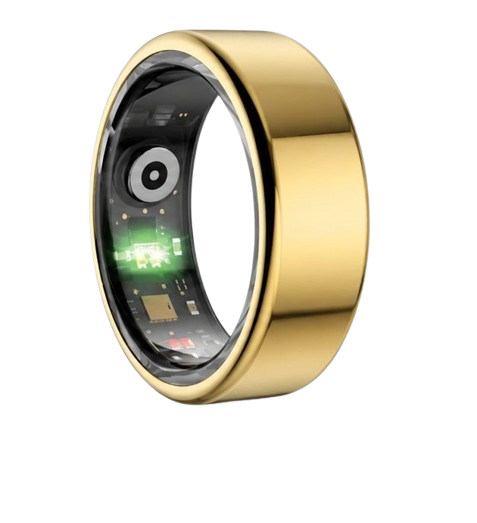
If you want to track this in real time, the Herz P1 Smart Ring monitors heart rate and skin temperature 24/7 — explore it here.
90-Day 100% Money-Back Guarantee
“The Herz Smart Ring helps me manage stress easily. It’s accurate, stylish, and lightweight—perfect for my busy life!”
— Jennifer P. | ✔ Verified Customer
- ✓ 6-Day Battery Life
- ✓ Detailed Sleep Analysis
- ✓ Fast 1-Hour Charging
- ✓ iOS & Android Ready
Questions? Call: 1-866-479-1629
The Cardiorespiratory Link: Understanding Body Temp and Heart Rate Relation
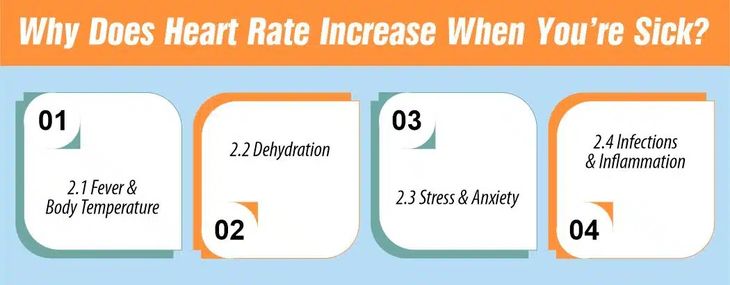
The intricate details of the body temp and heart rate relation are rooted deep in human cardiac biophysics.
Your heart’s natural pacemaker is the sinoatrial node located in the upper wall of the right atrium.
The cells within this pacemaker node rely on specialized ion channels to regulate electrical impulse rates.
When your core body temperature rises, the rate of ion movement through these cellular channels accelerates.
This direct thermal stimulation forces your cardiac muscles to contract much more frequently.
Biochemists refer to this biological acceleration as the Q10 temperature coefficient.
This kinetic process is accompanied by sudden adjustments within your autonomic nervous system.
Your autonomic nervous system is divided into two parts: the sympathetic and parasympathetic networks.
Under normal conditions, your parasympathetic vagus nerve acts as a brake to keep your heart rate low.
When you develop a fever, your brain suppresses this parasympathetic brake and triggers your sympathetic system.
This sympathetic surge floods your cardiac tissues with stress chemicals like adrenaline and norepinephrine.
These neurotransmitters increase both the beating speed and the muscular contraction force of your heart.
You will experience a distinct elevated heart rate when sick because of this combined chemical and thermal stimulation.
The American Heart Association notes that fever-induced dehydration also reduces your circulating blood volume.
As blood volume drops, your heart must pump faster to maintain proper oxygen delivery to your vital organs.
This highlights why staying hydrated is absolutely critical to minimizing cardiac strain during an infection.
The National Sleep Foundation also confirms that your body uses sleep to drive vital cellular repair.
However, when your heart is beating fast due to a fever, your sleep cycles become highly fragmented.
This internal stress shortens your deep sleep and REM cycles, which are vital for physical recovery.
By wearing the Herz P1 Smart Ring, you can track these subtle sleep disruptions through continuous pulse measurements.
Our military-grade steel ring tracks resting metrics all night without any bulk or skin irritation.
| Core Body Temperature Zone | Metabolic Demand Rate Increase | Expected Heart Rate Acceleration |
|---|---|---|
| 98.6°F (37.0°C) – Standard Baseline | 0% (Standard state) | Normal Resting HR (60 to 100 beats per minute) |
| 100.4°F (38.0°C) – Mild Fever Zone | Climbs by 10% to 12% | Increases by 8 to 15 bpm above baseline |
| 102.2°F (39.0°C) – Moderate Fever Zone | Climbs by 20% to 24% | Increases by 16 to 30 bpm above baseline |
| 104.0°F (40.0°C) – High Fever Danger Zone | Climbs by 30% to 36% | Increases by 30 to 45 bpm above baseline |
Infection vs. Temperature: Decoding the Heart’s Defense System
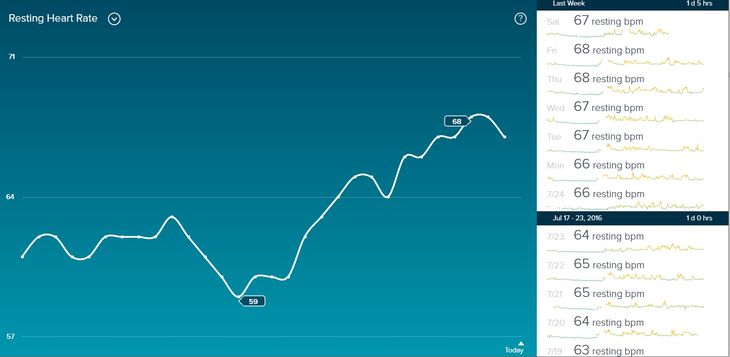
Many individuals assume that their heart rate only rises when a physical fever is present.
In reality, your sick resting heart rate can jump before a thermometer registers any fever.
So, does infection increase heart rate directly without an actual elevation in temperature?
Yes, because your immediate immune defense releases cytokines that trigger systemic inflammatory signaling.
These chemical messengers signal your autonomic system to enter a protective fight-or-flight state.
This early nervous response is why you might see a high heart rate when sick no fever during early incubation phases.
Your body accelerates blood flow to distribute white blood cells to key defense areas quickly.
If the invading infection progresses, the ongoing systemic strain can lead to true tachycardia when sick.
Tachycardia is defined as a sustained, resting heart rate that exceeds one hundred beats per minute.
For instance, battling a viral infection like the influenza virus can cause a flu heart rate over 100.
This high cardiac pace helps flush out waste products and transport antibodies to infected tissues.
If you have ever wondered is your heart rate higher when sick, the medical consensus is clear.
Your cardiovascular output must scale up to support your immune system during almost all infections.
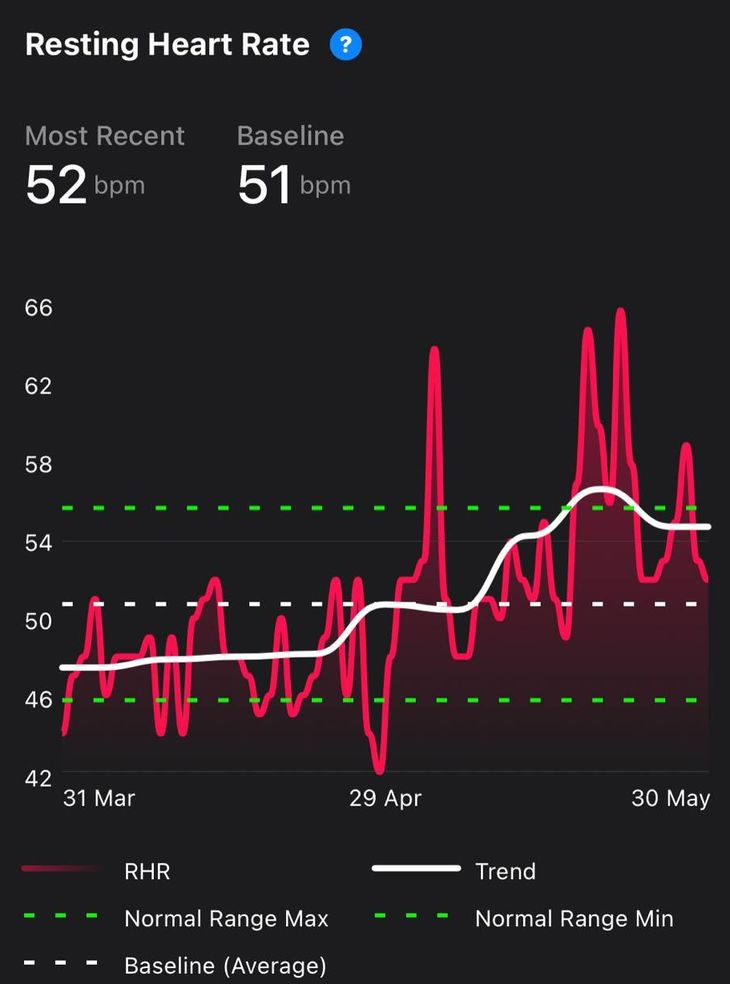
This is why tracking your resting heart rate is so useful for catching early onset sickness.
A sudden, unexplained rise in your morning pulse is often the first sign of an incoming illness.
Monitoring these trends manually with traditional chest straps or blood pressure cuffs is incredibly tedious.
The Herz P1 Smart Ring makes this effortless by recording your heart rate and skin temperature automatically.
Our multispectral PPG sensors track these subtle variables continuously while you go about your day.
This lets you identify early physiological stress and take proactive rest steps before symptoms escalate.
Practical Application Guide: Monitoring Your Sickness and Recovery
The Herz P1 Smart Ring translates complex biometric signals into easy-to-understand recovery metrics.
To get the most out of your device, first establish your baseline metrics during a healthy week.
The companion app will display your average resting heart rate, sleep duration, and temperature variations.
When you start to fall ill, you will notice your nightly skin temperature trend shifting positive.
At the exact same time, your resting pulse will rise and your heart rate variability will drop.
When these signals align, it is a clear warning to skip intense workouts and maximize your rest.
You can use these direct tracking protocols on your Herz P1 App to optimize your healing phase:
- Monitor Your Sleep Architecture: Track the ratio of deep sleep and REM sleep to confirm high-quality biological rest.
- Check the Weekly HRV Trend: A rising heart rate variability trend indicates that your nervous system is recovering.
- Observe the Nightly Skin Temperature: Wait for your temperature deviation to return to zero before resuming physical tasks.
- Review Your Daily Resting Pulse: Ensure your resting heart rate settles back to normal before returning to standard workouts.
The lightweight design of the Herz P1 ensures you can track these metrics comfortably throughout the night.
Unlike bulky smartwatches that require daily charging, our ring operates for up to six days on a single charge.
This lets you collect uninterrupted health data when your body is resting and recovering from illness.
The ring’s IP68 waterproof rating means you can wear it in the bath or shower without worry.
This durable construction guarantees that you can monitor your health continuously under any real-world condition.
Overcoming Risks and Common Wearable Pitfalls
Many health trackers fail because they are too heavy or uncomfortable to wear while sleeping.
If your device is charging on your nightstand, it cannot record your vital overnight health trends.
Additionally, some popular brands charge expensive monthly fees to view your own health data.
This model means your initial purchase is compounded by continuous annual costs that never stop.
The Herz P1 Smart Ring removes these financial and design barriers entirely.
Our advanced health app is completely free for a lifetime, with no monthly subscriptions required.
We secure your purchase with an industry-leading two-year warranty and a ninety-day money-back guarantee.
Another major mistake is wearing a loose-fitting ring that causes optical sensors to rotate.
If the sensors lose contact with your skin, the PPG reading will become inaccurate or fail.
The Herz P1 includes a free sizing kit to help you select the absolute best fit for your finger.
This snug, comfortable fit ensures your sensors capture clear, medical-grade arterial pulse waves.
The military-grade steel outer shell also protects the ring from accidental drops and everyday scratches.
This durability means you can focus on recovering instead of worrying about breaking a delicate screen.
Frequently Asked Questions About Fever and Heart Rate Tracking
Is the Herz P1 Smart Ring waterproof?
Yes, the Herz P1 is fully certified with an IP68 waterproof rating.
It is designed to withstand continuous submersion in water up to one hundred and sixty-four feet deep.
This allows you to wear it safely while swimming, showering, washing your hands, or sweating during a fever.
How long does the battery last?
The Herz P1 battery lasts up to six days on a single charge under standard continuous monitoring conditions.
The ring charges fully in under one hour using the included magnetic charging cradle.
This rapid charging ensures you rarely have to go without your tracking device.
Which finger is best to wear the smart ring on?
We recommend wearing the Herz P1 on your index, middle, or ring finger of either hand.
The index finger of your non-dominant hand typically provides the most accurate and stable PPG pulse signal.
This placement ensures optimal optical contact with the blood vessels near the skin surface.
Does the Herz P1 store health data offline?
Yes, the ring features seven days of local storage capacity to keep your biometric data secure.
You do not need to keep your phone connected via Bluetooth continuously throughout the day.
All your stored physical metrics will sync to the app automatically when you open it next to your ring.
Conclusion: Empowering Your Daily Recovery Journey
Monitoring your resting heart rate and skin temperature variations is vital to a safe and successful recovery.
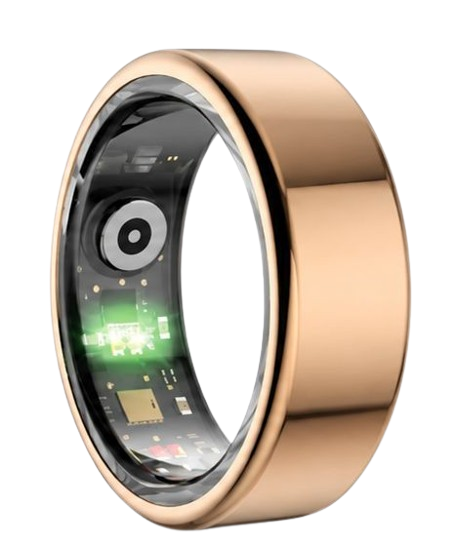
The Herz P1 Smart Ring delivers continuous, subscription-free tracking to help you understand your body’s signals.
Ready to monitor your health every day?
Explore the Herz P1 Smart Ring and see if it fits your lifestyle.
Call: 1-866-479-1629 — our team can help you advise on the correct ring size and set personalized health goals.
