

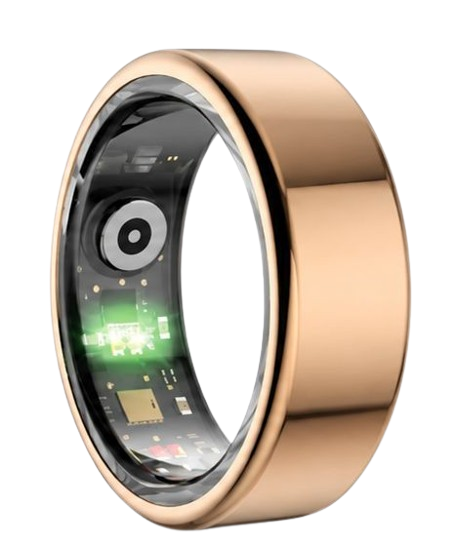
Monitoring your body’s subtle physiological warning signs during illness requires precise biometric tracking, which is why optimizing your rest mode setting is critical for a smooth rehabilitation. The Herz P1 smart ring provides 24/7 health tracking with clinical-grade accuracy to help you monitor your recovery without complex setups or ongoing subscription fees.
Built to Last. Save Up to 69% Today.
The Herz P1 Smart Ring tracks HRV, Sleep, Heart Rate & SpO2 around the clock. No subscriptions. No renewals. Ever.
In This Article
- Biometric Setup: Learn exactly how to configure your wearable settings for physiological downtime.
- The Autonomic Balance: Discover how heart rate variability (HRV) dictates cellular repair cycles during sickness.
- Immune Tracking: Understand the science of skin temperature deviations and blood oxygenation metrics.
- Common Tracking Pitfalls: Avoid typical mistakes that lead to corrupted or missing recovery data.
How to Configure and Use Wearable Rest Mode for Optimal Sick Recovery: A Step-by-Step Guide
Your body requires an enormous amount of metabolic energy to mount an effective immune response against viral or bacterial pathogens.
Continuing to pursue high-intensity activity goals while your system is compromised can prolong infections and trigger systemic inflammation.
Using a specialized recovery setup helps realign your daily biometrics with your body’s altered physiological capacity.
Prerequisites / What You’ll Need
To successfully execute this recovery protocol, you will need a calibrated health-tracking smart ring or premium smartwatch.
Ensure that your companion application is fully updated to prevent sync delays or erroneous calculations.
You also need at least three days of healthy baseline data to establish your personal biometric reference ranges.
Step-by-Step Instructions
-
Step 1: Detect Early Signs of Physiological Strain
Open your health-tracking application first thing in the morning to evaluate your core autonomic metrics.
Look for an elevated resting heart rate (RHR) that sits five or more beats per minute above your monthly average.
Check for a corresponding drop in your nocturnal heart rate variability (HRV) of 20% or more.
Note any upward deviation in skin temperature, which often precedes physical symptoms by up to twenty-four hours.
-
Step 2: Activate Your Wearable Rest Mode
Navigate directly to the settings panel of your health application to activate rest mode smart ring features.
This action signals the analytical algorithms to deprioritize high-intensity workout recommendations and cardio load metrics.
It shifts the software’s primary focus to restorative sleep depth, temperature trend tracking, and daytime parasympathetic activation.
Some premium platforms will automatically offer this prompt if your biometrics show severe, sustained systemic stress.
-
Step 3: Adjust and Suspend Active Daily Activity Goals
Manually override your daily step goals and calorie burn targets within your recovery rest mode app interface.
Lower your step goal to a minimal baseline that only accounts for light, essential movement around your living space.
Disabling high-stress reminders prevents the wearable from urging you to stand up or exercise when your body requires absolute quiet.
This psychological relief eliminates the anxiety of breaking workout streaks, allowing you to rest without performance guilt.
-
Step 4: Monitor Key Autonomic Markers Closely
Keep your wearable on your finger continuously throughout both the day and night to ensure gap-free optical sensor readings.
Review your blood oxygen saturation (SpO2) levels during sleep to confirm they remain within a safe range of 95% to 100%.
Track your sleeping heart rate curve to see if it reaches its lowest point early in the night, which indicates efficient physical recovery.
If your heart rate remains elevated until morning, your body is still actively battling the underlying physiological stressor.
-
Step 5: Evaluate Readiness Trends for Safe Re-entry
Do not resume vigorous physical training the moment your acute symptoms begin to subside.
Wait until your daily HRV levels return to your normal baseline range for two consecutive mornings.
Verify that your resting skin temperature has stabilized back to your established baseline average.
Once these biometric markers align, you can gradually deactivate the recovery setting and transition back to regular activity.
Enhancing Recovery with the Herz P1 Smart Ring
The Herz P1 Smart Ring serves as an exceptional companion during your recovery journey by providing continuous, subscription-free physiological insights.
Its lightweight, medical-grade steel construction ensures you can wear it comfortably 24/7 without the skin irritation often caused by bulky wrist-worn trackers.
By offering detailed monitoring of your nocturnal HRV and skin temperature deviations, the Herz P1 helps you make highly informed decisions about when to rest and when to return to your normal routine.
To experience this seamless, lifetime health monitoring without any recurring fees, explore the Herz P1 Smart Ring today.

The Autonomic Science of Sick Recovery: How HRV and Heart Rate Guide Cellular Repair
Your autonomic nervous system is divided into two primary pathways that control your physiological state.
The sympathetic nervous system acts as the accelerator, driving your “fight-or-flight” response during stress or physical exertion.
The parasympathetic nervous system acts as the brake, facilitating “rest-and-digest” biological functions and cellular repair.
According to research from the American Heart Association, heart rate variability serves as a direct window into this delicate autonomic balance.
When your body is healthy and fully rested, your autonomic nervous system remains highly adaptable.
This state of high flexibility causes your heart rate to vary constantly from beat to beat, resulting in high HRV.
When your immune system detects an active infection, it releases inflammatory signaling proteins called cytokines.
These cytokines trigger a strong sympathetic response to coordinate your body’s cellular defenses.
This defensive shift locks your heart rate into a highly consistent, rigid pattern, which causes your HRV to plummet.
Using wearable rest mode features allows you to track this inflammatory response in real time.
By observing when your nocturnal HRV begins to rise, you can confirm that your parasympathetic nervous system is regaining control.
This biological shift indicates that your body is moving out of an active defensive state and entering a deeper phase of cellular repair.
The Herz P1 Smart Ring monitors these autonomic fluctuations continuously throughout the night with an advanced 9-axis sensor array.
It translates this complex data into clear trends, helping you visualise your recovery process without needing to decode raw medical signals.
Thermoregulation and Blood Oxygenation: Tracking Immune Response via Smart Ring Sensors
Your core body temperature is tightly regulated by your brain’s hypothalamus, which acts as your internal thermostat.
When an immune response is triggered, the hypothalamus deliberately raises your temperature baseline to make your tissues less hospitable to pathogens.
Studies supported by the National Sleep Foundation demonstrate that even a fractional elevation in peripheral skin temperature can signal an active immune battle.
Smart rings are uniquely positioned to capture these shifts because the blood vessels in your fingers are highly sensitive to autonomic thermoregulation.
While a traditional thermometer only provides a single snapshot, a smart ring tracks continuous skin temperature deviations across your entire sleep cycle.
This continuous monitoring allows you to identify minor, sub-clinical temperature spikes before they develop into a noticeable fever.
In addition to temperature, tracking blood oxygen saturation (SpO2) is vital during respiratory illnesses.
Your SpO2 percentage reflects how efficiently your lungs are transferring oxygen from the air into your bloodstream.
Optical sensors in your wearable use red and infrared light wavelengths to measure the color of your arterial hemoglobin.
Oxygen-rich blood absorbs more infrared light, while oxygen-depleted blood absorbs more red light.
If your nocturnal SpO2 levels drop consistently below 95%, it suggests your respiratory system is under significant physiological strain.
The Herz P1 Smart Ring combines continuous SpO2 monitoring and skin temperature trend tracking into a unified, subscription-free dashboard.
This dual-metric observation provides a highly complete view of your physical state, allowing you to rest with confidence and security.
Practical Application Guide: Decoding Your Herz P1 App Recovery Metrics
Using the Herz P1 companion application during an active recovery phase is designed to be intuitive and highly practical.
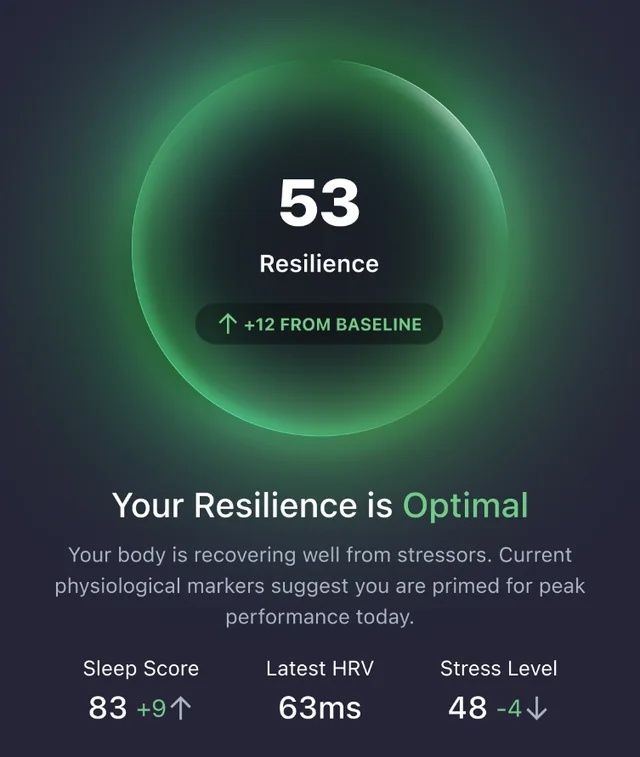
When you open the app, your primary focus should be your morning daily readiness value.
This index combines your nocturnal heart rate, sleep structure, and autonomic balance into a single, easy-to-read metric.
During an illness, this score will likely drop significantly, showing you a clear visual indication that your body requires quiet time.
To dive deeper into your recovery patterns, navigate to your daily resilience graph.
This chart maps out your physiological stress fluctuations throughout both your waking and sleeping hours.
A healthy profile shows clear, cyclical wave patterns where high-stress periods are offset by deep parasympathetic recovery windows.
During a sickness, this line may remain flat and elevated, indicating that your body is struggling to find moments of deep rest.
Reviewing your overall stress resilience score will help you understand your current capacity to handle physical or cognitive demands.
If this metric is low, it is a clear physiological signal to avoid demanding work tasks and strenuous mental activities.
You can also check your physical readiness score to evaluate the structural recovery of your cardiovascular and muscular systems.
When your physical scores begin to climb back into your personal optimal zones, it indicates your body is repairing successfully.
During the afternoon, look for periods of restoring time within your daily timeline.
These windows indicate moments where your smart ring detected a drop in your heart rate and an increase in your HRV while you were awake.
Consistently accumulating these calm, restorative blocks throughout the afternoon accelerates your cellular healing process.
Because the Herz P1 is constructed from lightweight, military-grade steel, you can wear it comfortably through these periods without skin irritation.
This 24/7 wearability ensures that no recovery windows, sleep stages, or heart rate fluctuations are left untracked.
Overcoming Risks and Common Recovery Mistakes
One of the most frequent mistakes individuals make during sick recovery is wearing a bulky, uncomfortable smartwatch to bed.
Heavy wrist-worn devices often shift during the night, causing optical sensors to lose contact with your skin and drop critical data.
This movement can lead to fragmented sleep tracking, frustrating gaps in your morning metrics, and incorrect recovery advice.
Additionally, many modern wearables lock your historical recovery trends behind restrictive, monthly app subscriptions.
Paying an ongoing fee to access your own biometric health data can create unnecessary stress and financial frustration.
The Herz P1 Smart Ring completely eliminates these design and financial pain points.
Its ultra-slim, ring-based design fits securely at the base of your finger, keeping the optical sensors perfectly positioned all night.
Furthermore, the Herz P1 companion application is completely free for lifetime use with no hidden charges or subscription gates.
Another common mistake is trying to “push through” mild physical symptoms to keep active movement streaks alive.
Ignoring your body’s early warming signals can prolong viral shedding and increase the risk of secondary infections.
By utilizing a subscription-free, highly durable smart ring, you can track your health metrics continuously and safely.
Frequently Asked Questions (FAQ)
Is the Herz P1 Smart Ring waterproof enough for daily wear?
Yes, the Herz P1 features a premium IP68 waterproof rating, certifying it for continuous submersion in water up to 164 feet deep.
You can wear it safely while showering, washing your hands, swimming, or relaxing in a steam room without removing it.
The fully sealed, military-grade steel exterior protects the internal optical sensors and battery from moisture and sweat.
How long does the Herz P1 battery last on a single charge?
The Herz P1 Smart Ring is engineered with advanced, low-energy processors that provide up to 6 full days of continuous battery life.
When the battery is depleted, you can charge the device back to 100% in under 1 hour using the included magnetic charging dock.
This rapid charging cycle ensures you rarely have to miss a night of sleep tracking or daytime stress monitoring.
Which finger is best to wear my smart ring on for maximum biometric accuracy?
We recommend wearing the Herz P1 on your index finger for the most accurate and consistent optical sensor readings.
The index finger contains a rich network of superficial blood vessels, which provides an exceptionally clean PPG signal.
If you prefer, you can also wear the ring on your middle or ring finger with excellent tracking results.
Does the Herz P1 store my health data offline if my phone is not nearby?
Yes, the Herz P1 features local onboard memory that securely stores up to 7 days of continuous biometric data offline.
You do not need to keep your smartphone next to your bed or carry it with you throughout your home to capture your metrics.
Once your ring reconnects to your phone via Bluetooth, all stored data will automatically sync and update your application dashboard.

90-Day 100% Money-Back Guarantee
“The Herz Smart Ring helps me manage stress easily. It’s accurate, stylish, and lightweight—perfect for my busy life!”
— Jennifer P. | ✔ Verified Customer
- ✓ 6-Day Battery Life
- ✓ Detailed Sleep Analysis
- ✓ Fast 1-Hour Charging
- ✓ iOS & Android Ready
Questions? Call: 1-866-479-1629
Conclusion
Tracking your autonomic markers with a high-fidelity smart ring simplifies your path back to full strength.
The subscription-free Herz P1 Smart Ring delivers the continuous insights you need to make science-backed recovery choices every single day.
Ready to monitor your health every day? Explore the Herz P1 Smart Ring and see if it fits your lifestyle. Call: 1-866-479-1629 — our team can help you advise on the correct ring size and set personalized health goals.
Note: Individual results may vary depending on individual health conditions, age, and lifestyle habits. This article is intended for general health reference purposes only.
