

If your wearable shows deep sleep vs rem vs core sleep and you’re not sure what it means, you’re not alone. Most people never learn why core sleep fills half the night, or how that balance decides if you wake up recovered or wrecked. For many, the real clue isn’t the data — it’s waking up gasping for air, being nudged awake for snoring, or getting up with a neck, back, or hip that already hurts.
Does This Sound Familiar?
Waking Up Gasping for Air or Battling Morning Aches?
You’re not stuck with poor recovery. Understanding your nightly sleep architecture is the first step to feeling rested again.
Discover the 24/7 Sleep Companion →Uncover the hidden patterns of your rest seamlessly.
In This Educational Guide
- Decoding the Sleep Matrix: Discover how deep, REM, and core sleep work together to rebuild your mind and body daily.
- The Science of Tracking: Learn how advanced multispectral optical sensors read your biometric signals directly from your finger.
- Actionable Optimization: Get practical, data-informed strategies to improve your recovery metrics.
- Smart Device Decisions: Understand why heavy smartwatches fail to deliver accurate, comfortable sleep tracking compared to sleek rings.
Decoding Deep Sleep vs REM vs Core: What Your Body is Telling You
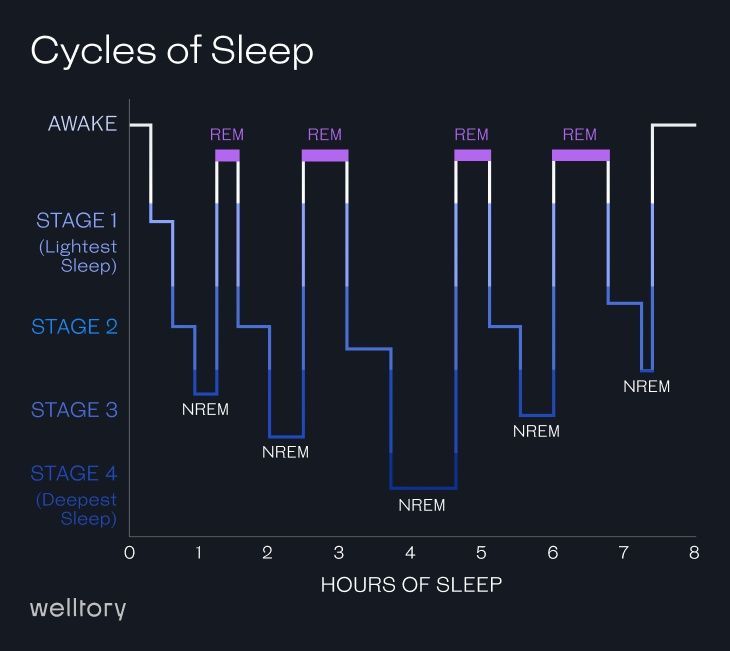
Every night, your body transitions through a series of complex neurological cycles designed to restore your mental and physical energy.
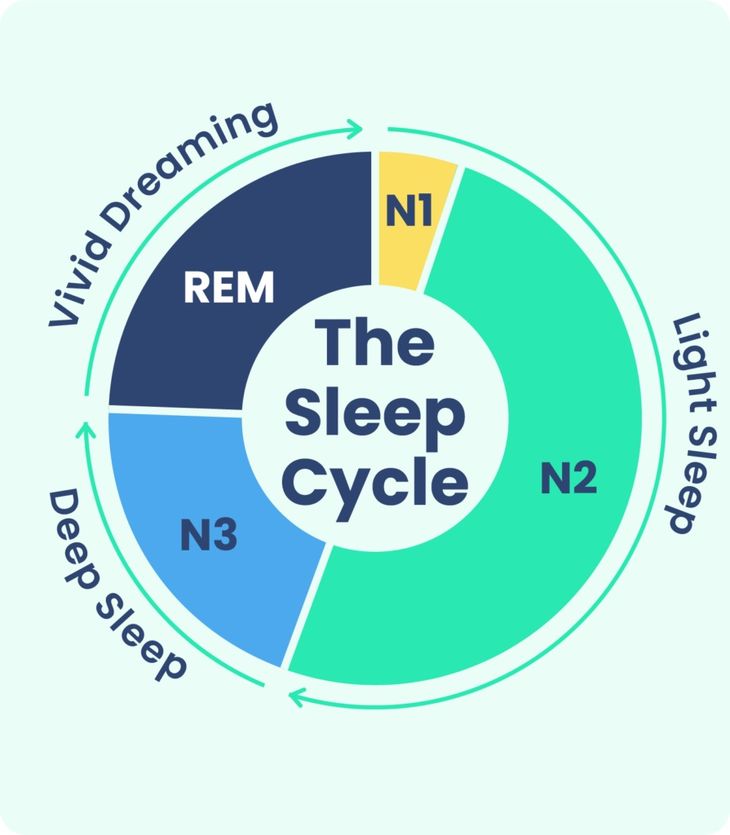
These cycles are divided into distinct stages of sleep that serve different restorative functions.
If you have ever looked at a fitness tracker, you have likely seen the breakdown of deep sleep vs rem vs core metrics on your dashboard.
Many users find these categories confusing because different manufacturers use varying terminology.
Historically, sleep science categorized rest into light sleep, deep sleep, and Rapid Eye Movement (REM) phases.
Today, advanced wearable sleep tracking technology introduces the term “core sleep” to represent the foundational light sleep phase. Continuous smart ring sensors help demystify these stages by reading biometric signals seamlessly.
This transitional phase acts as the essential structural scaffold for your entire night of rest.
Without a healthy balance of all three phases, you may wake up feeling sluggish and unrefreshed.
Even if you log a full eight hours of bedtime, your actual recovery depends heavily on the ratio of rem core deep sleep you obtain.
Let us analyze each phase in absolute detail so you can understand what your body needs.
Quick Sleep Check-In
Do you relate to any of these common morning struggles?
Deep Sleep: The Body’s Physical Rebuilding Phase
Deep sleep represents the physical restoration department of your nocturnal cycle.
This phase is medically defined as Stage 3 non-rapid eye movement (NREM) sleep.
During this period, your brain waves slow down to synchronized delta waves, which is why it is called slow-wave sleep.
This is the absolute deepest sleep stage your body can enter during the night.
Your muscles completely relax, and blood flow to your skeletal system increases significantly.
Your pituitary gland releases essential growth hormones that stimulate tissue repair and cellular growth.
Your immune system also synthesizes proteins called cytokines to fight off potential infections and inflammation.
Translating Science into Wearable Insights
During deep sleep, your heart rate dips to its lowest point. The Herz P1 Smart Ring utilizes continuous optical tracking to capture this exact moment.
- PPG Sensor & SpO2 Tracking: Monitors oxygen drops during deep sleep to help prevent morning fatigue.
- Heart Rate Variability (HRV): Verifies that your body has fully shifted into its parasympathetic “repair” mode.
Slow-wave sleep is also when your brain clears out beta-amyloid proteins that accumulate during waking hours.
These proteins are metabolic waste products linked to cognitive decline when left unmanaged.
Your cardiovascular system experiences a significant rest period during this phase as your resting heart rate reaches its lowest point.
This physical downtime allows your arterial walls to relax and recover from daytime pressure.
Many athletes prioritize this stage because it is directly responsible for restoring skeletal muscle glycogen stores.
If you suffer from muscle soreness or physical exhaustion, your body is likely craving more slow-wave rest.
Learning how to get more deep sleep can drastically improve your morning athletic recovery and physical stamina.
Our team suggests minimizing late-night caffeine and heavy meals to prolong this vital restorative phase.
REM Sleep: The Brain’s Cognitive Filing Cabinet
Rapid Eye Movement (REM) sleep is the primary zone for mental, emotional, and cognitive restoration.
During this phase, your brain activity spikes to levels that closely resemble your awake state.
Your eyes move rapidly behind closed lids, and your heart rate and respiration become highly variable.
This is the cycle where vivid dreaming occurs as your brain processes the experiences of the day.
It is during REM sleep that your mind consolidates short-term memories into long-term storage.
Your brain also clears out metabolic waste products through the newly discovered glymphatic system.
Research indicates that REM sleep plays a pivotal role in the neural consolidation of emotional memories.
During this phase, your brain selectively strengthens positive associations while stripping away negative emotional triggers.
“Once I started automatically tracking my REM cycles, I realized my late-night screen time was destroying my mental recovery. Seeing the data changed my habits overnight.”
— Mark T., Health Enthusiast & Herz P1 User
This process acts as a natural overnight therapy session to help you handle daily stress.
Adults who lack adequate REM sleep often experience an overactive amygdala, leading to increased anxiety.
Ensuring your sleep environment remains dark and cool through the early morning hours is key to preventing premature waking during REM cycles.
A lack of sufficient REM sleep often results in immediate brain fog, memory lapses, and heightened emotional reactivity.
If you struggle with creative problem-solving or emotional regulation at work, your REM sleep may be compromised.
Ensuring you do not wake up abruptly during the late morning hours is critical to preserving your longest REM cycles.
The final hours of your night are naturally heavily weighted toward this mental repair cycle.
Core Sleep: The Essential Structural Foundation
Core sleep is a term that often confuses users who are transitioning between different wearable interfaces.
Many people ask the question, is core sleep light sleep?
The simple answer is yes, core sleep refers to the combined stages of light sleep.
Specifically, it encompasses Stage 1 and Stage 2 of the NREM sleep cycle.
Although it is characterized by lighter brain activity, you should not dismiss its value.
Core sleep actually makes up about 50% of your total sleep duration each night.
It serves as the vital runway that allows your brain to transition safely into deep sleep and REM phases.
During core sleep, your body temperature begins to drop, and your heart rate starts to slow down.
During Stage 2 NREM sleep, your brain produces short bursts of rapid brain activity known as sleep spindles.
These sleep spindles are critical for sensory gating, which keeps you from waking up due to minor background noises.
This stage also features K-complexes, which are long delta waves that help protect your sleep architecture from disruption.
Understanding that core sleep is not empty space helps you appreciate the full spectrum of your nightly data.
It represents the vital baseline of your sleep health and prepares your system for deeper restorative states.
There are significant light sleep benefits, including motor skill consolidation and physiological stabilization.
To visualize how these phases flow together, studying a comprehensive sleep cycle diagram can be incredibly helpful.
When you look at the architecture of a healthy night, you will see how core sleep bridges the deeper recovery zones.
More common than you think
A stuffy nose, legs that won’t sit still, or a jolt that snaps you awake.
On nights your body finally settles, your mind takes over. Find out what happens to your heart rate while you sleep.
See How the Herz P1 Tracks Sleep Stages →This isn’t just “how you sleep.” Once you see the data, you can optimize it.
How Wearables Track Your Biometrics and Heart Rate Variability
Understanding how your smart ring collects sleep data requires looking at modern sensor engineering.
Smart rings map your physiological shifts into precise sleep zones using optical sensors.
The Herz P1 Smart Ring utilizes advanced photoplethysmography (PPG) technology to measure blood flow seamlessly without the friction of a wrist strap.
These multispectral sensors emit specific wavelengths of light into the capillaries at the base of your finger.
The sensor then measures how much light is absorbed or reflected back as blood pulses through the vessels.
The finger is an ideal location for sleep tracking because the digital arteries are highly accessible.
This allows the sensors to capture a much cleaner pulse signal compared to wrist-based wearables.
The National Sleep Foundation highlights heart rate variability (HRV) as a primary biomarker for sleep stage detection.
HRV is the variation in time intervals between consecutive heartbeats, measured in milliseconds.
When you transition between nrem sleep stages, your autonomic nervous system undergoes measurable changes.
During deep sleep, the parasympathetic nervous system dominates, leading to a highly regular, slow heart rate and a higher HRV.
When your body enters REM sleep, the sympathetic nervous system activates, causing your heart rate to fluctuate and your HRV to drop.
The optical sensors utilize red, green, and infrared light paths to capture dynamic blood volume changes.
Infrared light penetrates deeper into the subcutaneous tissue, providing highly accurate vascular readings during movement.
This multi-wavelength light technology allows the device to filter out noise caused by subtle finger twitching.
The high frequency of our sampling rate ensures that even the minor intervals between heartbeats are recorded.
This granular tracking provides a highly reliable metric for evaluating your autonomic nervous system activity.
Team Herz P1 leverages these specific biometric patterns to calculate your exact sleep metrics without guessing.
Our smart ring features an ultra-low margin of error, ensuring your daily dashboard is highly reliable.
This means you can track subtle changes in your recovery without needing to visit a clinical sleep lab.
The Science of Autonomic Regulation During Overnight Rest
Your cardiovascular system relies on overnight sleep to reset and recover from daily environmental stressors.
The American Heart Association has published extensive research on how poor sleep architecture impacts heart health.
Sustained periods of low deep sleep can prevent your blood pressure from dropping during the night.
This healthy overnight drop is medically referred to as “nocturnal dipping.”
If your body does not experience this dip, your heart is forced to work harder over a continuous 24-hour cycle.
The Herz P1 Smart Ring constantly monitors your heart rate and SpO2 levels to trace these dipping patterns.
It is crucial to monitor how your autonomic nervous system balances core sleep vs deep sleep throughout the night.
If you observe a persistent lack of deep sleep on your app, your nervous system may be stuck in a state of chronic sympathetic stress.
This is often triggered by lifestyle factors such as high work stress, late-night workouts, or alcohol intake.
A high HRV score indicates that your body is highly adaptable and resting in a parasympathetic state.
Conversely, a low HRV score during sleep suggests that your body is struggling to recover from daily physiological demands.
The National Sleep Foundation notes that consistent tracking of these patterns helps users identify early signs of physical fatigue.
Want to evaluate your cardiovascular recovery safely?
Explore Wearable Trackers →By analyzing the balance of your autonomic system, you can make intelligent decisions about your daily routine.
Our team is dedicated to giving you the exact tools needed to decipher these intricate biological signals.
Identifying these physiological trends allows you to implement direct lifestyle adjustments.
By tracking these subtle metrics, you can actively guide your body toward a state of complete rest.
Our advanced data analytics show that even minor improvements in evening wind-down habits can lead to a 15% increase in slow-wave sleep.
This proactive approach empowers you to manage your cardiovascular wellness from the comfort of your home.
Optimizing Your Daily Performance with Smart Ring Metrics

Having access to premium biometric data is only valuable if you know how to apply it to your daily life.
Decoding Your Daily Sleep Score
The Herz P1 companion app translates your complex biometric charts into a simple, daily Sleep Score. Curious what your Sleep Score is right now?
Discover how the Herz P1 algorithm calculates your readiness →
When you review your morning dashboard, look closely at the duration of each sleep phase.
If your app indicates that your deep sleep was insufficient, you should adjust your physical load for that day.
For example, instead of pushing through a high-intensity interval training session, choose a low-impact walk or stretch.
This prevents you from overtaxing your musculoskeletal system when it has not fully repaired itself.
If your REM sleep is flagged as low, prioritize cognitive breaks and stress reduction techniques during your workday.
Avoid back-to-back high-stress meetings where possible, and take short walking breaks to clear your mind.
You can also use the real-time HRV Stress Index on your Herz P1 app to monitor your physiological state throughout the day.
If you notice stress levels spiking, take five deep diaphragmatic breaths to stimulate your vagus nerve.
Try matching your sleep data with a simple daily journal to identify specific lifestyle patterns.
For instance, you might note how a warm evening bath increases your deep sleep duration by several minutes.
Alternatively, you might see how eating a late dinner reduces your HRV score throughout the first half of the night.
Over time, these small correlations help you build a personalized blueprint for optimal sleep hygiene.
The Herz P1 Smart Ring makes this self-discovery process completely seamless, silent, and effortless.
The lightweight, military-grade steel ring is designed for seamless, continuous 24/7 wear.
Many users report that they forget they are wearing the device within just a few hours of putting it on.
This comfort is essential for sleep tracking because it does not create sensory disruptions during the night.
By wearing the ring consistently, you build a highly accurate baseline of your unique biological rhythms.
This long-term trend data is key to making lasting improvements to your physical and mental health.
The Hidden Costs and Design Flaws of Bulky Sleep Trackers
The consumer wellness market is flooded with various tracking devices, but many have major design limitations.
One of the most common mistakes is wearing a heavy, bulky smartwatch to bed.
These large wrist-based devices often shift orientation when you roll over in your sleep.
This movement causes the optical sensors to lose contact with your skin, leading to massive gaps in your data.
Furthermore, the friction of a bulky watch strap can wake you up from light sleep states.
Many wrist-based wearables also feature bright screens that can accidentally light up during the night.
These unexpected light flashes can easily disrupt your sleep cycles without you consciously realizing it.
In contrast, a smart ring has no screen to distract your eyes or disrupt your melatonin production.
This screenless design is a major advantage for individuals practicing strict sleep hygiene protocols.
It allows you to focus purely on resting without the temptation of checking digital notifications in bed.
Another major frustration for wellness enthusiasts is the hidden cost of ongoing app subscriptions.
The Subscription Trap
Several popular smart ring manufacturers charge a monthly fee to unlock your sleep data. If you refuse to pay, you are locked out of the very biometric insights you bought the hardware for.
Team Herz P1 believes your personal health data belongs to you. The Herz P1 App is free for a lifetime with no subscriptions or renewal fees.
You buy the premium hardware once, and you own the entire tracking experience forever.
Our military-grade steel construction is built to survive physical impacts, high water pressure, and daily wear.
This durable build ensures that your investment continues to track your health accurately for years to come.
Transitioning from a bulky smartwatch to a sleek smart ring is the easiest way to elevate your sleep hygiene.
Frequently Asked Questions About Sleep Tracking and Wearables
Is the Herz P1 Smart Ring waterproof?
Yes, the Herz P1 features a certified IP68 waterproof rating. This means the ring is fully protected against continuous water submersion up to 164 feet. You can confidently wear it while swimming laps, taking hot showers, or relaxing in a sauna. The hermetic seal protects the delicate internal optical sensors from moisture intrusion.
How long does the Herz P1 battery last on a single charge?
The ring delivers up to 6 days of continuous battery life under standard operating conditions. This includes continuous 24/7 heart rate monitoring, HRV tracking, and detailed sleep staging. Learn more about the magnetic charging base that powers it up in under one hour.
Which finger is best to wear the smart ring on?
For the highest level of biometric accuracy, we recommend wearing the ring on your index finger. The index finger contains the densest network of digital arteries, which provides the cleanest PPG signal. Ensure the ring fits snugly but comfortably without squeezing your skin.
Does the Herz P1 store my health data offline?
Yes, the smart ring has built-in offline memory that can store up to 7 days of biological data. You do not need to keep your smartphone next to your bed with Bluetooth enabled all night. The ring will record your entire sleep cycle independently.
Not covered by generic sleep advice?
A restless kid, a shifting hormone cycle, or a night shift.
Every article says “just go to bed earlier” — but your nights were never that simple. You need a way to actually see what’s going on.
Explore Continuous Smart Ring Sensors →🛡 Learn about the local 12-Month 1-to-1 warranty on the next page. No registration required.
The Path to Restorative Sleep
Reclaiming your energy starts with understanding your exact sleep stages. The subscription-free Herz P1 Smart Ring provides precise biometric insights you can trust to rebuild your daily momentum.
Ready to uncover your health patterns?
Call: 1-866-479-1629 — our team can advise on correct sizing and set healthy goals.
Note: Individual results may vary depending on individual health conditions, age, and lifestyle habits. This article is intended for general health reference purposes only.
