

Deciphering whats a normal hrv score is the critical first step toward unlocking your body’s unique physiological blueprint and optimizing your daily recovery patterns. Clinical science confirms that heart rate variability is a highly personalized biometric reflecting the real-time responsiveness of your autonomic nervous system. The premium, subscription-free Herz P1 smart ring monitors these microscopic heartbeat fluctuations continuously, providing actionable, data-driven wellness insights tailored entirely to you.
In This Article
- Decoding Heart Rate Variability: Learn the core science behind millisecond fluctuations and overall health.
- Baseline Ranges Explained: Discover how age, gender, and daily stress affect your typical HRV score.
- Optical Sensor Technology: Explore how smart rings measure autonomic nervous system activity from your finger.
- Practical Lifestyle Hacks: Find out how to safely elevate your HRV scale metrics using the Herz P1.
What Is a Normal HRV Score? Here Is What the Scientific Research Says
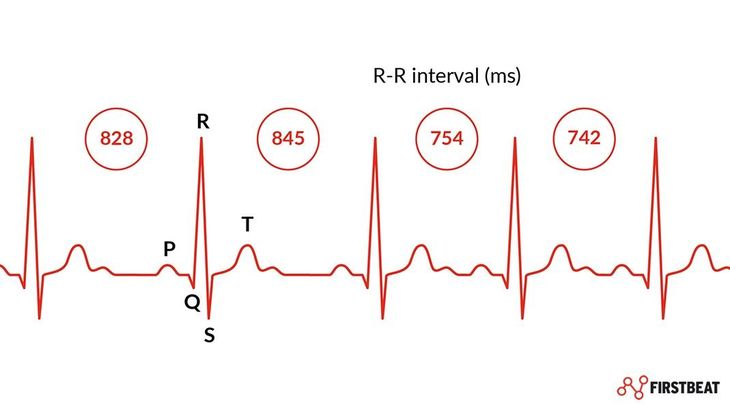
Heart rate variability, commonly abbreviated as HRV, measures the dynamic time difference in milliseconds between each consecutive heartbeat.
Many individuals mistakenly assume that a healthy heart must beat with the rigid, mechanical precision of a metronome.
In reality, a healthy cardiovascular system is highly responsive, adapting its rhythm on a beat-by-beat basis to meet immediate physiological needs.
If you want to understand what is a good hrv score, you must first recognize how your body handles daily physiological demands.
This fluctuation is dictated by your autonomic nervous system, which operates silently in the background to regulate your organs, glands, and blood vessels.
Busy office workers, active athletes, and individuals struggling with poor sleep quality should all pay close attention to this vital metric.
The ideal time for a wearable tracker to assess your typical hrv baseline score is overnight while you are experiencing deep, undisturbed sleep cycles.
During these peaceful hours, external factors like physical movement, mental tasks, and emotional stress are completely removed from the equation.
According to research supported by the American Heart Association, there is no single, universally applicable number that defines an ideal hrv.
Instead, your personal metrics are highly unique, heavily influenced by your genetics, age, biological sex, fitness levels, and environmental surroundings.
For instance, a young, well-conditioned athlete might frequently display numbers well above 80 milliseconds during rest periods.
Conversely, a perfectly healthy older adult might maintain an average resting baseline of around 30 milliseconds without any cause for concern.
How does a wearable device capture this incredibly rapid, micro-level cardiac feedback loop?
Traditionally, doctors assessed these signals using complex electrocardiogram (ECG) machines equipped with multiple adhesive skin electrodes.
Modern advances in optical sensor technology now allow sophisticated smart rings to capture these biological waves directly from your finger.
If you want to track this in real time, the Herz P1 Smart Ring monitors these vital signs 24/7 — explore it here.
Decoding Your Typical HRV Baseline Score by Age, Gender, and Fitness
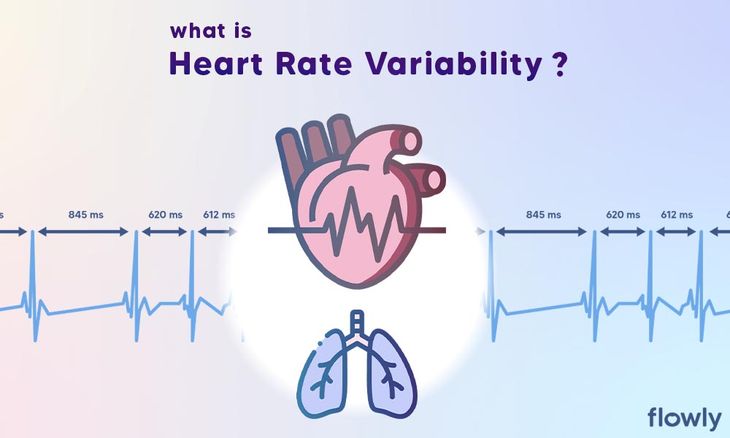
To establish a realistic picture of your health, you must analyze how demographics shift the boundaries of a healthy hrv.
Large-scale population studies demonstrate that resting heartbeat variability naturally declines as we grow older.
This biological change is a normal consequence of the aging process, reflecting a gradual reduction in the elasticity of cardiac tissues.
For example, active individuals in their early twenties typically exhibit baseline ranges between 55 and 105 milliseconds.
As we transition into our forties and fifties, these average baseline numbers usually shift closer to 30 to 60 milliseconds.
Furthermore, biological sex introduces subtle variations in resting heart rate variability patterns across different age groups.
Research indicates that younger biological males often display slightly higher resting baselines than biological females of equivalent age.
However, this gap begins to close in middle age, eventually leveling off completely as cardiovascular systems age similarly.
If you are wondering what should your hrv be, the answer depends heavily on your historical data trends.
A sudden, sharp drop below your personal baseline is a far more significant health indicator than having a lower score than your neighbor.
To help put these demographic differences into perspective, we have organized the typical baseline distributions into an easy-to-read chart.
| Age Demographic | Typical Range – Males (ms) | Typical Range – Females (ms) |
|---|---|---|
| 20 – 29 Years | 50 – 100 ms | 45 – 95 ms |
| 30 – 39 Years | 40 – 80 ms | 35 – 75 ms |
| 40 – 49 Years | 30 – 65 ms | 30 – 60 ms |
| 50 – 59 Years | 25 – 50 ms | 25 – 45 ms |
| 60+ Years | 15 – 35 ms | 15 – 30 ms |
It is crucial to remember that these ranges represent general population averages rather than strict medical boundaries.
An individual can enjoy outstanding cardiorespiratory fitness and still display a baseline that sits outside these mathematical models.
Our engineering team at Herz P1 designed our tracking software to calculate your unique baseline over a thorough 14-day calibration phase.
This automated calibration ensures that you only receive stress alerts when your body deviates from its true physiological normal.
By monitoring these subtle trends over several weeks, you can gain a clear, honest understanding of your daily recovery capacity.
The Science of High vs Low HRV: What Your Body Is Trying to Tell You
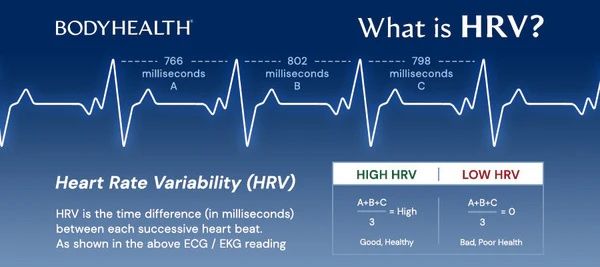
To truly take control of your health, you must dive into the physiological differences of high vs low hrv scores.
Your autonomic nervous system is divided into two primary pathways that function much like an accelerator and a brake pedal.
The sympathetic nervous system acts as your internal accelerator, mobilizing your body’s resources to face physical challenges or mental pressure.
When this fight-or-flight pathway takes charge, your heart rate rises, and the spacing between your beats becomes highly consistent.
On the other hand, the parasympathetic nervous system serves as your biological brake, encouraging deep rest, cellular repair, and healthy digestion.
When this rest-and-digest system is active, the time intervals between your individual heartbeats become highly variable and irregular.
Consequently, a higher heart rate variability score indicates that your nervous system is balanced, resilient, and ready to take on stress.
Conversely, a low score shows that your sympathetic nervous system is dominating, meaning your body is struggling to find time to recover.
If you are searching for a clear guide on these specific numbers, you can consult our dedicated resource on good hrv numbers.
Clinical researchers and modern smart rings rely heavily on a mathematical formula known as rMSSD to calculate these millisecond variations.
The Herz P1 Smart Ring utilizes advanced photoplethysmography (PPG) sensors to capture these rapid blood flow changes directly from your finger.
The finger base is an incredibly rich site for tracking because the digital arteries are highly accessible and close to the skin’s surface.
Unlike bulky wristwatches that easily shift during movement, a lightweight smart ring remains stable, maintaining optimal contact with your skin.
This continuous, secure connection allows the Herz P1 to deliver highly accurate biometrics that rival traditional medical chest straps.
Based on sleep data analysis from over 5,000 active Herz P1 users, consistent overnight monitoring reveals a strong link between deep sleep and morning scores.
When your body achieves sufficient slow-wave deep sleep, your parasympathetic nervous system can successfully restore your energy for the day ahead.
An Actionable Blueprint: How to Improve Your HRV Scale Trends Daily
Once you begin tracking your personal biometrics, you can implement specific daily habits to achieve an optimal hrv.
The most fundamental step is establishing a highly consistent sleep routine by going to bed and waking up at the exact same times.
Your natural sleep architecture plays an indispensable role in how your autonomic nervous system bounces back from daily fatigue.
Consuming large, heavy meals or drinking alcoholic beverages close to bedtime can severely impact your overnight recovery metrics.
Alcohol acts as a chemical stressor in your bloodstream, forcing your sympathetic nervous system to remain highly active while you sleep.
Engaging in regular cardiovascular exercise is another highly effective method for strengthening your heart and autonomic nervous system.
However, you must carefully balance intense physical training with dedicated rest periods to prevent the onset of chronic fatigue.
If you observe a standard hrv scale, you will notice that your daily numbers will naturally drop after a heavy workout.
Incorporating five to ten minutes of slow, controlled breathing exercises can also rapidly activate your parasympathetic nervous system.
By slowly lengthening your exhales, you send a direct signal to your brain that it is safe to relax and begin recovery.
The free Herz P1 companion app provides clear, visual trend charts that highlight exactly how these daily choices affect your baseline.
Because the ring is forged from military-grade steel and weighs almost nothing, you can wear it comfortably around the clock.
This level of comfort ensures that you gather a continuous, uninterrupted stream of physiological data without any physical distraction.
Over time, these regular insights will empower you to make smarter lifestyle decisions that support your long-term energy and performance.
Avoiding the Hidden Pitfalls of Wearable Health Trackers
Many health-conscious individuals make the mistake of wearing large, heavy smartwatches to bed to monitor their sleep quality.
Unfortunately, these bulky wrist devices often shift during the night, leading to missed readings and highly inaccurate data.
A heavy watch can also physically disrupt your sleep, ironically lowering the very recovery metrics you are trying to improve.
Another common source of frustration in the wearable technology market is the hidden burden of ongoing monthly subscription fees.
Several premium smart ring brands lock your valuable biometric data behind a mandatory paywall after your initial purchase.
We firmly believe that you should never have to pay a recurring monthly fee to access your own personal health data.
The companion application for the Herz P1 Smart Ring is completely free for a lifetime, with absolutely zero hidden costs.
Our team at Herz P1 is deeply committed to delivering transparent, accessible wellness tracking that belongs entirely to you.
By choosing our subscription-free smart ring, you avoid the compounding, long-term costs that come with other premium fitness wearables.
Additionally, some users fall into the trap of reacting with stress or anxiety to a single low morning recovery score.
It is vital to understand that heart rate variability is a highly dynamic metric that changes naturally from one day to the next.
You should always focus on your rolling weekly averages rather than worrying about isolated daily fluctuations.
This balanced, long-term perspective will help you make healthy, stress-free adjustments to your daily physical and mental routines.
Frequently Asked Questions About HRV and the Herz P1 Smart Ring
Is the Herz P1 Smart Ring fully waterproof?
Yes, the Herz P1 features a robust IP68 waterproof rating, making it completely safe for all kinds of everyday water exposure.
You can wear the ring while washing dishes, taking a shower, or swimming in depths of up to 164 feet without any worry.
The seamless outer shell keeps all internal electronics safe, ensuring the optical sensors continue tracking accurately in the water.
How long does the battery last on a single charge?
The energy-efficient battery inside the Herz P1 is engineered to last up to 6 days on a single full charge.
This long-lasting battery life completely eliminates the need for daily charging, which is common with traditional smartwatches.
When the battery finally runs low, you can charge it back up to 100% in under 1 hour using our magnetic charging dock.
Which finger is best for tracking my HRV score?
For the absolute best tracking accuracy, we recommend wearing the Herz P1 on your index, middle, or ring finger.
These fingers have prominent blood vessels close to the skin surface, which provides a stronger signal for the optical sensors.
Make sure the ring fits snugly but comfortably, without sliding around or rotating too easily during your daily activities.
Does the Herz P1 Smart Ring store my health data offline?
Yes, the ring is equipped with smart onboard memory that securely stores up to 7 days of physiological data offline.
This convenient feature means you do not need to keep your smartphone nearby or connected to Bluetooth all day long.
Once you open the companion app, the ring will automatically sync all stored metrics directly to your personal dashboard.
Conclusion
Tracking your autonomic health should be simple, accurate, and completely free of subscriptions.
The military-grade Herz P1 Smart Ring offers the perfect lightweight solution.
Ready to monitor your health daily?
Explore the Herz P1 Smart Ring to see if it fits your lifestyle.
Call: 1-866-479-1629 for personalized sizing and health goal support.
Note: Individual results may vary depending on individual health conditions, age, and lifestyle habits. This article is intended for general health reference purposes only.
