

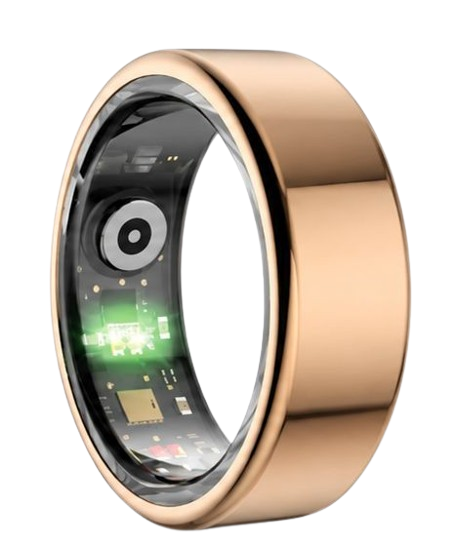
Understanding your body’s natural rhythms is the key to taking control of your reproductive health, which is why learning what is fertility window and how to track it accurately can transform your family planning journey. At Team Herz P1, we believe that tracking vital biometrics should be simple, seamless, and free of ongoing costs. That is why we designed the Herz P1 Smart Ring to monitor your skin temperature, sleep quality, and heart rate variability 24/7 without bulky screens or annoying subscription fees.
Built to Last. Save Up to 69% Today.
The Herz P1 Smart Ring tracks HRV, Sleep, Heart Rate & SpO2 around the clock. No subscriptions. No renewals. Ever.
In This Article
- What Is the Fertility Window? Discover the biological timeline of conception and debunk common myths.
- The Science of Thermal Tracking: Learn how skin temperature changes indicate your body’s most fertile phases.
- Stress and Reproductive Physiology: Understand the connection between daily stress, HRV, and your cycle.
- The Herz P1 Solution: Explore how continuous tracking simplifies cycle monitoring with zero recurring costs.
What Is the Fertility Window? Understanding Your Conception Timeline

Understanding the fertile window definition is the critical first step toward successful family planning.
Essentially, the fertility window meaning refers to the specific days during a woman’s menstrual cycle when intercourse can result in pregnancy.
Many women naturally ask, whats a fertile window and how many days does it actually last?
Clinical data confirms that this window spans exactly six days in total.
This includes the five days preceding ovulation and the actual day of ovulation itself.
The length of this window is determined by the biological lifespans of both human sperm and eggs.
Under optimal physiological conditions, healthy sperm can survive inside the female reproductive tract for up to five days.
In contrast, a mature egg is only viable for approximately 12 to 24 hours after it is released from the ovary.
Therefore, the maximum chance of conception occurs when viable sperm are already present in the fallopian tubes when the egg arrives.
This biological reality means that tracking the exact timing of ovulation is crucial for both conceiving and avoiding pregnancy.
A common point of confusion is, is ovulation always on the 14th day of the cycle?
Modern reproductive research indicates that this static assumption is a major myth.
In reality, menstrual cycle lengths vary significantly from month to month and from person to person.
This high level of variability makes relying on simple calendar-based calculations highly unreliable.
If you rely purely on generic mobile apps, you may get an inaccurate predicted fertile window meaning.
Clinical statistics show that only about 10% to 15% of women with a standard 28-day cycle actually ovulate exactly on day 14.
For others, ovulation can occur as early as day 10 or as late as day 22.
Because of this variability, tracking real-time biological markers is the only way to find your true window.
The biological mechanism behind ovulation is driven by a complex interplay of hormones.
During the early follicular phase, the pituitary gland releases follicle-stimulating hormone (FSH).
This hormone stimulates the growth of several ovarian follicles.
As these follicles mature, they produce rising levels of estrogen.
Once estrogen levels reach a critical threshold, they trigger a rapid surge of luteinizing hormone (LH).
This luteinizing hormone surge is the biological trigger that causes the dominant follicle to rupture and release an egg.
This release of the egg is the official event known as ovulation.
The window of peak fertility is concentrated during the two days immediately before ovulation and the day of ovulation itself.
Studies show that having intercourse on these three peak days accounts for the vast majority of successful pregnancies.
Specifically, the probability of conception rises to about 30% on the day before ovulation.
Conversely, the probability of conceiving drops to nearly zero just 24 hours after ovulation has passed.
By monitoring these biological phases, couples can time intimacy with maximum precision.
This eliminates the anxiety and stress of daily guessing.
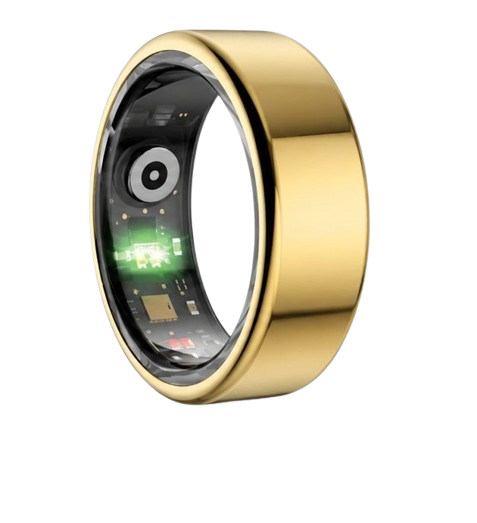
If you want to track this in real time, the Herz P1 Smart Ring monitors your core physiological trends 24/7 — explore it here.
90-Day 100% Money-Back Guarantee
“The Herz Smart Ring helps me manage stress easily. It’s accurate, stylish, and lightweight—perfect for my busy life!”
— Jennifer P. | ✔ Verified Customer
- ✓ 6-Day Battery Life
- ✓ Detailed Sleep Analysis
- ✓ Fast 1-Hour Charging
- ✓ iOS & Android Ready
Questions? Call: 1-866-479-1629
The Science of Thermal Tracking: Skin Temperature and Ovulation

To track ovulation with high precision, you must understand how your baseline body temperature fluctuates.
Your body’s resting metabolism is highly sensitive to the reproductive hormones in your system.
Historically, women have relied on traditional waking thermometers for bbt ovulation tracking.
This classic method requires you to take your temperature orally the very second you wake up.
It demands that you do not move, speak, or drink water before recording the measurement.
Unfortunately, a poor night’s sleep, late bedtime, or mild illness can easily distort these oral readings.
The Herz P1 Smart Ring offers a highly reliable, automated alternative by monitoring your skin temperature ovulation trends.
During the first half of your menstrual cycle, known as the follicular phase, your baseline temperature remains low.
This cooler temperature state is maintained by high levels of circulating estrogen.
Just prior to the release of an egg, some women experience a minor, temporary dip in their daily temperature.
Immediately following ovulation, the ruptured follicle transforms into the corpus luteum.
This temporary endocrine gland begins secreting high levels of progesterone.
Progesterone acts directly on the brain’s hypothalamus, which serves as your body’s internal thermostat.
This hormonal action causes a sustained rise in your ovulation cycle temperature.
This post-ovulatory temperature shift typically ranges from 0.5 to 1.0 degree Fahrenheit.
The elevated temperature remains high for the entire duration of your luteal phase.
Many women ask, does temperature drop after ovulation?
Under normal circumstances, your temperature will not drop immediately after the egg is released.
Instead, it stays elevated for approximately 10 to 14 days.
The temperature will only drop back to your baseline when progesterone levels decline, triggering your next period.
If you become pregnant during that cycle, your progesterone levels will remain high.
Consequently, your body temperature will remain elevated throughout your early pregnancy.
Tracking this thermal shift requires a continuous, high-precision sensor array.
The Herz P1 uses an advanced multispectral infrared sensor to detect skin temperature changes of a fraction of a degree.
It measures your skin temperature thousands of times each night while you are in deep sleep.
This automated approach eliminates the human error associated with manual morning thermometer readings.
The resulting thermal data is converted into clear, easy-to-read trend lines in your companion app.
This gives you a verified confirmation that ovulation has indeed taken place.
Because the ring fits securely around your finger, the sensors maintain perfect contact with your skin all night.
This consistent skin contact provides a much cleaner signal than loose-fitting wrist-worn smartwatches.
Our data demonstrates that finger-based thermal tracking is significantly less prone to ambient air interference.
Heart Rate Variability and Reproductive Stress Physiology
Physical and psychological stress have a direct, measurable impact on your fertility window.
The human brain regulates reproductive hormones via the hypothalamic-pituitary-gonadal (HPG) axis.
When you experience high levels of stress, your body activates the sympathetic nervous system.
This survival response causes your adrenal glands to release cortisol and adrenaline.
Elevated cortisol levels can directly suppress the release of Gonadotropin-Releasing Hormone (GnRH).
Without adequate GnRH, your pituitary gland cannot produce the LH surge required for ovulation.
This hormone suppression can delay your ovulation or cause you to miss a cycle entirely.
The American Heart Association states that chronic stress disrupts your autonomic nervous system balance.
You can measure this autonomic balance in real time by tracking your Heart Rate Variability (HRV).
HRV is the variation in time intervals between consecutive heartbeats.
A high HRV indicates that your parasympathetic nervous system is active and dominant.
This “rest and digest” state is highly favorable for reproductive health and hormonal balance.
Conversely, a low HRV indicates a dominant sympathetic nervous system, meaning your body is under stress.
By tracking your daily HRV, you can observe how your body is coping with stress.
The Herz P1 Smart Ring monitors your HRV every five minutes with clinical-grade accuracy.
This high sampling frequency allows you to see exactly when your body is entering a high-stress state.
If you notice a steady decline in your morning HRV, it may be time to prioritize rest.
Protecting your body from chronic stress helps maintain the regularity of your fertile window.
The military-grade steel construction of the Herz P1 is designed to withstand daily physical stressors.
Whether you are managing a high-stress boardroom meeting or hitting a heavy lifting session, the ring remains secure.
It tracks your physiological recovery metrics so you can align your active lifestyle with your cycle.
Tracking Your Menstrual Cycle on the Herz P1 Application

Gathering high-quality biological data is only useful if you have an intuitive way to read it.
The Herz P1 Smart Ring automatically syncs all collected metrics with our free female cycle app.
When you open the application, you are presented with a clear, user-friendly wellness dashboard.
The app takes your sleep staging, resting heart rate, and skin temperature to calculate your daily cycle phase.
It maps out your estimated follicular phase, ovulation day, and luteal phase on a visual calendar.
This calendar helps you see your predicted fertile days at a single glance.
You do not need to spend time manually logging temperature points or calculating cycle averages.
The ring’s optical sensors handle all the data collection quietly in the background.
Because the ring weighs only a few grams, it is exceptionally comfortable to wear 24/7.
This high level of comfort is especially important for overnight sleep tracking.
The National Sleep Foundation notes that deep sleep is essential for proper endocrine function and hormone release.
The Herz P1 app details your exact sleep architecture, showing how much REM and deep sleep you achieve.
It also monitors your blood oxygen saturation (SpO2) continuously throughout the night.
This deep dive into your sleep health helps you understand the connection between rest and cycle regularity.
If your sleep quality is poor, the app will offer personalized lifestyle tips to help you recover.
You can also track your daily physical activity and step count to see how exercise impacts your cycle.
The combination of activity, sleep, and temperature tracking provides an incredibly robust cycle guide.
Best of all, our companion application is entirely free to download and use.
There are absolutely no hidden costs or subscription fees required to access your cycle data.
This lifetime free access ensures you can track your health journey over many years without financial strain.
Common Pitfalls in Cycle Tracking and How to Avoid Them
Many women make critical errors when trying to track their fertile windows using modern technology.
One of the most common mistakes is wearing a bulky smartwatch to bed.
Large smartwatches are often uncomfortable to wear during sleep, leading to poor sleep quality.
If you take the watch off at night to charge it, you miss your critical basal temperature data.
The Herz P1 Smart Ring solves this with its slim, lightweight design and 6-day battery life.
You can easily wear it to sleep every night without feeling any bulk on your hand.
Another major pitfall is the hidden cost of ongoing subscription fees in the consumer health market.
Several popular health-tracking brands lock your cycle analysis and historical data behind a monthly paywall.
We believe that you should never have to pay a recurring fee to access your own biometric data.
The Herz P1 companion app requires zero subscriptions and offers full lifetime access out of the box.
A third common mistake is relying entirely on simple calendar math.
Standard cycle apps calculate your fertility window based on historical averages alone.
This static approach completely ignores real-time hormonal or stress-induced cycle delays.
By pairing calendar estimates with live skin temperature metrics, the Herz P1 provides a far more accurate picture.
It adjusts its predictions dynamically based on your actual physiological state each morning.
Finally, many tracking rings are fragile and cannot handle daily handwashing or swimming.
Taking your ring off constantly increases the risk of losing it or creating tracking gaps.
The Herz P1 is built with military-grade steel and features a robust IP68 waterproof rating.
You can confidently wear it while washing dishes, showering, or swimming laps in the pool.
This durable design ensures that your biometric tracking remains continuous and unbroken.
Frequently Asked Questions About Fertility Tracking and the Herz P1
To help you make an informed decision, we have compiled the most common questions from our community.
Is the Herz P1 Smart Ring fully waterproof?
Yes, the Herz P1 features a certified IP68 waterproof rating.
It is engineered to withstand continuous water submersion up to a depth of 164 feet.
You do not need to remove the ring when washing your hands, showering, or swimming.
How long does the battery last on a single charge?
Under normal continuous tracking conditions, the battery lasts up to 6 full days.
The ring can be charged from zero to 100% in under one hour using the included magnetic charger.
This rapid charge time makes it easy to top up the battery during your morning shower.
Which finger is best for accurate biometric tracking?
The index finger of your non-dominant hand is the recommended placement for the best signal quality.
However, the middle or ring fingers of either hand are also excellent choices.
The key is ensuring the inner sensor bumps sit snugly against the palm-side of your finger.
Does the ring store my biometric data offline?
Yes, the Herz P1 has built-in memory that stores up to 7 days of local data offline.
You do not need to keep your smartphone nearby or connected to Bluetooth at all times.
Your data will sync automatically once you open the free app near your ring.
Conclusion
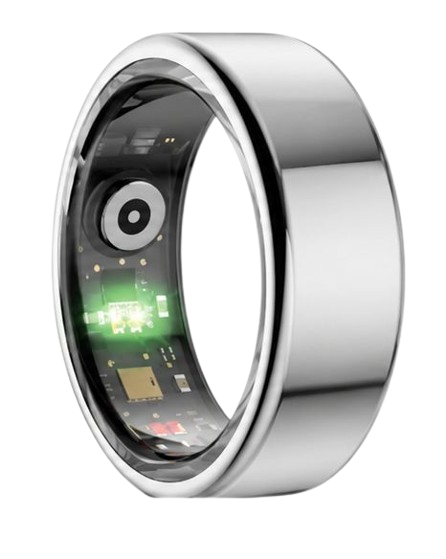
The Herz P1 Smart Ring is your ultimate companion for stress-free, accurate fertility tracking.
Ready to monitor your health every day?
Explore the Herz P1 Smart Ring and see if it fits your lifestyle.
Call: 1-866-479-1629 — our team can help you advise on the correct ring size and set personalized health goals.
Note: Individual results may vary depending on individual health conditions, age, and lifestyle habits. This article is intended for general health reference purposes only.
