

Many women struggle with fertility tracking because they assume their cycle mirrors textbook models, asking themselves: is ovulation always on the 14th day? Relying on this outdated rule often leads to missed windows of opportunity, calculation errors, and unnecessary psychological stress. At Herz P1, we believe in decoding your body’s true biometric signals rather than relying on arbitrary calendar math. Our premium Herz P1 Smart Ring continuously tracks your skin temperature and heart rate trends to reveal your actual personal cycle patterns, solving tracking confusion without stressful guesswork.
Built to Last. Save Up to 69% Today.
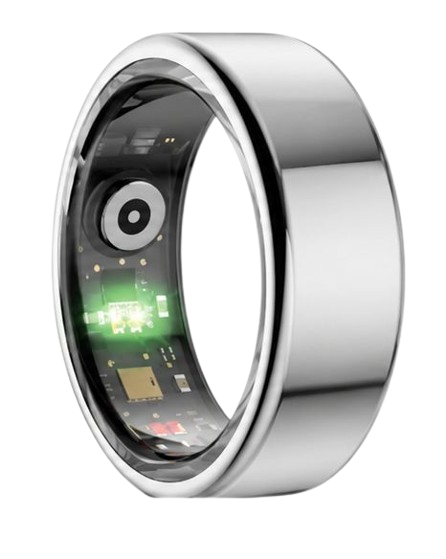
The Herz P1 Smart Ring tracks HRV, Sleep, Heart Rate & SpO2 around the clock. No subscriptions. No renewals. Ever.
In This Article
- The Science of the Day 14 Myth: Learn why the historical 14-day rule is a mathematical average rather than an absolute biological truth.
- The Physiological Drivers of Variation: Discover how lifestyle, stress, and sleep changes alter hormonal patterns and shift your fertile window.
- The Power of Continuous Temperature Tracking: See how tracking skin temperature patterns during sleep provides precise ovulation insights.
- A Smarter Way to Track Cycles: Understand how smart wearable devices eliminate manual charts to deliver automated biometric monitoring.
Is Ovulation Always on the 14th Day? Here Is What Science and Data Reveal

The belief that ovulation occurs exactly on day 14 of the menstrual cycle is a historical misinterpretation of statistical averages.
For decades, medical literature assumed a standard 28-day cycle with ovulation occurring perfectly in the middle.
However, comprehensive clinical studies conducted by reproductive endocrinologists reveal that only a small percentage of women experience this exact timing.
In fact, research published in peer-reviewed medical journals indicates that less than 13% of women with regular cycles ovulate on the 14th day.
This biological event represents the release of a mature oocyte from the dominant ovarian follicle into the fallopian tube.
This process is highly sensitive to a variety of internal and external stimuli, meaning the timing changes constantly.
Anyone who relies solely on the standard calendar method risks completely missing their true fertile days.
Whether you are trying to conceive or trying to understand why your periods are irregular, you must look at real biological data.
Your body does not follow a mathematical calendar; instead, it responds directly to your daily environment.
Ovulation can occur as early as day 10 or as late as day 22, even in individuals who consider their cycles regular.
The time before ovulation, known as the follicular phase, is highly variable and can easily stretch or compress.
Conversely, the post-ovulatory phase, known as the luteal phase, remains relatively stable between 11 and 16 days.
Understanding this biological math is crucial for understanding fertile window definition and managing your reproductive health.
Relying on generic health apps that use basic calendar math will only lead to confusion and tracking errors.
This is where modern wearable biometric technology makes a profound difference in daily life.
By continuously analyzing your physiological baseline, the Herz P1 Smart Ring identifies your unique hormonal shifts without requiring manual calculations.
Instead of guessing if you have reached your peak fertility, you can view your real-time body temperature and heart rate trends.
If you want to track this in real time, the Herz P1 Smart Ring monitors your cycle biomarkers 24/7 — explore it here.
90-Day 100% Money-Back Guarantee
“The Herz Smart Ring helps me manage stress easily. It’s accurate, stylish, and lightweight—perfect for my busy life!”
— Jennifer P. | ✔ Verified Customer
- ✓ 6-Day Battery Life
- ✓ Detailed Sleep Analysis
- ✓ Fast 1-Hour Charging
- ✓ iOS & Android Ready
Questions? Call: 1-866-479-1629
The Physiological Mechanics: Why the 14th Day of Ovulation Varies

Your endocrine system is a delicate, interconnected network that adapts continuously to your emotional and physical state.
The pituitary gland releases follicle-stimulating hormone to encourage follicle development in the ovaries.
The rate at which these follicles mature depends heavily on your metabolic health, stress levels, and genetic profile.
If you experience physical or mental exhaustion, your brain may delay the signal to release luteinizing hormone.
This delay directly pushes back your ovulation date, causing you to ask why is my menstrual cycle getting shorter or suddenly longer.
No two cycles are identical, and even healthy individuals experience variations of several days from month to month.
The follicular phase acts as a buffer, expanding or contracting based on your body’s survival priorities.
During times of acute stress, the body prioritizes cortisol production over reproductive hormones.
This evolutionary defense mechanism ensures that pregnancy is avoided during periods of biological threat or instability.
Understanding these biological mechanisms helps you understand why standard calendar predictions fail so often.
To accurately spot these physiological shifts, you need continuous, objective measurements of your baseline health metrics.
By monitoring changes in resting heart rate and autonomic nervous system activity, we can observe these hormonal shifts as they occur.
The Herz P1 Smart Ring offers a simple, automated solution to track these exact variations during sleep.
The Follicular Phase vs. Luteal Phase Dynamics
The menstrual cycle consists of two distinct halves separated by the ovulation event.
The follicular phase begins on the first day of menstruation and lasts until the egg is released from the ovary.
This phase is highly dynamic and is responsible for most of the variations in overall cycle length.
In contrast, the luteal phase remains highly consistent because it is governed by the lifespan of the corpus luteum.
Once ovulation occurs, the ruptured follicle transforms into the corpus luteum and begins producing progesterone.
This hormone prepares the uterine lining for potential implantation and naturally raises your core body temperature.
If fertilization does not happen, progesterone levels fall, the uterine lining sheds, and a new cycle begins.
Because the luteal phase has a fixed duration, tracking your temperature allows you to calculate your past ovulation date with high precision.
This retrospective confirmation is essential for calculating your predicted fertile window meaning and predicting future cycles.
How Stress and Sleep Deprivation Alter Ovulation Timing
Chronic stress and poor sleep sleep directly impair the hypothalamus, the brain’s control center for hormone regulation.
The National Sleep Foundation warns that sleep disruptions alter melatonin secretion, which is closely linked to reproductive health.
Similarly, the American Heart Association emphasizes that sustained stress keeps the sympathetic nervous system on high alert.
When cortisol levels rise, the pulsatile release of gonadotropin-releasing hormone is disrupted, which can delay or stop ovulation.
This hormonal disruption is a common cause of unexpected cycle changes and missed fertile windows.
By measuring your sleep architecture and nightly heart rate variability, the Herz P1 Smart Ring tracks how stress affects your body.
This data helps you make proactive lifestyle adjustments to support hormone balance and keep your cycle regular.
Tracking Basal Body Temperature and Skin Temperature Patterns

Tracking temperature changes is one of the most reliable ways to confirm ovulation without invasive lab tests.
For decades, women have used oral thermometers to practice bbt ovulation tracking every morning.
However, oral measurements are highly sensitive to disruptions like breathing through your mouth, waking up at different times, or restless sleep.
To capture accurate trends, you need continuous temperature measurements taken during your body’s most stable state.
Wearable devices solve this issue by measuring your skin temperature continuously throughout the night.
By collecting thousands of data points while you sleep, smart rings establish a highly accurate baseline.
This approach eliminates the stress of morning thermometer readings and reduces the impact of minor environmental disruptions.
With this automated data, you can easily track the natural thermal shifts that occur across your cycle.
Deciphering the Thermal Shift
Your hormonal patterns create a distinct biphasic temperature curve across your menstrual cycle.
During the follicular phase, estrogen remains dominant, keeping your ovulation cycle temperature relatively low.
Just before ovulation occurs, some women experience a brief, slight temperature drop due to an estrogen surge.
Immediately after ovulation, progesterone levels rise quickly, causing a sustained temperature increase.
This thermal shift typically raises your resting skin temperature by 0.5 to 1.0 degree Fahrenheit.
This elevation remains stable throughout the luteal phase, confirming that ovulation was successful.
If pregnancy does not occur, you will notice that your does temperature drop after ovulation as menstruation approaches.
By analyzing these shifts, the Herz P1 Smart Ring helps you track your body’s natural patterns and identify your fertile days.
This continuous monitoring allows you to observe your unique skin temperature ovulation patterns clearly, removing the guesswork from fertility tracking.
Step-by-Step Guide: How to Track Your True Fertility Window with Herz P1
Tracking your cycle with the Herz P1 Smart Ring is a simple, stress-free process designed to fit seamlessly into your daily life.
Instead of manually logging temperatures and taking daily ovulation tests, you simply wear the ring on your finger.
The lightweight, military-grade steel ring tracks your metrics continuously, sending the data directly to the free Herz P1 App.
Here is how to use this physiological data to optimize your cycle tracking and daily wellness planning:
- Wear the Ring Consistently: Keep the Herz P1 on your finger 24/7 to establish a reliable baseline.
- Check Your Morning Dashboard: Open the app each morning to review your overnight skin temperature trends and HRV.
- Monitor Your Resting Heart Rate: Watch for a gradual rise in resting heart rate, which often precedes ovulation by several days.
- Review Your Cycle Phase Predictions: Use the app’s automated predictions to see where you are in your cycle.
- Log Your Physical Symptoms: Note symptoms like cramps or mood changes to help the app refine its algorithm for your body.
Identifying Your Unique Fertile Window
Your fertile window spans a six-day period, ending on the day of ovulation.
This timing is based on the lifespan of sperm inside the reproductive tract and the 24-hour lifespan of the egg.
Understanding what is fertility window allows you to time intercourse or manage your reproductive health goals effectively.
The Herz P1 App combines your historical cycle lengths, temperature trends, and heart rate variability to identify these high-fertility days.
This comprehensive approach ensures you receive predictions tailored to your actual biology rather than a generic calendar average.
Because the ring is exceptionally lightweight and comfortable, you can wear it continuously during workouts, office meetings, and deep sleep.
Critical Pitfalls in Cycle Tracking and How Wearable Tech Solves Them
Many traditional tracking methods fail because they rely on manual input and consistent user habits.
Forgetting to take your temperature immediately upon waking up can easily skew your entire month’s data.
Similarly, relying on bulky smartwatches for overnight sleep tracking often leads to inconsistent readings.
Smartwatches frequently shift on the wrist during sleep, causing optical sensors to lose contact with the skin and miss critical metrics.
Additionally, the bright screens and heavy designs of smartwatches can disrupt your natural sleep cycles.
Another major frustration in the wearable market is the hidden cost of ongoing subscription fees.
Many popular smart rings require a monthly payment just to access your own biometric data.
At Team Herz P1, we believe that access to your personal health data should always be free and fully transparent.
The Herz P1 Smart Ring includes lifetime access to our companion app with absolutely no monthly subscriptions or fees.
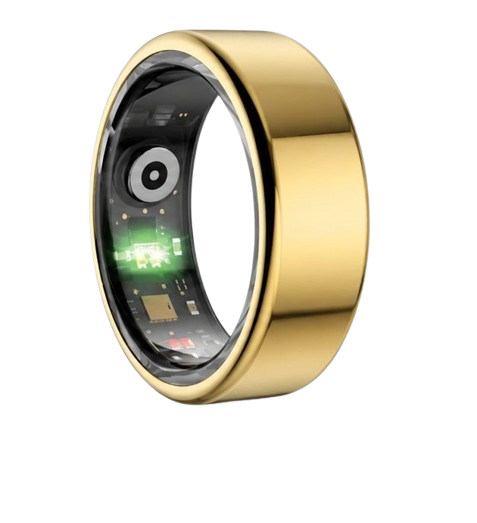
Our ring is built from military-grade steel, features IP68 waterproofing, and includes a 90-day money-back guarantee for complete peace of mind.
The ring stores up to 7 days of data locally, ensuring you never lose your metrics even during travel or offline use.
Frequently Asked Questions about Herz P1 and Ovulation Tracking
Is the Herz P1 Smart Ring waterproof?
Yes, the Herz P1 features a certified IP68 waterproof rating, making it safe for continuous use in water.
You can wear it while swimming, showering, washing your hands, or relaxing in a hot bath up to a depth of 164 feet.
This durable design ensures that your biometric tracking remains uninterrupted, no matter your daily activities.
How long does the battery last?
The Herz P1 is engineered for maximum energy efficiency, offering a reliable battery life of up to 6 days on a single charge.
When it is time to recharge, the ring reaches a full charge in under 1 hour using the included magnetic charger.
This long-lasting battery life eliminates the stress of daily charging, allowing you to track your sleep and recovery consistently.
Which finger is best to wear the smart ring on?
For the most accurate biometric readings, we recommend wearing the Herz P1 on your index, middle, or ring finger.
The blood vessels in these fingers are closer to the skin’s surface, allowing the optical sensors to capture highly accurate signals.
Choose the finger that offers a secure yet comfortable fit, ensuring the sensors maintain consistent contact with your skin.
Does the ring store data offline when disconnected from my phone?
Yes, the Herz P1 features built-in local storage that saves up to 7 days of biometric data offline.
You do not need to keep your phone nearby or maintain a constant Bluetooth connection to protect your information.
Once you open the companion app, the ring automatically syncs your stored data, updating your trends and charts instantly.
Conclusion
Tracking your actual cycle patterns does not have to be complicated or stressful.
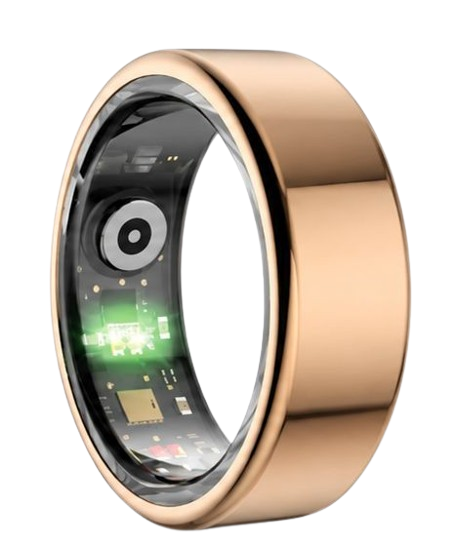
The Herz P1 Smart Ring delivers subscription-free body temperature and biometric insights to help you understand your unique rhythm every day.
Ready to monitor your health every day? Explore the Herz P1 Smart Ring and see if it fits your lifestyle. Call: 1-866-479-1629 — our team can help you advise on the correct ring size and set personalized health goals.
Note: Individual results may vary depending on individual health conditions, age, and lifestyle habits. This article is intended for general health reference purposes only.
