

Understanding how your body behaves during your cycle is crucial, and many women wonder: does temperature drop after ovulation? Many women struggle to track these subtle thermal shifts accurately while trying to optimize their fertility or cycle health. The Herz P1 smart ring monitors these minute physiological changes automatically every night. Let us explore the scientific truths behind post-ovulatory thermal patterns and how modern wearable biometric tech makes decoding them effortless.
Built to Last. Save Up to 69% Today.
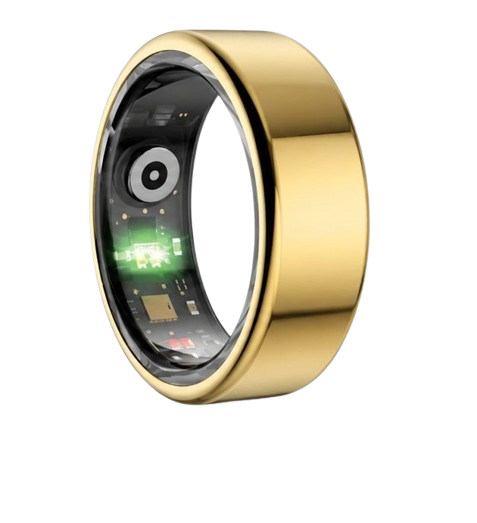
The Herz P1 Smart Ring tracks HRV, Sleep, Heart Rate & SpO2 around the clock. No subscriptions. No renewals. Ever.
In This Guide
- Physiological Shifts Explained: A thorough scientific breakdown of how hormonal changes dictate your basal body temperature curves.
- Post-Ovulation Fluctuations: Discover why a secondary temperature dip can occur and how to distinguish it from pre-menstrual cooling patterns.
- Biometric Ring Tracking: Learn how advanced optical smart rings record skin temperature continuously with clinical-grade accuracy.
- Troubleshooting Data Gaps: Step-by-step methods to optimize ring placement, calibration, and sensor alignment for reliable readings.
Does Temperature Drop After Ovulation? Here is What the Science Explains

To understand the thermal variations in your cycle, we must first look at the ovulation cycle temperature timeline.
The short answer to whether temperature drops immediately after ovulation is no, it actually rises.
Under typical circumstances, your body temperature spikes upward and stays elevated after ovulation has successfully occurred.
This upward shift is driven directly by progesterone, a hormone secreted by the newly formed corpus luteum.
However, many tracking charts show a brief, secondary post ovulation temperature drop about seven to ten days later.
Let us break down this phenomenon using the comprehensive 5W2H scientific framework.
What Is This Phenomenon and Who Does It Affect?
This thermal pattern is a transient shift in your baseline resting temperature during the luteal phase of your cycle.
It affects all menstruating individuals who are actively tracking their bbt throughout cycle trends.
It is especially prominent in those using high-precision resting temperature sensors to identify their fertility windows.
When and Where Does This Temperature Shift Occur?
The primary temperature rise begins exactly one to two days after the egg is released from the ovary.
The secondary temperature drop typically occurs mid-way through the luteal phase, often around cycle days 21 to 24.
This biological event takes place inside your bloodstream as hormones circulate through the hypothalamic-pituitary-gonadal axis.
The systemic thermal changes are most accurately measured at the capillary beds of your finger using continuous biometric sensors.
Why and How Does the Temperature Shift Happen?
The fluctuation happens because of a dynamic hormonal tug-of-war between estrogen and progesterone.
Progesterone warms the body, while estrogen acts as a natural cooling agent that pulls temperature downward.
During the mid-luteal phase, a secondary, minor surge of estrogen occurs naturally in healthy cycles.
This sudden burst of estrogen can briefly overpower progesterone for exactly twenty-four hours, causing a visible dip on your chart.
If pregnancy does not occur, both progesterone and estrogen levels crash completely at the very end of your cycle.
This steep decline causes a permanent basal body temperature before period drop, signaling the uterine lining to shed.
How Much and How Often Do These Temperatures Fluctuating?
The post-ovulatory temperature rise is typically a clear jump of 0.5 to 1.0 degrees Fahrenheit (0.3 to 0.6 degrees Celsius).
The secondary mid-luteal temperature drop is much smaller, usually measuring only 0.1 to 0.3 degrees Fahrenheit.
This minor dip occurs in approximately 10% to 15% of recorded cycle charts globally.
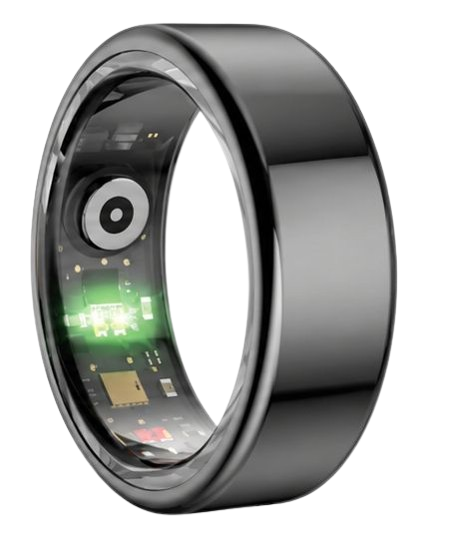
If you want to track this in real time, the Herz P1 Smart Ring monitors your skin temperature 24/7 — explore it here.
90-Day 100% Money-Back Guarantee
“The Herz Smart Ring helps me manage stress easily. It’s accurate, stylish, and lightweight—perfect for my busy life!”
— Jennifer P. | ✔ Verified Customer
- ✓ 6-Day Battery Life
- ✓ Detailed Sleep Analysis
- ✓ Fast 1-Hour Charging
- ✓ iOS & Android Ready
Questions? Call: 1-866-479-1629
Understanding the Hormonal Mechanics of the Post-Ovulation Temperature Drop

To truly understand your cycle, you must look closely at how chemical messengers coordinate their timing.
Our research at Team Herz P1 shows that many users mistake a normal mid-luteal dip for an early menstrual transition.
During the first half of your cycle, estrogen remains the dominant hormone.
This high level of estrogen keeps your overall resting temperature lower during the follicular phase.
A high body temp during follicular phase can sometimes happen due to environmental factors, but estrogen generally promotes cooling.
Once ovulation is triggered by the luteinizing hormone surge, the ruptured follicle transforms into the corpus luteum.
The corpus luteum immediately begins producing high levels of progesterone to prepare the uterine lining for potential implantation.
Progesterone acts on the hypothalamus, shifting your body’s thermal baseline upward.
This shift is what we track using bbt ovulation tracking methods.
About midway through the luteal phase, the corpus luteum briefly releases a secondary wave of estrogen.
This momentary estrogen surge explains why a sudden, single-day post ovulation temperature drop occurs on many charts.
Understanding this secondary surge helps prevent confusion when monitoring your cycle trends.
If conception does not occur, the corpus luteum naturally degrades over fourteen days.
This degradation shuts down progesterone production completely.
The resulting drop in progesterone causes a highly predictable basal body temperature before period decline.
Your body then transitions back to the cooler, follicular-phase state.
You will typically see this cooling pattern reflected as a clear basal temp during period drop as your new cycle begins.
How Smart Rings Decode Your Cycle: The Science of Digital Biometrics
Traditional basal temperature tracking requires you to use oral thermometers immediately upon waking up.
This manual method has many limitations because waking up to search for a thermometer introduces movement noise.
Talking, drinking water, or moving in bed can raise your core temperature instantly.
This movement makes pinpointing a true resting baseline extremely difficult.
Modern wearable technology solves this issue by tracking skin temperature continuously throughout the night.
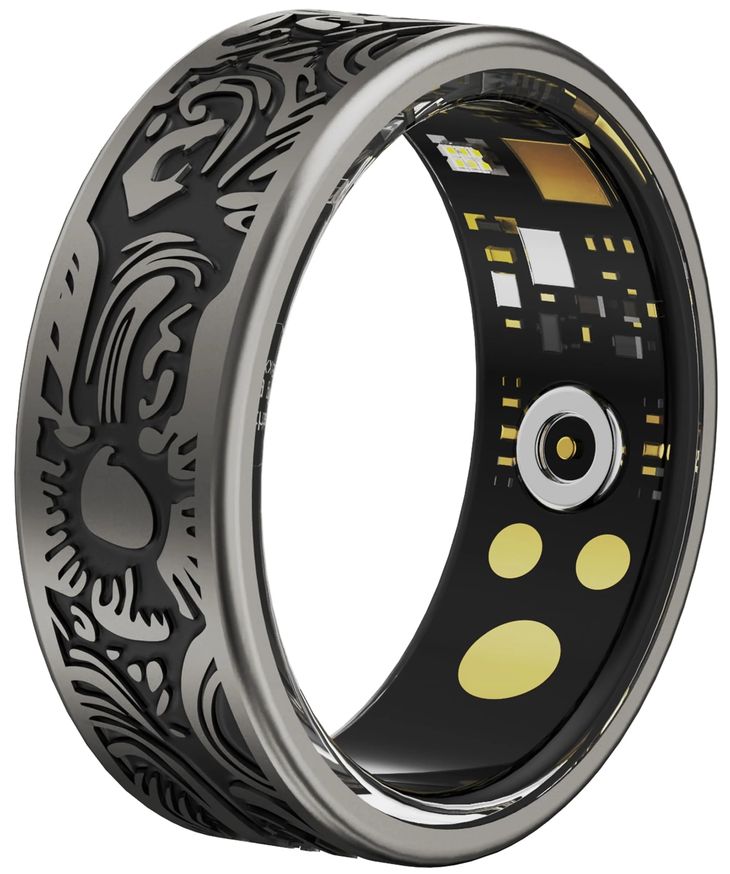
The Herz P1 Smart Ring utilizes advanced multi-wavelength optical sensors and precise thermistors.
These sensors rest directly against the palmar digital arteries of your finger.
Your fingers have a dense network of capillary beds that are highly sensitive to systemic vasomotor changes.
This arterial proximity allows the Herz P1 to read micro-fluctuations with a resolution of 0.01 degrees Celsius.
The ring measures your temperature when your body is in its deepest resting state.
This clinical-grade data is then paired with your heart rate variability (HRV) and sleep architecture analytics.
Citing the National Sleep Foundation, core body temperature drops naturally as you enter deep slow-wave sleep.
The Herz P1 algorithms filter out temporary nocturnal disruptions, like tossing and turning, to identify your true thermal baseline.
This continuous monitoring provides a much cleaner curve than manual oral charting.
By using a bbt charting ring, you can eliminate the daily stress of manual temperature logging.
You can read more about how this continuous monitoring works on our temperature cycle tracking page.
Is a Post-Ovulation Temperature Drop a Sign of Pregnancy or Period?
Many women notice a sudden dip on their chart and immediately wonder if it is an implantation dip.
An implantation dip is a short, single-day temperature drop that occurs seven to ten days after ovulation.
This dip matches the timeline of a fertilized egg attaching to the uterine wall.
The attachment of the embryo triggers a sudden, temporary surge in estrogen, which briefly pulls your temperature down.
If the temperature rebounds the very next day and remains elevated, it may indicate a successful implantation.
This pattern is often referred to as a triphasic temperature curve on fertility charts.
A triphasic curve shows three distinct temperature levels: follicular low, luteal high, and post-implantation higher.
However, if your temperature continues to trend downward over consecutive days, it is a temperature dip before period.
This continuous decline shows that the corpus luteum is ending its life cycle and progesterone is falling.
Distinguishing between these two patterns requires accurate, consecutive overnight measurements.
Slight changes caused by alcohol, room temperature, or minor illness can look like a hormonal dip on manual charts.
The Herz P1 Smart Ring helps clarify this by tracking your baseline trends over several months.
This long-term tracking allows the app’s smart algorithms to separate random environmental noise from true hormonal shifts.
Practical Application Guide: Charting Your Cycle with the Herz P1 App
Using the Herz P1 App to monitor your cycle is simple and highly automated.
You do not need to log any data manually when you wake up.
Simply wear the Herz P1 Smart Ring to bed every night on your chosen finger.
The ring automatically detects your sleep onset and starts taking thermal readings.
When you wake up, open the companion app on your smartphone to sync the overnight data.
The app will display your daily temperature variation relative to your personal cycle baseline.
You can use this data to identify your follicular phase, ovulation window, and luteal phase transitions.
The app also tracks your nightly Sleep Score and Heart Rate Variability (HRV).
During your luteal phase, you may notice your resting heart rate rises slightly alongside your temperature.
This is a completely normal reaction to progesterone warming your body.
If you see your HRV drop and temperature rise during this phase, it indicates your body is working harder.
You can use these insights to adjust your exercise intensity, opting for lower-impact recovery workouts.
When your temperature drops back to baseline, it signals that your body is ready for higher-intensity training.
Overcoming Risks: Sizing Errors and Wearable Tracking Pitfalls
Even the most advanced biometric sensors require proper skin contact to produce accurate data.
A loose ring can slide around your finger, causing gaps between the sensor and your skin.
This movement allows cool air to enter, creating artificial temperature drops on your chart.
To avoid this issue, we recommend using our sizing kit to find your perfect fit.
Your ring should fit snugly but comfortably without rotating easily when your hands are cold.
Many smartwatches suffer from similar issues, as their bulky designs can lift off your wrist during sleep.
The slim, lightweight design of the Herz P1 ensures consistent skin contact throughout the night.
Additionally, many wearable brands charge expensive monthly subscription fees to access your health data.
We believe your personal biometrics should belong to you without ongoing costs.
The Herz P1 App is free for life, with no paywalls or hidden fees ever.
We stand behind our quality with a 2-year warranty and a 90-day money-back guarantee.
Biometric Tracking Methods: Smart Rings vs. Smartwatches vs. Oral Thermometers
To help you choose the best tracking method for your needs, we have compared the three most common options.
| Feature | Herz P1 Smart Ring | Oral Thermometers | Typical Smartwatches |
|---|---|---|---|
| Measurement Frequency | Continuous overnight sampling | Single daily spot-check | Intermittent overnight scans |
| User Effort Required | Zero (automatic overnight tracking) | High (manual waking measurements) | Zero (automatic tracking) |
| Sensor Contact Quality | High (snug finger placement) | Variable (placement under tongue) | Moderate (lifts during wrist movement) |
| Monthly Subscription Fee | Free App Forever | None | Often $5.99 to $9.99/month |
| Data Insights Provided | Temp, Sleep, HRV, SpO2 trends | Temperature only | Varies by brand |
Frequently Asked Questions About Cycle Tracking and Wearable Tech
Conclusion: Start Your Hassle-Free Tracking Journey
Monitoring your cycle doesn’t have to be difficult.
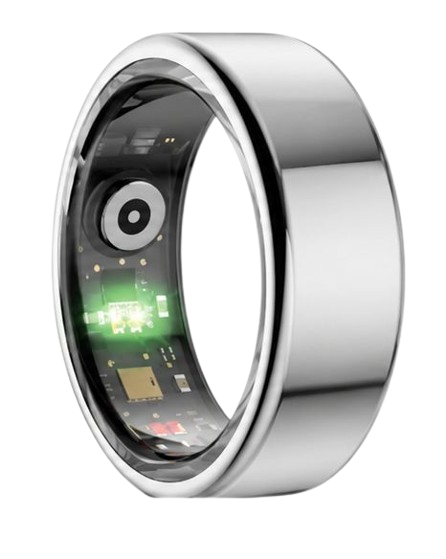
The Herz P1 Smart Ring acts as a reliable health companion, automatically tracking your nightly physiological changes.
Ready to monitor your health every day? Explore the Herz P1 Smart Ring and see if it fits your lifestyle. Call: 1-866-479-1629 — our team can help you advise on the correct ring size and set personalized health goals.
