

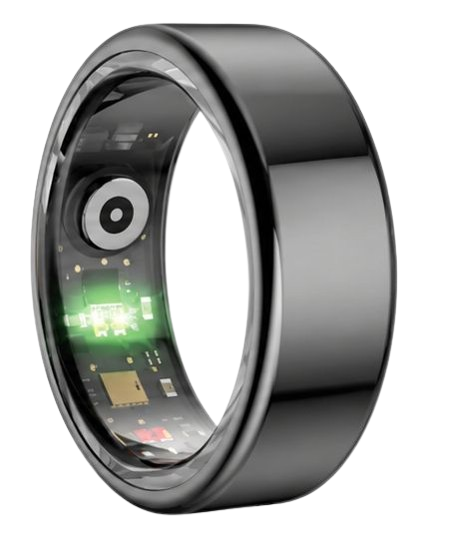
To master your marathon goals, you must track your recovery with the same intensity as your miles, which is why optimizing your biometric tracking with a reliable running ring like the Herz P1 Smart Ring provides a lightweight, continuous stream of cardiovascular insights to eliminate fatigue, prevent overtraining, and help you cross the finish line with peak athletic efficiency.
Built to Last. Save Up to 69% Today.
The Herz P1 Smart Ring tracks HRV, Sleep, Heart Rate & SpO2 around the clock. No subscriptions. No renewals. Ever.
In This Article
- The Ultimate How-To Guide: Learn step-by-step how to utilize a smart ring to optimize your marathon performance.
- PPG Optical Sensor Technology: Explore how deep finger photoplethysmography measures cardiovascular recovery better than wrist bands.
- Sleep Architecture & HRV Analysis: Understand why REM and Deep Sleep cycles determine your daily aerobic limits.
- Avoiding Training Pitfalls: Discover how to overcome common charging, sizing, and offline sync mistakes during active training.
How to Use a Running Ring for Marathon Training: A Step-by-Step Recovery and Performance Guide

Marathon training demands extreme physical endurance and precise recovery metrics.
A specialized sport ring acts as a compact lab on your finger to monitor physiological strain.
Before starting, you will need a properly fitted smart wearable and its connected tracking application.
Ensure your device is fully charged to avoid overnight data gaps.
Consistent daily wear is the secret to building an accurate cardiovascular baseline.
-
Step 1: Calibrate Your Baseline Sleep and Heart Rate Variability (HRV) Metrics
Put your ring on your index or middle finger and wear it continuously for seven consecutive days.
Avoid making drastic changes to your running intensity or sleep schedule during this initial calibration phase.
The app will establish your baseline resting heart rate and autonomic nervous system equilibrium.
This baseline acts as the clinical foundation for detecting early signs of overtraining or systemic exhaustion. -
Step 2: Establish Your Training Zones with the Active Ring Fitness Tracker
Use the companion app to input your age, biological sex, weight, and maximum heart rate values.
Utilize the active ring to monitor your heart rate zones during structured aerobic sessions.
Aim to spend eighty percent of your weekly mileage in Zone 2 to build a resilient mitochondrial foundation.
Your ring will log the exact cardiovascular strain experienced during these long, slow aerobic runs. -
Step 3: Monitor Real-Time Recovery and Daily Readiness Scores
Check your personalized daily readiness score every morning immediately after waking up.
This score combines your nocturnal heart rate variability, resting heart rate, and overall sleep architecture metrics.
If your readiness score drops below sixty, consider modifying your scheduled hard workout to an easy recovery run.
Paying attention to these daily readiness cues prevents structural muscle damage and minimizes acute fatigue buildup. -
Step 4: Analyze Cardiovascular Recovery Post-Run
Check your post-run heart rate recovery curve using your exercise ring tracker.
A healthy cardiovascular system should drop its heart rate by at least twelve beats within the first minute post-exercise.
Monitor how quickly your body returns to its homeostatic state during your post-workout rest periods.
Slow recovery times indicate that your cardiac muscle is still under significant autonomic nervous system pressure. -
Step 5: Sync Your Running Ring Data to Strava and Training Apps
Connect your ring app to popular running platforms like Strava or Apple Health for cohesive progress monitoring.
Export your continuous workout data to cross-reference heart rate fluctuations with your historical pace metrics.
Sharing this integrated metric flow helps your athletic coach adjust your weekly structural training loads.
Regular updates ensure your macro-cycle training plan aligns with your real-time physiological adaptive capacities.
Using the Herz P1 Smart Ring streamlines this step-by-step training protocol.
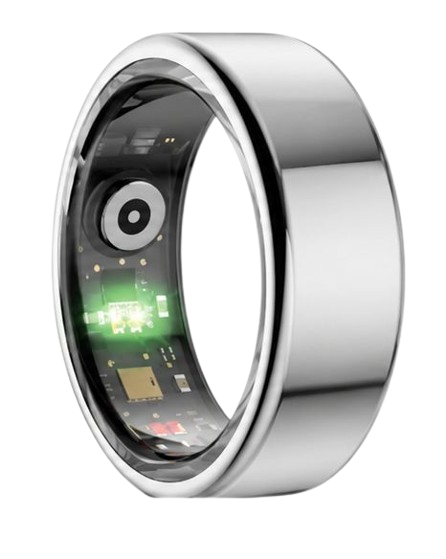
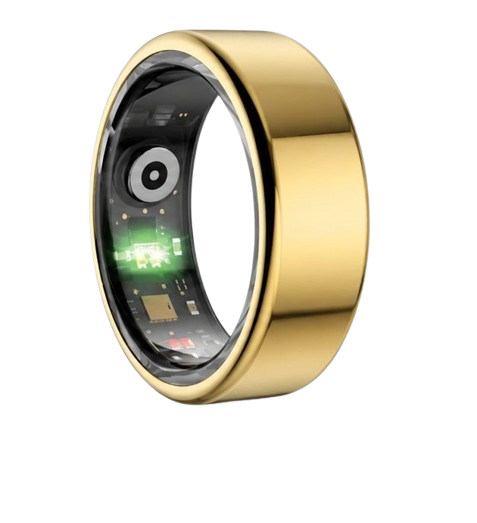
The ring features military-grade steel construction to handle heavy training environments.
Its high-fidelity optical sensors capture blood flow dynamics from the finger arteries with clinical-grade precision.
With no monthly subscriptions, you get a lifetime of advanced athletic metrics without recurring financial drain.
The Science of Photoplethysmography (PPG) at the Finger Base

Traditional fitness wristbands measure light absorption through the dorsal side of your wrist.
This anatomical location is plagued by excessive motion interference and thicker skin layers.
A high-quality best fitness ring tracker utilizes the highly vascularized digital arteries located inside your fingers.
These arteries rest directly beneath a thin epidermal layer.
This proximity allows the optical PPG sensors to capture heart rate data with medical-grade precision.
The optical sensor emits specific green, red, and infrared light wavelengths into your blood vessels.
As your heart contracts, blood volume swells, absorbing more light.
Between beats, blood volume recedes, allowing more light to bounce back to the photodiode.
This rhythmic light reflection translates into your precise pulse waveform.
The American Heart Association highlights pulse oximetry as a critical metric for monitoring systemic blood oxygenation.
Marathon runners can track their training adaptation by observing baseline cardiovascular recovery improvements.
A stabilizing resting heart rate indicates expanding stroke volume and enhanced left ventricular efficiency.
Conversely, a sudden elevated morning resting pulse can indicate early overtraining syndrome or physical dehydration.
The Herz P1 sensor array operates at high sampling frequencies to deliver continuous data during daily life.
This real-time precision ensures you never miss a critical cardiac warning signal.
Understanding Sleep Architecture and Heart Rate Variability in Endurance Athletes

Sleep is the ultimate anabolic training phase where your muscular tissues rebuild themselves.
Understanding your sleep architecture is crucial when preparing your body for a marathon.
Your nocturnal cycle alternates between Light Sleep, Deep Sleep, and Rapid Eye Movement (REM) phases.
Deep Sleep represents the physical recovery phase where human growth hormone is secreted to repair torn muscle fibers.
REM Sleep supports cognitive consolidation, allowing you to mentally process motor patterns and strategic race goals.
A premium fitness rings system analyzes these micro-cycles to evaluate your systemic restoration.
The National Sleep Foundation confirms that proper sleep architecture prevents cognitive fatigue and improves endurance limits.
Alongside sleep phases, Heart Rate Variability (HRV) serves as an accurate window into your autonomic nervous system.
HRV measures the millisecond-level variation in time between consecutive heart beats.
A high HRV score indicates a dominance of your parasympathetic branch, meaning your body is relaxed and ready for strain.
A low HRV score indicates sympathetic nervous system dominance, pointing to physical fatigue, emotional anxiety, or illness.
By utilizing an athletic ring, runners can easily track these variables without wearing heavy, uncomfortable chest straps.
Analyzing these autonomic metrics protects you from long-term burnout and severe athletic regression.
Practical Application Guide: Optimizing Daily Marathon Workouts
Reading the raw metrics on your companion app dashboard should feel intuitive and empowering.
Every morning, look at your sleep efficiency rating and your baseline HRV trends.
If your deep sleep percentage drops below fifteen percent of your total sleep, schedule a shorter running session.
If your resting pulse rises by more than five beats per minute above your average baseline, focus on hydration and stretching.
Daily exercise volume must be modulated dynamically rather than strictly adhering to a rigid paper calendar.
The ultra-lightweight design of the Herz P1 ensures you can comfortably collect biometric details twenty-four hours a day.
You will barely notice the ring on your hand while gripping water bottles or navigating long trail runs.
Continuous wear is the only way to build a reliable physiological picture.
The app translates these complex medical wave details into clear actionable recommendations for your day.
Overcoming Sizing and Biometric Tracking Mistakes
Many runners make the mistake of wearing a bulky, heavy smartwatch during overnight sleep cycles.
Bulky watches shift easily during movement, which disrupts light sensors and creates massive overnight data gaps.
A sleek exercise ring sits flush against your skin to maintain sensor contact all night.
Another common issue in the wearable space is the high ongoing cost of monthly app subscriptions.
Many brands charge subscription fees to access your own biometric trends.
We believe your health data belongs to you, which is why the Herz P1 application is entirely free for life.
Using a fit rings tracking option shouldn’t lock you into a monthly payment loop.
Always make sure your smart ring fits snugly on your chosen finger.
If the ring slides too freely, the optical sensor cannot accurately track dynamic blood flow variations.
Choose a finger that does not experience extreme swelling during your hot afternoon training runs.
Frequently Asked Questions (FAQ)
Is the Herz P1 Smart Ring waterproof enough for wet marathon runs and swimming?
Yes, the Herz P1 is rated IP68 waterproof, meaning it can withstand continuous submersion up to 164 feet deep.
You can comfortably wear it in heavy downpours, dynamic pool workouts, or during post-run recovery showers.
The durable protective outer shell shields the delicate internal sensor components from moisture damage.
How long does the battery last on a single charge?
The integrated lithium-polymer battery delivers up to six days of continuous use under normal conditions.
The device charges rapidly, going from empty to one hundred percent capacity in under one hour.
This long battery life eliminates the frustration of daily charging required by most modern smartwatches.
Which finger is best to wear the smart ring on for running?
For high-accuracy heart rate and blood flow metrics, wear the ring on your index or middle finger.
These fingers provide the strongest arterial blood flow signal to the optical sensors.
Make sure the sensor bumps on the interior band are resting against the underside of your finger.
Does the ring store biometric data offline when away from my phone?
Yes, the ring has local storage capabilities to save up to seven days of biometric records offline.
You do not need to carry your phone during long endurance runs or sleep cycles.
Once you reopen the app, all saved training records sync automatically via a Bluetooth connection.
90-Day 100% Money-Back Guarantee
“The Herz Smart Ring helps me manage stress easily. It’s accurate, stylish, and lightweight—perfect for my busy life!”
— Jennifer P. | ✔ Verified Customer
- ✓ 6-Day Battery Life
- ✓ Detailed Sleep Analysis
- ✓ Fast 1-Hour Charging
- ✓ iOS & Android Ready
Questions? Call: 1-866-479-1629
Conclusion
Optimize your marathon preparation by tracking your real-time recovery and cardiac health trends with the Herz P1.
Ready to monitor your health every day?
Explore the Herz P1 Smart Ring and see if it fits your lifestyle.
Call: 1-866-479-1629 — our team can help you advise on the correct ring size and set personalized health goals.
Note: Individual results may vary depending on individual health conditions, age, and lifestyle habits. This article is intended for general health reference purposes only.
