

Many health-conscious individuals struggle to find a comfortable wearable tracker that provides deep, reliable biometric insights without demanding daily recharging or charging heavy monthly fees. If you are looking for a sleek alternative to bulky smartwatches, modern fit rings like the Herz P1 Smart Ring offer a powerful, subscription-free solution to monitor your sleep quality, Heart Rate Variability (HRV), and daily activity levels. In this comprehensive guide, we will show you how to choose, size, and optimize these active smart ring devices to elevate your daily quality of life.
Built to Last. Save Up to 69% Today.
The Herz P1 Smart Ring tracks HRV, Sleep, Heart Rate & SpO2 around the clock. No subscriptions. No renewals. Ever.

In This Article
- How to Select, Size, and Optimize Your Active Fit Rings: A complete, step-by-step sizing and daily setup guide.
- The Biometric Science of HRV and Sleep Architecture: How finger-based sensors analyze your recovery.
- The Optical Technology Inside Modern Smart Ring Trackers: Demystifying PPG sensors and SpO2 tracking.
- Practical Lifestyle Tips & Workout Integration: Real-world protocols to enhance your physical performance.
- Overcoming Sizing Risks & Wearable Traps: How to avoid subscription traps and tracking errors.
How to Select, Size, and Optimize Your Active Fit Rings for Daily Tracking
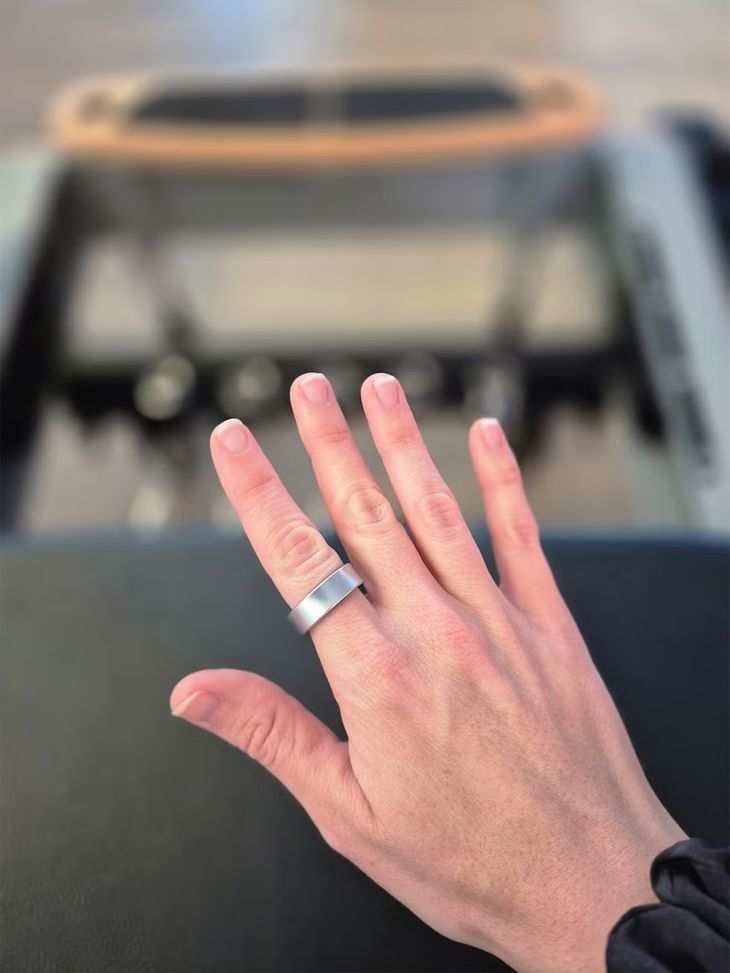
Getting the most out of your miniature wearable begins with a precise setup strategy.
Unlike loose bracelets, smart rings require steady skin contact to register micro-vascular changes accurately.
By following a clear preparation path, you can eliminate common biometric data gaps from your very first night of sleep.
Prerequisites and What You Will Need
Before you begin the physical setup, make sure you have a few simple tools ready.
You will need a compatible smartphone running at least iOS 14 or Android 10 with active Bluetooth enabled.
You will also need a dedicated ring sizing kit, which is provided free with your Herz P1 order.
Finally, ensure you have access to a stable USB power source to charge the ring cradle for its initial connection.
-
Step 1: Choose the Ideal Finger for Daily Biometric Readings
The index finger of your non-dominant hand is the absolute best location for daily tracking.
This finger contains highly superficial blood vessels that allow the optical sensors to read your pulse with minimal tissue interference.
If you prefer a different look, the middle finger serves as an excellent secondary option for your active ring.
Ensure the chosen finger does not have excessively large knuckles that might prevent a snug, flush fit at the very base of the digit.
Avoid placing the ring on your pinky finger or thumb, as these digits possess different vascular paths that can degrade overall signal quality.
-
Step 2: Wear a Sizer Ring for a Continuous Twenty-Four Hour Cycle
Human fingers naturally expand and contract throughout the day due to temperature changes and exercise.
You must wear your plastic sample sizer for at least twenty-four hours to observe how the fit adjusts to these fluctuations.
The sizer should fit snugly at the base of the finger without sliding around easily when your hand is dry.
However, it must not feel so tight that it restricts circulation or leaves deep, painful red indentations on your skin.
We recommend sleeping with the sizer on to ensure it remains comfortable as blood flow increases overnight.
-
Step 3: Align the Optical Sensors with the Palm Side of Your Hand
The active optical sensors must always remain positioned on the underside of your finger to maintain constant skin contact.
Most high-quality fitness rings incorporate a subtle interior flat spot or distinct physical marker to guide this alignment.
If the ring rotates during active exercise or sleep, your heart rate readings and sleep data might experience temporary gaps.
Develop a habit of checking this sensor alignment when you wash your hands or prepare for a workout session.
Keeping the sensors clean of skin oils and hand lotions with a soft dry cloth will also preserve optical clarity.
-
Step 4: Establish a Consistent Charging Routine to Avoid Data Loss
Allowing your wearable to discharge completely can disrupt your continuous overnight sleep staging analytics.
We recommend placing your ring on its magnetic charging cradle for fifteen minutes while you shower or get ready in the morning.
This simple daily habit keeps your battery topped up without ever missing a single hour of active tracking.
A full charge typically takes less than sixty minutes and provides up to six days of reliable, non-stop performance.
Avoid leaving the charging cradle in direct sunlight or freezing temperatures to protect the longevity of the lithium-polymer cell.
-
Step 5: Sync the Ring with Your Mobile App and Observe Baseline Trends
Open your companion application daily to sync the locally stored data from your ring over a secure Bluetooth connection.
Focus your attention on weekly averages rather than sudden daily spikes to understand your true physiological baseline.
Pay close attention to changes in your Heart Rate Variability (HRV) and deep sleep percentages to gauge physical recovery.
This objective data will help you decide when to push hard during training and when to prioritize active rest.
Over time, the application will provide personalized insights to help you build healthier daily habits.
Enhancing Your Journey with the Herz P1 Smart Ring
To make this setup process completely seamless, the Herz P1 is engineered with advanced multispectral sensors nested inside a military-grade steel body.
When you choose the Herz P1, you receive a free sizing kit containing twelve distinct sizes to guarantee a flawless fit.
Best of all, you gain full access to our comprehensive, subscription-free mobile app for life, keeping your health journey simple and affordable.
The Biometric Science Behind Fit Rings and HRV Analysis

Understanding how your body recovers from daily stress requires a look at cardiac and nervous system mechanics.
Compact smart rings are uniquely positioned to capture these subtle shifts because they rest near major digital arteries.
By measuring the precise intervals between your heartbeats, these devices offer a window into your nervous system’s balance.
Demystifying Heart Rate Variability (HRV)
Heart Rate Variability represents the tiny variations in timing between each consecutive heartbeat.
According to clinical insights published by the American Heart Association, a higher HRV generally indicates a highly adaptable autonomic nervous system.
Conversely, a sudden drop in your personal HRV baseline can signal physical overtraining, incoming fatigue, or high levels of mental stress.
Utilizing a premium best fitness ring tracker allows you to monitor these sensitive autonomic shifts throughout the night.
The Herz P1 tracks your HRV at five-minute intervals during sleep to give you a highly accurate, undistorted recovery score each morning.
This automated tracking removes the guesswork from planning your daily work and training intensity.
The Importance of Deep and REM Sleep Architecture
Sleep is divided into distinct, recurring cycles that serve critical roles in keeping your mind and body healthy.
The National Sleep Foundation highlights that deep sleep is essential for muscular repair, bone growth, and physical energy restoration.
Meanwhile, Rapid Eye Movement (REM) sleep supports complex cognitive functions, memory consolidation, and emotional regulation.
Many heavy, screen-equipped smartwatches fail to track these stages accurately because they slide around when you roll over in bed.
A lightweight exercise ring tracker sits securely at the base of your finger, maintaining a constant optical connection for precise stage mapping.
This stable contact allows our team to provide you with an objective analysis of your sleep quality every single morning.
By optimizing your sleep environment based on these trends, you can actively improve your daytime mental clarity.
How Optical Sensor Technology Decodes Blood Oxygen and Pulse Trends

The hardware inside a smart ring utilizes specialized light wavelengths to peer beneath your skin.
This non-invasive approach provides immediate feedback on cardiovascular performance without any skin irritation.
Understanding how these optical components work can help you appreciate the depth of your daily data.
Photoplethysmography (PPG) and Multispectral Light Sensors
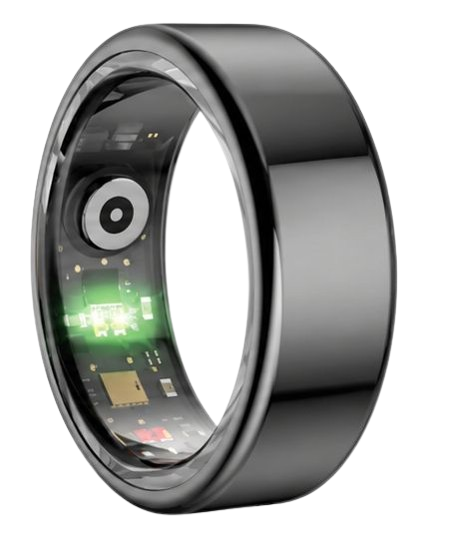
Modern sport ring options utilize photoplethysmography, or PPG, to observe changes in blood volume.
The device shines tiny LED lights through your skin and measures how much light is absorbed by your blood flow with each pulse.
While wristbands must shine light through thick layers of muscle, tendon, and bone, a ring targets the highly vascular digital arteries.
This physiological advantage allows our sensor array to gather exceptionally clean pulse wave data with minimal external noise.
We use red, green, and infrared wavelengths to capture various depth metrics, including your blood oxygen saturation (SpO2).
The resulting signal is processed by smart algorithms to filter out motion artifacts during physical movement.
This ensures your workout heart rates remain reliable even during dynamic functional training.
Tracking SpO2 for Cardiovascular and Respiratory Awareness
Blood oxygen saturation reflects how effectively your lungs and circulatory system are delivering oxygen to your muscles and organs.
Healthy individuals typically maintain an SpO2 level between ninety-five and one hundred percent throughout the day.
A unexpected drop in overnight SpO2 can point to restricted breathing patterns, poor room ventilation, or underlying physical fatigue.
Monitoring these trends over time helps you make informed adjustments to your bedroom environment, sleep posture, or pillows.
The Herz P1 tracks these fluctuations within a safe, non-invasive two percent margin of error compared to medical oximeters.
This clinical-grade precision provides peace of mind without the need for uncomfortable medical equipment clipped to your finger.
It acts as a quiet guardian of your respiratory health while you rest.
Practical Application Guide and Lifestyle Tips
Collecting physical data is only valuable if you can translate those numbers into daily lifestyle improvements.
By connecting your biometric trends to your daily routine, you can make intelligent decisions about work, exercise, and rest.
Here is how our active community uses their ring metrics to build sustainable, health-focused habits.
How to Apply Your Ring Data to Optimize Physical Training
Your athletic ring data should directly guide your daily physical exertion.
If your morning recovery score is high, your body is fully prepared to handle a high-intensity cardiovascular workout or heavy lifting session.
On days when your recovery score dips, swap intense training for a light walk or active stretching.
This proactive approach prevents overtraining syndrome and helps you avoid the dreaded plateaus of physical exhaustion.
Over a ninety-day cycle, users following this data-informed training path report fewer injuries and greater strength gains.
Listening to your body’s biometric signals is the ultimate key to sustainable physical longevity.
Managing Daily Stress Levels through Micro-Moments
Our companion app monitors your physiological stress levels by analyzing sudden shifts in your real-time heart rate.
When the app detects a stress spike during a busy work hour, take it as a gentle cue to step back.
Practicing just two minutes of deep, controlled diaphragmatic breathing can rapidly lower your heart rate.
By using your exercise ring to track these micro-recovery moments, you can prevent stress from accumulating.
This conscious intervention keeps your nervous system balanced and improves your late-night sleep transition.
Over time, you will build greater resilience to high-pressure workplace situations.
Tracking Menstrual Cycles and Body Temperature Fluctuations
The human body’s core temperature fluctuates in predictable patterns linked to hormonal shifts.
Using a dedicated exercise ring for women allows for precise, non-invasive monitoring of these minute shifts.
The Herz P1 tracks skin temperature variations down to fractions of a degree while you sleep.
This continuous monitoring helps predict cycle phases and ovulation windows with high accuracy.
Understanding these hormonal cycles allows you to align your diet, sleep, and physical training with your natural rhythms.
This removes the guesswork from reproductive health and provides deep personal insights.
Overcoming Risks and Common Wearable Mistakes
Every technology has potential pitfalls, and biometric wearables are no exception.
By recognizing these common mistakes, you can protect both your physical health and your financial investment.
Let us look at how to avoid the typical traps of modern health tracking devices.
Avoiding the Hidden Financial Costs of Subscription Wearables
Many users buy a sleek fitness tracker only to find that their daily data is locked behind an ongoing paywall.
These monthly app subscription fees can quietly add hundreds of dollars to the true cost of your device over time.
We believe that you should own your health data completely without paying recurring monthly fees.
The Herz P1 app is entirely free for life, giving you full access to every biometric trend, firmware update, and historical detail.
This transparent pricing model ensures you never have to pay to view your own biological information.
It makes prioritizing your health sustainable and highly cost-effective.
The Pitfalls of Bulky Wrist Trackers for Overnight Use
Wearing a large, glowing smartwatch to bed can actively disrupt your natural sleep onset.
The heavy watch face often catches on blankets, causing micro-arousals that ruin your deep sleep stages.
Swapping your watch for a sleek, lightweight smart ring removes this physical barrier to comfortable rest.
Our military-grade steel ring feels virtually weightless on your finger, allowing you to sleep naturally while gathering high-fidelity metrics.
You will no longer have to compromise sleep comfort to get the detailed overnight data you need.
It is the ultimate way to monitor your recovery without feeling weighed down.
Herz P1 vs. Traditional Wearable Trackers
To help you make an informed decision, our team has prepared an objective comparison of modern tracker designs.
The table below highlights how form factor and software policies affect your daily experience.
Use these metrics to determine which wearable style aligns with your personal health and financial goals.
| Feature Details | Herz P1 Smart Ring | Standard Smartwatches |
|---|---|---|
| Ongoing Subscription Fees | $0 (Free App Forever) | Often $5.99 to $9.99 per month |
| Physical Comfort in Bed | Excellent (Weightless, no screen) | Poor (Bulky, prone to screen glow) |
| Battery Life Range | Up to 6 full days per charge | Typically 1 to 2 days maximum |
| Warranty Coverage | 2-Year Manufacturer Warranty | Usually 1-Year standard warranty |
| Waterproof Standard | IP68 (Safe for swimming) | Varies greatly by model and price |
Frequently Asked Questions About Fit Rings
Is the Herz P1 waterproof enough for active swimming?
Yes, the Herz P1 is fully certified with an IP68 waterproof rating, allowing you to swim and shower with confidence.
This rigorous standard ensures the ring can withstand continuous water immersion up to fifty meters deep.
You can wear it in chlorinated lap pools, salt water, and hot showers without risking damage to the sensors.
The seamless steel outer shell and sealed inner resin protect all the delicate electronic components inside.
Simply rinse the ring with fresh water and dry it off after swimming to keep the skin contact area clean.
How long does the battery last on a single charge?
The Herz P1 delivers up to six days of continuous health monitoring on a single charge.
Our energy-efficient sensors and Bluetooth Low Energy chip minimize battery drain throughout the day.
When the battery does run low, you can charge it back to one hundred percent in under sixty minutes.
The compact magnetic charging cradle fits easily on your nightstand or office desk for quick power-ups.
This long battery life eliminates the daily charging anxiety associated with traditional smartwatches.
Which finger is best to wear my smart ring on?
We recommend wearing your smart ring on the index finger of your non-dominant hand for maximum accuracy.
This finger provides the cleanest blood flow signal for the optical PPG sensors located inside the band.
The middle finger and ring finger are also excellent, highly accurate alternatives if you prefer a different look.
Ensure the ring sits snugly at the base of the finger and does not easily spin around on its own.
A proper fit is the most important factor in receiving continuous, uninterrupted sleep and activity data.
Does the Herz P1 store my biometric data offline?
Yes, the ring features seven days of local data storage to protect your metrics when away from your phone.
You can go on a week-long camping trip or exercise without your smartphone nearby without losing any data.
Once you reopen the app near your phone, the ring will automatically sync all stored metrics via Bluetooth.
This offline storage ensures your health charts remain complete and continuous under all conditions.
It gives you the freedom to disconnect from your phone without disconnecting from your health goals.
90-Day 100% Money-Back Guarantee
“The Herz Smart Ring helps me manage stress easily. It’s accurate, stylish, and lightweight—perfect for my busy life!”
— Jennifer P. | ✔ Verified Customer
- ✓ 6-Day Battery Life
- ✓ Detailed Sleep Analysis
- ✓ Fast 1-Hour Charging
- ✓ iOS & Android Ready
Questions? Call: 1-866-479-1629
Conclusion: Your Subscription-Free Wellness Journey Starts Here
Optimizing your daily wellness should not be expensive. The subscription-free Herz P1 Smart Ring offers a durable path to decode your body’s vital signals. Ready to monitor your health every day? Explore the Herz P1 Smart Ring and see if it fits your lifestyle. Call: 1-866-479-1629 — our team can advise on the correct ring size.
Note: Individual results may vary depending on individual health conditions, age, and lifestyle habits. This article is intended for general health reference purposes only.
