

Waking up exhausted after ten hours in bed leaves you wondering if your recovery routine is actually backfiring. You might ask yourself: is it bad to sleep too much, or is your body simply demanding extra rest to heal? At Herz P1, we analyze biometric data from thousands of sleep cycles to help you identify when excessive rest shifts from recovery to a health risk. Let us decode the science of oversleeping and discover how to restore your natural rhythm.
In This Guide
- Discover if you can you sleep too much and understand the biological threshold for a dangerous sleep duration.
- Identify the primary over sleeping health risks, from chronic metabolic issues to cardiovascular strain.
- Recognize the subtle sleep too much symptoms that signal poor overnight recovery quality.
- Learn how to leverage cutting-edge sleep tracking technology to build a consistent circadian rhythm.
Is It Bad to Sleep Too Much? The 5W2H Scientific Breakdown

Oversleeping is medically defined as regularly sleeping more than nine hours in a twenty-four-hour period.
This persistent long sleep pattern is often referred to as hypersomnia.
It represents a complex biological state where your body remains in hibernation long after cellular repair is complete.
This issue primarily affects busy adults who endure high levels of physical and mental exhaustion throughout the week.
It also commonly impacts shift workers who struggle to maintain a stable daily schedule.
If you constantly find yourself asking why am I sleeping so much, your system is likely sending an urgent distress signal.
This excessive rest pattern becomes a serious concern when it occurs consistently for more than a few weeks.
While an occasional long sleep session after intense physical stress is healthy, chronic oversleeping indicates a biological imbalance.
You should pay close attention if these long sleep sessions are followed by severe daytime fatigue.
The physiological effects of oversleeping manifest systemically throughout your cardiovascular and nervous systems.
It slows down cognitive processing by altering neurotransmitter pathways in your brain.
It also causes physical lethargy by promoting sluggish blood flow throughout your major muscle groups.
This continuous physical inactivity can place a heavy burden on your arterial walls and cardiac systems.
Many individuals oversleep because they are struggling with poor sleep quality vs quantity.
If your sleep is constantly fragmented by micro-arousals, your brain will demand more total hours in bed to compensate.
This poor quality is often driven by sleep apnea, where breathing briefly stops and starts during the night.
Many people mistakenly believe they can balance their weekly sleep debt by staying in bed half the weekend.
However, modern medical research has debunked this habit, showing that you cannot simply replace lost sleep with long weekend binges.
If you want to know if is catching up on sleep a real thing, clinical data confirms that these irregular schedules only worsen your fatigue.
Oversleeping works by severely disrupting your body’s delicate circadian rhythm.
When you stay in a dark room past your normal waking hour, you delay the morning release of cortisol.
This delay prevents your core body temperature from rising, keeping your metabolic rate sluggish.
It also causes a prolonged release of melatonin, keeping your mind trapped in a state of fog.
The National Sleep Foundation warns that a dangerous sleep duration is anything consistently exceeding nine hours per night.
Clinical data shows that sleeping ten hours or more increases the risk of metabolic issues by thirty percent.
Furthermore, the American Heart Association reports that oversleeping correlates with a thirty-four percent higher risk of heart disease.
If you want to track this in real time, the Herz P1 Smart Ring monitors your sleep stages and heart rate 24/7 — explore it here.
The Biological Mechanism: How Oversleeping Impacts Your Health
To understand the danger of chronic oversleeping, you must look at its cellular impact.
When you remain physically inactive for extended hours, your systemic circulation slows down dramatically.
This prolonged physical dormancy triggers an elevation in systemic inflammation markers like C-reactive protein.
These elevated inflammatory markers are directly linked to long-term cardiovascular disease risk.
Additionally, oversleeping alters your body’s glucose metabolism, leading to insulin resistance.
When your cells become resistant to insulin, your body struggles to process blood sugar efficiently.
Over time, this metabolic sluggishness increases your risk of developing type 2 diabetes.
Many health enthusiasts assume that maximizing sleep time is always beneficial for physical repair.
However, you should ask yourself: can you get too much deep sleep?
The clinical answer is that excessive deep sleep often indicates a system under chronic immune or physical stress.
It can also signal that your brain is struggling to cycle naturally through light, REM, and deep stages.
These disrupted cycles prevent your brain from performing essential cognitive clean-up tasks.
This failure to clean up cellular waste leaves you feeling physically weak and mentally dull.
Our team at Herz P1 has analyzed sleep architecture across thousands of active users.
We have observed that users who consistently exceed nine hours of sleep show a marked decline in heart rate variability.
A lower HRV score indicates that your autonomic nervous system is struggling to adapt to daily physical stressors.
By tracking these metrics with a sleek smart ring, you can optimize your recovery without oversleeping.
Extended dormancy also reduces the overall tone of your blood vessels, leading to lower orthostatic tolerance.
This is why you might feel dizzy or lightheaded when you finally stand up after a long sleep session.
Furthermore, long sleep cycles can negatively affect your mental health by altering dopamine and serotonin pathways.
This disruption can trigger feelings of depression, which then drives you to sleep even longer.
Breaking this cycle requires precise, objective sleep tracking technology to guide your daily choices.
Decoupling the Catching-Up Myth: The Circadian Rhythm Under Threat
Many people attempt to survive on five hours of sleep during the week and sleep twelve hours on Saturday.
This common strategy relies on the belief that sleep debt can be balanced like a bank account.
However, modern sleep science has proven that the catching-up-on-sleep-myth is a dangerous misconception.
Your body operates on a highly precise circadian rhythm that regulates hormone release, body temperature, and digestion.
When you sleep in late on weekends, you shift your biological clock, causing a state known as social jet lag.
This circadian mismatch is highly stressful for your cardiovascular and metabolic systems.
If you are wondering can you catch up on sleep, the physical reality is that you cannot reverse weekly cellular damage in a single weekend.
Instead, this irregular sleep pattern confuses your pineal gland and delays melatonin regulation.
This delay makes it incredibly difficult to fall asleep at a reasonable hour on Sunday night.
As a result, you begin the new workweek already sleep-deprived and physically exhausted.
This vicious cycle leads to chronic sleep too much symptoms and daytime fatigue.
Establishing a highly consistent wake-up time is the single most important step to stabilizing your energy.
The Herz P1 Smart Ring makes tracking your sleep consistency effortless and highly accurate.
Our companion app measures your sleep regularity and warns you when your schedule is drifting out of balance.
A stable routine allows your body to predict when to release waking hormones like cortisol.
This predictive release ensures that you wake up feeling refreshed rather than groggy.
It also stabilizes your metabolic rate, supporting healthier energy consumption throughout the day.
By avoiding the temptation to oversleep on weekends, you protect your long-term cardiovascular health.
Our advanced tracking ring provides the daily accountability you need to maintain this consistency.
How to Stop Oversleeping: Actionable Steps for Perfect Sleep Hygiene

Breaking the habit of oversleeping requires a structured and deliberate approach to your daily routine.
First, you must set a firm wake-up time that remains identical every single day of the week.
This consistency helps train your biological clock to initiate the waking process naturally.
Second, expose your eyes to bright natural sunlight within fifteen minutes of waking up.
Bright morning light stops melatonin production immediately and helps set your biological clock for the day.
Third, monitor your daily sleep quality metrics to understand your actual physical recovery needs.
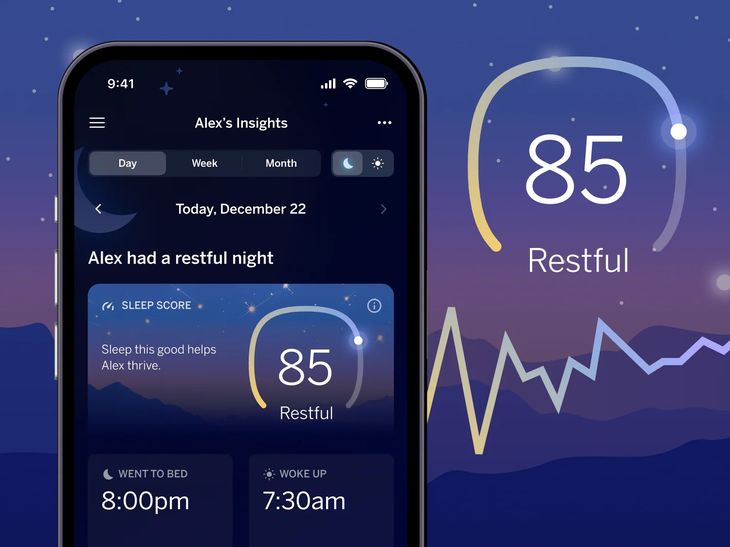
The Herz P1 App provides a comprehensive daily sleep score to help you evaluate your rest.
This score is calculated using our advanced sleep score calculation algorithm, which measures deep sleep, REM sleep, and HRV.
If your sleep score remains low despite spending nine hours in bed, your sleep quality is likely compromised.
You can use this objective data to adjust your habits, such as avoiding alcohol before bed.
Additionally, keeping a cool and dark bedroom environment will help prevent nighttime micro-arousals.
By wearing the Herz P1 Smart Ring, you can easily track how these lifestyle changes improve your sleep efficiency.
Because our ring is designed for continuous wear, you will quickly forget you are even wearing a tracker.
This effortless monitoring allows you to build a healthy and sustainable daily routine.
In addition, try to avoid taking long naps during the afternoon hours.
Any nap exceeding thirty minutes can disrupt your sleep pressure, making it harder to fall asleep at night.
Instead, focus on keeping your physical activity levels consistent during daylight hours.
Regular exercise helps deepen your slow-wave sleep stages, reducing the total duration you need to feel recovered.
Our smart ring automatically tracks your active minutes and calories burned to help you balance exertion and rest.
With these integrated insights, you can finally take complete control of your sleep-wake cycle.
Why Bulky Smartwatches Fail as Sleep Trackers
Many health-conscious people make the mistake of wearing a heavy smartwatch to sleep.
These bulky devices are often physically uncomfortable, leading to skin irritation and disrupted sleep.
Their large screens can also light up unexpectedly, triggering micro-arousals that ruin your sleep quality.
Furthermore, smartwatches have short battery lives, requiring you to charge them almost every day.
If you are forced to charge your tracker overnight, you lose out on critical sleep data and trends.
Another major drawback is the hidden cost of ongoing software subscriptions used by popular brands.
Many premium wearable companies lock your detailed health metrics behind an expensive monthly paywall.
We believe your personal health data should always belong to you for free, with no hidden catches.
The Herz P1 Smart Ring offers a premium, subscription-free alternative for continuous health tracking.
Our companion app provides full, lifetime access to all of your health metrics at zero ongoing cost.
Crafted from military-grade steel, the Herz P1 is incredibly thin, durable, and comfortable.
It fits securely on your finger all night, providing highly accurate sleep metrics without any physical discomfort.
Our ring is also fully IP68 waterproof, meaning you can wash your hands or shower without taking it off.
Its battery lasts up to six full days, so you only need to charge it once a week.
This reliable battery life ensures you never miss tracking a single sleep cycle or recovery phase.
By choosing a sleek smart ring over a heavy watch, you prioritize both comfort and data accuracy.
Our team at Herz P1 is dedicated to helping you achieve your wellness goals without any ongoing fees.
Frequently Asked Questions About Oversleeping and Tracking
Is the Herz P1 Smart Ring waterproof?
Yes, the Herz P1 features a fully certified IP68 waterproof rating.
It can withstand continuous water submersion up to fifty meters deep without any damage.
This makes it completely safe for swimming, showering, and relaxing in a hot tub.
You never have to remove your ring during your daily water-based activities.
How long does the battery last on a single charge?
The battery lasts up to six full days under normal continuous tracking conditions.
Our advanced low-energy technology ensures your heart rate and sleep are monitored 24/7.
When the battery is low, it charges fully in under one hour using the magnetic cradle.
This rapid charging ensures your sleep data tracking remains uninterrupted.
Which finger is best to wear the smart ring on?
We recommend wearing the Herz P1 on your index, middle, or ring finger.
The index finger of your non-dominant hand typically provides the strongest blood flow signal.
This strong signal ensures the highest accuracy for our optical heart rate and SpO2 sensors.
Ensure the ring fits snugly but remains comfortable throughout the day and night.
Our complimentary sizing kit makes it easy to find your perfect fit before you buy.
Does the Herz P1 store my biometric data offline?
Yes, the ring features secure onboard memory that stores up to seven days of local data.
You do not need to keep your smartphone nearby or connected to Bluetooth while you sleep.
Once you open the companion app, the ring automatically syncs all stored metrics to your phone.
This allows you to enjoy a completely device-free bedroom environment without losing any data.
Unlocking optimal health begins with understanding your body’s true sleep needs.
The Herz P1 Smart Ring gives you the precise insights to banish morning fatigue forever.
Ready to monitor your health every day? Explore the Herz P1 Smart Ring and see if it fits your lifestyle. Call: 1-866-479-1629 — our team can help you advise on the correct ring size and set personalized health goals.
Note: Individual results may vary depending on individual health conditions, age, and lifestyle habits. This article is intended for general health reference purposes only.
