

Discovering that your overnight biometric readings show an hrv 36 can trigger immediate questions about your cardiovascular health and daily recovery state. By monitoring these critical autonomic nervous system trends using the premium, subscription-free Herz P1 Smart Ring, you can easily decode what your heart rate variability actually signals about physiological fatigue, high stress levels, and sleep architecture. Let us explore the scientific data to see if 36 ms is normal or too low for your personal demographic.
Built to Last. Save Up to 69% Today.
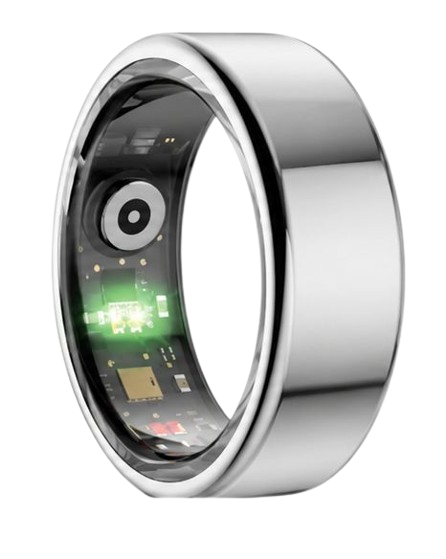
The Herz P1 Smart Ring tracks HRV, Sleep, Heart Rate & SpO2 around the clock. No subscriptions. No renewals. Ever.
In This Article
- Scientific Context: Understand what an HRV score of 36ms truly represents in terms of biological and neurological health.
- Autonomic Balance: Discover how the sympathetic and parasympathetic systems control your heart rate metrics.
- Demographics & Age: See why age and gender completely shift the definition of a healthy recovery baseline.
- Actionable Remedies: Learn simple, evidence-based lifestyle changes to boost your daily HRV levels and recovery capacity.
- The Herz P1 Edge: Find out how military-grade tracking technology helps you check vitals and optimize your health without hidden subscription costs.
Is an HRV of 36 Normal or Too Low? Here is What the Research Says
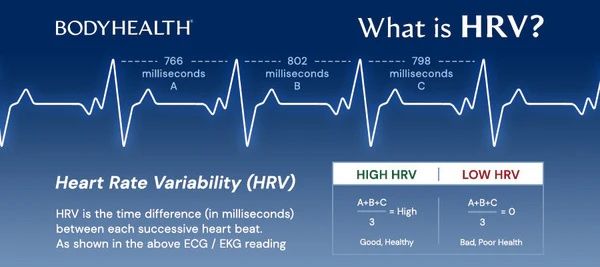
To determine if an hrv 36 is normal or too low, we must first analyze the core physiology of heart rate variability.
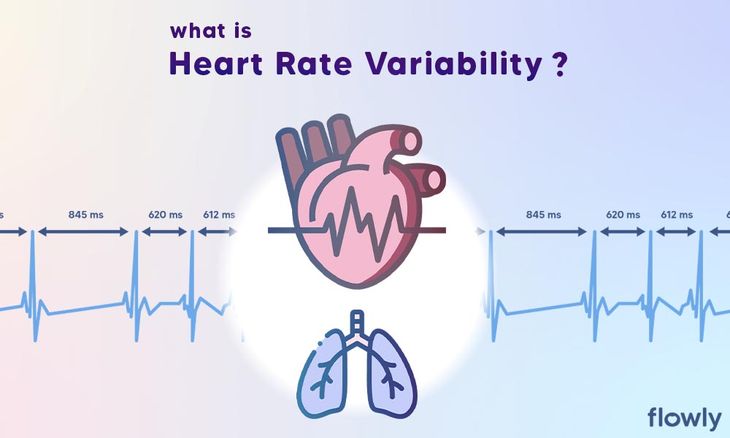
Your heart does not beat in a perfectly rigid, metronomic pattern.
The variations in time between consecutive heartbeats are measured carefully in milliseconds.
This biological variance is known as heart rate variability (HRV).
A resting hrv of 36ms serves as a direct window into your autonomic nervous system.
Specifically, it shows the delicate balance between your rest-and-digest parasympathetic system and your fight-or-flight sympathetic system.
When you seek to evaluate what is a good hrv score, you must realize that scores are highly individual.
For a young, highly conditioned athlete, a score of 36 might indicate acute physical fatigue or overtraining.
However, for a busy working professional in their 40s or 50s, 36ms sits comfortably within an average, expected range.
This means your score is not a definitive medical diagnostic tool but rather a dynamic trend metric.
To understand why this happens, we must look at how the body manages daily strain.
When you face high work stress, sleep deprivation, or poor hydration, your sympathetic system takes over.
This causes your heartbeats to become more uniform and tightly spaced, which lowers your total HRV score.
Conversely, deep restorative sleep and physical rest allow your parasympathetic nervous system to flourish.
This creates wider gaps between beats and elevates your score on the hrv scale.
If you see a sudden drop to an hrv 34 or an hrv 35, your body is likely signaling a need for active recovery.
If your baseline consistently floats around 36, it serves as your unique operational benchmark.
The key to biological monitoring is to watch for unexpected deviations from this baseline over several days.
By using smart rings to track these subtle overnight trends, you can easily adapt your training loads and rest periods.
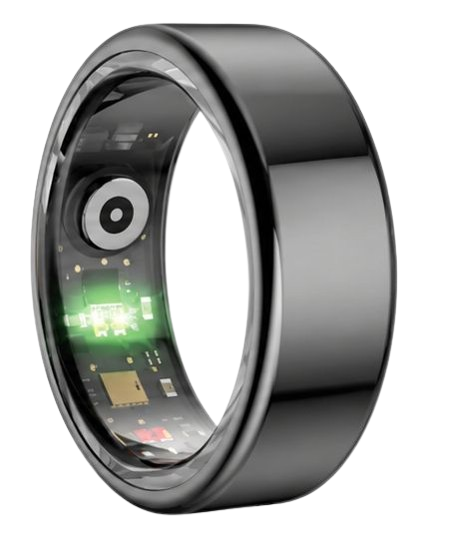
If you want to track this in real time, the Herz P1 Smart Ring monitors heart rate variability 24/7 — explore it here.
90-Day 100% Money-Back Guarantee
“The Herz Smart Ring helps me manage stress easily. It’s accurate, stylish, and lightweight—perfect for my busy life!”
— Jennifer P. | ✔ Verified Customer
- ✓ 6-Day Battery Life
- ✓ Detailed Sleep Analysis
- ✓ Fast 1-Hour Charging
- ✓ iOS & Android Ready
Questions? Call: 1-866-479-1629
Decoding Your Heart Rate Variability: The Autonomic Nervous System Connection
The Physiology Behind a Resting HRV of 36ms
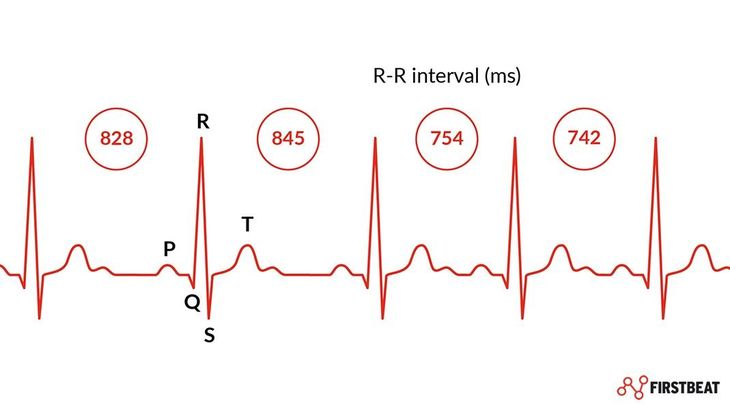
To appreciate a resting heart rate variability 36 score, we must study clinical cardiology tracking.
The time gaps between heartbeats are regulated by the sinoatrial node in your right atrium.
This node acts as your heart’s natural pacemaker.
It responds constantly to neural signals sent by your brain’s autonomic control centers.
The parasympathetic nervous system transmits signals via the vagus nerve, which slows heart rate and increases beat variability.
The sympathetic nervous system releases hormones to speed up heart rate and restrict variability.
Therefore, a score of 36ms suggests that your sympathetic system is currently exerting moderate dominance over your cardiac pacemaking.
This state is completely normal during active working hours, intense workouts, or focused mental tasks.
However, if your score remains at 36ms during deep sleep, your body may not be resting fully.
According to research from the American Heart Association, chronic low variability can point to a high systemic stress load.
Optical sensor technology on modern smart rings calculates this score using the Root Mean Square of Successive Differences (RMSSD) formula.
RMSSD is highly sensitive to vagal tone, making overnight measurements incredibly valuable for assessing recovery.
When you wear a high-precision device to bed, it filters out movement noise to deliver stable, quiet-state readings.
How Age, Gender, and Genetics Influence the HRV Scale
You must realize that there is no single, universal standard for good hrv numbers.
Your genetics, age, and biological sex dictate your personal limits on the hrv scale.
In your 20s, a normal overnight reading might easily fluctuate between 60ms and 100ms.
As we age, our autonomic flexibility naturally declines as part of normal physiological maturation.
By the time we reach our 40s or 50s, a baseline between 30ms and 50ms is highly standard.
This means an hrv 36 is often a perfectly healthy marker for a mature adult.
You should never compare your personal numbers directly with friends or professional athletes.
An athlete tracking an optimal hrv might average 90ms, yet feel highly fatigued if they drop to 60ms.
Meanwhile, you could feel completely vibrant and energized with a consistent, stable reading of 36ms.
It is far more useful to focus on your multi-week trends and baseline averages.
If you typically baseline at 36, tracking slight improvements to an hrv 37 or an hrv 38 indicates a positive adaptation to your wellness routine.
The goal is to build long-term physiological resilience, not to chase arbitrary numbers on a screen.
Analyzing the Dynamic Shift: Comparing 36ms to Surrounding Scores
To understand your daily physical state, you must monitor how your body transitions between adjacent values.
If you wake up and see your score slide to an hrv 35, it suggests a minor increase in physical or mental strain.
A further drop to an hrv 34 signals a more pronounced state of autonomic depletion.
This progressive decline often happens when you are fighting off a minor illness, recovering from hard training, or lacking sleep.
On the other hand, upward movements indicate that your autonomic nervous system is rebounding nicely.
Reaching an hrv 37 means your parasympathetic vagal tone is actively recovering.
Hitting an hrv 38 is a clear sign that your body has restored its energy reserves.
We can compile these patterns into a simple comparison framework to help you manage your daily lifestyle choices.
| HRV Metric (ms) | Physiological Interpretation | Recommended Lifestyle Action |
|---|---|---|
| 34 ms | Autonomic depletion, high physical fatigue, or systemic stress. | Prioritize gentle stretching, deep hydration, and early sleep. |
| 35 ms | Mild strain, sympathetic system dominance, incomplete recovery. | Reduce high-intensity workouts; focus on mindfulness. |
| 36 ms | Stable baseline for mature adults; moderate recovery state. | Engage in standard daily physical activity and balanced work. |
| 37 ms | Improved parasympathetic activation, positive adaptation. | Proceed with planned workouts and moderate-intensity challenges. |
| 38 ms | High autonomic resilience, fully restored physiological capacity. | Ideal day for intense training, complex tasks, and high output. |
By looking at this data table, you can see that minor millisecond shifts reflect real physiological changes.
Your smart ring tracks these small movements quietly while you sleep, giving you a clear recovery blueprint every morning.
How to Read and Improve Your HRV and Sleep Metrics with the Herz P1 App
Actionable Protocol to Elevate Your Baseline Naturally
If you want to boost your resting HRV baseline, you must take a systematic approach to your daily wellness habits.
First, establish a highly consistent sleep schedule by going to bed and waking up at the exact same times daily.
This consistency anchors your natural circadian rhythm, which optimizes your autonomic nervous system performance during the night.
Second, avoid consuming heavy meals, caffeine, or alcohol within three to four hours of your bedtime.
Digesting heavy food or processing alcohol forces your heart to work harder, which dramatically lowers your overnight HRV scores.
Third, integrate slow, deep diaphragmatic breathing exercises into your evening wind-down routine.
Inhaling for five seconds and exhaling for five seconds directly stimulates your vagus nerve.
This simple practice instantly shifts your body out of fight-or-flight mode and into a state of deep restoration.
Finally, ensure you stay properly hydrated throughout the day by drinking plenty of clean water.
Adequate hydration supports optimal blood volume, which allows your cardiovascular system to adapt to stress much more efficiently.
Tracking Daily Physical Fatigue with Advanced Smart Rings
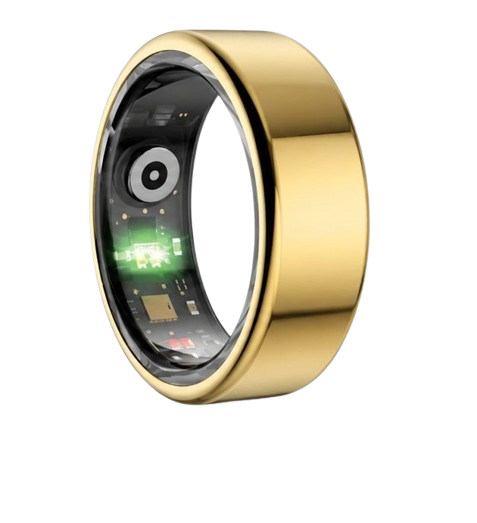
The premium Herz P1 Smart Ring makes monitoring your physical recovery simple, comfortable, and seamless.
Unlike bulky, heavy smartwatches that can feel uncomfortable to wear to bed, the Herz P1 is incredibly light and compact.
Its ultra-slim, military-grade steel design sits comfortably on your finger, allowing you to sleep completely undisturbed.
The ring’s multi-wavelength optical sensors track your heart rate, blood oxygen saturation (SpO2), and HRV every five minutes.
This high-frequency sampling creates a highly detailed, uninterrupted profile of your autonomic activity throughout the night.
When you wake up, the Herz P1 App displays your metrics in a clean, easy-to-understand recovery dashboard.
You can quickly see if your body is ready to tackle a high-intensity workout or if it requires a restful recovery day.
Because there are absolutely no monthly subscription fees, you gain full, lifetime access to your detailed data trends.
This allows you to monitor your physiological progress over months and years without worrying about hidden costs.
Overcoming Wearable Pitfalls: Bulky Watch Comfort and Hidden Subscription Fees
The Hidden Disadvantages of Heavy Sleep Trackers
Many health-conscious individuals try to track their sleep and HRV using large, bulky sport watches.
However, wearing a heavy, metal smartwatch to bed can actually disrupt the very sleep stages you are trying to measure.
The physical weight of a watch often causes it to shift on your wrist, which interrupts the sensor’s optical connection.
This leads to massive gaps in your overnight biometric data and highly inaccurate recovery scores.
Furthermore, many premium smart rings lock your detailed physiological data behind expensive monthly app subscriptions.
This means you are forced to pay a recurring fee simply to view the health metrics your ring has already collected.
We believe your personal health data should belong to you entirely, without any ongoing financial barriers.
The Herz P1 Smart Ring offers a highly accurate, subscription-free alternative that respects your pocketbook and your comfort.
By combining military-grade materials with an ergonomic ring shape, it delivers seamless, all-day biometric tracking.
Frequently Asked Questions About Smart Rings and HRV Tracking
Is the Herz P1 Smart Ring fully waterproof?
Yes, the Herz P1 features a rugged IP68 waterproof rating, allowing it to withstand water depths up to 164 feet. This means you can safely wear it while swimming, showering, washing your hands, or sweating heavily during workouts.
How long does the battery last on a single charge?
The Herz P1 battery lasts up to 6 full days of continuous 24/7 biometric tracking. When it runs low, it charges from empty to full in under 1 hour using its compact magnetic charging dock.
Which finger is best to wear the smart ring on?
For the absolute best sensor accuracy, we recommend wearing the ring on your index, middle, or ring finger. Make sure the ring fits snugly without twisting easily, ensuring the optical sensors stay in close contact with your skin.
Does the ring store my health data offline when disconnected?
Yes, the Herz P1 has built-in local memory that securely stores up to 7 days of detailed biometric data offline. As soon as you open the app, your stored data syncs automatically via a secure Bluetooth connection.
Take Control of Your Health Journey
Monitoring your daily biometrics is the most powerful way to build lasting wellness and resilience.
Ready to monitor your health every day? Explore the Herz P1 Smart Ring and see if it fits your lifestyle. Call: 1-866-479-1629 — our team can help advise on correct ring sizes and set personalized goals.
