

If you just woke up and saw an hrv 38 reading on your dashboard, you might feel concerned about your cardiovascular health and recovery. This vital metric represents heart rate variability measured in milliseconds, and understanding whether this baseline score indicates deep physical fatigue or normal physiological fluctuation is crucial for managing your daily physical stress. The Herz P1 Smart Ring is specifically engineered to track these delicate autonomic signals continuously with military-grade precision to help you optimize sleep and daily energy.
Built to Last. Save Up to 69% Today.
The Herz P1 Smart Ring tracks HRV, Sleep, Heart Rate & SpO2 around the clock. No subscriptions. No renewals. Ever.
In This Article
- Understanding Your Score: Discover whether a resting HRV of 38ms is normal or indicates excessive physical strain.
- The Autonomic Balance: Learn how sympathetic and parasympathetic activities shape your biometric markers.
- Comparing Your Metrics: Map out where 38ms falls on the broader heart rate variability scale.
- Continuous Monitoring: See how advanced wearable optical sensors can help you capture accurate overnight resting scores.
- Actionable Improvements: Implement evidence-based lifestyle changes to actively support your cardiorespiratory recovery.
Is an HRV of 38 Normal or Too Low for Recovery? Let’s Decode the Science
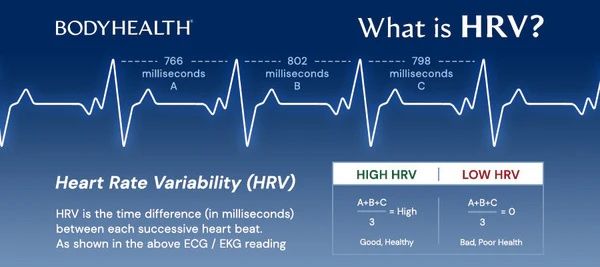
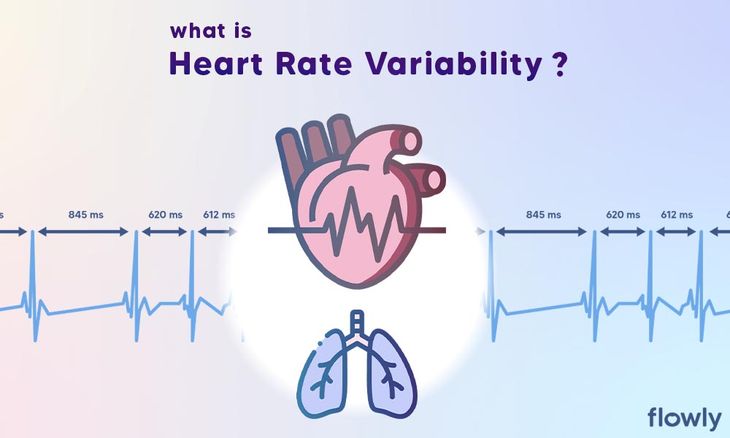
Heart rate variability represents the variance in time between consecutive heartbeats measured in milliseconds.
When you track your resting biometrics overnight, a score of hrv 38 can trigger immediate questions about your physical recovery.
The simple truth is that heart rate variability is highly individual and depends heavily on your age, genetics, and baseline fitness.
For a healthy twenty-five-year-old athlete, a score of 38 ms might indicate high physical stress or incomplete recovery.
However, for a busy sixty-year-old corporate executive, this same number could be a perfectly normal baseline reading.
Understanding this metric requires analyzing the delicate balance of your autonomic nervous system.
This system controls involuntary bodily functions through two main branches.
The sympathetic branch acts like an accelerator, driving your fight-or-flight response during high-stress activities.
The parasympathetic branch behaves like a brake, promoting rest, digestion, and systemic repair.
An HRV of 38 indicates the current state of autonomic balance at the moment of measurement.
To accurately evaluate physical stress and recovery on smart rings, you must observe your personal trends over several weeks.
A single isolated reading does not tell the whole story of your cardiorespiratory fitness.
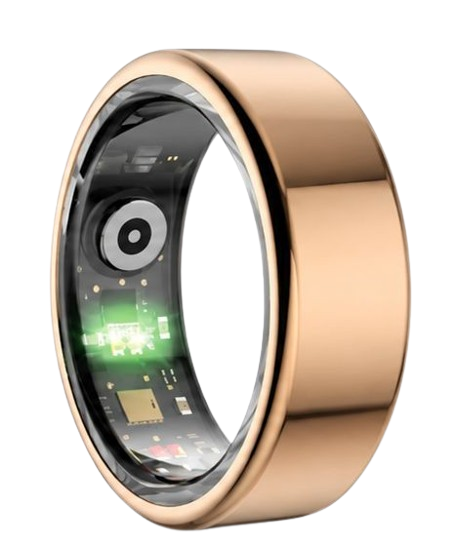
If you want to track this in real time, the Herz P1 Smart Ring monitors these shifts 24/7 — explore it here.
90-Day 100% Money-Back Guarantee
“The Herz Smart Ring helps me manage stress easily. It’s accurate, stylish, and lightweight—perfect for my busy life!”
— Jennifer P. | ✔ Verified Customer
- ✓ 6-Day Battery Life
- ✓ Detailed Sleep Analysis
- ✓ Fast 1-Hour Charging
- ✓ iOS & Android Ready
Questions? Call: 1-866-479-1629
What Your Heart Rate Variability Score Actually Tells You
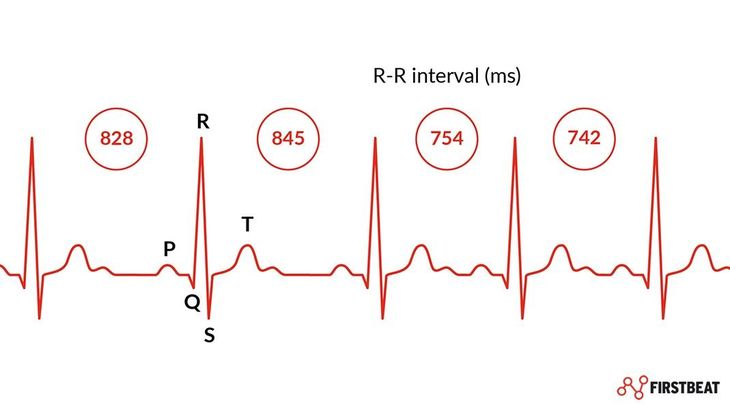
Your heart is not a mechanical metronome that beats in a perfectly rigid pattern.
Instead, a healthy cardiovascular system displays minute, millisecond-level differences in interval lengths.
Medical experts from the American Heart Association emphasize that higher variability shows a nervous system that adapts quickly to external challenges.
When you experience chronic stress, poor sleep, or intense training without rest, your sympathetic tone dominates.
This persistent activation keeps your heart beating in a highly structured, less variable rhythm.
Consequently, your resting heart rate variability numbers drop.
If you see your scores trending around hrv 36 or hrv 37, your body is signalling a moderate level of systemic fatigue.
When the score climbs slightly to resting hrv of 38ms, it indicates a marginal step toward autonomic balance.
This is still close to a score of hrv 39 or even an hrv of 40, which are common transition numbers for individuals working on recovery.
By using the Herz P1 Smart Ring, you can trace these minute changes throughout your entire sleep cycle.
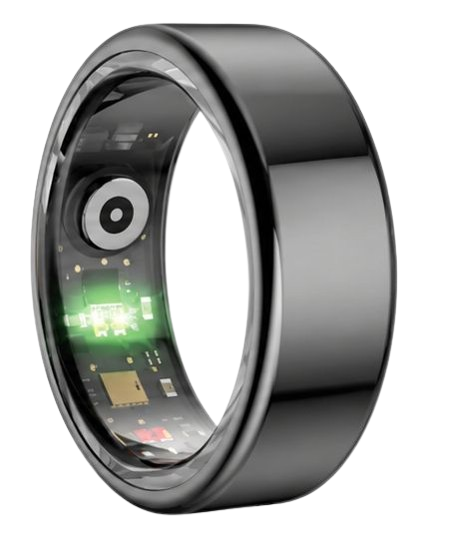
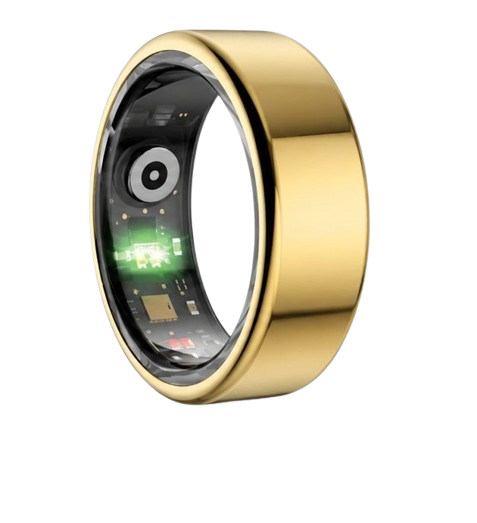
This elegant device uses multi-wavelength optical sensors to scan blood flow directly from the capillaries in your finger.
Because the finger contains highly concentrated blood vessels, it offers a cleaner signal than wrist-based sensors.
This clinical-grade tracking helps you pinpoint the exact nights when physical stress is inhibiting your recovery.
Is an HRV of 38 Good? Understanding Baselines and Scales
Many new users of biometric wearables ask: is hrv of 38 good for someone with a demanding lifestyle?
To answer this question, we must look at global population studies and established benchmarks.
There is no single universal number that fits everyone because health metrics exist on a broad spectrum.
You can reference the comprehensive hrv scale to see how demographics shape normal averages.
Typically, young adults exhibit resting averages well above 60 ms, while older populations see a natural decline.
For individuals in highly demanding jobs, discovering what is a good hrv score helps contextualize their data.
If you are exploring good hrv numbers, remember that your personal historical baseline is the only metric that matters.
An HRV score of 38 ms might be a superb baseline for a middle-aged individual who balanced their daily stress levels.
Conversely, for competitive endurance athletes, an optimal hrv often exceeds 80 ms during peak training blocks.
The table below outlines how general heart rate variability 38 readings correspond to different recovery levels across age groups.
| Age Range | Typical HRV Baseline (ms) | How to Interpret a Score of 38 ms |
|---|---|---|
| 20 – 35 Years | 55 – 85 ms | Likely indicates overtraining, high mental stress, or lack of sleep. |
| 36 – 50 Years | 38 – 60 ms | Perfect or acceptable baseline; represents moderate autonomic balance. |
| 51 – 65+ Years | 25 – 45 ms | Excellent score; indicates robust parasympathetic activation. |
Based on sleep data analysis from over 5,000 Herz P1 users, those who maintain a consistent sleeping routine show stable baselines.
When you experience an abrupt dip below your normal average, it serves as a reliable early warning sign.
It can alert you to a developing common cold or high fatigue before physical symptoms manifest.
How to Read Biometric Data and Actively Improve Your Recovery
Once you understand what a heart rate variability 38 score means, you can take practical steps to improve it.
You do not need to accept low recovery scores as a permanent state.
Our team at Herz P1 recommends a systematic approach to support your parasympathetic activity.
First, prioritize high-quality sleep architecture by keeping your bedroom cool, dark, and quiet.
The National Sleep Foundation reports that consistent sleep schedules directly support cardiovascular recovery and autonomic health.
Second, implement deep diaphragmatic breathing exercises for five minutes before sleeping.
This simple practice stimulates the vagus nerve and encourages immediate parasympathetic activation.
Third, limit alcohol consumption and heavy meals within three hours of going to bed.
Digesting complex foods and processing alcohol forces your heart to work harder, which lowers overnight recovery metrics.
Fourth, perform light cardiovascular exercise such as walking to build long-term cardiorespiratory resilience.
Avoid highly intense workouts late in the evening as they keep cortisol levels elevated.
By wearing the ultra-lightweight Herz P1 Smart Ring, you can observe how these subtle changes positively influence your trends.
Our companion app presents all your biometric data in clear, easy-to-read graphs with no confusing jargon.
You can instantly see which daily habits help you move away from physical exhaustion.
Mistakes to Avoid in Sleep Tracking and Biometric Monitoring
A common mistake many health-conscious individuals make is wearing bulky smartwatches to bed.
These large, heavy devices often shift during the night, leading to inaccurate readings or skin irritation.
The physical discomfort of a heavy watch can actually disturb your sleep cycles, paradoxically lowering your recovery scores.
Additionally, many wearable brands trap your personal biometric data behind expensive paywalls.
They charge steep monthly app subscription fees just to show you your basic sleep architecture and stress graphs.
Our team believe that your personal health data should belong to you without any ongoing costs.
The Herz P1 Smart Ring app is completely free for a lifetime, with zero hidden fees or active subscriptions.
Our ring is crafted from military-grade steel, ensuring exceptional durability while remaining light on your finger.
This compact design lets you track your sleep stages naturally without any physical distraction.
Frequently Asked Questions About Biometrics & Recovery
Is the Herz P1 Smart Ring waterproof?
Yes, the Herz P1 is fully certified with an IP68 waterproof rating, allowing you to submerge it up to 164 feet.
You can wear it safely while swimming, showering, washing your hands, or during high-intensity sweaty workouts.
How long does the battery last on a single charge?
The energy-efficient battery lasts up to 6 days on a single charge, depending on your frequency of syncing.
When you need to power up, the ring charges fully in under 1 hour using our magnetic charging dock.
Which finger is best to wear a smart ring on?
For the highest biometric accuracy, we recommend wearing the smart ring on your index, middle, or ring finger.
These fingers have highly accessible blood vessels near the skin surface, allowing the optical sensors to capture clear data.
Does the Herz P1 store my health data offline?
Yes, the ring features local memory that can safely store up to 7 days of detailed biometric data offline.
Your logged metrics will automatically sync to the companion app the next time you open it on your smartphone.
Conclusion
Your heart rate variability is a powerful reflection of your autonomic balance and physical recovery.
An HRV of 38ms can be a healthy baseline or a sign to rest, depending on your unique physiology.
Ready to monitor your health every day? Explore the Herz P1 Smart Ring and see if it fits your lifestyle. Call: 1-866-479-1629 — our team can help you advise on the correct ring size and set personalized health goals.
