

Have you ever wondered why your body undergoes a quiet transformation the moment you close your eyes at night? Understanding how and why does your heart rate slow down when you sleep is a crucial step toward unlocking the secrets of your cardiovascular wellness. Our team at Team Herz P1 designed an elegant, subscription-free solution to monitor these delicate nocturnal changes with military-grade steel precision. Let us explore the remarkable science behind your resting heart rate and how your body heals itself while you rest.
Built to Last. Save Up to 69% Today.
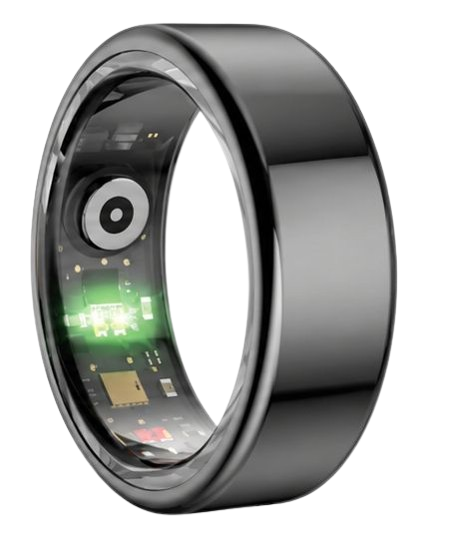
The Herz P1 Smart Ring tracks HRV, Sleep, Heart Rate & SpO2 around the clock. No subscriptions. No renewals. Ever.
In This Article
- The biological triggers that cause your pulse to decelerate during sleep.
- How sleep cycles, light sleep, and deep sleep stages directly govern your cardiac rhythms.
- The difference between normal heart rate drop patterns and potential red flags.
- Practical tips on using modern smart rings to track cardiac dipping trends without bulky wrist straps.
Does Your Heart Rate Slow Down When You Sleep? The Comprehensive Science Revealed
The short answer is a resounding yes.
Your cardiovascular system undergoes a natural, restorative deceleration every single night.
This process is technically known as nocturnal bradycardia.
During the day, your heart beats faster to support movement, digestion, and cognitive tasks.
When you transition to rest, your metabolic demands drop dramatically.
This shift is orchestrated by your autonomic nervous system.
Specifically, the parasympathetic branch becomes dominant.
This branch acts as a natural brake for your cardiovascular system.
Anyone who wants to track their long-term health trends should pay close attention to this nightly drop.
It affects busy office workers, professional athletes, and elder populations alike.
This biological shift begins the moment you enter the light stages of sleep.
It reaches its lowest point during deep, slow-wave sleep cycles.
This phenomenon occurs globally in healthy individuals of all ages.
Your body performs this deceleration to conserve energy and repair vital cellular tissues.
Without this nightly break, your heart would experience continuous, exhausting strain.
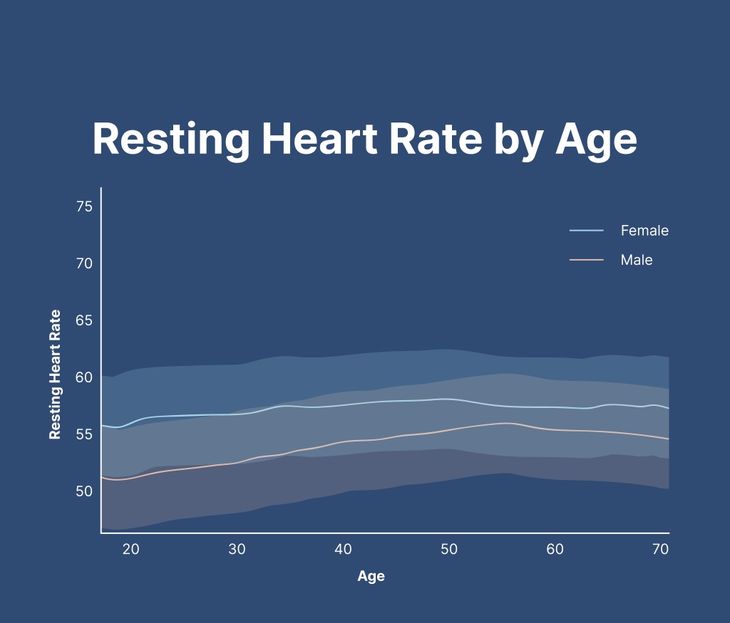
Your heart rate drops by roughly 10% to 20% compared to your daytime waking baseline.
For most healthy adults, this means a drop to between 40 and 60 beats per minute.
If you have ever asked, does your heartbeat slow down when you sleep, you now know the core mechanism is a protective neural break.
Your heart is a highly responsive muscular pump that adapts instantly to metabolic demands.
At the center of this adaptation is the sinoatrial node, your heart’s natural pacemaker.
During wakefulness, sympathetic nerve signals prompt the sinoatrial node to fire rapidly.
When you transition to sleep, the parasympathetic nervous system releases a neurotransmitter called acetylcholine.
Acetylcholine binds to specific receptors in your cardiac muscle tissues.
This binding action slows down the electrical impulses traveling through your heart.
This physiological slowdown decreases both your heart rate and your overall blood pressure.
The primary beneficiaries of this nightly break are your heart muscle cells themselves.
These cells get a much-needed period of rest and metabolic recovery.
This process is highly critical because the heart never stops working throughout your entire life.
Allowing it to operate at a lower capacity during sleep preserves long-term cardiovascular health.
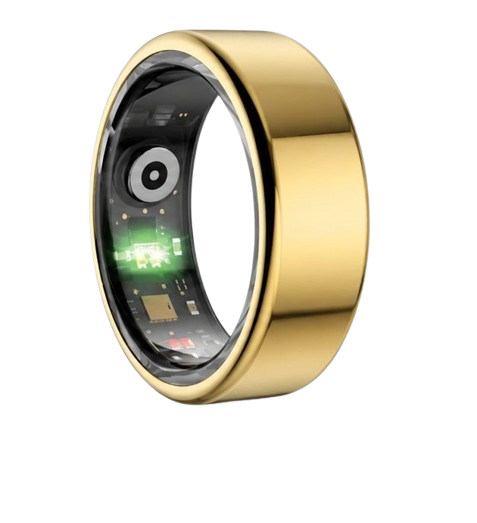
If you want to track this in real time, the Herz P1 Smart Ring monitors your cardiovascular health 24/7 — explore it here.
90-Day 100% Money-Back Guarantee
“The Herz Smart Ring helps me manage stress easily. It’s accurate, stylish, and lightweight—perfect for my busy life!”
— Jennifer P. | ✔ Verified Customer
- ✓ 6-Day Battery Life
- ✓ Detailed Sleep Analysis
- ✓ Fast 1-Hour Charging
- ✓ iOS & Android Ready
Questions? Call: 1-866-479-1629
The Physiology of the Sleep Cycle and Heart Deceleration
To fully understand this process, we must look at sleep architecture.
Sleep is not a uniform state of unconsciousness.
It consists of distinct, repeating cycles of light, deep, and rapid eye movement (REM) stages.
When you transition from wakefulness to light sleep, your muscle tone decreases.
At this exact point, your breathing becomes more rhythmic and slow.
This shift triggers an immediate physiological response.
You might wonder, does your heart rate drop when you sleep as soon as you close your eyes?
The answer involves a chemical cascade of hormones.
During the day, cortisol and adrenaline keep your heart rate elevated.
At night, these stimulating hormones decline while melatonin levels rise.
This hormonal shift signals the heart to reduce its overall workload.
As you descend into deep sleep, your body enters a highly anabolic state.
This is when physical restoration takes place.
Your blood pressure lowers, and your heart rate hits its lowest daily baseline.
You may ask yourself, why does my heart rate drop when i sleep so deeply?
It is because your body is focusing all energy on muscle repair and cellular growth.
However, during REM sleep, this pattern changes dramatically.
REM sleep is when vivid dreaming occurs.
During REM, your brain activity spikes to levels near wakefulness.
Consequently, your heart rate can become irregular and spike temporarily.
This demonstrates a beautiful dance between the brain and the cardiovascular system.
Experiencing a healthy drop in heart rate while sleeping is a hallmark of strong cardiovascular fitness.
It is natural to ask, when you sleep does your heart slow down to allow your body to heal?
So, does your heart slow down when you sleep due to hormonal changes?
Our research at Team Herz P1 shows that consistent sleep tracking reveals these dynamic changes clearly.
Non-REM sleep is divided into three distinct stages: N1, N2, and N3.
Stage N1 is the initial transition phase where you drift in and out of consciousness.
Stage N2 represents a slightly deeper state where brain waves begin to slow down.
Stage N3, or slow-wave sleep, is the deepest and most physically restorative stage.
During N3, your blood pressure drops by about 10 to 15 percent.
Your heart rate reaches its absolute lowest and most stable point of the night during this stage.
This stability is interrupted when you enter REM sleep cycles.
REM sleep is characterized by rapid eye movements and temporary muscle paralysis.
Your brain is highly active during REM, dreaming and consolidating cognitive memories.
This heightened brain activity causes your autonomic nervous system to fluctuate rapidly.
As a result, your heart rate can suddenly spike or drop unpredictably during REM sleep.
A healthy heart transitions smoothly between these deep and active sleep cycles.
These smooth transitions reflect a resilient, highly adaptive cardiovascular system.
Deciphering Nocturnal Heart Rate Dips and Cardiovascular Recovery
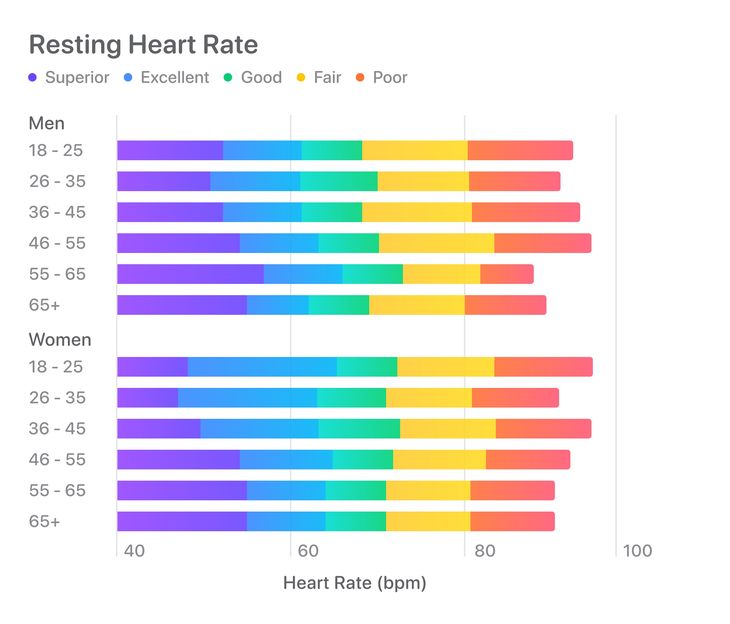
Cardiologists closely monitor how much your heart rate decreases during the night.
This phenomenon is widely referred to as autonomic heart rate dipping.
A normal resting heart rate drop sleeping pattern shows a decrease of 10% to 20% compared to your daytime resting pulse.
If your heart rate drops less than 10%, you are considered a “non-dipper.”
Non-dipping can be a warning sign of chronic stress, poor sleep quality, or underlying health issues.
Knowing that your heart rate lower when sleeping is a positive sign can bring peace of mind.
But how low is too low when you are resting?
Many people search to find out how low does heart rate go when sleeping safely.
For highly trained athletes, the lowest heart rate during sleep can drop to 30 or 40 beats per minute.
For the average healthy adult, a low point of 40 to 50 beats per minute is completely normal.
If your heart rate drops significantly below this without athletic conditioning, it is wise to monitor the trend closely.
Having your heart rate lower at night allows your blood vessels to relax.
This relaxation period lowers your overall risk of chronic cardiovascular issues.
The American Heart Association emphasizes the importance of tracking these baseline shifts.
A sudden lack of a nightly dip can indicate that your body is fighting an infection.
It can also show that you are severely overtrained or highly stressed.
Using a precise biometric tool makes identifying these trends simple and stress-free.
By monitoring these dips, you can make informed decisions about your daily activity levels.
Indeed, does your heart rate decrease when you sleep uniformly across all sleep cycles?
Medical researchers categorize individuals into dippers, non-dippers, extreme dippers, and reverse dippers.
Extreme dippers experience a nocturnal heart rate drop of over 20%.
While often seen in elite athletes, extreme dipping in sedentary individuals can sometimes indicate underlying conditions.
Conversely, reverse dippers actually show an increase in heart rate during sleep compared to daytime.
Reverse dipping is strongly associated with sleep apnea, high stress, or autonomic dysfunction.
A standard 10% to 20% dip remains the golden baseline for optimal health.
Analyzing this dip requires accurate, continuous overnight monitoring.
This is where optical photoplethysmography (PPG) technology proves incredibly useful.
The sensors on a wearable device shine light through your skin to measure changes in blood volume.
By measuring the precise time between pulse waves, the device calculates your heart rate and HRV.
Understanding these subtle variations helps you identify shifts in your physiological baseline early.
Practical Application: How to Use Your Heart Rate Data to Optimize Recovery
Tracking your heart rate data is only the first step toward better health.
The real power lies in knowing how to apply these daily insights.
When you wake up, open the Herz P1 companion app to view your sleep dashboard.
Check your resting heart rate curve from the previous night.
A classic “U-shaped” curve indicates that your heart rate dropped early in the night.
This early drop shows that your body digested dinner early and relaxed quickly.
A “downward slope” curve suggests your heart rate only reached its lowest point right before waking.
This late drop often happens after a late meal, intense evening workout, or alcohol consumption.
You can use these visual patterns to adjust your evening habits.
If you see a downward slope, try moving your last meal two hours earlier.
You can also introduce a calming wind-down routine to help your parasympathetic system activate sooner.
Additionally, pay close attention to your daily Heart Rate Variability (HRV) score.
A high HRV score paired with a healthy nightly heart rate dip indicates high readiness.
This is the perfect day to push yourself during workouts or tackle challenging projects.
Conversely, a low HRV score and a flat heart rate curve mean your body is still recovering.
On these days, prioritize light active recovery, hydration, and an early bedtime.
Wearing the Herz P1 Smart Ring 24/7 makes capturing these seamless trends effortless.
Its lightweight, military-grade steel design feels almost invisible on your finger.
Unlike bulky watches, it will not disrupt your sleep or cause skin irritation.
This allows you to maintain a continuous, highly accurate record of your wellness journey.
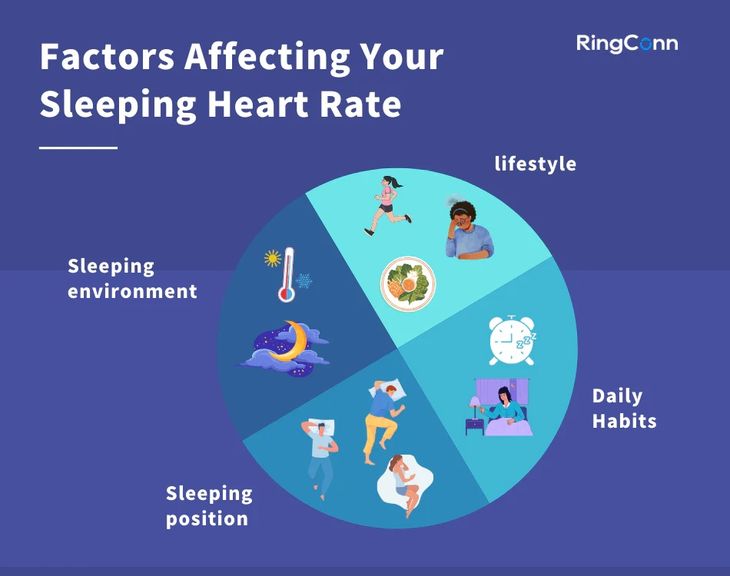
Your dietary choices play a massive role in your nocturnal heart rate patterns.
Eating a large, heavy meal close to bedtime forces your digestive system to work overtime.
Your body must redirect blood flow toward your stomach and intestines to process the food.
This redirect keeps your heart rate elevated for several hours into your sleep cycle.
Caffeine and alcohol consumption produce a similar, highly disruptive effect on sleep.
Caffeine blocks adenosine receptors in the brain, keeping your nervous system in a stimulated state.
Alcohol may help you fall asleep faster, but it severely disrupts your REM cycles and raises your sleeping heart rate.
By tracking your metrics, you can directly observe how these habits impact your recovery curve.
You can then use this objective data to establish healthier, more supportive lifestyle boundaries.
Overcoming Sleep Tracking Obstacles and Smart Wearable Pitfalls
Many people make the mistake of wearing large, heavy smartwatches to bed.
These devices can feel warm, bulky, and uncomfortable during the night.
This discomfort can actually disrupt your sleep stages and raise your heart rate.
Furthermore, smartwatches often require daily charging.
This means you must take them off at night, leaving huge gaps in your health data.
Another major frustration in the wearable market is the hidden cost of subscription fees.
Many brands charge you a hefty monthly fee just to access your own biometric data.
We believe your personal health metrics should never be held behind a paywall.
The Herz P1 Smart Ring offers a refreshing, user-friendly alternative.
Our companion app is completely free for lifetime use with zero subscription fees.
You buy the ring once and enjoy unlimited access to all advanced tracking metrics.
This includes comprehensive HRV analysis, oxygen levels, and detailed sleep cycles.
Additionally, our ring features an exceptional 6-day battery life.
It charges fully in under an hour, so you rarely have to take it off.
By choosing a sleek, subscription-free smart ring, you eliminate charging anxiety and hidden costs.
You also gain highly accurate, uninterrupted insights into your cardiovascular recovery.
This makes the Herz P1 a highly reliable, cost-effective partner for your long-term health.
Sizing is critical because a loose smart ring can rotate and lose contact with the skin.
When contact is lost, the optical sensors cannot read your pulse waves accurately.
This can lead to gaps in your overnight graphs and inaccurate sleep stage calculations.
To avoid this, use our complimentary sizing kit to find your perfect fit before ordering.
We also advise wearing the ring on your non-dominant hand to minimize physical wear and tear.
Washing your hands regularly keeps the optical sensors clear of sweat, lotion, and dirt.
Clean sensors ensure maximum light penetration and highly accurate readings every night.
Additionally, our military-grade steel construction provides incredible scratch resistance.
This durable material protects the delicate internal components from accidental drops and impacts.
You get a device that is built to last, providing highly reliable data for years to come.
Frequently Asked Questions About Nocturnal Heart Rate and Wearable Technology
Is the Herz P1 Smart Ring waterproof?
Yes, the Herz P1 features an advanced IP68 waterproof rating.
This military-grade rating certifies that the ring is fully protected against dust and water immersion.
You can safely wear it while washing your hands, showering, or swimming in depths up to 164 feet.
This robust design ensures your biometric tracking remains continuous, no matter your environment.
How long does the battery last and how quickly does it charge?
The Herz P1 is engineered with a high-capacity, energy-efficient battery.
It delivers up to 6 days of continuous, active health tracking on a single charge.
When it is time to power up, the ring charges fully in under 1 hour.
This rapid charging capability minimizes downtime and keeps your data tracking seamless.
Which finger is best to wear the smart ring on?
For the highest biometric accuracy, we recommend wearing the ring on your index finger.
The middle and ring fingers are also excellent alternatives if you prefer a different fit.
Ensure the ring fits snugly but comfortably without rotating too easily.
A proper fit allows the optical sensors to maintain steady, optimal contact with your skin.
Does the Herz P1 store health data offline?
Yes, the Herz P1 possesses built-in memory storage to safeguard your data.
It can store up to 7 days of detailed biometric metrics completely offline.
The moment you open the app, your stored data syncs automatically via secure Bluetooth.
This means you never have to worry about data loss when you are away from your phone.
Conclusion: Your Subscription-Free Wellness Journey Starts Here
Understanding why your heart slows down during sleep is essential for optimal recovery.
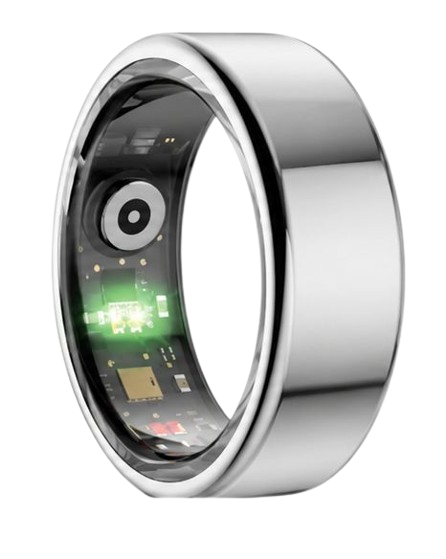
The Herz P1 Smart Ring tracks these vital shifts to keep you informed and empowered.
Ready to monitor your health every day? Explore the Herz P1 Smart Ring and see if it fits your lifestyle. Call: 1-866-479-1629 — our team can help you advise on the correct ring size and set personalized health goals.
