

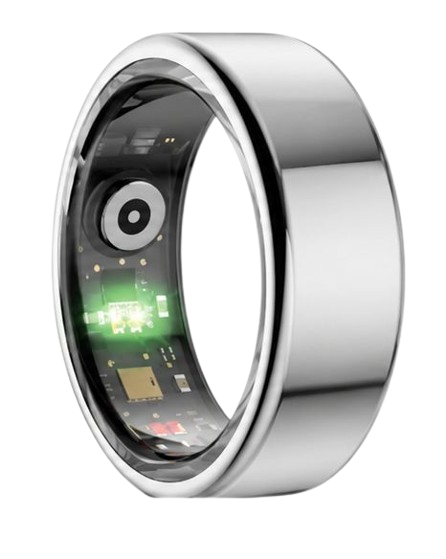
If you wake up feeling exhausted despite spending eight hours in bed, your body might be signaling a silent disruption in your nighttime breathing. Traditional pulse oximeters are too bulky for sleep tracking, which is why modern blood oxygen sensing rings are now the ultimate solution for capturing physiological data. At Team Herz P1, we engineered the Herz P1 Smart Ring to translate complex overnight SpO2 fluctuations into actionable insights. This guide will show you how to monitor oxygen trends, identify sleep disturbances, and choose the perfect wearable ring to optimize your recovery.
Built to Last. Save Up to 69% Today.
The Herz P1 Smart Ring tracks HRV, Sleep, Heart Rate & SpO2 around the clock. No subscriptions. No renewals. Ever.
In This Article
- The Best Oxygen Rings Evaluated: A detailed review of the leading market options and how they match up against the Herz P1.
- The Science of Blood Oxygen Sensing: How optical LEDs track oxygen saturation directly from the capillaries in your finger.
- Overnight Desaturation Analysis: Understanding the connection between hypoxia and sleep disturbances.
- Overcoming Common Wearable Mistakes: Simple adjustments to ensure medical-grade tracking accuracy every single night.
The 3 Best Pulse Oximeter Rings for Sleep and SpO2 Tracking

Choosing a dedicated pulse oximeter ring requires evaluating accuracy, battery longevity, and nighttime comfort.
Many consumers are transitioning away from bulky wrist-based trackers because rings provide a more stable connection on the finger capillaries.
Let us closely examine the three most prominent blood oxygen tracking options available on the market today.
1. Wellue O2Ring
The Wellue O2Ring is a highly specialized medical-grade pulse oximeter ring designed specifically for continuous sleep monitoring.
It features a built-in silent vibrator that gently shakes your finger whenever your oxygen saturation drops below your target threshold.
This active alert system makes it an exceptional choice for individuals who need immediate feedback during nighttime breathing pauses.
However, the device is notably bulky because of its thick medical silicone band, which can feel restrictive during daily activities.
Furthermore, it lacks comprehensive lifestyle metrics such as advanced heart rate variability (HRV) analysis or daytime fitness tracking.
2. Oura Ring Gen 3
The Oura Ring Gen 3 is a highly popular smart ring that offers detailed overnight oxygen monitoring alongside general wellness tracking.
It utilizes red and infrared optical sensors to detect blood oxygen levels, presenting your average SpO2 and breathing regularity scores each morning.
This ring is best suited for mainstream consumers who want a sleek, stylish aesthetic that blends in with professional attire.
The primary disadvantage of this premium wearable is its mandatory monthly subscription fee, which restricts access to your personal physiological data.
Without paying this ongoing fee, users are locked out of detailed sleep stage graphs and long-term trend analysis.
3. Circular Ring Slim
The Circular Ring Slim is a lightweight plastic wearable that tracks physical activity, sleep cycles, and blood oxygen levels.
It provides automated haptic alarms and uses an AI assistant to deliver personalized text-based summaries of your daily recovery metrics.
This option is appealing to tech-savvy individuals who prefer modern, interactive notifications over static raw data charts.
Unfortunately, many users report that the plastic outer shell is prone to scratching and does not hold up well to heavy workouts.
Additionally, the companion application can experience occasional connection lag when sync-ing large blocks of stored offline data.
Why the Herz P1 Smart Ring Represents the Ultimate Upgrade
If you want to track o2 levels without compromise, the Herz P1 Smart Ring offers a superior path forward.
Our team engineered the Herz P1 from military-grade steel to ensure it survives high-impact environments and daily wear.
Unlike competitors that rely on cheap plastic or fragile resins, our ultra-durable ring features an IP68 waterproof rating.
We believe your health data belongs entirely to you, which is why we offer our comprehensive companion app with zero subscription fees.
You receive clinical-grade smart ring blood oxygen monitoring, a 2-year warranty, and a 90-day money-back guarantee.
| Feature / Metric | Herz P1 Smart Ring | Wellue O2Ring | Oura Ring Gen 3 | Circular Ring Slim |
|---|---|---|---|---|
| Monthly Subscription Fee | ||||
| Chassis Material | Military-Grade Steel | Medical-Grade Silicone | Titanium Alloy | Polished Plastic |
| Waterproof Rating | IP68 (Up to 164 Ft) | Not Rated (Splash Only) | IP68 (Up to 330 Ft) | IP68 (Up to 164 Ft) |
| Battery Longevity | 6 Days (1-Hr Charge) | 12-16 Hours Only | 5-7 Days | 5 Days |
| Warranty Coverage | 1-Year Warranty | 1-Year Warranty | 1-Year Warranty |
If you are ready to monitor your physiological trends with absolute confidence, visit our store to secure your Herz P1 Smart Ring today.
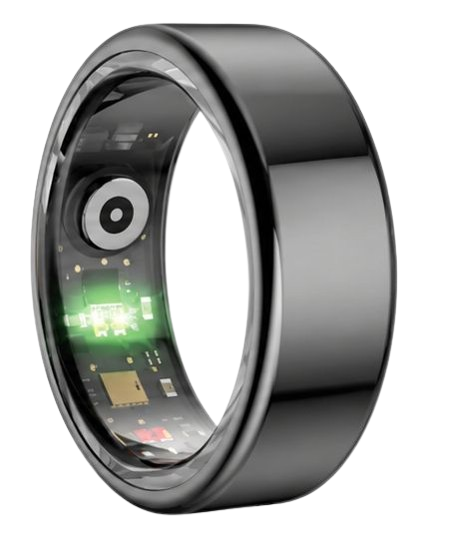
The Science of Optical Sensors in Blood Oxygen Sensing

To evaluate blood oxygen tracking accuracy, we must understand the optical technology inside wearable devices.
Every clinical oxygen ring monitor relies on a technology known as Photoplethysmography, or PPG.
This optical method projects light through your skin to analyze changes in blood volume and oxygen levels.
By capturing these measurements at the base of your finger, smart rings provide highly reliable continuous tracking.
How Photoplethysmography (PPG) Measures SpO2
The blood in your body changes color depending on how much oxygen it is currently carrying.
Oxygen-rich hemoglobin absorbs more infrared light, allowing red light to pass through your tissues easily.
Conversely, oxygen-depleted hemoglobin absorbs more red light, which alters the balance of light reflected back to the sensor.
Your ring contains specialized red and infrared LEDs that project light directly into your finger capillaries.
A highly sensitive photodetector measures the ratio of light absorption thousands of times per minute.
The device then processes this raw optical signal using advanced algorithms to determine your exact blood oxygen saturation percentage.
This complex data is delivered directly to your companion app, simplifying the entire experience of smart ring blood oxygen monitoring.
Why the Finger Is the Ideal Biometric Location
Smartwatches often struggle to maintain consistent skin contact, especially during active movement or side-sleeping positions.
The wrist contains thick muscle tissue, bone structures, and large tendons that can easily block or scatter optical light waves.
In contrast, the fingers are highly vascularized zones where digital arteries run close to the surface of the skin.
This superficial arterial layout allows the red and infrared LEDs to gather clean, high-fidelity pulse waveforms.
Because the ring fits snugly around the base of your finger, it eliminates the sensor shifting that commonly causes errors in wristbands.
As a result, an oxygen monitor ring provides a much higher signal-to-noise ratio than any modern wrist-worn tracker.
This stability ensures that your overnight SpO2 data remains continuous and free of motion-induced artifacts.
Understanding Overnight Oxygen Variation and Sleep Hypoxia
The human brain requires a steady, uninterrupted flow of oxygen to complete vital restorative cycles overnight.
Monitoring your overnight oxygen variation is one of the most effective ways to assess your respiratory health.
Understanding these patterns helps you recognize potential health warnings before they lead to chronic, daytime fatigue.
Let us explore how physiological changes during different sleep stages can directly impact your blood oxygen levels.
Defining Hypoxia and Blood Oxygen Desaturation
Healthy individuals typically maintain an overnight blood oxygen saturation baseline between 95% and 100%.
When your blood oxygen level drops below 90%, your tissues enter a physiological state known as hypoxia.
During a sleep disturbance, your airway can become temporarily blocked, preventing fresh air from reaching your lungs.
This blockage causes a sudden drop in SpO2, which is clinically referred to as an oxygen desaturation event.
To safeguard your health, our app includes hypoxia desaturation tracking to log the exact frequency of these occurrences.
If your body experiences frequent oxygen dips, your brain will repeatedly force you into light sleep to restore normal breathing.
This constant fragmentation prevents you from getting the deep, restorative rest your muscles and mind require.
The Dynamic Relationship Between Sleep Architecture and SpO2
Your body cycles through distinct sleep stages, including light sleep, deep slow-wave sleep, and rapid eye movement (REM) sleep.
During deep sleep, your breathing is exceptionally stable, which keeps your blood oxygen levels highly consistent.
However, during REM sleep, your muscles experience temporary paralysis to prevent you from physically acting out your dreams.
This profound muscle relaxation can cause the soft tissues in your throat to sag into your airway.
If your airway narrows, your body will show a notable sleep oxygen variation on your morning trend charts.
According to the National Sleep Foundation, identifying these REM-related oxygen drops is critical for managing long-term sleep quality.
By pairing SpO2 tracking with movement sensors, the Herz P1 maps out exactly when these desaturation events occur.
Evaluating Advanced Multi-Biometric Health Systems
To truly understand your physical recovery, you cannot look at overnight oxygen levels in complete isolation.
Your blood oxygen saturation, heart rate variability, and blood pressure trends are all closely linked.
When your respiratory system is stressed, your autonomic nervous system must work harder to protect vital organs.
This interconnected relationship is why a modern smart ring tracks multiple biometric markers simultaneously.
How Low Oxygen Triggers Autonomic Stress Responses
When your blood oxygen saturation drops, your brain immediately senses the lack of incoming oxygen.
This oxygen deficit triggers your sympathetic nervous system, initiating a mild “fight-or-flight” survival response.
Your body responds by releasing stress hormones, which cause your heart rate to spike and your blood vessels to constrict.
This physical compensation mechanism can be actively tracked using a modern blood pressure ring.
Over time, these repetitive nighttime stress spikes can place a heavy, chronic burden on your cardiovascular system.
By tracking these subtle circulatory shifts, the Herz P1 helps you monitor how nighttime breathing affects your long-term cardiovascular health.
Comparing Heart Rate Variability, ECG, and SpO2 Data
Heart rate variability, or HRV, is a powerful measurement of how effectively your body recovers from daily stress.
A high HRV score indicates a relaxed, highly resilient nervous system that is ready for physical exertion.
Conversely, a low HRV score combined with overnight SpO2 dips indicates that your body is struggling to recover.
Some advanced consumers use a specialized ecg ring to monitor their heart rhythm for irregular beats.
However, pairing continuous SpO2 tracking with HRV analysis is often the most practical approach for general sleep wellness.
This balanced combination provides a comprehensive picture of your autonomic recovery without requiring complex, on-demand testing.
The Clinical Value of Comprehensive Metabolic Tracking
As wearable technology continues to evolve, health monitoring is becoming increasingly proactive and integrated.
Many health-conscious individuals now pair their smart rings with tools like the stelo glucose biosensor to manage metabolic wellness.
When your body experiences poor sleep and low oxygen levels, your insulin sensitivity can decrease the following day.
This metabolic decline can lead to unexpected blood sugar spikes and intense afternoon energy crashes.
By tracking both respiratory and metabolic markers, you can quickly identify how your sleep quality affects your daily physical energy.
This highly proactive approach allows you to make informed, data-driven decisions regarding your diet, exercise, and recovery habits.
Practical Application: Reading Your SpO2 and Sleep Data
Acquiring high-quality health data is only valuable if you know how to apply those insights to your daily lifestyle.
The Herz P1 companion app is designed to translate your raw biometrics into simple, easy-to-read charts.
By reviewing your daily patterns, you can make immediate, positive adjustments to your environment and sleep habits.
Let us look at how to navigate your morning dashboard and take proactive steps to improve your sleep scores.
Navigating Your Overnight SpO2 App Dashboard
When you open your spo2 app each morning, you will see an overnight blood oxygen trend chart.
Your primary goal is to maintain a flat, consistent horizontal line that stays safely above 95% throughout the night.
If you notice sharp, downward spikes on your graph, these indicate temporary desaturation events.
The app also calculates an overall Sleep breathing quality score, which helps you assess your respiratory performance at a glance.
By comparing these daily breathing scores, you can easily track how lifestyle changes impact your overnight recovery over time.
Natural Protocols to Optimize Your Nighttime Blood Oxygen
If your morning charts reveal frequent oxygen dips, there are several simple lifestyle changes you can implement.
First, try sleeping on your side rather than your back, as back-sleeping naturally encourages your airway to collapse.
You can use a supportive body pillow to help keep your body in a stable side-sleeping position throughout the night.
Additionally, keeping a bedroom window cracked open can improve air circulation and help prevent carbon dioxide buildup.
Engaging in regular cardiorespiratory exercise during the day is another highly effective way to strengthen your lungs.
For more actionable tips, you can read our complete guide on how to increase blood oxygen levels naturally.
Adjusting Your Daily Routine Based on Sleep Scores
Your sleep score acts as a built-in compass for managing your physical energy and daily workout intensity.
If your Herz P1 reveals a high recovery score, your body is well-prepared for a high-intensity workout or a demanding workday.
However, if your sleep score is low, it is wise to focus on restorative activities like yoga, light walking, or stretching.
Pushing through intense physical training when your body is poorly recovered can lead to overtraining and chronic fatigue.
By aligning your daily schedule with your physiological data, you can achieve better fitness results with far less stress.
This smart, intuitive approach to training is why many active individuals refer to the Herz P1 as their favorite wellness companion.
Overcoming Common Wearable Pitfalls and Sizing Mistakes
Even the most advanced biometric sensors will produce inaccurate data if a wearable device is used incorrectly.
Many consumers make simple mistakes during their first few weeks of wearing a health tracker.
By learning how to avoid these common pitfalls, you can ensure consistent, medical-grade tracking accuracy.
Let us examine the most frequent issues users encounter and how our team helps you avoid them entirely.
The Hidden Financial Burden of Subscription-Based Wearables
Many smart ring manufacturers lure buyers with a low initial retail price, only to charge high recurring fees later.
These mandatory monthly subscription fees can easily add hundreds of dollars to your total cost of ownership over time.
We believe that you should never have to pay a monthly fee to access your own personal health data.
The Herz P1 includes full, lifetime access to our advanced analytical companion app with absolutely zero hidden costs.
This straightforward, subscription-free model ensures you can monitor your health trends long-term without any ongoing financial stress.
Why Bulky Smartwatches Fail at Nighttime Tracking
Many people find it uncomfortable to wear a thick, heavy smartwatch to bed every single night.
These large wrist devices can catch on your bedsheets, press uncomfortably against your face, or disturb your partner.
Because smartwatches are heavy, they are prone to sliding around on your wrist when you toss and turn.
This movement creates gaps between the optical sensors and your skin, resulting in lost or highly inaccurate data.
The Herz P1 Smart Ring solves this comfort issue entirely with its incredibly lightweight, low-profile design.
It sits securely at the base of your finger, providing a highly reliable connection without causing any nighttime discomfort.
How to Find Your Perfect Ring Fit and Avoid the Rotation Trap
To maintain high accuracy, your ring must fit snugly enough to prevent it from spinning freely on your finger.
If the optical sensors rotate away from the palm side of your finger, they will struggle to read your capillaries.
However, the ring should not be so tight that it feels restrictive or uncomfortable when your hands naturally swell at night.
To help you find the perfect balance, every Herz P1 order includes a complimentary, multi-size ring fitting kit.
We recommend wearing a sample sizing ring for a full 24 hours to observe how your finger changes size.
This simple step ensures your final ring remains perfectly positioned for consistent, high-fidelity data capture.
Frequently Asked Questions About Blood Oxygen Sensing Rings
To help you make an informed decision, our wellness team has answered the most common questions about the Herz P1.
Is the Herz P1 Smart Ring waterproof?
Yes, the Herz P1 features a robust IP68 waterproof rating, certifying it for continuous submersion in water.
You can confidently wear it while washing your hands, taking a hot shower, swimming laps, or relaxing in a sauna.
The internal electronics are sealed within a protective, medical-grade resin to prevent any moisture from entering the device.
How long does the Herz P1 battery last on a single charge?
The Herz P1 delivers up to 6 days of continuous tracking on a single charge, even with overnight SpO2 active.
When the battery runs low, the included magnetic charging dock fully replenishes the device in under an hour.
This long battery life eliminates the daily charging anxiety that many smartwatch users experience.
Which finger is best for wearing my smart ring?
We recommend wearing the Herz P1 on your index, middle, or ring finger for the most accurate biometric readings.
These three fingers contain the strongest capillary networks, which helps the optical sensors capture clean pulse waves.
You can choose whichever hand feels most comfortable, though many users prefer wearing it on their non-dominant hand.
Does the ring store my biometric data when my phone is offline?
Yes, the Herz P1 contains an onboard memory chip that can store up to 7 days of detailed biological data offline.
You do not need to keep your smartphone near your bed or leave your Bluetooth connection active overnight.
The moment you open the app, the ring will automatically sync all your stored sleep and oxygen data in seconds.
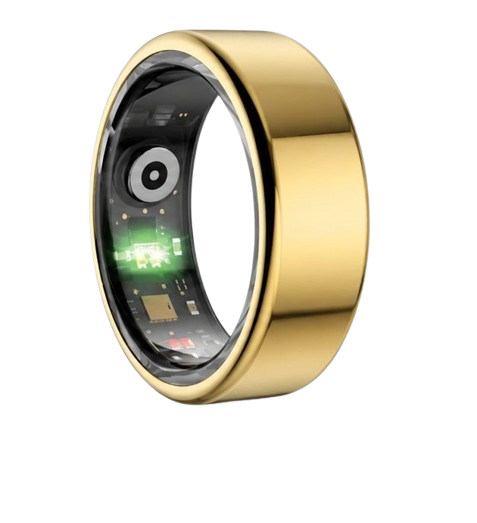
90-Day 100% Money-Back Guarantee
“The Herz Smart Ring helps me manage stress easily. It’s accurate, stylish, and lightweight—perfect for my busy life!”
— Jennifer P. | ✔ Verified Customer
- ✓ 6-Day Battery Life
- ✓ Detailed Sleep Analysis
- ✓ Fast 1-Hour Charging
- ✓ iOS & Android Ready
Questions? Call: 1-866-479-1629
Conclusion: Empower Your Sleep and Recovery Journey
Continuous blood oxygen sensing is a powerful, science-backed way to take control of your nightly recovery and long-term health. The subscription-free Herz P1 Smart Ring offers a durable, stylish, and highly accurate solution to monitor your vitals without monthly fees. Ready to monitor your health every day? Explore the Herz P1 Smart Ring and see if it fits your lifestyle. Call: 1-866-479-1629 — our team can help you advise on the correct ring size and set personalized health goals.
