

Finding an overnight hrv 50 on your wearable device can trigger immediate questions about your cardiorespiratory fitness and recovery. Is this metric a sign of health, or does it indicate chronic stress and fatigue? Our team at Herz P1 wants to help you decode these vital signals. We will address your specific recovery concerns and guide you toward optimal wellness.
Built to Last. Save Up to 69% Today.
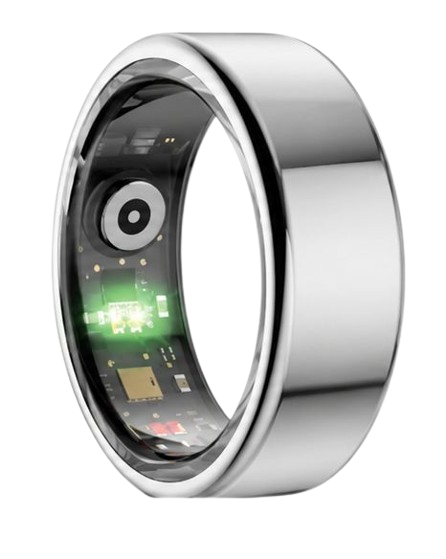
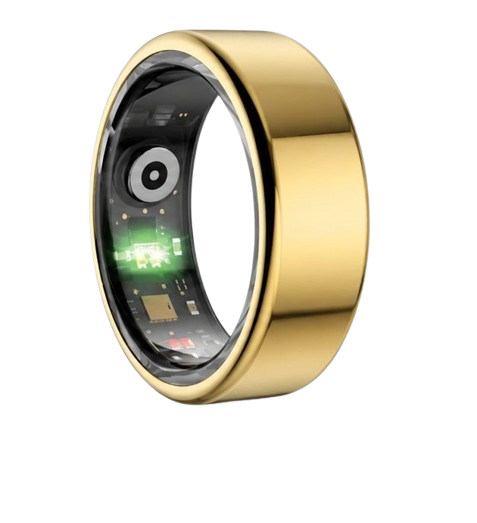
The Herz P1 Smart Ring tracks HRV, Sleep, Heart Rate & SpO2 around the clock. No subscriptions. No renewals. Ever.
In This Article
- Understanding Your HRV Score: An in-depth physiological breakdown of what fifty milliseconds represents for your autonomic resilience.
- Autonomic Balance & Health: Discover how the nervous system regulates your cardiac intervals during rest and daily activity.
- PPG Smart Ring Technology: Explore how optical sensors on the finger capture clinical-grade heart rate metrics overnight.
- Actionable Lifestyle Strategies: Proven methods to improve your heart rate variability through sleep, diet, and proper stress management.
Is an HRV of 50 Good for Your Health and Recovery? The Complete Breakdown

Understanding your heart rate variability is one of the most powerful ways to check your physical recovery.
Many people wear advanced trackers to sleep and wake up to find a hrv 50 score.
You might immediately ask yourself, is hrv of 50 good for my health?
The quick answer is that a score of fifty is generally considered moderate and highly normal for most adults.
It indicates that your autonomic nervous system is in a balanced state, showing decent adaptability to daily stressors.
However, your ideal score depends heavily on specific individual factors like your age, gender, and genetic background.
For instance, younger individuals often have much higher baselines, while older adults may naturally experience lower numbers.
This metric represents the variation in time between each of your consecutive heartbeats in milliseconds.
A higher variation indicates that your parasympathetic nervous system is actively working to rest and digest.
A lower variation suggests that your sympathetic fight-or-flight system is dominant due to physical or mental stress.
Consistent tracking helps you understand how your heart reacts to exercise, sleep, and emotional pressure.
Busy office workers and active fitness enthusiasts both benefit from checking their scores daily to prevent burnout.
Your score matters most when measured during your deep, undisturbed overnight sleep cycles.
Measuring during sleep eliminates external variables like posture, movement, and caffeine intake.
This provides a clean physiological baseline that you can rely on for accurate health tracking.
Clinicians often use specific mathematical formulas to calculate these subtle heartbeat variations.
One common measurement is the root mean square of successive differences, known as the hrv rmssd normal range.
Another helpful calculation is the standard deviation of NN intervals, known as the hrv sdrr normal range.
Both of these metrics help paint a comprehensive picture of your overall autonomic health and cardiac resilience.
Knowing your data helps you determine what is a good hrv score for your personal lifestyle.
If you notice your score consistently hovering around fifty, your body is likely handling moderate daily loads well.
Our team at Herz P1 is dedicated to making this complex biometric data easy for you to understand.
We believe that tracking your vitals should be simple, intuitive, and accessible without any hidden fees.
If you want to track this in real time, the Herz P1 Smart Ring monitors your autonomic metrics 24/7 — explore it here.
90-Day 100% Money-Back Guarantee
“The Herz Smart Ring helps me manage stress easily. It’s accurate, stylish, and lightweight—perfect for my busy life!”
— Jennifer P. | ✔ Verified Customer
- ✓ 6-Day Battery Life
- ✓ Detailed Sleep Analysis
- ✓ Fast 1-Hour Charging
- ✓ iOS & Android Ready
Questions? Call: 1-866-479-1629
How Your HRV Baseline Compares to Other Recovery Ranges

Evaluating a resting hrv 50 ms score requires comparing it to your personal historical trends.
It is highly common to see your biometric numbers shift slightly from one night to the next.
For example, you might wake up one morning and notice a minor dip to an hrv 49 score.
This small change could be the result of a late dinner or mild dehydration before bed.
If your score drops slightly lower to an hrv 48, your body might be fighting a minor infection.
It could also mean that you experienced highly fragmented sleep or elevated evening stress.
On the other hand, prioritizing your recovery can quickly boost your numbers into an hrv 60 range.
Consistently hitting an hrv 70 signals that your cardiovascular system is highly resilient and well-rested.
Learning to interpret these daily fluctuations is key to finding good hrv numbers for your unique body.
You should never compare your scores directly to those of other people.
An elite athlete might have a baseline over one hundred, while a healthy business executive might hover around forty.
Both individuals can be in excellent health relative to their personal biometric baselines.
This is why our team at Herz P1 focuses on tracking your personalized trends over time.
The Herz P1 Smart Ring establishes your unique baseline during your first two weeks of continuous wear.
It then alerts you when your overnight score drops significantly below your normal range.
This warning allows you to adjust your plans and avoid overexerting yourself.
You can choose to take a rest day or practice mindful meditation to help your body recover.
Managing your daily load based on real data is a highly effective way to support your heart.
This proactive approach helps you build long-term cardiovascular resilience.
It empowers you to take charge of your wellness journey with confidence.
The Technology Behind Finger-Based PPG Sensing

Understanding how your wearable device captures these heartbeat intervals is essential for trusting your data.
Most modern health trackers utilize photoplethysmography technology to monitor your cardiovascular activity.
This process involves projecting light into your skin and measuring how much light is absorbed by blood flow.
Many smartwatches project green light from the wrist, which must travel through thick tissue and muscle.
This distance can sometimes lead to signal interference, especially when you move during sleep.
In contrast, the finger base contains major digital arteries that sit very close to the skin surface.
This anatomical feature makes the finger an ideal location for capturing clean, high-fidelity biometric data.
The Herz P1 Smart Ring takes full advantage of this physical structure by using multi-wavelength PPG sensors.
It uses infrared, red, and green light to continuously measure your pulse rate and blood oxygen levels.
The infrared light is especially useful because it can measure your vitals without disturbing your deep sleep.
This allows the ring to record your exact heart rate variability throughout the night.
It measures the time gaps between beats with an incredibly low margin of error.
This high level of accuracy ensures that your normal hrv score trends are completely reliable.
You can make important lifestyle decisions knowing that your ring is capturing true physiological data.
Our team at Herz P1 is committed to delivering this level of clinical-grade precision directly to your finger.
We believe that high-quality health insights should be comfortable and easy to collect every single day.
This is why we engineered a sleek, lightweight ring that replaces bulky wrist-worn trackers.
Actionable Lifestyle Habits to Optimize Your HRV and Recovery Scores
Improving your cardiovascular variation is a gradual process that requires consistent lifestyle adjustments.
First, you should focus on establishing a regular sleep schedule to support your natural circadian rhythms.
Going to bed at the same time every night helps regulate your autonomic nervous system.
Second, you must be mindful of what you consume in the hours leading up to bedtime.
Alcohol is one of the most common substances that can severely suppress your overnight recovery scores.
Even a single drink can cause your resting heart rate to rise and your variability to drop.
Eating heavy meals late at night also forces your body to focus on digestion rather than cardiovascular rest.
Third, managing daily stress through active mindfulness can have an immediate positive impact.
Practicing slow, deep breathing for just ten minutes before bed can activate your parasympathetic system.
This simple practice helps calm your heart and prepares your body for deep, restorative sleep.
Fourth, regular moderate exercise is highly effective for building a stronger, more resilient cardiovascular system.
Activities like walking, swimming, and cycling help improve your heart’s efficiency over time.
However, you must avoid overtraining, which can cause chronic inflammation and suppress your scores.
The Herz P1 App makes it easy to track the direct impact of these positive lifestyle changes.
You can view clear visual charts of your progress over days, weeks, and months.
This valuable feedback loop helps you stay motivated on your personal wellness journey.
| Biometric Metric | Typical Target Range | Primary Recovery Strategy |
|---|---|---|
| Heart Rate Variability (HRV) | 50 ms – 100+ ms | Paced breathing, stress management, hydration |
| Resting Heart Rate (RHR) | 50 bpm – 70 bpm | Consistent cardiovascular exercise, quality sleep |
| Blood Oxygen (SpO2) | 95% – 100% | Nasal breathing, proper bedroom ventilation |
Sizing and Wearable Gaps: Avoiding Common Biometric Pitfalls
Many people try to track their health using heavy, oversized smartwatches.
These bulky devices can easily catch on your blankets and wake you up during the night.
They also require frequent, sometimes daily charging, which leads to massive gaps in your sleep data.
Wearing a lightweight smart ring is a far more comfortable and seamless way to monitor your vitals.
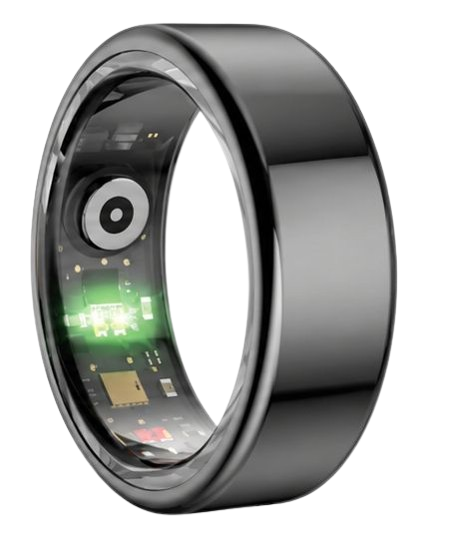
The Herz P1 Smart Ring is crafted from military-grade steel that feels almost weightless on your finger.
It sits flat against your skin, ensuring continuous sensor contact without any physical discomfort.
Another major issue in the wearable industry is the rise of expensive monthly app subscriptions.
Some brands make you pay a recurring fee just to view the health metrics you already paid for.
We believe that your personal health data should belong to you completely and unconditionally.
That is why the Herz P1 App is free for life with no subscription fees or paywalls.
You get full access to all your sleep stages, HRV trends, and daily stress insights forever.
Additionally, many consumer wearables are fragile and easily damaged by water or daily physical wear.
Our smart ring features an IP68 waterproof rating, allowing you to wear it during all your daily activities.
You can wash dishes, take showers, and swim in pools without ever needing to remove the device.
This durable design ensures that your tracking remains truly continuous and uninterrupted.
Frequently Asked Questions About Smart Rings and HRV
Is the Herz P1 Smart Ring fully waterproof?
Yes, the ring features a certified IP68 waterproof rating.
This high standard ensures the device is completely safe from dust, sweat, and water immersion.
You can wear it while swimming in pools or taking warm showers without any worry.
It can easily withstand depths of up to one hundred and sixty-four feet.
How often do I need to charge the Herz P1 battery?
The battery is designed to last up to six days on a single charge.
This long-lasting performance minimizes the need for frequent charging.
When the battery runs low, it charges back to one hundred percent in under one hour.
Which finger is best for accurate biometric tracking?
The index finger is the highly recommended choice for the most accurate sensor alignment.
This finger contains highly accessible blood vessels that sit close to the skin.
However, the middle and ring fingers are also excellent choices if they offer a better fit.
You should choose the finger where the ring feels snug but comfortable throughout the day.
Can the smart ring track my health metrics offline?
Yes, the device has built-in offline storage that can save up to seven days of data.
Your recorded vitals will automatically sync to your phone as soon as you open the app.
This means you do not need to keep your phone nearby while you sleep or exercise.
Embrace a Smarter Approach to Your Daily Recovery
Monitoring your biometrics should be simple, accurate, and completely free of ongoing fees. The Herz P1 Smart Ring helps you decode your overnight recovery without any hassle. Ready to optimize your health? Explore the Herz P1 Smart Ring to see how it fits your lifestyle. Call us at 1-866-479-1629 to get personalized help with sizing and recovery goals.
Note: Individual results may vary depending on individual health conditions, age, and lifestyle habits. This article is intended for general health reference purposes only.
