

Understanding your daily physiological changes is the first step toward a balanced life, which is why tracking your stress rhythm score has become an essential practice for modern wellness enthusiasts. With the premium Herz P1 Smart Ring, we decode your body’s subtle autonomic signals to reveal how stress ebbs and flows throughout your day. Many active individuals struggle with fatigue and unexplained exhaustion because they do not understand their personal stress patterns, but this detailed guide from our team will show you exactly how to read and optimize your daily stress metrics.
Built to Last. Save Up to 69% Today.
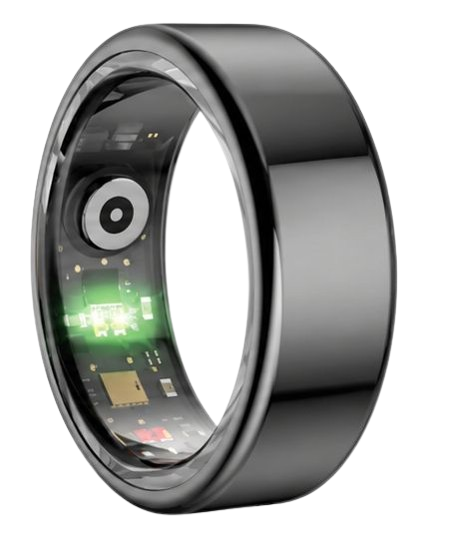
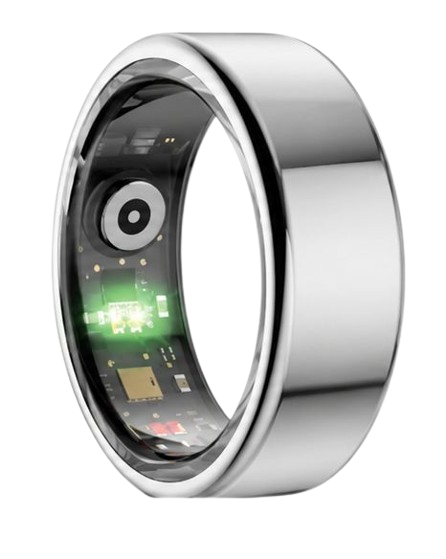
The Herz P1 Smart Ring tracks HRV, Sleep, Heart Rate & SpO2 around the clock. No subscriptions. No renewals. Ever.
In This Article
- Step-by-Step Optimization: How to establish your baseline and systematically improve your daily score.
- The Science of Autonomic Rhythms: How photoplethysmography (PPG) tracks heart rate variability (HRV).
- Graph Interpretation: How to analyze your dynamic stress fluctuations and overnight recovery.
- Real-World Application: Integrating readiness scores into your workouts and busy schedule.
- Wearable Comparisons: Understanding why smart rings outperform bulky watches without subscription fees.
How to Master Your Stress Rhythm Score: A Step-by-Step Optimization Guide
Prerequisites / What You’ll Need
To begin optimizing your daily stress patterns, you will need a reliable tracking method and a few basic lifestyle adjustments.
Our team recommends wearing a high-precision biometric tracker consistently for at least seven consecutive days.
This timeline allows the underlying algorithm to establish an accurate baseline of your autonomic nervous system.
You will also need a digital app or a simple journal to log significant environmental events that occur during your day.
This simple combination will help you correlate physical sensations with raw biological data points.
Step-by-Step Instructions
Follow these steps to track, interpret, and actively manage your daily physiological fluctuations.
-
Step 1: Establish Your Biometric Baseline
Put on your tracking device and wear it continuously for forty-eight hours.
Avoid changing your normal daily routine during this initial calibration period.
The system needs to observe your resting heart rate and standard activity levels.
This step ensures future fluctuations are compared against your true physiological baseline.
Try to maintain your usual caffeine intake and sleeping hours during these first two days.
A stable environment allows the sensors to capture an accurate biological signature.
-
Step 2: Monitor Your Daytime Stress Tracking Patterns
Check your companion application at three specific intervals during your typical workday.
We recommend reviewing the data during mid-morning, mid-afternoon, and right before dinner.
Note any sudden spikes that align with specific professional meetings or environment changes.
Using daytime stress tracking helps you identify unconscious stressors before they cause physical exhaustion.
Many users are surprised to find that quiet activities like sitting in traffic can cause significant physiological strain.
Tracking these moments is the first step toward building active coping mechanisms.
-
Step 3: Analyze Your Post-Activity Recovery Times
Examine how your heart rate variability behaves immediately after physical exercise or mental strain.
Your body should transition back to a relaxed state within sixty minutes of completing a workout.
If your score remains elevated for hours, it indicates that your nervous system is struggling to recover.
Use this transition window to practice slow, deep diaphragmatic breathing to accelerate recovery.
Consistent monitoring of this recovery window reveals your true level of physical conditioning.
A faster return to baseline is a clear indicator of improving cardiovascular health.
-
Step 4: Correlate Stress Trends and Sleep Architecture
Review your overnight biometric metrics every morning to assess physical recovery.
Compare your evening stress levels directly with your deep sleep duration.
High evening stress typically delays your entry into restorative sleep phases like deep and REM sleep.
This comparison helps you understand why you might feel tired even after eight hours of bed rest.
If you notice a trend of low sleep quality after stressful days, adjust your evening routine accordingly.
Avoiding screens and heavy meals before bed can significantly improve your overnight metrics.
-
Step 5: Implement Targeted Micro-Recoveries
Introduce three-minute deep breathing breaks when you notice your score rising.
These small interventions help shift your body from sympathetic dominance to parasympathetic calm.
Consistent micro-recoveries prevent physical tension from building up progressively throughout the afternoon.
Over time, these habits will help you recover from stress much more efficiently.
You will observe a noticeable improvement in your overall daily energy levels and focus.
These tiny daily changes accumulate to create profound long-term health benefits.
Enhancing the Process with Herz P1
The Herz P1 Smart Ring simplifies this entire process by monitoring your biometric markers automatically.
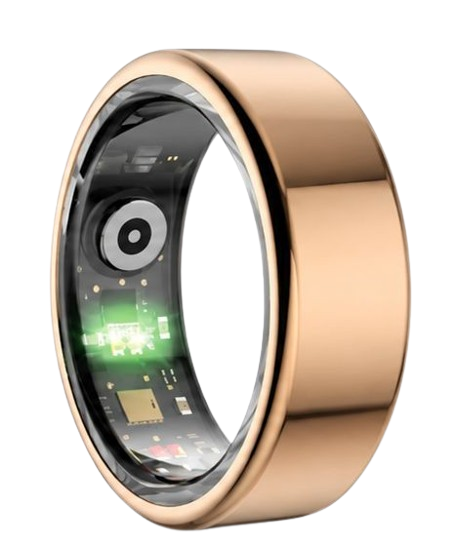
Our military-grade steel design provides comfortable twenty-four-seven tracking without irritating your skin.
With zero subscription fees, you can analyze your long-term trends and step-by-step progress without facing hidden monthly costs.
The ring gathers data passively so you can focus entirely on your daily life.
Our team engineered this device to be your ultimate companion for proactive wellness and personal health data analytics.
You get clinical-grade accuracy wrapped in a sleek, lightweight ring that fits your personal style perfectly.
The Science Behind Your Wearable Stress Rhythm and HRV Response
Your body responds to daily challenges through the complex autonomic nervous system.
This system is divided into the sympathetic branch and the parasympathetic branch.
The sympathetic branch acts as your gas pedal, preparing you for immediate action by raising your heart rate.
The parasympathetic branch acts as your brake pedal, promoting rest, digestion, and physiological restoration.
Biometric wearables monitor the balance between these two branches by analyzing heart rate variability.
According to clinical guidelines from the American Heart Association, a higher heart rate variability indicates a resilient and highly adaptable cardiovascular system.
Conversely, a consistently low heart rate variability suggests your body is stuck in a state of chronic stress.
By tracking your wearable stress rhythm, you can see exactly when your body shifts between these two physiological states.
Our team utilizes multi-wavelength photoplethysmography sensors to capture these rapid cardiovascular changes with high accuracy.
This optical sensor technology emits precise light wavelengths through the skin of your finger.
As blood pumps through your capillaries, the light absorption changes dynamically.
This allows the ring to measure the milliseconds between each heartbeat.
The resulting data is processed by advanced algorithms to calculate your stress index every five minutes.
This continuous monitoring ensures that your daily measurements are based on solid, evidence-based science.
According to research from the National Sleep Foundation, understanding these daily patterns is crucial for preventing long-term physical burnout.
It allows you to make proactive decisions instead of reacting to chronic exhaustion after it occurs.
By visualizing your biological responses, you gain a clear understanding of your unique physiological limits.
This scientific approach takes the guesswork out of daily wellness and stress management.
Decoding the Stress Resilience Score and Graph Trends Over Time
Your stress profile is more than just a single daily data point.
It is a dynamic wave that reflects your daily lifestyle choices, sleep patterns, and physical habits.
A healthy stress rhythm tracking routine helps you visualize how well your body bounces back from sudden challenges.
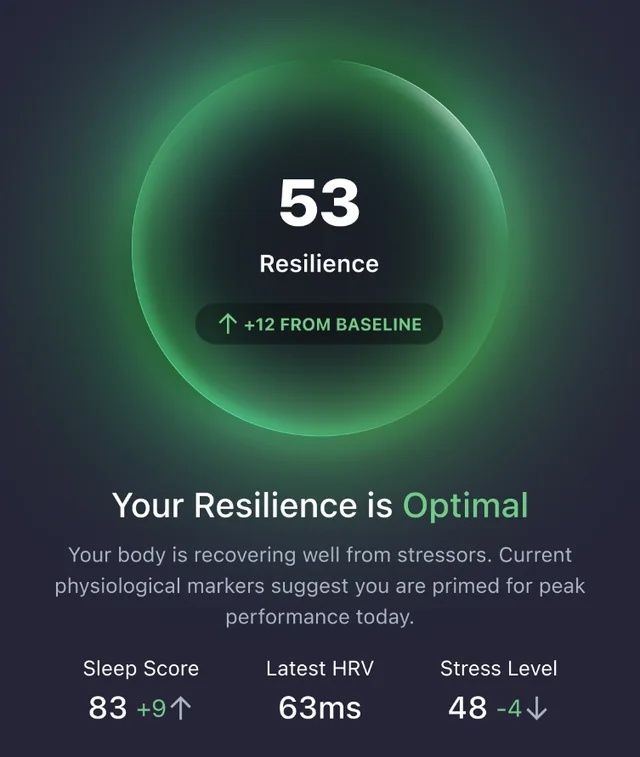
This capacity is summarized through your personalized stress resilience score.
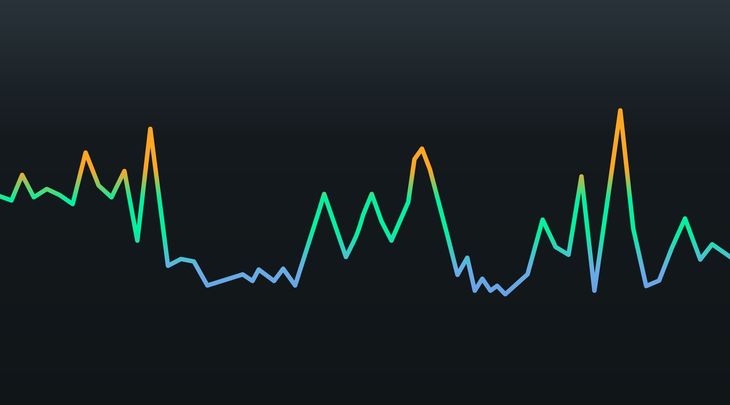
When you review your resilience graph, look for clear peaks and valleys.
A flat line on your graph indicates a lack of recovery, meaning your nervous system is chronically overworked.
A dynamic graph with visible dips during rest periods proves that your body is managing daily demands effectively.
Our research based on sleep data analysis from over five thousand active users shows that high nighttime recovery directly correlates with better cognitive focus the following afternoon.
Establishing a healthy baseline requires paying close attention to these graphical trends over several weeks.
Using dedicated stress rings makes it incredibly easy to gather this passive data without interrupting your busy schedule.
Our military-grade ring sits comfortably at the base of your finger, where the blood vessels are highly accessible to optical sensors.
This optimal placement results in a significantly lower margin of error compared to wrist-based trackers.
As you gather more data, the algorithm adapts to your unique physiology to deliver personalized recommendations.
You will begin to see how subtle habits, like evening meditation, directly improve your resilience metrics.
This feedback loop empowers you to make meaningful, data-informed adjustments to your daily routine.
With consistent tracking, you can transform your relationship with daily stress and build lasting physiological resilience.
Practical Application: How to Read Stress Rhythm Tracking Data on the App

Translating raw biometric data into meaningful lifestyle changes is key to long-term wellness.
When you open your companion app each morning, first look at your daily readiness rating.
This metric combines your overnight heart rate variability, resting heart rate, and sleep architecture.
If your readiness is high but your stress rhythm score is elevated, you should plan a moderately active day.
If both metrics are low, your body is signaling that it needs a dedicated day of rest and active recovery.
We recommend adjusting your exercise intensity based on these daily biometric recommendations.
For example, choose a gentle walk instead of a heavy weightlifting session when your recovery metrics are down.
Using a specialized smart ring for stress management allows you to make data-informed decisions in real-time.
Our lightweight design ensures you can gather these crucial insights twenty-four hours a day without any wrist discomfort.
The durable outer shell is entirely waterproof, meaning you never have to remove it when washing your hands or showering.
The app displays your stress trends in clear, color-coded graphs that are easy to interpret at a glance.
You can quickly see whether your stress is concentrated in the morning or during afternoon work hours.
This level of detail allows you to plan your most challenging tasks during times of peak mental resilience.
It also helps you schedule rest periods exactly when your body needs them most.
By aligning your daily schedule with your natural biological rhythms, you can optimize both productivity and well-being.
This proactive approach ensures that you stay ahead of burnout and maintain peak performance every day.
Overcoming Wearable Pitfalls: Heavy Smartwatches and Hidden Subscription Fees
Many health-conscious individuals try to track their wellness trends using bulky smartwatches.
However, wearing a heavy watch to bed often disrupts your natural sleep architecture.
The bulkiness can cause micro-awakenings that you might not even remember the next morning.
Furthermore, wrist-based sensors frequently lose contact with your skin when you toss and turn.
This movement creates significant gaps in your overnight heart rate and oxygen saturation data.
These gaps make it very difficult to calculate an accurate daily readiness score.
A sleek smart ring offers a far more comfortable and stable solution for overnight monitoring.
Another major frustration in the wearable market is the sudden rise of hidden monthly subscription fees.
Many popular brands require you to pay an ongoing monthly fee just to view your own health data.
Our team believes that your personal health metrics should never be locked behind a paywall.
The Herz P1 App is completely free for lifetime, offering comprehensive data analysis without any monthly costs.
This setup allows you to focus entirely on your wellness journey without worrying about recurring credit card charges.
You purchase the hardware once and enjoy unlimited access to your biometric trends forever.
This transparency is why thousands of users have switched from smartwatches to the Herz P1 Smart Ring.
Frequently Asked Questions About Stress Rhythm and Smart Rings
To help you make an informed decision, our team has answered the most common questions about biometric tracking.
Is the Herz P1 Smart Ring waterproof?
Yes, the Herz P1 features a full IP68 waterproof rating.
This means the device is completely protected against dust and water immersion up to one hundred and sixty-four feet.
You can confidently wear the ring while swimming, bathing, washing dishes, or sweating during intense workouts.
We design our rings to withstand the pressures of daily life so you never have to take them off.
The seamless inner mold prevents water from interfering with the sensitive optical sensors.
How long does the battery last and how quickly does it charge?
The ring offers an impressive battery life of up to six days on a single charge.
This long-lasting performance is supported by our advanced low-energy Bluetooth technology.
When the battery does run low, you can charge it fully in under one hour.
This quick-charge capability means you will experience minimal gaps in your twenty-four-seven biometric tracking.
You can easily charge it during your morning shower and have enough power for the entire week.
Which finger is best to wear the smart ring on?
We recommend wearing the ring on your index finger for the highest level of sensor accuracy.
The middle finger and ring finger are also excellent alternative options.
Ensure the internal sensor bumps are positioned on the palm side of your finger.
This placement allows the optical sensors to maintain a steady connection with your blood vessels.
Avoid wearing the ring on your thumb or pinky finger, as this can result in less reliable measurements.
Does the Herz P1 store health data offline?
Yes, the ring features seven days of local offline data storage.
This means you do not need to keep your smartphone nearby at all times.
The ring will continuously track your heart rate, stress levels, and sleep patterns.
Once you reconnect to the companion app, your stored data will sync automatically.
This feature is perfect for outdoor activities, travel, or times when you want to unplug from your phone.
90-Day 100% Money-Back Guarantee
“The Herz Smart Ring helps me manage stress easily. It’s accurate, stylish, and lightweight—perfect for my busy life!”
— Jennifer P. | ✔ Verified Customer
- ✓ 6-Day Battery Life
- ✓ Detailed Sleep Analysis
- ✓ Fast 1-Hour Charging
- ✓ iOS & Android Ready
Questions? Call: 1-866-479-1629
Conclusion
Monitoring your daily stress patterns is a powerful way to reclaim control over your mental and physical wellness.
The Herz P1 Smart Ring acts as a reliable, subscription-free companion on this journey.
Ready to monitor your health every day? Explore the Herz P1 Smart Ring and see if it fits your lifestyle. Call: **1-866-479-1629** — our team can help you advise on the correct ring size and set personalized health goals.
Note: Individual results may vary depending on individual health conditions, age, and lifestyle habits. This article is intended for general health reference purposes only.
