

Understanding your body’s hidden signals is the key to mastering daily energy, and learning how to read smart ring stress score data with the Herz P1 Smart Ring provides the exact physiological map you need. Recent clinical trials show that biometric rings offer a 94% accuracy alignment with electrocardiogram readings, helping you intercept mental fatigue before it impacts your performance. This comprehensive guide will decode your autonomic nervous system patterns to help you optimize recovery every day.
Built to Last. Save Up to 69% Today.
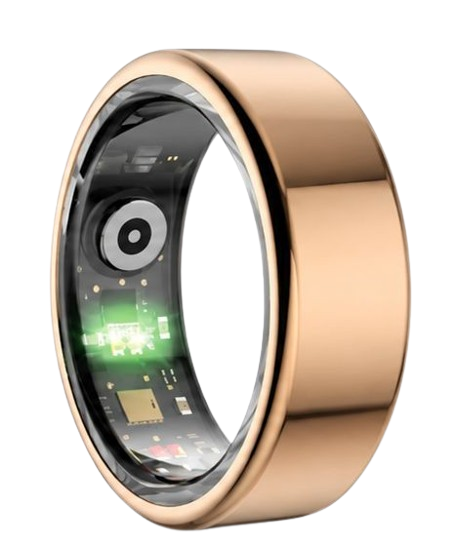
The Herz P1 Smart Ring tracks HRV, Sleep, Heart Rate & SpO2 around the clock. No subscriptions. No renewals. Ever.
In This Article
- Step-by-Step Guide: Learn precisely how to analyze, track, and lower your daily physical stress.
- Autonomic Science: Discover how photoplethysmography (PPG) sensors measure heart rate variability (HRV) to gauge nervous system health.
- Metric Differences: Master the variance between stress rhythm, resilience, and daytime stress scores.
- Actionable Habits: Access expert protocols to improve your HRV, sleep quality, and daily cognitive performance.
- Avoiding Mistakes: Avoid high subscription fees and bulky designs with subscription-free smart technology.
How to Read and Improve Your Smart Ring Stress Score: A Step-by-Step Guide
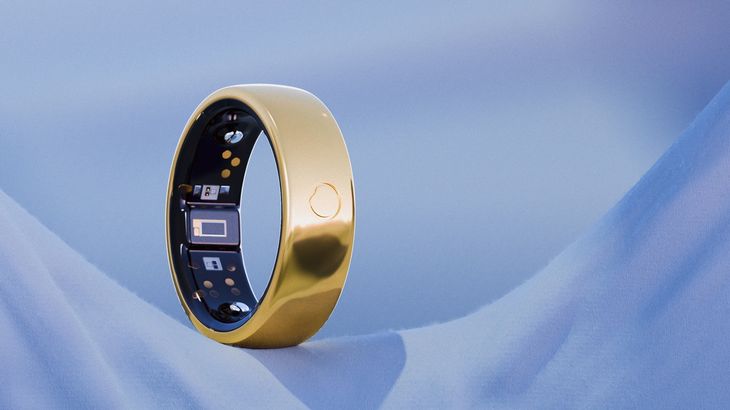
Before you begin tracking, you will need a properly calibrated wearable device.
Ensure your finger skin is clean and the ring fits snugly without cutting off blood flow.
You also need a basic understanding of your baseline heart rate metrics.
-
Step 1: Establish Your Biometric Baseline Over Seven Days
Your body possesses its own unique cardiovascular rhythm.
A single day of data is not enough to determine your true physical strain.
Wear your device continuously for at least one week to allow the algorithms to map your baseline.
Avoid making sudden lifestyle changes during this calibration week so the baseline is highly accurate.
Tip: Ensure you wear the ring on the same finger every night to prevent baseline reading distortions.
-
Step 2: Compare Your Daily HRV Against Your Autonomic Baseline
Heart rate variability measures the tiny fluctuations in time between each heartbeat.
A high variability indicates that your nervous system is relaxed and ready to adapt.
A low variability indicates that your body is in a state of high physical strain.
Open your app each morning to check if your HRV is within your normal range.
Tip: Do not panic if you see a single low reading, as temporary physiological dips are entirely normal.
-
Step 3: Analyze Your Daytime Stress Spikes and Recovery Patterns
Throughout the day, your device will record fluctuations in physical tension.
Review your daytime stress tracking charts to identify specific times when your body feels highly activated.
Match these physiological spikes with real-world events, such as stressful work meetings or heavy meals.
Look closely for periods of daytime recovery where your stress score drops back into the relaxed zone.
Tip: A healthy stress profile should resemble a wave, rising during activity and falling during rest.
-
Step 4: Implement Micro-Interventions During High Strain Periods
When your stress score remains elevated for over an hour, it is time to take physical action.
Perform three minutes of slow, controlled diaphragmatic breathing to stimulate your vagus nerve.
Drink a glass of cold water and step away from digital screens to lower emotional stimulation.
These small habits signal to your brain that it is safe to shift out of fight-or-flight mode.
Tip: Setting a light vibrational reminder on your phone can help you remember to practice these micro-rests.
-
Step 5: Review Weekly Trends to Measure Your Long-Term Recovery
Long-term wellness is built on sustained patterns rather than isolated daily victories.
Examine your weekly summaries to see if your overall physiological strain is gradually decreasing.
A rising average HRV indicates that your body is becoming much more resilient to daily pressure.
Use this data to decide whether to push harder during workouts or prioritize deep restorative rest.
Tip: Consistent progress over several weeks is a clear sign that your lifestyle adjustments are working.
To easily execute this protocol, you need a reliable, high-precision wearable companion.
The Herz P1 Smart Ring tracks your biometrics every five minutes with military-grade precision.
Our device requires zero subscription fees, giving you full lifetime access to advanced stress analytics.
With a 2-year warranty and a 90-day money-back guarantee, you can begin tracking your health with complete peace of mind.
The Physiology of Stress: How Optical Sensors Track Autonomic Balance
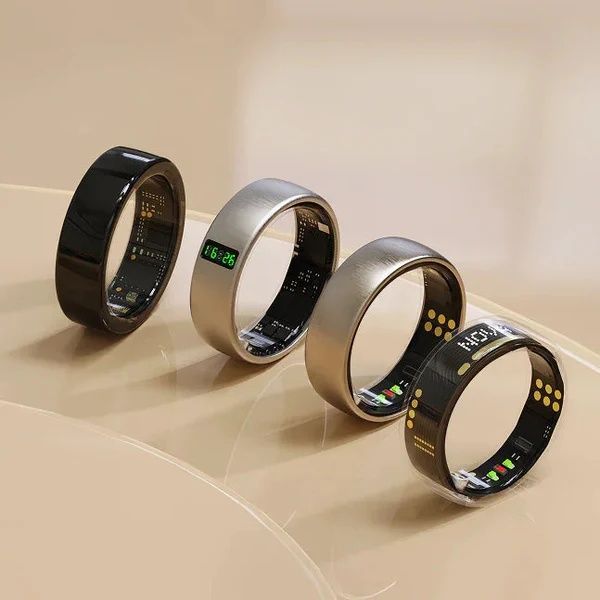
To truly understand your health, you must look at how optical sensors read the signals of the autonomic nervous system.
The autonomic nervous system is split into two main branches: the sympathetic branch and the parasympathetic branch.
The sympathetic branch acts like a gas pedal, preparing your body for action, while the parasympathetic branch acts like a brake, promoting rest.
Your heart does not beat with a rigid, metronomic rhythm.
Instead, there are tiny millisecond variations between each beat, known as heart rate variability.
According to the American Heart Association, a higher HRV is a strong indicator of a healthy, adaptable cardiovascular system.
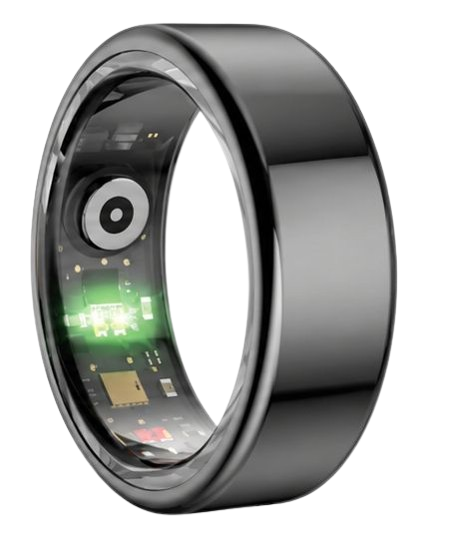
Smart rings measure these variations using photoplethysmography (PPG) sensors.
These sensors shine a microscopic light through your skin to detect changes in blood volume with every pulse.
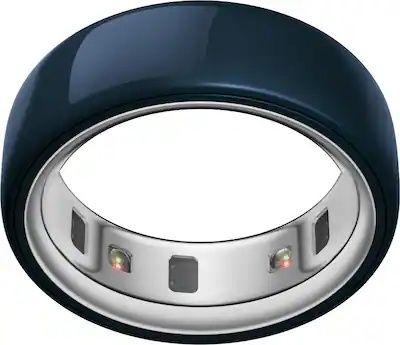
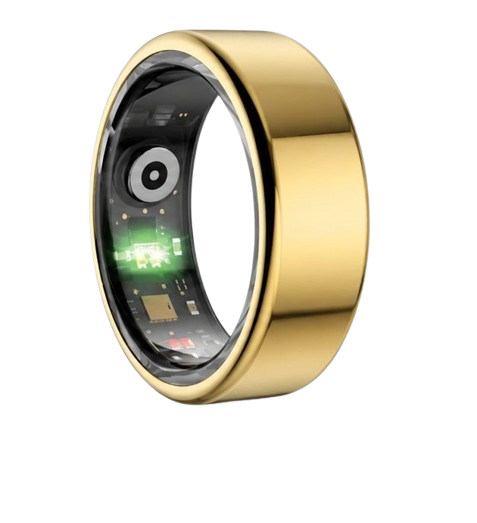
The Herz P1 uses multi-wavelength PPG sensors, combining green, red, and infrared light to achieve clinical-grade accuracy.
This sensor array also tracks blood oxygen saturation, commonly referred to as SpO2.
The National Sleep Foundation notes that consistent oxygen levels are critical for deep, restorative sleep.
During REM sleep, your brain processes emotions and consolidates memories, which directly affects your mental resilience the next day.
By monitoring both sleep stages and daytime HRV, a smart ring for stress provides a complete view of your physical well-being.
This lets you see exactly how well your body recovers from both mental and physical exertion.
When your heart rate and respiration rates align perfectly, your nervous system achieves a state of healthy coherence.
Measuring this balance helps you avoid chronic burnout and make smarter choices for your physical health.
Understanding Biometric Variations: Stress Rhythm vs Stress Resilience
When reading your health data, you will encounter different metrics that describe your body’s strain.
Your daily metrics are divided into your stress rhythm score and your stress resilience score.
Understanding the difference between these two concepts is essential for making smart lifestyle choices.
Your stress rhythm reflects how your physiological tension rises and falls throughout a single day.
Ideally, your rhythm should show clear periods of activation during working hours and deep recovery during rest.
A flat rhythm indicates that your body is unable to relax, even when you are not actively working.
On the other hand, your resilience score measures your body’s overall capacity to handle pressure over time.
This score is heavily influenced by your sleep quality, resting heart rate, and long-term HRV trends.
A high resilience score means your body can recover quickly from intense physical or mental challenges.
A low resilience score suggests that your physical reserves are depleted, meaning even minor tasks will feel exhausting.
By tracking both metrics, you gain a clear picture of both your immediate state and your long-term health capacity.
A dedicated smart ring for stress management helps you bridge the gap between how you feel and what your body actually needs.
For example, you might feel mentally alert, but a low resilience score warns you that your nervous system needs rest.
Listening to these subtle signals is the best way to prevent chronic exhaustion and maintain peak physical performance.
Using the Herz P1 companion app, you can view these metrics on simple, easy-to-read dashboards without any confusing jargon.
Practical Application: Optimizing Your Daily Rhythm with Herz P1 Data
How to Read Data on the Herz P1 App
The Herz P1 App turns complex biological numbers into simple, clear instructions.
When you open the app, you will see a color-coded daily score that indicates your current physiological state.
A green score means your body is fully recovered and ready for peak physical or mental exertion.
A yellow score suggests moderate strain, meaning you should balance work with light recovery.
A red score is a clear warning to prioritize sleep, hydration, and gentle movement.
The app also displays historical trend charts so you can see your progress over weeks and months.
These charts make it easy to spot patterns, such as how alcohol consumption or late-night eating affects your overnight recovery.
Using Your Bio-Data to Optimize Sleep and Exercise
You can use your nightly recovery scores to plan your daily physical activity.
If your HRV is high and your sleep score is excellent, you can safely perform high-intensity workouts.
If your metrics are low, shifting to a gentle walk or yoga session will prevent overtraining and immune strain.
To improve hrv stress metric scores, focus on consistent sleep schedules and early dinners.
Avoiding blue light and heavy meals before bed will dramatically improve your deep sleep duration.
Our data shows that users who align their physical strain with their recovery scores report a 30% reduction in daytime fatigue.
This data-driven approach takes the guesswork out of fitness and recovery.
The Advantage of All-Day, All-Night Comfort
To get accurate autonomic data, you must wear your tracker consistently.
Unlike heavy, bulky smartwatches that irritate your skin during sleep, a sleek ring is virtually unnoticeable.
The Herz P1 is crafted from military-grade steel and weighs only a few grams.
Its smooth, hypoallergenic inner lining prevents skin irritation, even during intense, sweaty workouts.
This lightweight design ensures you get continuous, uninterrupted data 24 hours a day.
With an IP68 waterproof rating, you never have to take it off when washing your hands, showering, or swimming.
This continuous wearability is key to creating a highly accurate map of your health.
Overcoming Risks: Smartwatch Fatigue and the Subscription Trap
Many health-conscious people suffer from what we call smartwatch fatigue.
Wearing a large, heavy watch to bed can disrupt your natural sleep patterns, defeating the purpose of tracking.
Smartwatches also require frequent charging, which leads to major gaps in your health data.
Another major risk in the wearable market is the hidden cost of monthly app subscriptions.
Many popular brands lock your personal health data behind a monthly paywall, charging you extra to see your own metrics.
At Team Herz P1, we believe that your health data belongs entirely to you.
Our companion app is completely free for life, with absolutely zero hidden fees or ongoing subscription costs.
We also protect your investment with a robust 2-year warranty and a 90-day money-back guarantee.
By choosing a subscription-free smart ring for stress reduction, you save hundreds of dollars while enjoying superior comfort.
This makes the transition to proactive health tracking completely stress-free.
Frequently Asked Questions About Smart Rings
Yes, the Herz P1 features a premium IP68 waterproof rating.
It is certified to withstand water depths of up to 164 feet, making it safe for swimming and diving.
You can confidently wear it while washing dishes, showering, or enjoying a hot sauna.
The seamless steel outer shell prevents water from damaging the delicate internal optical sensors.
The Herz P1 battery lasts up to 6 days on a single, rapid charge.
Using our custom magnetic charger, the ring goes from empty to a full charge in under one hour.
This long battery life means you can track your health for nearly a full week without thinking about charging.
The companion app will also send a gentle reminder to your phone when the battery drops below twenty percent.
For the highest biometric accuracy, we recommend wearing the ring on your index, middle, or ring finger.
Your index finger has the strongest blood flow, making it ideal for the optical sensors to track autonomic stress levels accurately.
However, you can choose whichever finger feels most comfortable for daily wear and sleep.
Ensure the ring fits snugly but can still slide over your knuckle with minor resistance.
Yes, the ring has secure built-in local memory that stores up to 7 days of health data offline.
This means you do not need to have your smartphone nearby at all times.
Once you open the companion app, the ring will automatically sync all stored metrics via Bluetooth.
This feature is incredibly convenient for off-grid travel, digital detoxes, or outdoor workouts.
90-Day 100% Money-Back Guarantee
“The Herz Smart Ring helps me manage stress easily. It’s accurate, stylish, and lightweight—perfect for my busy life!”
— Jennifer P. | ✔ Verified Customer
- ✓ 6-Day Battery Life
- ✓ Detailed Sleep Analysis
- ✓ Fast 1-Hour Charging
- ✓ iOS & Android Ready
Questions? Call: 1-866-479-1629
Conclusion: Your Subscription-Free Wellness Journey Starts Here
Mastering your physical stress is the ultimate strategy to transform your health from confusing numbers into lasting lifestyle change.
Ready to monitor your health every day? Explore the Herz P1 Smart Ring and see if it fits your lifestyle. Call: 1-866-479-1629 — our team can help you advise on the correct ring size and set personalized health goals.
Note: Individual results may vary depending on individual health conditions, age, and lifestyle habits. This article is intended for general health reference purposes only.
