

How to Choose the Right Pillow for Restorative Sleep: The Scientific Sleep Ergonomics Guide and Pillow Quiz
Waking up with a stiff neck, a racing mind, or deep exhaustion despite spending eight hours in bed? Your sleep ergonomics might be fractured. Biometric science shows that poor cervical alignment reduces deep sleep and suppresses Heart Rate Variability (HRV). Our comprehensive guide and tailored pillow quiz will help you align your spine, while advanced, screen-free tracking monitors your recovery.
Take Back Your Sleep.
Take Back Your Life.
- Fall asleep faster & sleep deeper
- Stop waking up in the middle of the night
- Wake up refreshed & full of energy
Key Article Highlights
- Cervical Spine Support: How maintaining neutral skeletal alignment prevents sleep disruption and physical stress.
- Understanding Biometrics: The direct biological connection between your neck alignment, Deep/REM sleep cycles, and HRV.
- Taking a Pillow Quiz: The framework for analyzing sleep position, shoulder width, and mattress density.
- Screen-Free Tracking: Why modern sleep optimization requires monitoring recovery metrics without the disruption of blue-light emitting devices.
Table of Contents
The Science of Sleep Ergonomics: Why Your Pillow is Ruining Your Rest
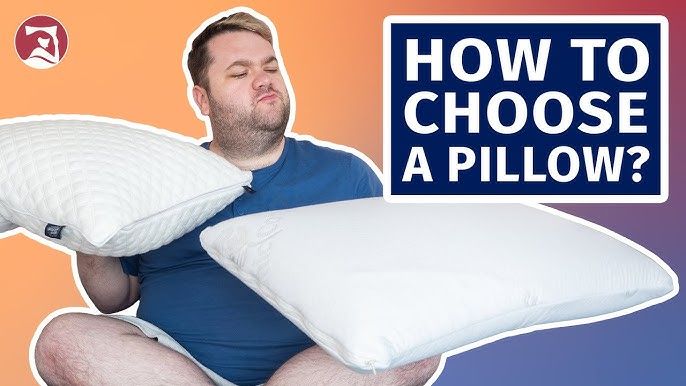
For many of us, the quest for a restful night feels like chasing a phantom. You try cutting off caffeine early, skipping evening screens, and keeping your bedroom cool. Yet, you still find yourself staring at the ceiling at 3 AM with a racing mind, waking up with non-restorative sleep, or dragging yourself through the day in a cloud of brain fog. Often, we assume our mental stress is the sole culprit. But what if the source of your sleep struggle is physical, hidden directly beneath your head?
Your head weighs approximately 10 to 12 pounds. When you lie down, your cervical spine (comprising the seven small vertebrae in your neck) must support this weight while maintaining its natural lordotic curve. If your pillow is too thick, too thin, too soft, or too firm, your neck is forced into unnatural positions. This muscular tension does more than cause morning stiffness; it sends constant “danger” signals to your central nervous system, triggering micro-arousals that disrupt your sleep cycles without you even realizing it. Our team at Mind Body Dan believes that understanding this connection is the first step to reclaiming your energy, and utilizing a targeted pillow quiz is the most efficient way to pinpoint your specific ergonomic needs.
Prerequisites for Finding the Perfect Pillow
Before diving into a physical purchase, there are a few foundational parameters you must understand about sleep posture and body geometry:
- Primary Sleep Position: Do you spend the majority of the night on your back, side, stomach, or in a state of constant tossing and turning?
- Shoulder Width: The distance between the tip of your shoulder and the side of your neck dictates the height (loft) of the pillow required when side-sleeping.
- Mattress Firmness: A softer mattress allows your body to sink deeper, reducing the loft needed from your pillow, whereas a firm mattress requires a higher loft pillow to keep your neck aligned.
Step-by-Step Execution Guide to Selecting a Pillow
Finding the right pillow shouldn’t be based on trial and error. By following a structured approach, you can systematically narrow down your choices:
- Take a Structural Assessment: Begin by utilizing a tailored pillow quiz. This clinical approach analyzes your physical structure and sleep habits to eliminate options that would compromise your neck.
- Match Your Posture to Pillow Loft:
• Side Sleepers need a high loft pillow (4 to 6 inches) to bridge the shoulder gap.
• Back Sleepers require a medium loft pillow (3 to 4 inches) with extra support under the neck to preserve the natural curve.
• Stomach Sleepers need an ultra-thin, low-loft pillow (less than 3 inches) or no pillow at all to prevent hyper-extending the lower back. - Select Your Fill Material: Choose high-quality materials such as natural latex (bouncy and responsive), memory foam (contouring and supportive), or down-alternative (pliable and classic).
- Implement a Scientific Tracking Framework: Once you change your pillow, you need to track how your body responds. The most comfortable-feeling pillow might not actually be facilitating the deepest sleep. To observe this objectively, we recommend using a screen-free biometric tracker like the Herz P1 Smart Ring. Unlike bulky smartwatches that disrupt your sleep with screen lights, the Herz P1 is a lightweight titanium ring that quietly monitors your Heart Rate Variability (HRV), Sleep Stages (REM, Deep, Light), and overall recovery score without annoying daily charges or hidden subscription fees.
- Audit Your Progress: Review your daily recovery and HRV trend over a 14-day trial period with your new pillow to ensure your physical stress levels are dropping.
Common Pitfalls & Mistakes
Many well-meaning sleep seekers fail to find comfort because of three persistent errors:
- Buying for “Fluffiness”: Fluffiness does not equal support. A down pillow may feel soft at first touch, but it compresses fully under the weight of your head, leaving your neck flat and unaligned.
- Keeping Pillows Too Long: Over time, foam and feathers degrade. If your pillow doesn’t spring back to its original shape when folded in half, its supportive capabilities are gone.
- Ignoring Mattress Variables: If you buy a premium orthopedic pillow but sleep on an old, sagging mattress, the overall alignment of your thoracic and lumbar spine will remain compromised.
Your Quick Pillow-Buying Checklist
| Metric | Ideal Target | How to Verify |
|---|---|---|
| Alignment Check | Ears, shoulders, and hips are aligned in a straight line. | Have a partner take a side-profile photo of you lying down. |
| Loft Height | Varies based on shoulder width and mattress depth. | Use the results of a customized how to choose the right pillow quiz. |
| Material Type | Responsive foam or natural latex that maintains loft. | Avoid pure polyester cluster fiber that collapses within months. |
By shifting our perspective and treating sleep as an ergonomic discipline, we can begin to resolve chronic night awakenings and eliminate persistent morning fatigue. Selecting your head support scientifically is your first major victory in this process.
The Interactive Pillow Quiz: Deciphering Your Sleep Style

Most people select pillows based on an unscientific metric: they walk down a store aisle, squeeze three or four options wrapped in plastic, and guess which one feels softest. This haphazard approach explains why so many individuals own a graveyard of abandoned pillows in their closets. We need to replace guessing with structured evaluation. That is why taking a targeted pillow quiz is critical to achieving anatomical neutrality during your rest.
A comprehensive pillow quiz evaluates more than just your preferred sleeping position; it acts as a digital diagnostic of your skeletal posture and sleeping climate. Let’s walk through the exact physical criteria a high-quality assessment processes, helping you understand how to navigate your own selection:
Decoding Sleep Positions in a Pillow Quiz
Each sleep posture places distinct demands on your cervical spine. An optimized pillow quiz categorizes users based on these physiological realities:
- The Side Sleeper: Approximately 70% of people sleep primarily on their side. In this position, the pillow must fill the exact rectangular gap between your shoulder edge and your cheek. If the loft is too low, your head tilts downward, pinching the nerve roots on the compressed side. If the loft is too high, the opposite side’s neck muscles are severely stretched. A structured pillow quiz will measure your shoulder width (narrow, medium, or broad) to determine your ideal loft thickness.
- The Back Sleeper: Back sleepers require contouring. Your head needs to sink back slightly, but your neck requires firm support. Traditional flat pillows do not fill the natural space under your neck, causing your neck muscles to stay active all night. The pillow quiz typically recommends contoured, ergonomic memory foam shapes with a recess in the center to cradle the occiput while supporting the neck.
- The Stomach Sleeper: This position is the most anatomically challenging. Sleeping on your stomach forces your neck to be rotated fully to one side for hours, stressing the cervical joints. To prevent adding vertical hyperextension to this rotational strain, stomach sleepers need a exceptionally thin pillow. Our pillow quiz framework often suggests stomach sleepers use a flat, responsive latex model or place a thin pillow under their pelvis to realign the lower spine.
- The Combination Sleeper: If you shift positions constantly, you are likely reacting to physical discomfort. However, true combination sleepers need a dynamically responsive pillow. This means a pillow with a high loft on the outer edges (for side sleeping) and a lower loft in the center (for back sleeping).
Why a Screen-Free Bedroom Matters for Sleep Hygiene
Finding the right pillow is only half the battle. If your bedroom is saturated with bright screens, blue light, and constant digital notifications, your brain cannot produce the melatonin required to fall into deep sleep. Reclaiming your rest requires a screen-free sanctuary. While tracking your sleep is crucial to verifying if your new pillow is improving your physical alignment, utilizing bulky smartwatches with glowing screens can actually undermine your sleep hygiene. Moving toward elegant, screen-free tracking methods is key to deep, restorative recovery.
Ultimately, a structured physical quiz eliminates the guesswork. Instead of relying on a subjective feel, you can trust biometric principles to guide your spine into its natural resting state.
Validating Your Recovery: Linking Pillow Ergonomics to Biometrics

How do you know if your new pillow is actually working? Most consumers rely entirely on “subjective morning feeling.” While waking up without pain is a fantastic indicator, it is a lagging metric that doesn’t tell the whole story. Your autonomic nervous system operates continuously throughout the night, and its response to physical stressors can be tracked with clinical precision through biometric monitoring.
When your neck is strained or twisted due to incorrect pillow height, your body registers this as a physical threat. To protect the spinal cord, your deep neck muscles go into spasm. This persistent physical work keeps your sympathetic nervous system (“fight or flight”) mildly active during sleep. Consequently, your body struggle to drop into parasympathetic dominance—the state of deep rest, tissue repair, and cardiovascular recovery. By tracking key physiological markers, we can directly measure the impact of structural changes like those guided by a pillow quiz.
The Two Core Biometrics That Define Your Sleep Quality
- Heart Rate Variability (HRV): HRV measures the time variation between consecutive heartbeats. High HRV indicates a highly responsive autonomic nervous system that is rested and dominant in the parasympathetic phase. If your pillow is misaligned, the continuous, low-level muscular pain keeps your heart rate elevated and your HRV depressed. When you correct your posture, you will often observe an immediate overnight increase in your baseline HRV.
- Sleep Stage Architecture (Deep & REM Sleep): Deep sleep is when your growth hormones are released, cells regenerate, and muscles repair. REM sleep is when your brain processes emotions and consolidates memories. Micro-arousals caused by tossing and turning to relieve neck pressure will constantly disrupt these cycles, leaving you stranded in light sleep. Correct cervical alignment stabilizes your body, reducing physical movement and allowing you to experience uninterrupted, deep, restorative sleep.
To accurately monitor these biometrics without introducing screens or electromagnetic distractions to your bedside, the Herz P1 Smart Ring stands out as a highly sophisticated solution. Rather than wearing a heavy smartwatch that vibrates with notifications and requires charging every single day, the Herz P1 is crafted from sleek, featherlight titanium. It fits seamlessly on your finger, operating completely screen-free to track your sleep phases, HRV, and heart rate with medical-grade precision.
A Scientific Loop for Sleep Optimization
By integrating the recommendations from a scientific how to choose the right pillow quiz with continuous, screen-free tracking, you create a closed-loop system for optimization. You no longer have to guess if a memory foam, latex, or contoured pillow is ideal for your body; your daily HRV and Sleep Stage metrics will give you absolute, undeniable proof.
At Mind Body Dan, our mission is to make advanced biometric science practical. Reclaiming your recovery shouldn’t involve endless subscription fees, heavy gadgets, or mental fatigue over hard-to-read charts. With the right pillow supporting your neck and a lightweight, subscription-free smart ring on your finger, you possess a complete, elegant toolkit to transform your sleep, eliminate brain fog, and conquer your day.
Disclaimer: Results may vary depending on individual physical activity levels, unique health conditions, and daily tracking patterns. The content in this article is designed for informational and educational purposes only and should not be used as a substitute for professional medical advice, diagnosis, or treatment. Always consult with a qualified healthcare provider regarding any spinal issues or persistent sleep disorders.
