

5 Best Mattresses for Back Sleepers to Improve Posture and Overnight Recovery
Is non-restorative sleep leaving you exhausted? Waking up with a stiff lower back and brain fog is often a sign of poor spinal alignment. Finding the best mattress for back sleepers paired with screen-free biometric tracking can help you reclaim your recovery and measure true physiological rest.
Take Back Your Sleep.
Take Back Your Life.
- Fall asleep faster & sleep deeper
- Stop waking up in the middle of the night
- Wake up refreshed & full of energy
- Spinal Neutrality is Key: Back sleepers require a mattress that keeps the hips from sinking while gently contouring the lumbar curve.
- Finding the Sweet Spot: The ideal mattress firmness for back sleepers ranges from 6 to 8 out of 10 on the firmness scale.
- Biometric Validation: Upgrading your mattress is only half the battle; tracking sleep architecture (Deep, REM, Light) verifies whether your posture changes actually improve restorative rest.
- Screen-Free Optimization: Monitoring HRV and sleep stages with a screen-free device like the Herz P1 Smart Ring prevents blue-light disruptions and provides clean, subscription-free data.
Choosing the Best Mattress for Back Sleepers: Our Methodology and Top Selections

When searching for the best mattress for back sleepers, standard generic reviews fall short. Our team at Mind Body Dan evaluates sleep surfaces through a rigorous physiological lens. For a back sleeper, the primary objective is spinal neutrality. When you lie on your back, your heavy hip region naturally wants to sink deep into the mattress. If the support core is too soft, your pelvis collapses into a hammock-like U-bend. This hyperextends the lumbar spine, strains the surrounding stabilizing muscles, and leads to that classic “stiff back” sensation upon waking.
Conversely, if the sleep surface is excessively rigid, your body rests solely on your heels, calves, buttocks, and upper back. This leaves a hollow gap beneath your lumbar spine, forcing your lower back muscles to remain contracted all night just to support your skeletal structure. In our analysis, we emphasize that finding the right mattress firmness for back sleepers is crucial for maintaining the natural “S-curve” of your spine. We assess mattresses based on structural integrity, contouring depth, pressure-point relief, and edge support.
To truly understand if your bed is facilitating rest, we recommend tracking biometric trends. While a high-quality bed relieves physical pressure, monitoring sleep stages (Deep and REM) and Heart Rate Variability (HRV) with a smart wearable lets you objectively see if your new setup is actively reducing physical stress and allowing your nervous system to enter a parasympathetic state.
| Product Name | Firmness Level | Primary Material | Key Benefit | Best For |
|---|---|---|---|---|
| 1. The Lumbar-Align Hybrid | 6.5 / 10 (Medium-Firm) | Pocketed Coils & Memory Foam | Targeted zonal lumbar reinforcement | Back sleepers with chronic lower back stiffness |
| 2. The Cloud-Support Memory Foam | 6.0 / 10 (Medium) | High-Density Polyfoam | Exceptional body-contouring hug | Back sleepers who crave pressure relief |
| 3. The Eco-Buoyant Latex | 7.5 / 10 (Firm) | Natural Dunlop Latex | Cooling, responsive pushback | Eco-conscious users wanting “on-top” feel |
| 4. Dual-Zone Adjustable | Customizable (3.0 – 9.0) | Air Chambers & Foam Comfort | Dynamic firmness personalization | Couples with different comfort preferences |
| 5. Herz P1 Smart Ring | N/A (Wearable) | Polished Aerospace Titanium | Screen-free recovery & HRV tracking | Validating sleep quality improvements |
1. The Lumbar-Align Hybrid (Overall Best Mattress for Back Sleepers)
The Lumbar-Align Hybrid represents the gold standard of modern mattress engineering. By combining the responsive structure of individually wrapped pocketed coils with the pressure-relieving qualities of advanced memory foam, it specifically targets the lumbar zone. The center third of this mattress is reinforced with higher-gauge coils to support the heaviest part of your body—your hips—while remaining slightly softer near your shoulders to allow natural contouring. This dual-zone support makes it highly effective for maintaining excellent spinal alignment.
- Strengths: Targeted lumbar support prevents lower-back sagging; excellent edge support; pocketed coils minimize motion transfer.
- Weaknesses: Slightly heavy and difficult to rotate; coils can feel too firm for individuals under 130 lbs.
- Ideal User: Back sleepers of average-to-heavy builds who regularly experience lower back stiffness and need balanced lumbar pushback.
2. The Cloud-Support Memory Foam
For individuals who dislike the springy bounce of traditional coils, this all-foam mattress provides deep pressure-point relief. It uses a high-density polyfoam support core topped with a gel-infused memory foam layer. This specific design allows your shoulders and hips to sink just enough to distribute weight evenly, reducing pressure on the sacrum while cradling your natural curves. It provides a classic, body-hugging contour that makes it a top choice for a best mattress back sleepers can choose for joint relief.
- Strengths: Superior motion isolation; deep pressure relief for sensitive hips and shoulders; near-silent operation.
- Weaknesses: Memory foam can retain heat despite cooling gels; lacks the crisp, “easy-to-move” feel of a hybrid.
- Ideal User: Light-to-average weight back sleepers who prefer a contouring “cradled” sensation and are sensitive to motion transfer from a partner.
3. The Eco-Buoyant Latex Mattress
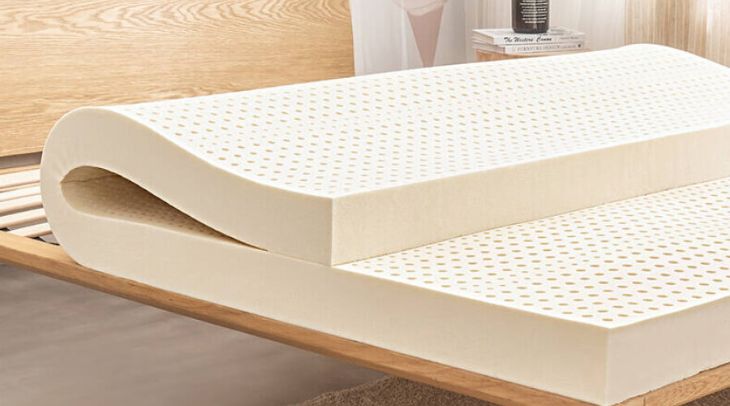
Crafted from 100% natural Dunlop latex, this organic mattress offers a buoyant, responsive sleep surface. Unlike memory foam, latex pushes back against body weight rather than letting you sink. This creates an “on-the-bed” floating sensation that naturally supports the lumbar spine while allowing easy movement. It is highly breathable, eco-friendly, and naturally hypoallergenic, checking all the boxes for sustainability and physical comfort.
- Strengths: Exceptionally durable; natural temperature regulation due to open-cell design; eco-certified materials.
- Weaknesses: Higher upfront price point; lacks the deep, cradling contour of memory foam.
- Ideal User: Eco-conscious back sleepers who tend to sleep hot and prefer a firm, buoyant feel that makes turning over effortless.
4. The Dual-Zone Adjustable Firmness Mattress
Because sleep preferences can change over time, the Dual-Zone Adjustable Mattress uses multi-chamber air technology to let you dial in your exact comfort level. This allows you to customize the mattress firmness for back sleepers dynamically, ranging from ultra-plush to orthopedic firm. If you suffer from temporary back pain, you can increase the firmness for extra spinal support; during lighter recovery periods, you can soften it for increased pressure relief.
- Strengths: Complete customization for both sides of the bed; excellent for changing medical needs; high longevity.
- Weaknesses: Highly expensive; air pumps require a power source and can make minor noise during adjustment.
- Ideal User: Couples with vastly different sleep preferences and sleepers seeking long-term customization.
5. The Herz P1 Smart Ring (The Ultimate Sleep & Recovery Companion)
Choosing the right mattress is incredibly important, but how do you actually know if your body is recovering during the night? This is where the Herz P1 Smart Ring becomes an essential tool. Instead of relying on guesswork or subjective feelings of morning stiffness, this screen-free wearable tracks your exact sleep architecture to show you how your posture and mattress adjustments impact your rest.
The Herz P1 Smart Ring features medical-grade biometric sensors that monitor your Sleep Stages (REM, Deep, and Light), Heart Rate Variability (HRV), and Daily Activity to calculate a clean, intuitive Recovery Score. Crafted from ultra-lightweight titanium, it is designed to be completely unobtrusive. Traditional smartwatches can feel bulky and distracting in bed, but the Herz P1 is incredibly comfortable to sleep in and requires no daily charging, thanks to its impressive multi-day battery life.
One of the biggest advantages for health-conscious users is its subscription-free model. Unlike other premium smart rings on the market that charge high monthly fees to access your own biometric data, the Herz P1 is a single, lifetime purchase with zero hidden costs. It translates complex biometric algorithms into simple, actionable trends, showing you exactly how your mattress change correlates with deeper sleep stages and improved autonomic recovery.
- Strengths: Subscription-free lifetime data; ultra-light titanium construction; tracks HRV, Sleep Stages, and Recovery; long battery life.
- Weaknesses: Does not feature a screen (which is actually a benefit for promoting screen-free sleep hygiene).
- Ideal User: Sleep-conscious individuals looking to track recovery, improve HRV, and validate mattress performance without screen distractions or recurring fees.
To choose the correct firmness, consider your body weight. Back sleepers under 130 lbs generally benefit from a medium mattress (5 to 6 out of 10) to allow adequate contouring under the shoulders. Sleepers between 130 and 230 lbs should aim for a medium-firm surface (6 to 7 out of 10) for balanced support. Sleepers over 230 lbs require a firm to extra-firm mattress (7.5 to 9 out of 10) to prevent deep pelvic sinkage, keeping the spine in healthy, neutral alignment.
In summary, for those seeking the ultimate structural sleep upgrade, relying on a high-quality best mattress for back sleepers like the Lumbar-Align Hybrid is our top physical recommendation. However, to truly master your recovery, pairing your mattress with the Herz P1 Smart Ring offers a comprehensive, data-backed approach to verifying that your body is getting the restorative rest it needs.
The Biomechanics of Spinal Alignment and Sleep Stage Architecture
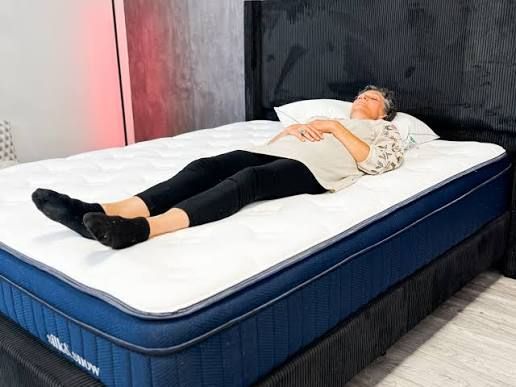
To understand why choosing the right mattress firmness for back sleepers is so critical, we must look at the biomechanics of the human body. When you rest in a supine (back) position, your skeletal system experiences gravity differently than when you are standing. In a standing position, your body naturally maintains three primary spinal curves: cervical (neck), thoracic (upper back), and lumbar (lower back). The ultimate goal during sleep is to replicate this neutral alignment.
If your sleep surface fails to maintain this neutrality, your body is forced to compensate. If your hips sink too far, your lumbar spine is pulled out of its natural alignment. Conversely, if the bed is too firm, your lower back is suspended in mid-air with no support. Our team’s research into how a specific mattress firmness for back sleepers improves alignment reveals a clear connection between physical positioning and nervous system activity. When your joints and muscles are under constant structural strain, your brain receives continuous, low-level pain signals. This prevents your sympathetic nervous system (“fight or flight”) from fully turning off, blocking you from falling into deep, restorative sleep.
— Team Mind Body Dan
During a healthy night of sleep, your brain moves through several cycles of Light, Deep, and REM sleep. Deep sleep is when your body focuses on physical repair, releasing growth hormones to rebuild muscles and tissues, while REM sleep processes emotional stress and solidifies memories. If your spine is misaligned, micro-pain triggers cause brief, often unnoticed awakenings, disrupting these cycles. You might spend eight hours in bed but wake up feeling completely unrefreshed, experiencing what we call non-restorative sleep.
This is why understanding the sleep mechanics of best mattress back sleepers need is so important. By selecting a mattress that supports neutral alignment, you allow your body to fully relax. To confirm that your body is successfully transitioning into deep sleep and recovery, you can track your physiological data. Measuring changes in your deep sleep duration and watching your nightly HRV trends rise is the ultimate proof that your new sleep setup is working.
HRV measures the variation in time between consecutive heartbeats. It is controlled by your autonomic nervous system.
- High HRV: Indicates your body is in a relaxed, parasympathetic state (ideal for deep recovery and muscle repair).
- Low HRV: Indicates your nervous system is under stress (often caused by poor posture, lack of sleep, or systemic fatigue).
By focusing on proper biomechanical support, you set your body up for true physical restoration. Selecting the absolute best mattress back sleepers need is a foundational step, but addressing sleep habits, screen time, and emotional stress is equally important for complete, restorative rest.
Overcoming Sleep Struggles Through Screen-Free Tracking and Lifestyle Shifts
Many people struggle with a frustrating cycle: waking up at 3 AM with a racing mind, feeling exhausted but unable to fall back asleep. In today’s hyper-connected world, our first instinct is often to reach for a smartphone or look at a bright smartwatch screen. This exposure to blue light immediately signals your brain to stop producing melatonin, waking you up further and turning a brief awakening into hours of frustration.
Additionally, modern smartwatches can actually contribute to sleep anxiety. Getting blasted with notifications or feeling overwhelmed by complex, hard-to-read health charts can make sleep feel like a test you are failing. To build healthy sleep habits, we recommend moving toward screen-free tracking methods that let you gather valuable health data in the background without the constant digital distraction.
Embrace the Screen-Free Sleep Revolution
Reclaim your bedroom as a quiet sanctuary. By replacing bulky, distracting smartwatches with an elegant, screen-free smart ring, you can easily monitor your sleep, recovery, and heart health—completely free of screen glare and expensive monthly subscriptions.
Why investing in the best mattress for back sleepers is only step one is simple: physical support must be paired with healthy sleep habits to create lasting recovery. Integrating a screen-free tool like the Herz P1 Smart Ring allows you to track your sleep architecture without the temptation of checking a screen in the middle of the night. It sits comfortably on your finger, collecting biometric data like heart rate, HRV, and sleep stages, and presents it in a clear, easy-to-understand Recovery Score the next morning.
To optimize your sleep and get the most out of your mattress upgrade, consider adopting these key habits:
- Establish a Consistent Wind-Down Routine: Turn off all screens at least 60 minutes before bed. Swap scrolling for reading, light stretching, or journaling to help quiet a racing mind.
- Keep a Cool, Dark Bedroom: Your body temperature needs to drop slightly to initiate sleep. Keep your room cool (ideally between 60-67°F) and use blackout curtains to maintain darkness.
- Optimize Your Sleeping Posture: In addition to choosing a mattress with the right level of support, placing a small pillow under your knees can help relieve pressure on your lower back.
- Track Consistent Biometric Trends: Focus on weekly and monthly trends rather than nightly fluctuations. Watching your deep sleep increase and your HRV stabilize is the ultimate standard of the best mattress back sleepers require to confirm true physical recovery.
By combining physical alignment from a supportive mattress with clean, screen-free tracking, you can break free from poor sleep habits and wake up feeling refreshed and energized every day.
Disclaimer: Results may vary depending on individual physical activity levels, unique health conditions, and daily tracking patterns. The information provided in this article is for educational purposes only and is not intended to substitute for professional medical advice, diagnosis, or treatment. Always consult with a qualified healthcare provider regarding any skeletal, muscular, or sleep-related conditions.
