

5 Best Mattress for Couples Options for Motion Isolation and Restful Sleep
Sharing a bed shouldn’t mean sacrificing your sleep quality. If midnight tosses and turns leave you exhausted, finding the best mattress for couples is essential. Let’s dive into how motion isolation and screen-free biometric tracking can rescue your recovery scores and put an end to those frustrating, exhausting 3 AM awakenings.
Take Back Your Sleep.
Take Back Your Life.
- Fall asleep faster & sleep deeper
- Stop waking up in the middle of the night
- Wake up refreshed & full of energy
- Motion Transfer Solved: Discover how specialized hybrid and memory foam beds keep partner movements localized to one side of the bed.
- Biometric Feedback: Understand why tracking sleep stages (REM, Deep, Light) and Heart Rate Variability (HRV) is the missing link to solving chronic fatigue.
- Screen-Free Solutions: Learn how a distraction-free wearable can help you log your nightly recovery metrics without the sleep-disrupting blue light of smartwatches.
- Tailored Recommendations: Find options for edge support, varying firmness preferences, and split configurations.
Top Mattress Solutions and Tracking Methods to Restore Couple’s Sleep
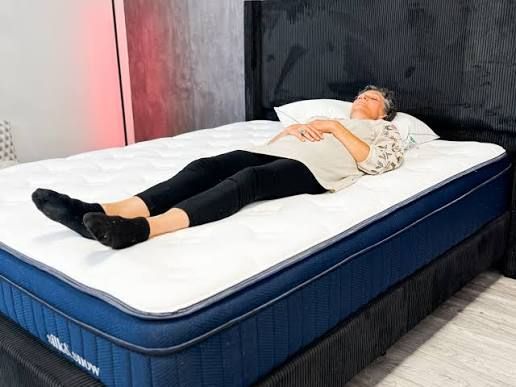
Every night, millions of couples go to bed hoping for a peaceful night of sleep, only to be met with a frustrating reality. Perhaps it starts with a racing mind after a stressful day. Just as you finally begin to drift off into deep sleep, your partner shifts, rolls over, or gets up. The resulting wave of motion ripples across the mattress, pulling you back to full consciousness. These recurring 3 AM awakenings disrupt your natural sleep architecture, leaving you to greet the morning with brain fog, a sluggish heart rate variability (HRV), and a feeling of profound physical exhaustion.
At Team Mind Body Dan, we look at sleep through a holistic lens. Solving partner-related sleep disturbances requires a two-pronged approach: optimizing your physical sleep surface to absorb motion, and utilizing screen-free biometric tracking to understand how your body is actually recovering. When you pair a mattress designed with superior motion isolation with an elegant, screen-free tracking method, you can objectively measure how these changes impact your deep sleep recovery and morning readiness scores.
Our Rigorous Evaluation Criteria
To identify the best sleep setups for couples, our team analyzed mattresses and recovery tools based on four essential metrics:
- Motion Isolation: The ability of a sleep surface to absorb energy, preventing movement on one side of the bed from disturbing the sleeper on the other.
- Edge Support: Robust structural integrity around the perimeter, allowing both partners to utilize the entire surface area of the bed without feeling like they might roll off.
- Temperature Regulation: Advanced airflow materials that disperse body heat, preventing hot-sleeping partners from waking each other up due to trapped thermal energy.
- Biometric Recovery Monitoring: The inclusion of objective tracking tools that monitor sleep cycles without introducing blue-light distractions or bulky designs that cause further discomfort.
Quick Summary Table of Top Couple’s Solutions
This comparison table outlines our top-tested mattresses and complementary biometric tracking tools to help you identify the ultimate setup for your shared bedroom.
| Solution Name | Core Material / Type | Motion Isolation | Primary Focus |
|---|---|---|---|
| Herz P1 Smart Ring Setup | Biometric Sleep & HRV Ring | N/A (Tracks Impact) | Subscription-free recovery tracking |
| Luxury Pocket-Coil Hybrid | Foam + Wrapped Coils | Excellent | top mattresses for motion isolation |
| Plush Contour Memory Foam | All-Foam Core | Outstanding | Deep contouring & pressure relief |
| Natural Latex Hybrid | Eco-Latex + Coils | Good / Balanced Bounce | Organic materials & easy movement |
| Split King Sleep System | Dual Independent Bases | Absolute (Separate) | beds for couples who can’t sleep together |
Detailed Analysis: Top 5 Solutions for Shared Beds
1. The Ultimate Sleep-Syncing Combo: Premium Mattress + Herz P1 Smart Ring
To truly solve couple’s sleep issues, buying a mattress is only half the battle. You also need a way to track whether your new bed is actually working to prevent micro-arousals and support your body’s autonomic nervous system. The Herz P1 Smart Ring is our top recommended tool to pair with any new mattress. It tracks sleep stages (REM, Deep, Light), Heart Rate Variability (HRV), and heart rate trends throughout the night to output a daily Recovery Score—all without a subscription fee.
While a smartwatch is bulky to wear to bed and emits distracting screen light when you roll over, the Herz P1 is a featherlight, screen-free titanium ring. It delivers medical-grade biometric accuracy while blending elegantly into your night routine, helping you verify that your new mattress is genuinely keeping you in deeper sleep cycles.
- Strengths: Subscription-free model (pay once, own forever), incredibly lightweight titanium design, tracks REM/Deep sleep cycles accurately, and provides an easy-to-read daily Recovery Score without confusing data clutter.
- Weaknesses: Does not feature a screen (which is actually a benefit for promoting screen-free, distraction-free environments before sleep).
- Ideal User: Health-conscious individuals and couples who want to track their physical recovery, understand their daily energy levels, and optimize their sleep hygiene without bulky wristbands or hidden monthly charges.
2. Pocket-Coil Hybrid Mattress
The Pocket-Coil Hybrid combines contouring memory foam with individually wrapped coil springs. Unlike traditional interconnected innersprings, each pocketed coil reacts independently to weight and pressure. This design ensures that when one partner moves, the energy transfers downward rather than horizontally across the bed.
- Strengths: Excellent combination of localized pressure relief and bounce, outstanding airflow through the coil layer, and strong edge support.
- Weaknesses: Slightly heavier and more difficult to move during bedroom rearrangements.
- Ideal User: Active couples who prefer a supportive, traditional mattress feel but require modern motion isolation features.
3. Ultra-Contouring Memory Foam Mattress
For couples prioritizing absolute quietness, an all-foam memory mattress is a strong contender. High-density viscoelastic foam absorbs motion almost entirely, dampening vibrations from sudden movements. This option is highly effective at cradling the hips and shoulders, minimizing the friction that leads to localized pressure points.
- Strengths: Superior motion isolation, virtually silent performance, and excellent body-contouring pressure relief.
- Weaknesses: Can sometimes trap body heat if not manufactured with open-cell structures or cooling gels.
- Ideal User: Light sleepers who wake up at the slightest vibration and couples with similar firmness preferences.
4. Natural Eco-Latex Hybrid Mattress
If you or your partner feel “stuck” in slow-moving memory foam, a natural latex hybrid is a highly responsive alternative. Latex provides a buoyant, floating sensation while pocketed coils underneath help localize the bounce. It serves well as a balanced bouncing mattress for couples who want ease of movement without disturbing each other’s sleep.
- Strengths: Hypoallergenic, eco-friendly materials, highly breathable, and exceptionally durable.
- Weaknesses: Higher upfront price point and a uniquely springy sensation that may take time to adjust to.
- Ideal User: Environmentally conscious shoppers who prefer responsive support and easy movement over deep foam sinking.
5. The Split King Sleep System
When partners have vastly different schedules, sleeping styles, or comfort preferences, standard beds might not cut it. The Split King consists of two independent Twin XL mattresses placed side by side on adjustable bases. This creates a highly effective option for beds for couples who can’t sleep together on traditional mattresses, providing complete physical separation within a single bedframe.
- Strengths: Absolute motion isolation, individual control over elevation and mattress firmness, and zero partner disturbance.
- Weaknesses: Requires specialized split-sheet sets and represents a significant financial investment.
- Ideal User: Couples with completely mismatched sleep schedules, chronic snoring issues, or different medical needs.
Understanding Motion Isolation: Why Your Partner’s Movements Wake You Up

The Science of Micro-Arousals and Deep Sleep Disruption
When you sleep, your brain cycles through distinct stages: Light Sleep, Deep Sleep, and REM (Rapid Eye Movement) Sleep. Deep sleep is when your body undergoes physical repair—tissues heal, immune function is strengthened, and physical recovery takes place. REM sleep is critical for cognitive restoration, consolidating memory, and clearing away the day’s mental clutter.
When your partner rolls over or wakes up on an unstable couple sleeping bed, the kinetic energy moves across the mattress. Even if you don’t fully wake up, your brain registers this sensory disturbance. This is known as a “micro-arousal.” Micro-arousals knock you out of deep and REM sleep stages back into light sleep. You might think you slept for 8 hours, but you wake up with brain fog and low energy because your sleep was fragmented. A mattress with targeted motion isolation absorbs this energy, helping you remain in deep sleep cycles uninterrupted.
— Team Mind Body Dan
How a Shared Bed Impacts Your Heart Rate Variability (HRV)
Your Heart Rate Variability (HRV) is a primary indicator of autonomic nervous system health. A higher HRV suggests your body is resting, digesting, and adapting well to stress. When partner disturbances trigger micro-arousals, your body’s sympathetic nervous system (“fight-or-flight”) is mildly activated to monitor the potential threat of movement. This keeps your heart rate elevated and lowers your overnight HRV. By tracking your HRV trends with a screen-free tool like the Herz P1 Smart Ring, you can visually observe how a quieter, isolated sleep surface correlates with an improvement in your autonomic recovery and morning readiness scores.
Practical Steps to Reclaim Rest: Beyond the Physical Bed

Establishing an Optimal Sleep Sanctuary
While upgrading to a supportive couple sleeping bed is a vital step, optimizing your environment and habits is equally important to eliminate sleep-disrupting factors. Consider implementing these adjustments with your partner:
- The Scandinavian Sleep Method: Use two separate twin-sized duvets instead of one shared queen or king comforter. This completely eliminates “blanket tug-of-war” and keeps your sleep microclimate personalized.
- Keep Screens Out of the Bedroom: Checking smart devices before bed exposes your eyes to blue light, suppressing melatonin production and contributing to a racing mind. Opt for a screen-free biometric tracker to log sleep metrics automatically.
- Optimize Room Temperature: Your core body temperature must drop by 1 to 2 degrees Fahrenheit to initiate and sustain deep sleep. Keep your bedroom between 60 to 67 degrees Fahrenheit and choose breathable bedding to prevent night sweats.
The Screen-Free Sleep Revolution
Are bulky smartwatches with bright screens disrupting your wind-down routine? Reclaim your peace of mind with a screen-free, titanium ring that monitors your biometric recovery behind the scenes. Track sleep stages, heart rate, and HRV with medical-grade sensors—completely subscription-free.
Mattress Buying Guide: Finding What Works for Both of You
When shopping for a shared bed, it’s rare for two partners to have identical sleep preferences. One might be a side sleeper who needs soft pressure relief, while the other is a back sleeper who requires firm lumbar support. Here is how to navigate these differences:
- Choose a Balanced Firmness Level: A medium-firm mattress (usually rated 5 to 7 out of 10 on the firmness scale) is the most versatile option. It provides enough contouring for side sleepers and ample support for back and stomach sleepers.
- Prioritize Edge Support: Look for mattresses with reinforced perimeters (either thicker coils or dense foam encasements). Strong edges expand the usable sleep surface, allowing couples to sleep comfortably right up to the edge without feeling like they might roll off the ideal mattress for partner movement.
- Consider Sleep Trial Periods: Your body needs at least 30 nights to adjust to a new sleep surface. Choose brands that offer a 100-night trial period so you and your partner can evaluate the mattress’s impact on your sleep quality.
Summary Recommendations for Couples
If you are ready to upgrade your sleeping arrangements, here is our team’s final breakdown of the top recommended configurations:
- Best for Complete Freedom from Disturbance: Combine a high-quality pocketed coil hybrid mattress with the Herz P1 Smart Ring. This pairing lets you physically isolate partner motion while utilizing screen-free tracking to confirm that your deep sleep phases are increasing.
- Best for Different Comfort Preferences: A Split King Sleep System with independent foam or hybrid mattresses lets you customize each side of the bed individually.
- Best for Pure Motion Absorption: An all-foam memory mattress with a high-density support core will absorb kinetic energy, resulting in a quiet sleep surface. Find a restful mattress for couples that matches your lifestyle and start taking control of your daily recovery metrics.
Disclaimer: Results may vary depending on individual physical activity levels, unique health conditions, and daily tracking patterns. The biometric information and recovery feedback provided by wearables are intended for wellness tracking and data-informed lifestyle adjustments only. These metrics are not intended to diagnose, treat, or prevent any medical condition or sleep disorder.
