

Is Memory Foam Toxic? What Science Says About Your Mattress Safety
Have you ever wondered: is memory foam toxic? While memory foam provides cradling comfort, its chemical emissions can silently trigger midnight awakenings and morning brain fog. At Team Mind Body Dan, we explore how tracking biometrics with tools like the screen-free Herz P1 Smart Ring helps verify if your mattress is degrading your recovery metrics.
Take Back Your Sleep.
Take Back Your Life.
- Fall asleep faster & sleep deeper
- Stop waking up in the middle of the night
- Wake up refreshed & full of energy
- Safety Certification: Modern memory foam mattresses are generally safe, provided they carry certifications like CertiPUR-US® or OEKO-TEX® to guarantee low chemical emissions.
- The Off-gassing Phenomenon: That distinct “new mattress smell” is caused by volatile organic compounds (VOCs) breaking down in the air. While rarely toxic in high doses, it can cause airway irritation and micro-arousals.
- Heat-trapping Issues: Synthetic foam often retains body heat, raising your core temperature and leading to a restless mind and interrupted deep sleep.
- Empirical Recovery Tracking: Utilizing advanced biometric indicators, such as nocturnal Heart Rate Variability (HRV) and sleep stage architecture, allows you to objectively evaluate if your bed-in-a-box is impairing your recovery.
Decoding the Truth: Is Memory Foam Toxic to Your Long-Term Health?
The Quick Answer
Yes and no. The short answer is that high-quality, certified memory foam mattresses are generally safe and non-toxic for most people. However, to choose the right product and avoid potential health hazards, you need to understand how manufacturing quality, certification standards, and volatile organic compounds (VOCs) influence sleep safety. Identifying if your sleep system is triggering low-level systemic stress is the first step to reclaiming your morning energy.
A Detailed Scientific Explanation of Off-Gassing
To understand if your sleep setup is compromised, we have to start by investigating whether is memory foam toxic for your long-term health. Traditional memory foam is a synthetic polyurethane material developed originally by NASA in the 1960s to improve seat safety and crash protection. To give the foam its characteristic “elastic” or body-conforming behavior, manufacturers add several petroleum-derived chemicals, plasticizers, and flame retardants.
When you unbox a new vacuum-sealed mattress, you are immediately confronted with “off-gassing.” This is the release of volatile organic compounds (VOCs) that have accumulated inside the sealed packaging. To evaluate if is memory foam toxic during this phase, we look closely at the specific chemicals involved. Some uncertified, older, or low-cost memory foams may emit traces of formaldehyde, benzene, and naphthalene. In enclosed spaces, breathing these chemicals can irritate the lining of your throat, nose, and lungs. While these emissions rarely reach acutely poisonous levels, they can impose an invisible tax on your respiratory system while you sleep, leading to fragmented rest and morning grogginess.
For individuals suffering from allergies, chemical sensitivities, or asthma, asking is memory foam toxic is highly practical. If your body is constantly fighting off mild chemical irritants, your sympathetic nervous system remains highly active. This subtle, chronic irritation prevents your body from shifting into the deep, restorative parasympathetic state required to fully repair muscle tissue and consolidate daily memories.
When to Use vs. When to Avoid Memory Foam
While synthetic foam has drawbacks, it is not a one-size-fits-all negative. Let’s break down who can benefit from memory foam and who should actively avoid it to protect their sleep health:
- Who Should Avoid It:
- Individuals with severe asthma, COPD, or hyper-sensitive airways who are highly reactive to airborne chemicals.
- Hot sleepers who naturally run a high body temperature (as standard polyurethane foams trap heat easily).
- Infants and young toddlers whose respiratory systems and brains are still in highly sensitive developmental windows.
- Who Can Safely Use It:
- Side sleepers who need targeted pressure relief on their shoulders and hips to prevent joint pain.
- Couples disrupted by motion transfer, as foam excels at absorbing energy.
- Anyone who buys certified, low-VOC brands and takes the proper precautions to thoroughly ventilate the mattress before its first use.
Our Team’s Suggested Sleep Optimization Solutions
If you love the body-conforming feel of foam but want to eliminate chemical concerns, we recommend transitioning to certified natural latex, plant-based memory foams, or high-end hybrid mattresses. These alternatives replace harsh petrochemicals with organic materials while retaining excellent body support.
However, a new mattress is a significant financial investment. Before rushing out to replace your current bed, you can gather objective data on how your body is actually recovering. We suggest implementing screen-free biometric tracking to see how your sleep setup affects your physical recovery. Many traditional smartwatches are bulky, distracting to wear to bed, and require daily charging—which often interrupts your tracking consistency.
To solve these operational issues, we highly recommend the Herz P1 Smart Ring. This ultra-lightweight, screen-free titanium ring monitors your sleep stages (REM, Deep, Light) and your Heart Rate Variability (HRV) throughout the night. By translating complex bio-algorithms into an intuitive daily Recovery Score, it tells you exactly how restored your nervous system is. Best of all, it has no monthly subscription fees, operates without a distracting screen, and features a long battery life, making it the perfect, elegant companion for optimizing your sleep environment.
Section FAQ: Immediate Mattress Concerns
Q: How long should I let a new memory foam mattress air out?
A: We recommend letting any new mattress ventilate in a well-ventilated room with open windows for at least 48 to 72 hours before sleeping on it. This allows the majority of VOC off-gassing to dissipate safely.
Q: Can off-gassing chemicals cause long-term chronic illness?
A: For certified mattresses (like CertiPUR-US®), the chemical emissions are far below dangerous thresholds. However, uncertified foams may contain trace heavy metals or forbidden phthalates, which is why verifying certifications is so important when evaluating if is memory foam toxic under normal household conditions.
Q: Why does my mattress smell worse when the room gets warm?
A: Chemical reactions accelerate with heat. When evaluating if is memory foam toxic when exposed to high temperatures, research shows that ambient warmth and direct body heat can increase the rate of VOC off-gassing, emphasizing the need for temperature-regulated sleep rooms.
What Is Memory Foam Made Of, and Is It Dangerous?
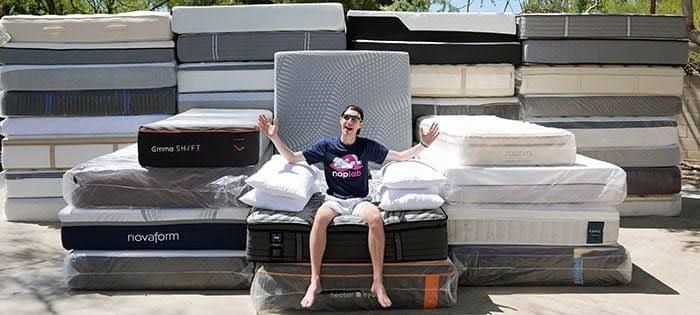
To understand the health implications of your bed, we must demystify whats memory foam made of before purchasing. Memory foam is manufactured through a chemical process that combines polyols (organic compounds containing multiple hydroxyl groups) with diisocyanates and water or blowing agents. This reaction creates a highly porous, open-cell structure that compresses under weight and slowly recovers its shape when pressure is removed.
So, the question shifts from composition to actual health risk: is memory foam dangerous for daily sleep? Under normal conditions, certified memory foam is not inherently hazardous. However, the denseness of polyurethane foam presents a physical health drawback: heat retention.
Our body’s natural circadian rhythm relies heavily on thermal cues. To fall asleep and transition into deep sleep, your core body temperature must drop by 1 to 2 degrees Fahrenheit. Traditional memory foam acts like an insulator, trapping your body heat and reflecting it back at you. This trapped heat forces your heart rate to remain elevated as your body works to cool itself down, leading to restless tossing and turning, night sweats, and frustrating 3 AM awakenings.
When your sleeping surface traps heat, your heart rate increases and your Heart Rate Variability (HRV) decreases. This biological stress response suppresses deep sleep and REM cycles, leaving you with intense brain fog and fatigue, even if you spent eight hours in bed.
If your body is chronically struggling to stay cool on a dense foam mattress, your nightly recovery metrics will reflect that strain. Instead of guessing why you feel perpetually exhausted, tracking your sleep architecture can show you the exact physical impact of your bed. The Herz P1 Smart Ring tracks these physiological changes with medical-grade precision. Wearing this lightweight titanium ring allows you to observe how your nocturnal heart rate and HRV fluctuate in response to different room temperatures or bedding changes, helping you optimize your bedroom environment with real data.
Understanding the chemistry behind your mattress is important, but checking if your body is actively recovering is what truly matters. To learn more about whether is memory foam toxic over decades of nightly use, we must evaluate the degradation of the foam itself. As polyurethane breaks down over years of mechanical compression and sweat exposure, it crumbles into micro-particles that can accumulate in bedroom dust, highlighting why replacing an aging, degrading mattress is vital for maintaining clean indoor air quality.
Safe Alternatives & Actionable Steps to Protect Your Sleep Sanctuary
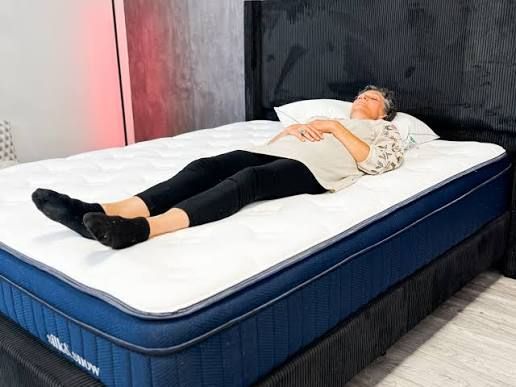
If you want to determine if sleeping on a synthetic bed is memory foam dangerous for daily restorative rest, the safest approach is to look for reputable safety certifications or explore natural alternatives. When shopping for a new mattress, always look for these labels:
- CertiPUR-US®: Guarantees the foam is made without ozone depleters, harmful flame retardants (like PBDEs), heavy metals, or phthalates, and has extremely low VOC emissions.
- OEKO-TEX® Standard 100: Ensures every component of the mattress, including threads and zippers, is completely free from harmful levels of toxic chemicals.
- GOLS (Global Organic Latex Standard): The gold standard for organic latex, ensuring the material is harvested from sustainable, pesticide-free rubber trees.
To avoid the potential downsides of synthetic foams, consider upgrading to natural organic latex, wool, or high-performance pocket-coil hybrid mattresses. These materials offer outstanding pressure relief, natural flame resistance, and exceptional breathability, allowing your body to naturally cool down and remain in deep, restorative sleep cycles longer.
Optimize Your Recovery With Screen-Free Simplicity
Reclaiming your sleep quality requires tracking how your body reacts to environmental changes. The Herz P1 Smart Ring provides deep sleep insights and tracks your nightly HRV trends—all without hidden subscription fees, bulky wrist designs, or blue-light emitting screens near your bed.
Whether you decide to air out your current memory foam mattress, buy a protective allergen cover, or invest in a new certified organic bed, the most effective way to measure success is by tracking your body’s physical response. By monitoring sleep stages and heart rate variability, you can see if your lifestyle changes are actually working. Our mission at Mind Body Dan is to simplify this health data, making it easy and actionable for you to reclaim your energy and sleep peacefully every single night.
To explore the chemical breakdown and find out whats memory foam made of in modern bed-in-a-box brands, always check the technical safety sheets. Ultimately, resolving whether is memory foam dangerous for your home comes down to choosing certified products, maintaining good room ventilation, and tracking your body’s sleep and recovery metrics to ensure you wake up feeling fully refreshed and energized.
Disclaimer: Results may vary depending on individual physical activity levels, unique health conditions, and daily tracking patterns. The content provided in this article is for informational and educational purposes only and is not intended to diagnose, treat, cure, or prevent any medical condition or sleep disorder. Always consult with a qualified healthcare professional before making significant changes to your physical sleep setup or starting a new biometric tracking regimen.
