

Why Do You Wake Up Feeling Exhausted? The Science of Interrupted Sleep Explained
Waking up at 3 AM with a racing mind is exhausting. If you struggle with non-restorative sleep, you might be experiencing fragmented sleep. At Team Mind Body Dan, we explore how sleep disruption impacts your recovery, and how tracking your biometric trends with a screen-free Herz P1 Smart Ring helps reclaim your energy.
Take Back Your Sleep.
Take Back Your Life.
- Fall asleep faster & sleep deeper
- Stop waking up in the middle of the night
- Wake up refreshed & full of energy
- Quality Over Quantity: Spending 8 hours in bed means very little if you suffer from fragmented sleep.
- The Biometric Blueprint: Waking up in the middle of the night directly impacts your Heart Rate Variability (HRV) and limits Deep and REM sleep stages.
- The Smart Watch Dilemma: Bulky wearables with glowing screens often worsen sleep disruptions and require frustrating daily charging.
- A Screen-Free Alternative: Monitoring your recovery trends using a lightweight titanium smart ring can provide medical-grade sleep insights without distraction.
What is Interrupted Sleep and Why Does It Drain Your Energy?

Yes, chronic sleep disruptions severely damage your overall physiological recovery, even if you spend a solid eight hours in bed. The short answer is that waking up in the middle of the night breaks up your essential sleep cycles, directly leading to next-day brain fog, low heart rate variability (HRV), and emotional exhaustion. However, to choose the right lifestyle adjustments or tracking tools, you need to understand how these sleep disturbances impact your cardiovascular recovery and autonomic nervous system.
For many of us, the night is not a peaceful bridge from one day to the next. Instead, it is a series of frustrating events. You fall asleep, only to wake up at 3 AM with a racing mind. Perhaps you struggle to fall back asleep, watching the hours tick away while worrying about how tired you will feel tomorrow. This experience of interrupted sleep—scientifically termed sleep fragmentation—prevents your brain and body from progressing through the critical sleep stages required for true recovery.
When you sleep, your body moves through repeated 90-to-120-minute cycles consisting of light sleep, deep sleep, and Rapid Eye Movement (REM) sleep. Each stage serves a specific purpose. Deep sleep is when your muscles repair, your tissues grow, and your immune system strengthens. REM sleep is when your brain processes emotions, consolidates memories, and clears out metabolic waste. If you experience frequent sleep disruption, your body is forced to restart these cycles constantly. This means you may spend almost your entire night in light sleep, entirely missing out on the restorative phases. The result? You wake up feeling just as exhausted as when your head hit the pillow.
When to Track Your Sleep vs. When to Seek Medical Guidance
Understanding your sleep quality is the first step toward improving it. However, it is important to distinguish between daily lifestyle recovery tracking and clinical sleep disorders:
- When to use lifestyle tracking: If you feel generally healthy but occasionally suffer from non-restorative sleep, brain fog, or stress-induced wakefulness. Tracking your recovery trends helps you see how caffeine, late-night screens, or alcohol contribute to your interrupted sleep patterns.
- When to consult a specialist: If you experience chronic, loud snoring, wake up gasping for air, or experience persistent insomnia that does not improve with lifestyle adjustments. These can be indicators of underlying physiological conditions that require clinical evaluation rather than simple tracking.
For those looking to monitor and optimize their daily wellness, the key is having access to clear, simple, and actionable data. This is where the Herz P1 Smart Ring comes in. Rather than overwhelming you with complicated medical graphs, this premium titanium ring translates your overnight biometrics—such as heart rate, HRV, and sleep stages—into a simple Daily Recovery Score. This screen-free wearable allows you to monitor your health trends without the bright, sleep-disrupting screen of a traditional smartwatch.
Frequently Asked Questions About Waking Up in the Night
Q: Why do I wake up at the exact same time every night?
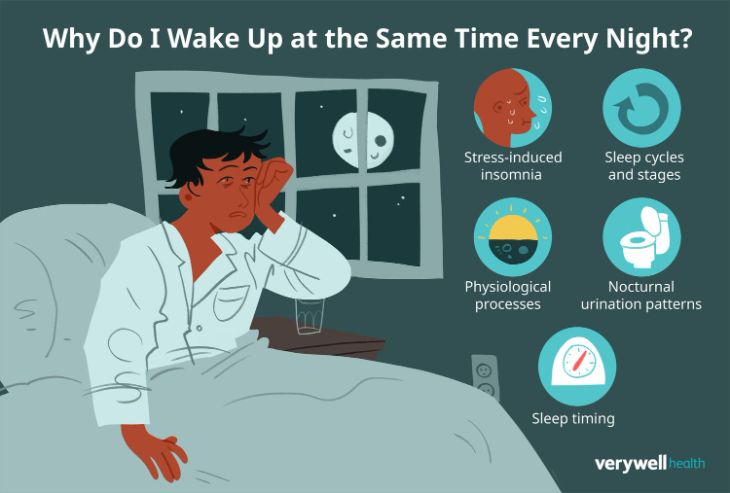
A: Waking up around 3 AM is incredibly common and often aligns with natural transitions between sleep cycles. During these transitions, you are in a lighter state of sleep. If you are experiencing daily stress, elevated cortisol levels can cause a full, conscious awakening with a racing mind instead of a smooth transition to the next cycle.
Q: Can I catch up on lost sleep by sleeping in on weekends?
A: While extra rest can temporarily reduce sleep pressure, it cannot completely reverse the cognitive and physical impacts of chronic fragmented sleep. Maintaining a consistent sleep schedule is far more beneficial for your circadian rhythm than sleeping in.
Q: How does a smart ring track my sleep stages?
A: Smart rings utilize advanced optical sensors on the underside of your finger, where blood vessels are close to the surface. By monitoring subtle changes in your heart rate, pulse wave amplitude, and body movement, biometric algorithms can accurately estimate how much time you spend in light, deep, and REM sleep.
The Biometric Impact: How Sleep Fragmentation Lowers Your HRV and Recovery

When you suffer from interrupted sleep, the damage extends far beyond a simple feeling of tiredness. Inside your cardiovascular system, a subtle struggle is taking place. Your autonomic nervous system (ANS) is divided into two main branches: the sympathetic branch (the “fight-or-flight” system) and the parasympathetic branch (the “rest-and-digest” system). During deep, continuous sleep, your parasympathetic nervous system should take full control, allowing your heart rate to slow down and your Heart Rate Variability (HRV) to rise.
HRV is the variation in time between consecutive heartbeats. A high HRV indicates that your body is highly adaptable, relaxed, and recovered. Conversely, a low HRV suggests that your body is under stress, stuck in a state of sympathetic dominance. When you experience sleep disruption, your body is repeatedly jolted out of its relaxed state, causing spikes in cortisol (the stress hormone) and adrenaline. This sudden shift suppresses your parasympathetic activity, leading to a noticeable drop in your overnight HRV.
How Interrupted Sleep Damages Your Biometrics:
Each time your sleep is interrupted, your heart rate spikes and your heart rate variability (HRV) plummets. Over time, this chronic stress-state prevents your cardiovascular system from recovering, leading to elevated daytime stress and reduced immune function.
By monitoring these fluctuations, we can gain a clear picture of our physical resilience. For instance, if you notice your HRV is unusually low and your resting heart rate is elevated, it is a clear indicator that your body did not recover overnight—likely due to hidden sleep fragmentation. Rather than guessing why you feel sluggish, tracking these cardiovascular trends provides objective proof of how your body is responding to its environment.
Unfortunately, traditional tracking methods often introduce their own set of problems. Many individuals try to track their sleep using heavy, bulky smartwatches. Not only are these devices uncomfortable to wear to bed, but they also feature bright screens that can light up with notifications in the middle of the night, worsening your interrupted sleep. Furthermore, having to charge a smartwatch daily means it often ends up on the charger overnight, exactly when you need it most.
Breaking the Cycle: Practical Strategies and Screen-Free Tracking
To break free from the cycle of fragmented sleep, we must address both our pre-bedtime habits and how we monitor our recovery. The journey to restorative, uninterrupted rest starts with basic sleep hygiene. Establishing a consistent sleep schedule, keeping your bedroom cool, and avoiding large meals or alcohol close to bedtime are foundational steps.
Perhaps the most critical lifestyle shift is removing screens from your evening routine. The blue light emitted by smartphones, tablets, and televisions mimics daylight, suppressing the natural production of melatonin, the hormone that signals to your body that it is time to sleep. Moreover, checking social media or reading work emails before bed keeps your mind highly stimulated, paving the way for those dreaded 3 AM awakenings and stressful sleep fragmentation episodes.
But how do you track your sleep quality without relying on a screen-heavy device? This is where the beauty of a screen-free wearable becomes clear. Instead of checking a glowing screen on your wrist, you can wear an elegant, unobtrusive ring that silently gathers data while you sleep, syncing it to your phone only when you choose to look at it the next morning.
The Screen-Free, Subscription-Free Sleep Solution
The Herz P1 Smart Ring offers a premium, titanium design that fits comfortably on your finger. Weighing almost nothing and requiring no bright, distracting screens, it tracks your sleep stages, HRV, and heart rate with medical-grade precision. Best of all, it operates on a subscription-free model—allowing you to buy once and own your data forever.
By transitioning to a screen-free monitoring method, you eliminate the cognitive load of constantly checking your notifications while resting. You can rest easy knowing that your recovery trends are being accurately monitored without any hidden subscription fees or monthly costs. Reclaiming your mornings begins with understanding your nights, and with the right combination of mindful habits and elegant tracking tools, you can finally put an end to interrupted sleep and wake up feeling truly refreshed.
Disclaimer: Results may vary depending on individual physical activity levels, unique health conditions, and daily tracking patterns. This article is for informational purposes only and does not constitute medical advice. For any concerns regarding chronic sleep conditions or potential sleep disorders, please consult with a qualified medical professional.
