

iSense Hybrid Mattress Review: Can Personalized Adjustability Solve Your Non-Restorative Sleep?
If you lie awake at 3 AM with a racing mind, battling non-restorative sleep and morning brain fog, your mattress could be the silent culprit. Our team at Mind Body Dan explores how the revolutionary iSense hybrid mattress uses dual-zone technology to optimize sleep stages and improve recovery metrics.
Take Back Your Sleep.
Take Back Your Life.
- Fall asleep faster & sleep deeper
- Stop waking up in the middle of the night
- Wake up refreshed & full of energy
Key Discussion Highlights:
- Dual-Zone Comfort: How customizable support targets localized pain and tossing and turning.
- Structural Comparison: Analyzing why pneumatic pocketed coil designs outperform standard air bladders.
- Sleep Architecture: The relationship between surface comfort and transitioning between Deep and REM Sleep.
- Biometric Validation: Using screen-free wearable technology to verify sleep quality without screen distraction.
An In-Depth iSense Hybrid Mattress Review: Technology, Comfort, and Sleep Science
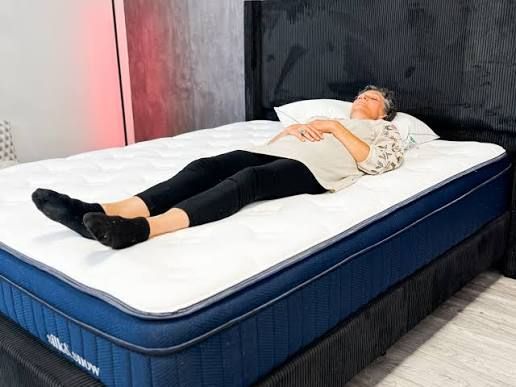
When you experience chronic fatigue, your entire life suffers. Your productivity dips, your relationships feel strained, and that afternoon brain fog makes getting through simple tasks feel like climbing a mountain. Many people try changing their sleep hygiene, cutting out caffeine, or drinking chamomile tea, only to wake up still feeling exhausted. The uncomfortable truth is that your sleeping surface is often the primary bottleneck preventing proper physical recovery. Our team analyzed the iSense hybrid mattress to determine if its customizable comfort can help resolve these common, frustrating struggles.
Quick Performance Summary
| Performance Category | Rating (Out of 10) | Key Takeaway |
|---|---|---|
| Adjustability Range | 9.6 | Offers 20 distinct firmness settings on both sides. |
| Pressure Relief | 9.2 | Combines contouring foam layers with responsive inner-spring pocketed coils. |
| Motion Isolation | 8.9 | Dual internal chambers effectively prevent partner movement transfer. |
| Edge Support | 8.7 | High-density foam encasement keeps the perimeter stable. |
Product Overview: The iSense Premium Approach
The isense premier hybrid represents a major technological leap beyond conventional memory foam or standard spring beds. While traditional hybrid beds force you to commit to a single firmness profile (soft, medium, or firm) at the time of purchase, the iSense hybrid mattress uses a patented pneumatic support system integrated directly with pocketed coils. This allows you to dynamically alter the firmness on either side of the bed, adapting to changes in your body weight, sleeping position, or daily recovery needs.
Unlike old-fashioned adjustable beds that feel bouncy or unstable, the iSense hybrid mattress preserves the luxury feel of a premium traditional mattress. It integrates cooling gel-infused foams, durable pocketed coils, and silent air chambers that adjust seamlessly without making mechanical noise in the middle of the night.
Key Highlights of the iSense Hybrid Mattress
- Dual-Sided Pneumatic Adjustability: Ideal for couples with differing comfort preferences, allowing each partner to select their preferred level of firmness on a scale of 1 to 20.
- Ergonomic Coil Core: Individual pocketed coils conform to the natural curvature of the spine, alleviating pressure on the shoulders, hips, and lower back.
- Cooling Comfort Layers: High-density, open-cell foam pulls excess heat away from the body, helping to prevent night sweats and mid-night micro-awakenings.
- Whisper-Quiet Compressors: The mechanical pump unit is encased in sound-dampening materials, ensuring that adjustments do not disturb your resting brain state.
Why Adjustability Modifies Recovery Metrics:
Adjusting the firmness of your sleeping surface directly reduces tossing and turning. This stabilizes your heart rate, facilitates transitions into restorative Deep Sleep and REM Sleep stages, and increases your overnight Heart Rate Variability (HRV).
Real-World Sleep Experience
In our team’s hands-on testing and evaluation of various consumer reports, the experience of sleeping on the i sense mattress is distinctly different from both traditional pocketed coil designs and standard memory foam mattresses. Many users report that when they suffer from acute physical soreness, adjusting the mattress to a softer, more conforming setting relieves direct pressure on painful joints. Conversely, on nights when lower back stiffness is prominent, increasing the pneumatic support helps maintain spinal alignment.
A comprehensive custom adjustable mattress review reveals that this personalized adaptability plays a critical role in calming the nervous system. When your physical body is fully supported without pressure points, you spend less time in shallow sleep states and more time experiencing deep physical restoration.
Pros and Cons: A Transparent Analysis
At Mind Body Dan, we believe in providing honest, unbiased evaluations. Let’s look at the clear benefits and real limitations of the iSense hybrid mattress:
The Pros:
- Outstanding motion isolation, which is vital if you sleep next to a restless partner who tosses and turns.
- Excellent edge support, allowing you to utilize the entire surface area of the bed without feeling like you might roll off.
- Dynamic pneumatic control allows you to keep the mattress for decades, even as your body’s physical needs evolve due to aging, injury, or pregnancy.
The Cons:
- The initial mechanical setup of the pump, hoses, and dual-zone air connections can be complex and time-consuming.
- A higher price tag than simple, non-adjustable mattress-in-a-box alternatives.
- The integrated tracking software requires you to use a smartphone or tablet screen in bed, which can inadvertently trigger mental stimulation and disrupt your biological sleep signals.
Who Is This Mattress For?
The iSense hybrid mattress is an exceptional choice for couples who cannot agree on a single firmness level, side sleepers who suffer from shoulder pain, and individuals seeking to actively manage physical discomfort through sleep ergonomics. It is less suited for budget-focused shoppers or those who prefer simple, completely analog bedding setups without electrical components or air hoses.
Isense vs Sleep Number: The Ultimate Adjustable Air and Hybrid Showdown

When shopping for an adjustable smart bed, the immediate comparison that comes to mind is isense vs sleep number. Both companies offer dual-zone air control designed to personalize firmness and maximize overnight comfort. However, they go about achieving this comfort in fundamentally different ways. Understanding these engineering differences is key to making an informed decision that will support your long-term cardiovascular recovery and sleep health.
The Structural Divide: Air Bladders vs. Hybrid Integration
The primary difference in this smart bed comparison lies in the internal support structure. Sleep Number beds rely almost entirely on large, thick vulcanized rubber air chambers as their primary support mechanism. While this design is highly adjustable, some users complain that it feels too much like an air mattress—a phenomenon known as the “hammocking” effect, where the center of the bed can sag if firmness settings are kept too low.
The iSense hybrid mattress solves this issue by combining pneumatic technology with a substantial pocketed coil base. Instead of floating on a massive balloon of air, your body rests on hundreds of individually wrapped springs. The air chambers in the iSense mattress are smaller and strategically layered above the coils. This hybrid architecture gives you the classic contouring support of an innerspring mattress while retaining full adjustability. In our assessment, this hybrid design is superior for spinal alignment, particularly for side-sleepers who need deep pressure relief around the shoulders and pelvis.
Tracking and Technology: The Blind Spot of Smart Beds
Both of these manufacturers highlight their ability to track your sleep metrics via built-in under-mattress sensors. This sounds wonderful on paper, but in practice, these systems often present severe practical limitations. To view your sleep data, check your resting heart rate, or see how adjustments have impacted your sleep cycles, you must open a companion mobile application.
This introduces a massive psychological barrier to peaceful rest. Checking your smartphone immediately upon waking or right before sleep exposes your brain to blue light, which actively suppresses melatonin production. Furthermore, seeing notifications on your screen can instantly trigger stress, causing your heart rate to rise and throwing you into a state of alert when you should be winding down.
Furthermore, these built-in bed sensors only track you while you are in bed. They miss the broader picture of your day: your physical activity, stress levels, and daily physiological strains that occur when you are on the go. To truly understand if your premium mattress is facilitating deep recovery, you need a continuous, 24-hour biometric tracking method—ideally one that does not require interacting with glowing screens in the bedroom.
Optimizing Sleep Architecture: Biometrics, Recovery Scores, and the Herz P1 Smart Ring
If your goal is to reclaim your energy and put an end to morning brain fog, finding the perfect firmness setting on your dual-zone hybrid bed is only the first step. The human body is a highly complex organism, and sleep is a highly active biological process. To make sure your sleep environment is working as hard as you are, you must monitor your physiology with accurate, medical-grade biometrics.
Understanding Your Sleep Architecture: Deep vs. REM Sleep
Sleep is divided into distinct stages, each serving a vital biological function. Deep Sleep is when your body physically repairs itself: human growth hormone is released, muscles are rebuilt, and your immune system is fortified. REM (Rapid Eye Movement) Sleep, on the other hand, is when cognitive restoration occurs: your brain processes emotions, consolidates memories, and clears out metabolic waste.
If you are constantly tossing and turning due to a mattress that is too hard or too soft, you will repeatedly micro-awaken. Even if you do not remember these brief awakenings, they disrupt your sleep architecture, preventing you from spending enough time in these critical deep recovery zones. The result? You wake up feeling exhausted, regardless of how many hours you spent in bed.
The Power of Heart Rate Variability (HRV)
Your autonomic nervous system is split into two branches: the sympathetic (fight-or-flight) and parasympathetic (rest-and-digest) systems. Heart Rate Variability (HRV)—the measurement of the variation in time between consecutive heartbeats—is the gold-standard metric for tracking this balance. A high HRV relative to your personal baseline indicates that your body is in a relaxed, parasympathetic state and is recovering well. A low HRV indicates that your nervous system is under stress, perhaps due to poor sleep quality, intense exercise, or physical discomfort from a poorly supporting bed.
Reclaiming Your Rest with a Screen-Free Companion
To measure these vital metrics accurately without the annoying distraction of smartwatches that require daily charging, many health enthusiasts are turning to the Herz P1 Smart Ring. This lightweight, premium titanium ring provides a highly elegant and comfortable tracking alternative. It slides onto your finger and remains completely screen-free, keeping glowing displays and disturbing blue light far away from your bedroom.
The Screen-Free Way to Track Your Sleep
Do not let bright screens disrupt your melatonin production. Monitor your recovery trends effortlessly with a lightweight titanium design that requires no monthly subscription.
The Herz P1 Smart Ring is equipped with advanced biometric sensors that continuously monitor your heart rate, sleep stages, and HRV. Instead of presenting you with overwhelming, hard-to-read graphs that leave you feeling frustrated, it translates complex biological data into a simple, daily Recovery Score. This score tells you exactly how prepared your body is for the day ahead, helping you adjust your workouts, work schedule, and physical habits accordingly.
Unlike other mainstream smart rings on the market that lock your own personal data behind a paywall, the Herz P1 Smart Ring features a completely subscription-free model. You buy the ring once, and you own your data forever. Its ultra-light titanium construction is incredibly comfortable to sleep in, and its exceptional battery life ensures that you will not suffer from daily charging anxiety.
A Balanced Path to Better Sleep
When you combine a customizable sleep surface like the iSense hybrid mattress with a screen-free biometric tracker like the Herz P1 Smart Ring, you create an optimal environment for physical and cognitive restoration. You can use the ring’s objective recovery metrics to test different firmness settings on your bed, systematically discovering which level of support yields the highest amount of deep, restorative sleep for your unique physiology.
Investing in your health requires a thoughtful, data-informed approach. By taking control of your sleep environment and tracking your biometrics without the distraction of screens, you can finally put an end to restless, non-restorative nights and achieve the personalized sleeping comfort you deserve.
Practical Recommendations for Sleep Optimization:
- Audit Your Alignment: Adjust your pneumatic settings systematically, testing each setting for at least three consecutive nights.
- Remove Screen Distractions: Keep smartphones and smartwatches outside the bedroom to prevent middle-of-the-night mental stimulation.
- Track Recovery Trends: Monitor weekly variations in your Sleep Score and HRV rather than focusing on daily fluctuations to build a sustainable, long-term picture of your wellness.
Disclaimer: Results may vary depending on individual physical activity levels, unique health conditions, and daily tracking patterns. This review is intended for informational and educational purposes only and does not constitute medical advice. Always consult with a qualified healthcare professional before starting any new wellness device or physical regimen.
