

5 Best At Home Sleep Study Options for Restorative Sleep Insights
Are you tired of waking up at 3 AM with a racing mind, feeling completely drained? Disrupted sleep stages and low heart rate variability (HRV) often signal underlying fatigue. To understand your patterns, an at home sleep study or a continuous tracker like the Herz P1 Smart Ring can reveal vital, screen-free insights to reclaim your daily recovery.
Take Back Your Sleep.
Take Back Your Life.
- Fall asleep faster & sleep deeper
- Stop waking up in the middle of the night
- Wake up refreshed & full of energy
- Discover the difference between clinical diagnostic tools and continuous wearable wellness trackers.
- Learn how to choose the right at home sleep study methods depending on your unique physiological goals.
- Explore how cutting-edge, screen-free wearables like the Herz P1 Smart Ring monitor deep sleep, REM stages, and heart rate variability without subscription fatigue.
- Understand the major benefits and operational disadvantages of clinical versus lifestyle sleep assessment options.
Why Track Your Sleep? Understanding At Home Sleep Study Methods

Have you ever spent your night tossing and turning, watching the minutes tick away on your bedside clock, only to wake up feeling like you barely slept at all? That frustrating phenomenon of non-restorative sleep, paired with the afternoon brain fog that leaves you reaching for a third cup of coffee, is incredibly common. Many individuals struggle with 3 AM awakenings and a racing mind, leaving them exhausted yet unable to pinpoint why their recovery is failing. Historically, the only way to find answers was through a cold, clinical, and uncomfortable overnight laboratory study.
Today, the landscape of holistic wellness has evolved. With the rise of home health tests and accessible biometric tracking, you can monitor your body’s nightly behavior right from the comfort of your own bed. Initiating an at home sleep study has become the preferred first step for people seeking to understand their sleep architecture, respiratory changes, and nervous system recovery without sleeping in a laboratory setting.
When we investigate how our bodies heal overnight, we look closely at key metrics like Sleep Stages (REM, Deep, and Light Sleep) and Heart Rate Variability (HRV). Deep sleep is the physically restorative stage where muscles repair and tissues grow, while REM sleep supports cognitive processing, memory, and emotional regulation. HRV, on the other hand, measures the variation in time between consecutive heartbeats, serving as a direct window into your autonomic nervous system. A higher HRV baseline generally points to a well-rested, highly resilient body, while a lower HRV suggests persistent physiological or mental strain.
How We Select and Evaluate Sleep Tracking Tools
To help you navigate the sea of options available for at home sleep studies and daily physiological monitoring, Team Mind Body Dan established a rigorous evaluation framework. We assess sleep tracking options based on five core criteria:
- Accuracy and Sensor Quality: The capability of optical and biometric sensors to consistently capture heart rate, respiratory rates, oxygen saturation (SpO2), and movement patterns.
- Comfort and Ergonomics: The physical design of the device. Bulky wearables can act as a secondary sleep disruptor, counteracting the goal of the tracking itself.
- Battery Longevity: The convenience of the charging cycle. Devices requiring daily charging often lead to missed data gaps.
- Data Actionability: How easily complex raw biometric algorithms are translated into a simple, highly intuitive Daily Recovery Score or Sleep Quality Index.
- Financial Transparency: The avoidance of sneaky monthly subscription paywalls, prioritizing systems where the user owns their physical device and historical data forever.
Quick Comparison: At-Home Sleep Monitoring Options
| Device / Option Type | Core Metrics Tracked | Best Feature | Pricing Model |
|---|---|---|---|
| Clinical Type III PMD | Airflow, Effort, SpO2, Heart Rate | Identifies severe apnea episodes | One-time clinical fee (high) |
| Herz P1 Smart Ring | Sleep Stages (REM, Deep), HRV, SpO2, Recovery Score | Screen-free, 100% subscription-free, titanium comfort | No subscription fees |
| Traditional Smartwatch | Steps, Basic Sleep, Screen alerts | Comprehensive fitness apps | Device cost + frequent upgrades |
| Disposable Patch Sensors | Pulse rate, SpO2, Sleep hours | Ultra-light for single-use diagnostic | Recurring cost per night tested |
Detailed Product and System Reviews
To help you establish which tool aligns with your unique health routine, let’s explore the leading sleep tracking options and diagnostic methodologies available today.
1. Clinical Type III At-Home Portable Monitor
These clinical-grade devices are designed specifically for diagnostic pathways, particularly when medical providers suspect obstructive airway concerns. These setups utilize complex at home sleep study equipment, featuring nasal cannulas, respiratory effort belts across the chest, and wired finger pulse oximeters to evaluate physical gas exchange.
Strengths: Highly precise for evaluating oxygen saturation drops and respiratory disruptions; accepted widely by clinical health professionals.
Weaknesses: Extremely uncomfortable; wires easily tangle during tossing and turning; provides only a single night of diagnostic data rather than continuous lifestyle trends.
Ideal User: Individuals who require a medically requested, clinical assessment to confirm specific airway issues.
2. Herz P1 Smart Ring
For those searching for a beautiful, screen-free, and profoundly comfortable way to monitor overnight recovery over months and years, the Herz P1 Smart Ring is a standout solution. Forged from premium, ultra-lightweight titanium, this ring rests gently on the finger, completely bypassing the bulky “watch fatigue” that causes many to abandon sleep tracking altogether.
The ring’s medical-grade optical sensors rest on the underside of your finger, where capillary blood flow is closest to the surface, delivering superior biometric tracking accuracy compared to wrist-worn devices. By recording heart rate variability, body temperature variations, blood oxygen patterns, and movement, the ring maps your exact Sleep Stages (REM, Deep, and Light Sleep) throughout the night. It then condenses these complex data streams into an easy-to-read, intuitive Daily Recovery Score—completely devoid of confusing, overwhelming mathematical graphs.
Perhaps its most patient-friendly feature is the completely subscription-free model. In an industry flooded with hidden monthly paywalls, the Herz P1 Smart Ring lets you buy once and own your physiological insights forever. Furthermore, the absence of an illuminated screen protects your brain from disruptive blue light exposure during your pre-bed wind-down, supporting optimal melatonin production naturally.
Strengths: Exceptionally lightweight titanium design; screen-free for a peaceful, distraction-free bedroom environment; tracks deep biometrics like HRV and Sleep Stages; completely subscription-free; outstanding battery life.
Weaknesses: Does not feature an active screen for real-time text message notifications (by design, to promote mental decompression); requires a sizing kit for the perfect snug finger fit.
Ideal User: Wellness enthusiasts, busy professionals, and light sleepers looking to easily optimize their sleep hygiene, track long-term recovery trends, and avoid monthly subscription costs with a premium, screen-free, and elegant daily tracker.
3. Traditional Screen-Equipped Smartwatch
These wrist-bound screen devices offer robust multipurpose support, handling everything from real-time exercise routing to answering calls. While capable of basic movement-based sleep tracking, they are inherently designed as active, day-oriented companions.
Strengths: Excellent for real-time workout metrics, on-the-fly step counts, and active lifestyle coordination.
Weaknesses: Bulkiness and weight often wake light sleepers; screens frequently illuminate with nocturnal notifications; require near-daily charging, creating gaps in vital nighttime trends.
Ideal User: Fitness-minded individuals who do not mind sleeping in a larger wrist device and prefer real-time visual alerts during workouts.
Your Ultimate Buying Guide
When selecting your path toward better sleep, think about what you actually need. If your goal is strictly clinical evaluation for airway blockages, consulting with a physician about an official, clinical at home sleep study is the correct choice. However, if you are struggling with daily fatigue, a racing mind, or poor recovery, and you want to understand how your lifestyle choices (like late meals or evening screen use) affect your nervous system, a continuous tracker is far more valuable.
For daily recovery tracking, opt for comfort and a lack of distractions. Wristwatches often run out of battery during the night, and their blue-light screens can keep your brain awake. A titanium, screen-free smart ring like the Herz P1 is the ideal everyday solution—seamlessly monitoring your Sleep Stages, HRV, and overall recovery trends without disturbing your rest or trapping you in a costly monthly subscription.
At Home Sleep Study Equipment and Technology Options

— Team Mind Body Dan
When searching for the right at home sleep study equipment, it is helpful to look under the hood of the clinical and optical technologies that track your body’s restorative sleep trends. Depending on whether you are doing a medically supervised test or long-term biometric tracking, different sensors are used to monitor your biological signs.
Clinical diagnostic systems, often used in at home sleep studies, rely heavily on mechanical and respiratory sensors to track breathing. These systems measure respiratory effort using stretch-sensitive bands wrapped around your chest, and keep tabs on airflow with nasal cannulas. These tools are crucial for identifying airway blockages, but their bulky design and trailing wires can feel intrusive, making it difficult to fall asleep naturally in your own bed.
On the other hand, daily wellness trackers leverage optical sensors to gather data much more comfortably. Technologies like Photoplethysmography (PPG) use micro-LEDs to shine safe light through your skin, measuring changes in blood volume with every heartbeat. From this, the device tracks your heart rate, oxygen levels (SpO2), and heart rate variability (HRV) with remarkable precision.
The Optical Advantage of Finger-Based Sensors
Most smartwatches attempt to monitor your blood flow from the back of your wrist, where thick bones, muscles, and movement can easily disrupt the signal. Finger-based trackers have a major advantage: the blood vessels in your fingers are closer to the skin’s surface, providing a much cleaner, medical-grade biometric signal for measuring heart rate variability (HRV) and sleep stages.
By capturing these biometrics continuously, advanced trackers can accurately map your sleep architecture—detailing your transitions between Light, Deep, and REM sleep. For example, during Deep sleep, your heart rate naturally slows down and your HRV stabilizes, reflecting physical recovery. In contrast, during REM sleep, your heart rate fluctuates and your brain activity increases as you dream. Managing these daily patterns provides highly actionable insights, letting you adjust your evening habits to wake up feeling genuinely refreshed.
Weighing the Disadvantages of Home Sleep Testing
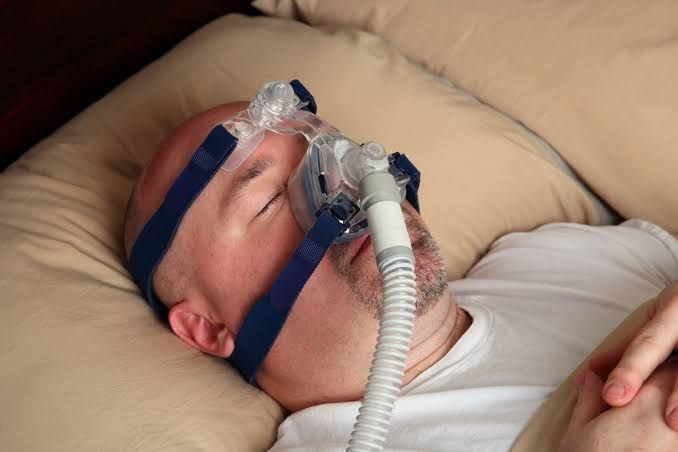
While diagnostic tests are highly useful for catching respiratory issues, it’s important to recognize the disadvantages of home sleep testing before buying or scheduling a clinical test. Knowing these limitations helps you pair diagnostics with long-term tracking to get a complete picture of your health.
One primary concern is that disadvantages of home sleep testing include the absence of Electroencephalography (EEG) sensors. A true lab-based sleep study uses EEG sensors placed on your scalp to track brain waves, which is the only way to directly measure sleep depth. Portable home diagnostic setups and everyday wearables have to estimate your sleep stages using surrogate data like movement, heart rate, and respiratory patterns. Because of this, home tests can sometimes struggle to differentiate between deep sleep and quiet wakefulness, occasionally leading to inconclusive results.
Another common issue is sensor displacement. Without an in-lab technician on hand to adjust a loose strap or reconnect a slipped cannula, a restless night of tossing and turning can easily ruin your data. If a critical sensor falls off mid-sleep, your entire test might be invalidated, forcing you to start over.
Finally, a one-night clinical test only captures a single snapshot of your health. Sleep is highly variable, influenced by daily stress, diet, and physical activity. Relying on just one night of data—especially when sleeping under the stress of unfamiliar wires—can easily lead to skewed, unrepresentative results.
We can overcome these limitations by pairing a clinical assessment with continuous daily tracking. While a one-time test is great for answering specific diagnostic questions, using a lightweight, screen-free wearable like the Herz P1 Smart Ring lets you track your long-term baselines comfortably. Seeing how your sleep trends evolve over weeks and months gives you a much richer, more accurate picture of your physical and mental well-being.
How to Optimize Your Nightly Sleep Patterns
To get the most out of your sleep tracking and support your body’s natural recovery processes, we recommend implementing these simple, science-backed habits:
- Keep Your Bedroom Cool: Your body temperature needs to drop slightly to initiate deep, restorative sleep. Set your thermostat between 60°F and 67°F (15°C to 19°C) to make it easier for your body to cool down.
- Stick to a Consistent Schedule: Going to bed and waking up at the same time every day—even on weekends—keeps your circadian rhythm in harmony, which naturally improves your nightly Deep and REM sleep stages.
- Enjoy a Screen-Free Wind-Down: Blue light from smartphones and TVs tricks your brain into thinking it is still daytime, blocking the release of melatonin. Try switching off all screens an hour before bed and reading a book instead.
- Mind Your Late-Night Meals: Digestion takes energy and raises your resting heart rate. Try to finish eating at least three hours before bed so your heart rate can drop early in the night, giving your body more time to focus on deep, physical recovery.
Ultimately, reclaiming your physical energy and mental clarity is all about understanding your body’s unique rhythms. Whether you start with an official at home sleep study to address specific clinical concerns or adopt a continuous, screen-free tracker like the Herz P1 Smart Ring, gaining objective insights is key. Armed with the right data, you can step away from guesswork and take simple, practical steps to wake up feeling vibrant, restored, and ready to take on the day.
