

If you are searching for what to do if you wake up tired every day, you are not alone in this exhausting daily battle. Statistics show that over 35% of adults struggle with chronic morning fatigue. Our team designed the Herz P1 Smart Ring to decode your silent body signals. By analyzing your unique sleep cycles and heart rate variability, this article provides the exact, science-backed steps needed to reclaim your mornings.
Built to Last. Save Up to 69% Today.
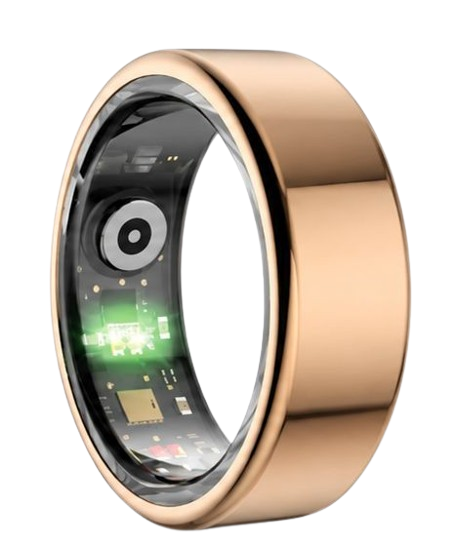
The Herz P1 Smart Ring tracks HRV, Sleep, Heart Rate & SpO2 around the clock. No subscriptions. No renewals. Ever.
In This Article
- You will discover the systematic step-by-step blueprint to prevent morning fatigue.
- We will analyze how sleep architecture anomalies and oxygen drops ruin your daytime energy.
- You will understand how Heart Rate Variability acts as a window into autonomic recovery.
- We will detail practical lifestyle adjustments using high-resolution wearable biometric data.
- Our team will address the financial and comfort pitfalls of bulky, subscription-heavy wearables.
How to Reclaim Your Morning Energy: A Step-by-Step Recovery Guide

Prerequisites: Preparing for Your Recovery Journey
Before beginning your optimization process, you must commit to a few basic health foundations.
You will need a reliable way to measure your resting physiological metrics overnight.
You also need a baseline understanding of your typical sleep duration and daily activity levels.
Finally, prepare to maintain a consistent wake-up schedule for at least two consecutive weeks.
-
Step 1: Set a Fixed Circadian Wake-Up Anchor
You must wake up at the exact same time every morning, regardless of how tired you feel.
This strict boundary trains your brain to release morning cortisol at the correct hour.
A fluctuating waking time confuses your internal circadian clock, causing severe grogginess.
Expose your eyes to bright natural light within fifteen minutes of waking to stop melatonin production.
-
Step 2: Eliminate Late-Day Nervous System Stimulants
You need to avoid caffeine, nicotine, and heavy alcohol consumption in the afternoon and evening.
Caffeine has a half-life of up to eight hours and blocks your body’s natural sleep-inducing adenosine receptors.
Alcohol might make you feel drowsy, but it actively fragments your deep and rapid eye movement (REM) sleep cycles.
Stop eating large meals at least three hours before bedtime to keep your core body temperature low.
-
Step 3: Engineer a Cool and Completely Dark Bedroom
Your bedroom temperature should remain cool, ideally between 65 and 68 degrees Fahrenheit.
Your body needs to drop its core temperature by about two degrees to initiate deep, restorative sleep.
Use high-quality blackout curtains to prevent ambient artificial streetlights from disrupting your melatonin levels.
Remove glowing screens and electronic devices from your bedside table to limit subconscious psychological stress.
-
Step 4: Practice a Consistent Pre-Sleep Wind-Down Ritual
Establish a twenty-to-thirty-minute transition period before your head hits the pillow.
Engage in calming activities like reading a physical book, light stretching, or keeping a journal.
Practice paced breathing exercises, such as inhaling for four seconds and exhaling for six seconds.
This simple habit stimulates the vagus nerve and shifts your system into a deeply relaxed parasympathetic state.
-
Step 5: Review Weekly Physiological Trends to Adapt Your Habits
Do not panic over a single night of poor sleep data on your tracker.
Focus instead on your rolling seven-day averages for deep sleep, REM sleep, and resting heart rate.
Identify which specific factors, like late dinners or screen time, correlate with lower recovery scores.
Adjust your routines incrementally based on these objective insights to build lasting, sustainable energy.
The Herz P1 Smart Ring supports this exact process by tracking your sleep phases and nervous system recovery without any intrusive, glowing screens.
90-Day 100% Money-Back Guarantee
“The Herz Smart Ring helps me manage stress easily. It’s accurate, stylish, and lightweight—perfect for my busy life!”
— Jennifer P. | ✔ Verified Customer
- ✓ 6-Day Battery Life
- ✓ Detailed Sleep Analysis
- ✓ Fast 1-Hour Charging
- ✓ iOS & Android Ready
Questions? Call: 1-866-479-1629
Decoding Sleep Architecture: Why Morning Fatigue Happens Despite 8 Hours of Sleep

Many individuals struggle with morning tiredness even when spending a full eight hours in bed.
This occurs because sleep duration does not equal sleep quality.
According to research from the National Sleep Foundation, healthy sleep requires continuous, uninterrupted cycles of deep sleep and REM sleep.
If you find yourself exhausted in the morning, your brain may be struggling to enter deep slow-wave sleep.
Deep sleep is the vital stage where your tissues repair, growth hormone is released, and your immune system recharges.
Without sufficient deep sleep, you will feel physically depleted the next day.
Likewise, REM sleep is crucial for cognitive restoration, memory consolidation, and emotional regulation.
If you are frequently tired in the morning, micro-arousals could be fracturing these cycles.
Micro-arousals are brief, subconscious awakenings caused by noise, elevated body temperature, or minor breathing disruptions.
You will not remember these interruptions, but they prevent your brain from remaining in deep sleep stages.
This structural fragmentation is the main reason for feeling tired after waking up.
Tracking your blood oxygen saturation (SpO2) during the night helps identify silent breathing drops that cause these arousals.
The Herz P1 uses a highly accurate red and infrared sensor array to monitor SpO2 trends every minute.
This allows you to spot sudden oxygen drops that could indicate airway blockages or poor sleeping positions.
By understanding your sleep architecture, you can move away from guessing and start targeting the real issues.
Autonomic Balance and Heart Rate Variability: Waking Up Groggy Demystified
Your autonomic nervous system is divided into two primary branches: the sympathetic and the parasympathetic.
The sympathetic branch acts as your body’s accelerator, driving your “fight-or-flight” response to daily stress.
The parasympathetic branch acts as your body’s brake, promoting the “rest-and-digest” state required for recovery.
If you are waking up tired, your nervous system might be stuck in a sympathetic state overnight.
This biological state can be measured objectively through a metric called Heart Rate Variability (HRV).
HRV measures the tiny, millisecond variations in time between each consecutive heartbeat.
The American Heart Association notes that a higher HRV indicates a healthy, resilient, and adaptive nervous system.
Conversely, a low HRV score reveals a stressed autonomic system that is struggling to recover.
If you are waking up groggy, it is highly likely your overnight HRV trend remained flat or depressed.
A flat HRV suggests your body was actively fighting off stress, late-night food digestion, or alcohol throughout the night.
Traditional smartwatches try to measure this at the wrist, where motion artifacts often corrupt the sensor readings.
The Herz P1 solves this by using advanced optical sensors that sit directly against the digital arteries in your finger.
This strategic placement delivers a stronger, cleaner pulse signal than wrist-based trackers can ever manage.
By monitoring your HRV Stress Index every five minutes, the Herz P1 maps exactly when your system relaxes.
This empowers you to trace your recovery progress and take control of your daytime vitality.
Navigating Your Biometrics: How to Optimize Your Routine with the Herz P1 App

Understanding your data is the first step toward conquering persistent sleep inertia symptoms.
The free Herz P1 App consolidates your complex biometrics into an intuitive daily Sleep Score and Recovery Index.
When you open the app in the morning, look first at your resting heart rate (RHR) trend line.
A healthy RHR should dip to its lowest point during the middle of your sleep cycle.
If your heart rate only dips right before you wake up, your body spent most of the night digesting food or processing stress.
Next, evaluate your deep sleep percentage to see if you met the recommended fifteen-to-twenty-percent target.
If your deep sleep is low, consider moving your last meal or workout earlier in the day.
You can also use the app’s real-time HRV monitoring to test different evening wind-down techniques.
For example, compare your HRV after reading a book to your HRV after watching television.
You will quickly see clear proof of which habits actually quiet your nervous system.
This immediate feedback loop teaches you how to wake up and not be tired.
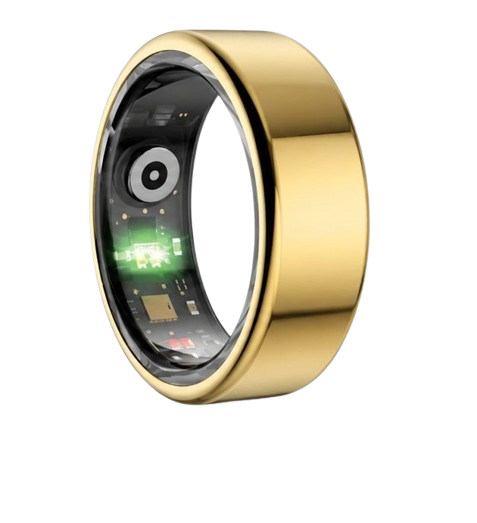
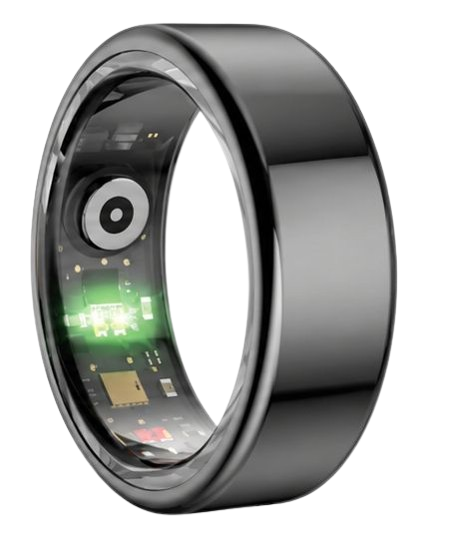
The lightweight, military-grade steel ring is incredibly comfortable, ensuring you never drop tracking due to sleep discomfort.
With consistent use, you will transform raw biometric trends into a personalized blueprint for endless morning energy.
Choosing the Right Technology: Smart Rings Versus Overpriced Smartwatches
When deciding how to track your sleep metrics, the form factor of your wearable device matters immensely.
Many users struggle to sleep while wearing a bulky, heavy smartwatch on their wrist.
Wristwatches can easily snag on sheets, shift during the night, and glow brightly with distracting notifications.
A smart ring offers a sleek, minimal, and entirely screen-free alternative that sits naturally on your finger.
Its lightweight design ensures you can wear it comfortably twenty-four hours a day without wrist fatigue.
Furthermore, many premium smart rings on the market lock your personal biometrics behind expensive monthly paywalls.
These ongoing subscription models can cost you over seventy dollars every single year just to view your own data.
We believe your health data belongs to you, which is why the Herz P1 App is free for life.
There are no surprise monthly fees, no premium upgrades, and no locked features.
You pay once for the hardware and enjoy complete access to your biometric trends forever.
Additionally, our ring is crafted from ultra-durable, military-grade steel with a resilient IP68 waterproof rating.
You can wear it in the shower, the pool, or the sauna without worrying about moisture damage.
Supported by a comprehensive two-year warranty and a ninety-day money-back guarantee, it represents a risk-free investment in your long-term wellness.
Frequently Asked Questions About Morning Fatigue and Wearables
Is the Herz P1 Smart Ring fully waterproof?
Yes, the Herz P1 features a robust IP68 waterproof rating that allows for complete submersion up to 164 feet deep.
This means you can safely wear the ring while swimming, taking hot showers, washing dishes, or sweating during intense workouts.
The protective outer shell is designed to shield the sensitive optical sensors from moisture in all daily conditions.
How long does the battery last and how fast does it charge?
The Herz P1 battery lasts up to six full days of continuous, twenty-four-seven monitoring on a single charge.
This impressive battery life minimizes charging anxiety and ensures you rarely miss a night of sleep tracking.
When the battery runs low, the ring charges fully in under one hour using the included magnetic charging cradle.
Which finger provides the most accurate biometric readings?
Our team recommends wearing the smart ring on the index, middle, or ring finger of your non-dominant hand.
The index finger generally has the most robust blood flow, providing the cleanest signal for the optical sensors.
Ensure the ring fits snugly but comfortably, without rotating easily during normal hand movements.
Does the ring store my sleep and heart rate data offline?
Yes, the Herz P1 contains local memory that safely stores up to seven days of biometric data offline.
You do not need to keep your smartphone next to your bed or leave your Bluetooth connection active overnight.
The ring will automatically sync your saved sleep stages and HRV metrics the next time you open the app.
What is the primary cause of waking up tired after a full night’s sleep?
The most common cause of morning fatigue is sleep fragmentation, which occurs when micro-arousals disrupt your sleep cycles.
These tiny, unnoticed awakenings are often triggered by ambient noise, bedroom heat, or subtle drops in blood oxygen levels.
Tracking your physiological trends with a smart ring helps pinpoint exactly when and why your sleep is being interrupted.
Conclusion: Reclaim Your Restorative Nights
Morning fatigue does not have to be your permanent reality.
By establishing clear circadian anchors, improving sleep hygiene, and tracking overnight trends, you can wake up feeling refreshed.
The Herz P1 Smart Ring offers the continuous, subscription-free data tracking you need to make successful adjustments.
Ready to monitor your health every day?
Explore the Herz P1 Smart Ring and see if it fits your lifestyle.
Call: 1-866-479-1629 — our team can help you advise on the correct ring size and set personalized health goals.
