

Understanding your resting heart rate is the first step toward reclaiming your daily energy and monitoring your cardiovascular health trends. If you are exhausted by complex health metrics or tired of bulky smartwatches that die overnight, the Herz P1 Smart Ring offers a seamless, subscription-free way to track your heart health around the clock. Let us explore what your heart beats mean and how to optimize your cardiac recovery effortlessly.
Built to Last. Save Up to 69% Today.
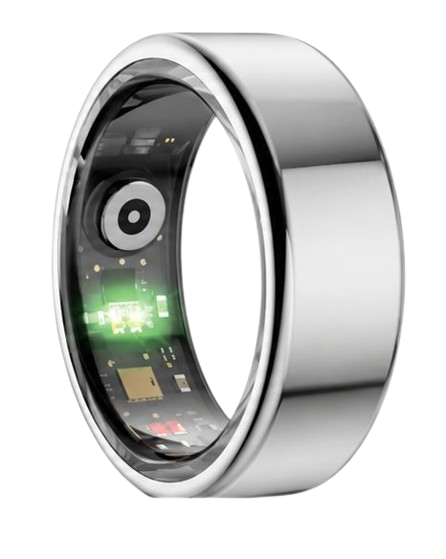
The Herz P1 Smart Ring tracks HRV, Sleep, Heart Rate & SpO2 around the clock. No subscriptions. No renewals. Ever.
In This Article
- What is the Resting Heart Rate and What Does It Reveal? Learn the fundamental science and 5W2H parameters of this crucial metric.
- Decoding the Normal Range for Resting Heart Rate: Explore age-specific baselines, athlete variations, and warning signs.
- Sleeping Heart Rate vs. RHR: Discover how your heart recovers during deep sleep stages.
- How to Lower Your Resting Heart Rate: Follow clinical lifestyle protocols to build a stronger heart over time.
- Biometric Troubleshooting: Overcome common tracking errors and sizing traps with smart ring technology.
What is the Resting Heart Rate and What Does It Reveal About Your Body?
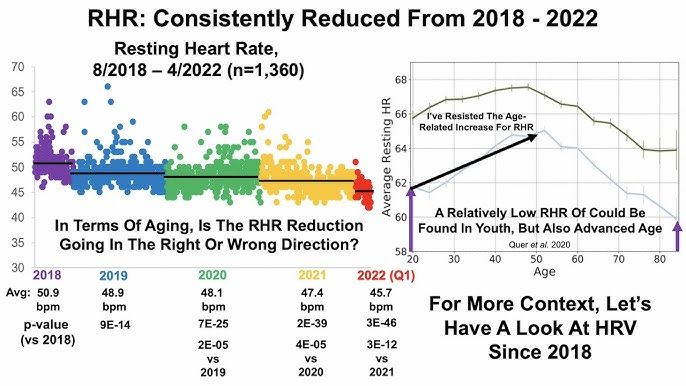
The resting heart rate measures how many times your heart beats per minute when you are completely relaxed.
Your rhr is a direct window into the efficiency of your heart muscle and the state of your autonomic nervous system.
Busy professionals, active adults, and health-conscious individuals should all monitor this vital metric to understand daily physical strain.
A lower resting rate typically indicates superior cardiovascular health and a robust stroke volume.
This tracking is most critical during quiet morning hours immediately after waking up, as external variables remain minimal.
Your measurements occur continuously at home or at work when you remain physically still for several minutes.
This biological metric matters because a high resting rate forces the cardiovascular system to work harder to maintain systemic oxygen delivery.
When the heart operates under high strain, your body remains trapped in a sympathetic state of fight-or-flight.
Your heart beats are controlled by electric signals that scale up or down depending on hydration, stress, and sleep depth.
The standard baseline is quantitative, with healthy adult ranges sitting between sixty and one hundred beats per minute.
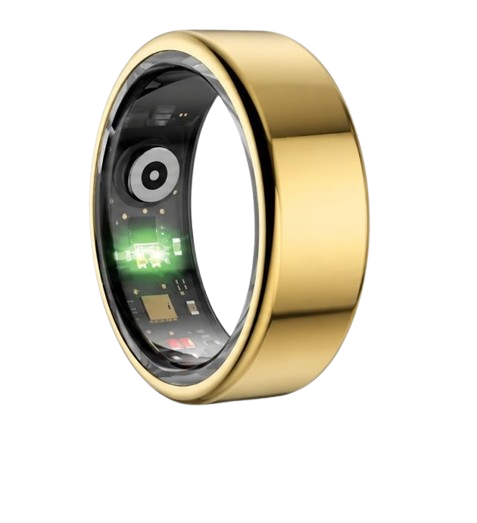
If you want to track this in real time, the Herz P1 Smart Ring monitors heart rate around the clock — explore it here.
90-Day 100% Money-Back Guarantee
“The Herz Smart Ring helps me manage stress easily. It’s accurate, stylish, and lightweight—perfect for my busy life!”
— Jennifer P. | ✔ Verified Customer
- ✓ 6-Day Battery Life
- ✓ Detailed Sleep Analysis
- ✓ Fast 1-Hour Charging
- ✓ iOS & Android Ready
Questions? Call: 1-866-479-1629
Decoding the Normal Range for Resting Heart Rate Across Different Ages and Lifestyles
The American Heart Association defines the standard normal range for resting heart rate as 60 to 100 beats per minute.
However, this wide range does not tell the whole story of your cardiovascular fitness.
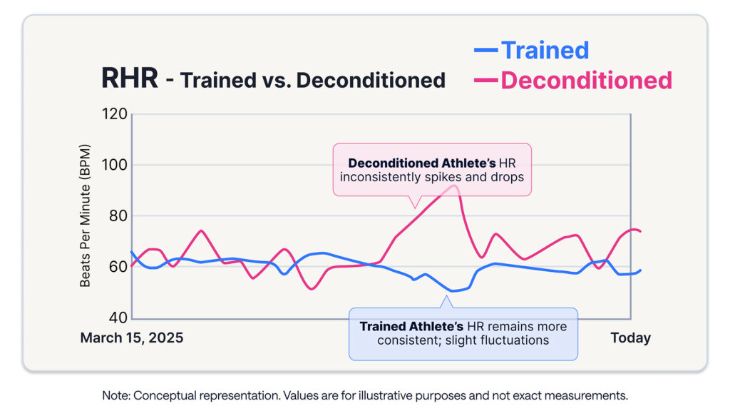
Highly active individuals often develop an athlete resting hr that measures between 40 and 60 beats per minute.
This occurs because regular physical training increases the stroke volume of the left ventricle.
With each beat, a stronger heart pumps more blood, reducing the total frequency of beats needed to sustain systemic circulation.
We must look at age, gender, and environmental stressors to understand what your baseline says about your actual cardiovascular age.
| User Category | Expected RHR Range (BPM) | Cardiovascular Significance |
|---|---|---|
| Sedentary Adults | 70 – 85 BPM | Average heart health; elevated stress on ventricular walls. |
| Active Fitness Enthusiasts | 55 – 68 BPM | Efficient cardiac stroke volume; healthy parasympathetic balance. |
| Highly Trained Athletes | 40 – 54 BPM | Strong physiological adaptation; high vagal nerve tone. |
Understanding Bradycardia and Tachycardia
A resting rate consistently below 60 beats per minute is clinically referred to as bradycardia.
For an athlete, bradycardia is a badge of cardiovascular efficiency and high parasympathetic activity.
For a sedentary individual, chronic bradycardia could occasionally point to conduction system issues within the heart.
Conversely, a resting heart rate that stays consistently above 100 beats per minute is known as tachycardia.
Tachycardia may signal subclinical illness, chronic dehydration, systemic inflammation, or high stress levels.
The military-grade Herz P1 Smart Ring uses multispectral optical photoplethysmography (PPG) to track these variations.
It samples blood flow velocity at the finger capillaries, where the skin is thin and the pulse signals remain incredibly crisp.
Sleeping Heart Rate vs. RHR: Tracking Autonomic Recovery Nightly
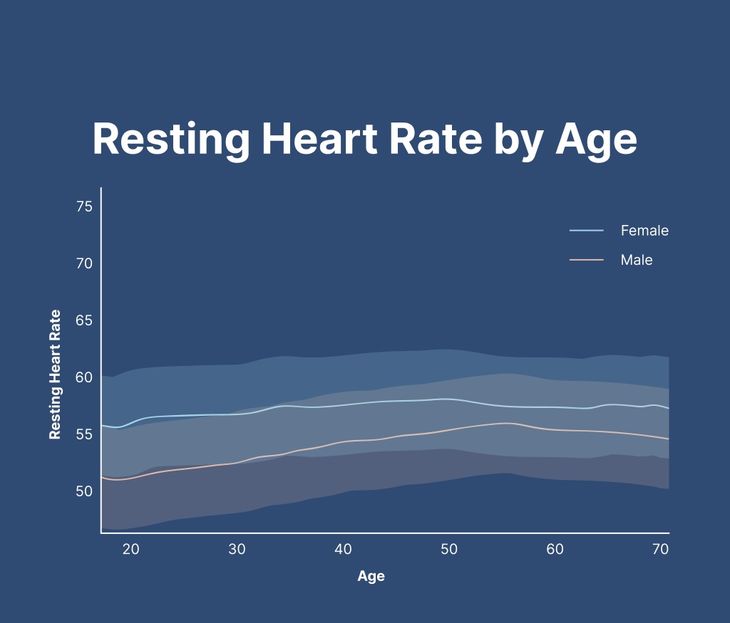
Many people mistake their morning resting rate for their sleeping heart rate, but these metrics tell different stories.
Your heart rate during sleep should naturally dip by approximately 10% to 20% compared to your daytime resting baseline.
This nighttime drop is known as cardiac dipping, and it is a key marker of autonomic nervous system health.
If you experience a low hrv while sleeping alongside an elevated heart rate, your body is failing to transition into deep recovery.
This lack of recovery often happens after consuming late-night meals, drinking alcohol, or experiencing high cognitive stress.
Your heart rate should reach its lowest point during the middle of your sleep cycle, matching your deepest slow-wave sleep stages.
In addition, monitoring your respiratory rate during sleep alongside these metrics helps paint a full picture of recovery.
The Herz P1 Smart Ring tracks these subtle sleep architecture details without the discomfort of a glowing watch screen on your wrist.
Its lightweight design ensures you can rest comfortably while the optical sensors record continuous, medical-grade sleep data.
How Can I Reduce My Resting Heart Rate? Clinical and Lifestyle Protocols
If you find that your resting baseline is elevated, you may ask: how can i reduce my resting heart rate naturally?
Lowering your RHR requires a structured combination of cardiovascular training, autonomic nervous system soothing, and proper recovery.
Here are several highly effective, evidence-based lifestyle adjustments to implement over thirty to ninety days.
1. Prioritize Aerobic Training in Zone 2
To build a larger stroke volume, you must train your heart muscle through consistent, low-intensity aerobic exercise.
Zone 2 training refers to exercise where you can still maintain a conversation without gasping for breath.
Aim for 150 minutes of weekly Zone 2 exercise, such as brisk walking, cycling, or swimming.
Over time, this training strengthens the left ventricle, allowing it to pump more blood per contraction.
This physiological adaptation naturally reduces the daily workload of your cardiac muscle.
2. Optimize Hydration and Electrolyte Levels
Dehydration causes blood volume to drop, making your blood thicker and harder to pump.
To maintain pressure, your heart must beat faster, raising your daily resting rate.
Ensure you consume adequate fluids and minerals throughout the day, especially sodium, potassium, and magnesium.
A well-hydrated cardiovascular system keeps the heart working under minimal tension.
3. Master Parasympathetic Autonomic Activation
Chronic work stress keeps your sympathetic nervous system firing, which elevates your heart rate.
You can actively lower this tension by practicing slow, diaphragmatic breathing exercises for five minutes daily.
This practice stimulates the vagus nerve, which acts as a natural brake for your heart rate.
Regularly practicing deep breathing is a great way to learn how to improve hrv and lower stress levels.
You can check your morning readiness score on the Herz P1 App to see how well these breathing habits are working.
Are Wearable Trackers Right for You? Overcoming Sizing and Data Errors
Many consumers fail to get accurate heart rate data because they use bulky smartwatches that slip on the wrist.
If a wearable sensor shifts during sleep, the optical light path breaks, leading to highly inaccurate readings.
This problem is solved by using a lightweight smart ring that fits securely around the base of the finger.
The finger capillaries provide a much stronger, clearer pulse signal than the outer wrist bone.
Another common mistake is choosing a wearable brand that locks your personal health data behind a monthly paywall.
The Herz P1 Smart Ring delivers deep health tracking with absolutely no monthly subscription fees.
Built with military-grade steel and featuring an IP68 waterproof rating, it is designed for rugged, 24/7 wear.
With a 6-day battery life and a 2-year warranty, it offers a hassle-free alternative to fragile smartwatches.
Frequently Asked Questions About Resting Heart Rate and Wearable Technology
Is the Herz P1 Smart Ring waterproof enough for daily swimming?
Yes, the Herz P1 is fully certified with an IP68 waterproof rating.
It can withstand continuous water submersion up to 164 feet, making it perfect for pool workouts and hot showers.
How long does the Herz P1 battery last on a single charge?
The advanced lithium-polymer battery lasts up to six days under normal use.
When the battery is low, a full charge takes less than one hour using the magnetic charging cradle.
Which finger is best for accurate heart rate tracking?
The index finger is the top recommendation because it has the most robust capillary blood flow.
However, the middle and ring fingers also provide highly accurate readings as long as the ring fits snugly.
Can the Herz P1 Smart Ring store data when my phone is offline?
Yes, the ring features local memory storage that holds up to seven days of continuous health data.
Your data syncs automatically to your smartphone as soon as the Bluetooth connection is restored.
Conclusion: Take Control of Your Heart Health with Confidence
Monitoring your resting heart rate trends over time is the ultimate way to track your cardiorespiratory recovery.
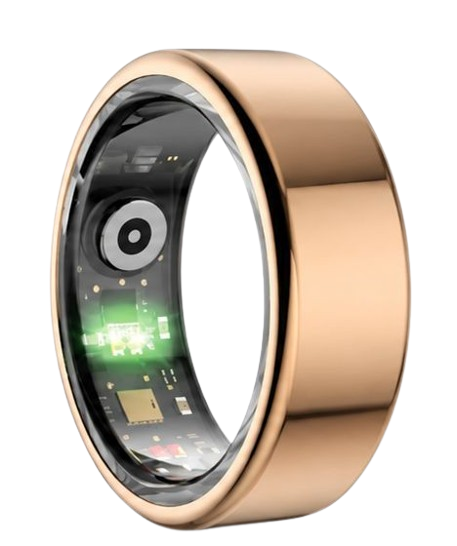
The Herz P1 Smart Ring makes this process entirely seamless, subscription-free, and incredibly comfortable.
Ready to monitor your health every day? Explore the Herz P1 Smart Ring and see if it fits your lifestyle. Call: 1-866-479-1629 — our team can help you advise on the correct ring size and set personalized health goals.
