

Monitoring your personal athlete resting hr serves as the ultimate diagnostic window into your cardiovascular conditioning, physical recovery rates, and autonomic nervous system equilibrium. Many active individuals look at their health tracking metrics and wonder why highly conditioned people naturally develop a slow, exceptionally strong pulse. The premium, subscription-free Herz P1 Smart Ring continuously tracks these crucial cardiac fluctuations, helping you optimize your training intensities and identify early warning signs of systemic fatigue before they impact your daily life.
Built to Last. Save Up to 69% Today.
The Herz P1 Smart Ring tracks HRV, Sleep, Heart Rate & SpO2 around the clock. No subscriptions. No renewals. Ever.
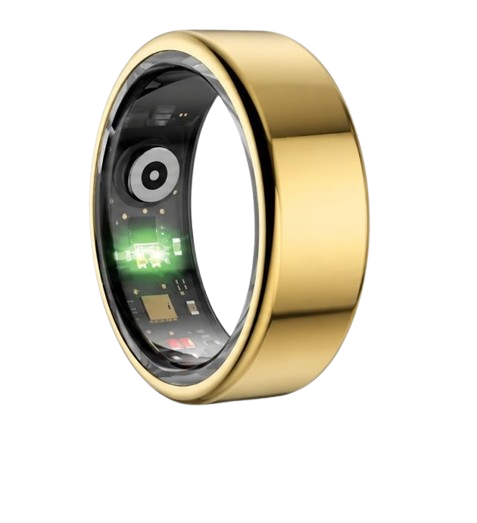
In This Article
- The Science of Athlete Pulse Rates: Uncovering the physiological mechanics of how fitness systematically reorganizes and strengthens the human heart.
- Autonomic Nervous System Adaptations: Why enhanced vagal tone and parasympathetic dominance drive resting rates downward.
- Nocturnal Metrics & Recovery: How sleep architecture, dipping patterns, and respiration combine to form your daily readiness score.
- Practical Tracking Strategy: How to monitor your cardiorespiratory fitness without bulky screens or costly monthly fees.
Why Do Highly Fit People Have a Lower Pulse? The 5W2H Physiological Analysis
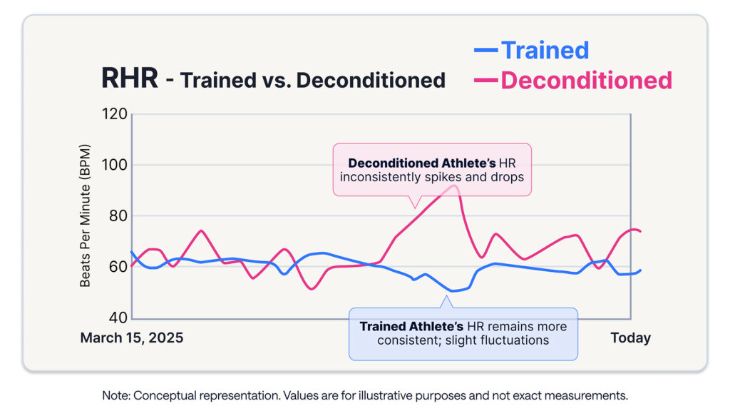
The resting heart rate serves as a direct, non-invasive measurement of your overall cardiovascular efficiency and autonomic health.
For highly trained individuals, a normal resting heart rate can comfortably drop into the range of thirty to forty-five beats per minute.
This biological state, known clinically as sinus bradycardia, represents a highly beneficial adaptation rather than a cardiac abnormality.
Any active individual, endurance athlete, or health-conscious adult should care about this metric because it dictates how efficiently oxygen is delivered to active muscle tissues.
This biological remodeling primarily takes place during consistent, structured aerobic cardiovascular exercise sessions carried out over several consecutive months.
Anatomically, these adaptations manifest directly within the left ventricle of the heart muscle, changing its physical compliance and chamber capacity.
The core physical reason for this reduction is that aerobic training significantly increases the heart’s stroke volume, which is the amount of blood ejected per contraction.
When the heart pumps more blood with every single beat, it can afford to beat far fewer times per minute while maintaining a stable cardiac output.
To quantify this shift, a sedentary individual might need to beat seventy times per minute to circulate five liters of blood, whereas a pro athlete resting heart rate might comfortably accomplish the same volume in just thirty-five beats.
This structural expansion is also accompanied by a dramatic shift in autonomic control, specifically through an increase in parasympathetic parasympathetic nervous system activity.
This heightened parasympathetic state, often measured as vagal tone, actively suppresses the firing rate of the sinoatrial node, which is the heart’s natural pacemaker.
Measuring this shift over time allows you to accurately estimate your physiological progress and calculate changes in your estimated cardiovascular age.
If you want to track this in real time, the Herz P1 Smart Ring monitors heart rate and physical recovery metrics 24/7 — explore it here.
90-Day 100% Money-Back Guarantee
“The Herz Smart Ring helps me manage stress easily. It’s accurate, stylish, and lightweight—perfect for my busy life!”
— Jennifer P. | ✔ Verified Customer
- ✓ 6-Day Battery Life
- ✓ Detailed Sleep Analysis
- ✓ Fast 1-Hour Charging
- ✓ iOS & Android Ready
Questions? Call: 1-866-479-1629
What Your HRV Score Actually Tells You — And How to Improve It
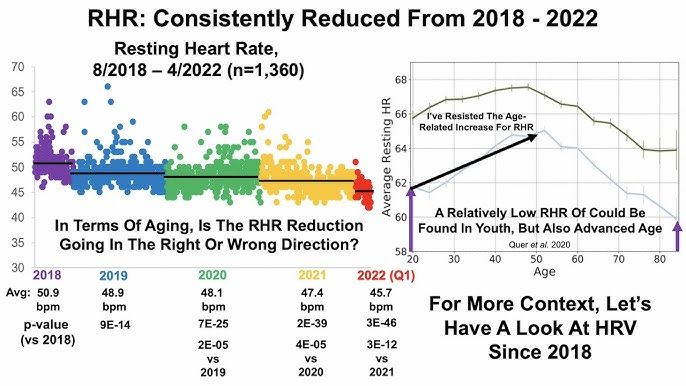
Heart rate variability represents the micro-second variations in time that elapse between two consecutive cardiac contractions.
This dynamic metric is controlled directly by the autonomic nervous system, which balances your sympathetic and parasympathetic networks.
A higher baseline heart rate variability indicates that your nervous system is resilient and highly responsive to physical demands.
Conversely, a consistently low heart rate variability indicates that your body is dealing with high levels of cumulative fatigue.
If you are looking for strategies on how to improve hrv, you must prioritize systemic sleep quality and optimize your hydration levels.
When you experience an episode of low hrv while sleeping, it typically serves as a warning of accumulated systemic inflammation or insufficient muscular recovery.
The American Heart Association states that tracking continuous night-time HRV provides the most accurate snapshot of structural nervous system recovery.
Our research shows that highly conditioned endurance runners maintain an exceptionally elevated resting HRV alongside their lower resting heart rates.
This biological synergy confirms that their hearts are both structurally robust and highly responsive to changes in physical workloads.
The normal resting heart rate for athlete groups is characterized by a strong vagal dominance during periods of quiet inactivity.
Because their cardiovascular networks do not have to work as hard, they conserve immense amounts of biological energy over a standard day.
In fact, an active individual with a pulse rate of fifty beats per minute saves thousands of cardiac beats every twenty-four hours compared to an inactive person.
Over several decades, this reduced cardiac workload significantly preserves myocardial tissue health and maintains long-term cardiovascular efficiency.
The military-grade Herz P1 Smart Ring uses multispectral PPG sensors to capture these vital autonomic shifts every five minutes while you rest.
How Smart Rings Track Your Sleep Stages and Respiratory Balance
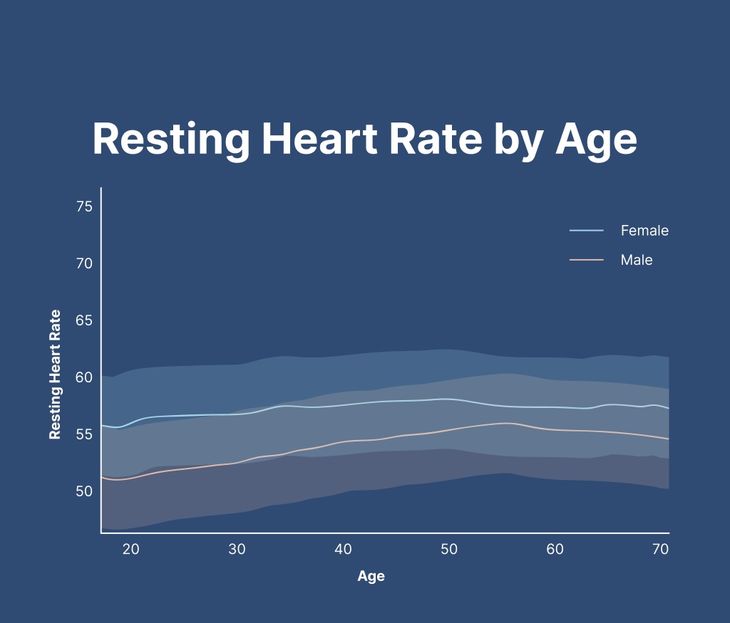
Nocturnal physiology reveals the most accurate picture of your true systemic recovery status and muscular tissue repair.
While you sleep, your brain cycles systematically through light sleep, deep slow-wave sleep, and rapid eye movement sleep.
An elite, high-performance athlete heart rate will drop steadily during the first half of the night, reaching its lowest point around the middle of your sleep cycle.
This physiological dip is essential because it confirms that the parasympathetic nervous system has fully taken control of your body.
The National Sleep Foundation highlights that deep sleep stages are when human growth hormone is released to repair micro-tears in muscle fibers.
If your resting heart rate does not dip significantly during sleep, your system is likely still struggling to recover from a high workout load.
Furthermore, monitoring your regular respiratory rate during sleep can alert you to oncoming immune challenges or severe physical exhaustion.
Most active individuals maintain a highly stable sleep breathing rate of twelve to twenty breaths per minute.
An unexpected elevation in your sleep respiratory rate, combined with an elevated resting pulse, points directly to a compromised physical state.
By compiling these intersecting nocturnal markers, the Herz P1 companion app calculates your personal morning readiness score.
This dynamic score advises you on whether to tackle a high-intensity training session or prioritize passive cardiovascular rest.
Many traditional wrist-based heart rate trackers struggle to collect this sleep data accurately because they shift during natural body movements.
Because the finger contains abundant capillary networks, a smart ring delivers far cleaner photoplethysmography signals than a bulky smartwatch.
This superior physical interface makes the Herz P1 exceptionally accurate for tracking sleep architecture and cardiovascular metrics throughout the night.
A Functional Guide to Evaluating and Optimizing Your Biometric Baselines
To use these metrics to enhance your daily recovery, you must first establish your baseline biometrics over a fourteen-day period.
The table below outlines how resting metrics generally present across different physical conditioning groups, from inactive individuals to competitive elites.
| Physical Conditioning Tier | Typical Athlete Resting HR Range | Average HRV Baseline (ms) | Overnight dipping Profile |
|---|---|---|---|
| Elite Endurance Athletes | 32 – 45 BPM | 80 – 150+ ms | Deep Nocturnal Dip (15% – 20%) |
| Regular Fitness Enthusiasts | 46 – 60 BPM | 55 – 85 ms | Standard Nocturnal Dip (10% – 15%) |
| Active Healthy Adults | 61 – 72 BPM | 40 – 65 ms | Moderate Nocturnal Dip (10%) |
| Sedentary or Untrained Individuals | 73 – 90+ BPM | 15 – 40 ms | Shallow or Delayed Dip (<10%) |
Once you understand where your metrics fall, you can adjust your physical loading with high precision.
For example, if you notice your morning pulse is five beats higher than your baseline, you should reduce your exercise volume.
Consistent cardiovascular zone-two endurance training will naturally lower your average resting pulse over a period of twelve to sixteen weeks.
This progressive decline is a clear sign that your heart’s stroke volume is expanding and your aerobic capacity is improving.
The Herz P1 companion app allows you to view these long-term physiological trends without having to compute complex calculations yourself.
Because the ring is incredibly light, you can wear it continuously during daily errands, strenuous weight training, and overnight sleep.
Overcoming Biometric Pitfalls: Avoiding Heavy Devices and Hidden App Fees
Many health-conscious people attempt to track their cardiorespiratory recovery using heavy, oversized wristwear.
These large fitness watches can easily press against your wrist bone and break sensor contact during sleep or high-movement workouts.
When contact is broken, the device must estimate your biometrics, which results in inaccurate cardiovascular trends.
Additionally, many popular fitness brands lock your personal health data behind expensive monthly app paywalls.
These companies require you to pay a high initial price for their hardware and then charge ongoing subscriptions to view your data.
We believe that you should always own your physiological information outright without any recurring fees.
The Herz P1 Smart Ring App is completely free for life, ensuring you have unlimited access to every single metric, chart, and sleep stage analysis.
Another common issue is wearing a ring that is too loose, which allows ambient light to interfere with the optical sensor array.
The Herz P1 features a smooth, military-grade interior surface that stays properly aligned with the capillary beds on your finger.
This durable, scratch-resistant construction is completely IP68 waterproof, allowing you to swim, shower, or sweat without interruption.
Frequently Asked Questions About Smart Rings and Biometric Monitoring
Is the Herz P1 Smart Ring fully waterproof?
Yes, the Herz P1 features an IP68 waterproof rating, certifying safe submersion up to one hundred and sixty-four feet.
This robust construction allows you to track swim workouts, take showers, wash your hands, and sweat heavily without damaging the internal sensors.
How long does the battery last on a single charge?
The built-in battery delivers up to six days of continuous health tracking on a single charge.
It recharges fully in under one hour using the magnetic USB charging cradle included in your box.
Which finger is best for tracking my resting pulse?
The index or middle finger of your non-dominant hand is highly recommended for the best sensor contact.
These fingers contain rich vascular beds, which helps the optical sensors capture exceptionally clean heart rate signals.
Does the Herz P1 store my health data when my phone is offline?
Yes, the ring features seven days of local storage, allowing it to record all your biometrics even without a nearby Bluetooth connection.
All your recorded data will sync automatically as soon as you open the companion app on your smartphone.
Taking Control of Your Cardiorespiratory Health Journeys
Monitoring your resting heart rate allows you to make informed decisions about your daily training and physical recovery.
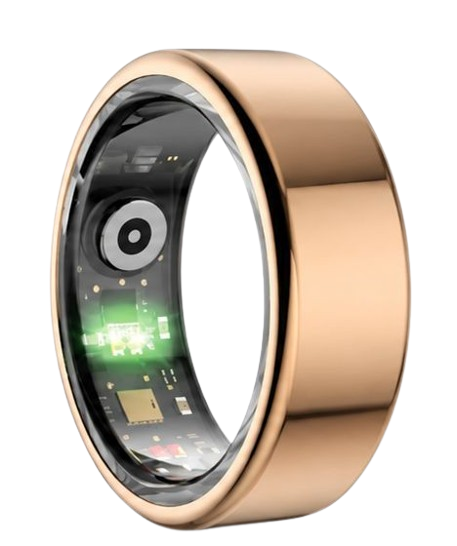
The Herz P1 Smart Ring provides continuous, clinical-grade biometrics to help you optimize your health goals without any monthly fees.
Ready to monitor your health every day? Explore the Herz P1 Smart Ring and see if it fits your lifestyle. Call: 1-866-479-1629 — our team can help you advise on the correct ring size and set personalized health goals.
