

How to Choose the Perfect Pillow for Deep, Restorative Sleep
Is a bad pillow ruining your sleep? Waking up with a stiff neck, a racing mind, or brain fog is often a structural issue. Taking our scientific pillow quiz helps optimize your sleep posture, while pairing it with the screen-free Herz P1 Smart Ring lets you track physical recovery objectively.
Take Back Your Sleep.
Take Back Your Life.
- Fall asleep faster & sleep deeper
- Stop waking up in the middle of the night
- Wake up refreshed & full of energy
Key Highlights:
- Postural Alignment: Your sleeping position dictates your pillow loft; getting this wrong ruins your spinal alignment.
- Scientific Assessment: Utilizing an interactive pillow quiz takes the guesswork out of choosing pillow materials and support levels.
- Biometric Feedback: Tracking your sleep stages (REM, Deep, Light) validates whether your new setup is working.
- Uninterrupted Monitoring: Reclaiming your sleep requires reducing blue light and screen distraction before bed.
In This Ultimate Guide:
The Science of Sleep Ergonomics and Why Your Current Setup Fails
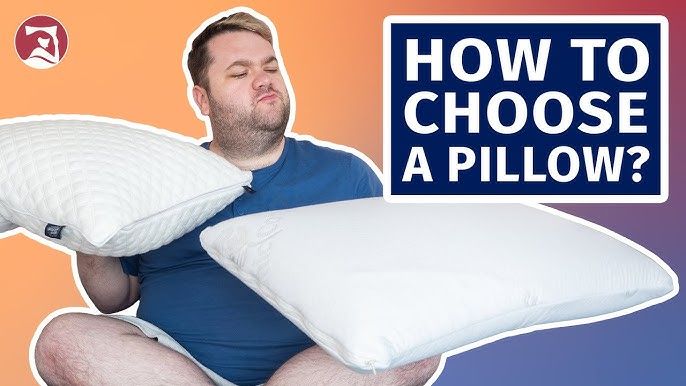
Many of us face the same frustrating cycle. You crawl into bed after an exhausting day, but instead of drifting off peacefully, you experience a racing mind and uncomfortable tossing and turning. You wake up at 3 AM with a stiff neck, only to greet the morning with a thick cloud of brain fog and the realization that you have had another night of non-restorative sleep. When we suffer from poor sleep quality, we often blame stress or search for a quick fix, falling into a dependency on bad habits. However, we often ignore the most basic structural element of our sleep environment: the pillow.
If your neck is bent at an unnatural angle for eight hours, your nervous system remains in a heightened state of alert. This elevated physical stress prevents you from entering deep, restorative sleep stages. To fix this, you need an objective way to find your perfect sleep setup. That is where a structured, scientific approach like a customized pillow quiz comes in. Our team at Mind Body Dan has analyzed how small ergonomic adjustments can significantly lower physical tension and improve cardiovascular recovery.
Prerequisites for Finding Your Ideal Sleep Support
Before you dive into selecting a pillow, you must understand your physical baselines. Spinal alignment is highly individualized. A pillow that works perfectly for a friend might leave you waking up sore. When you prepare to take a pillow quiz, keep the following variables in mind:
- Primary Sleep Position: Do you spend most of the night on your back, side, or stomach? Each position demands a completely different structural support system.
- Mattress Firmness: A soft mattress allows your hips and shoulders to sink deeper, requiring a lower pillow loft to maintain a neutral spine. A firm mattress requires a higher loft.
- Shoulder Breadth: Side sleepers with broad shoulders need a thicker pillow to fill the gap between the ear and the mattress compared to those with narrower frames.
- Current Biometric Indicators: Are you tracking your resting heart rate or sleep stages? Knowing your baseline patterns helps you understand if your current setup is causing frequent micro-arousals.
Step-by-Step Execution Guide to Reclaiming Your Rest
To systematically optimize your sleep, follow this expert-backed protocol:
- Step 1: Take an Objective Assessment. Avoid the temptation to buy a pillow based on generic online reviews. Instead, use a structured pillow quiz to analyze your physical dimensions and sleep habits. This simple tool helps narrow down hundreds of confusing options into a personalized recommendation.
- Step 2: Understand Pillow Loft. Alignment depends entirely on “loft” (the height of the pillow). A side sleeper needs high loft to fill the shoulder gap, a back sleeper needs medium loft to support the neck’s natural curve, and a stomach sleeper needs low or no loft to avoid hyperextension of the cervical spine.
- Step 3: Track the Impact of the Change. Adjusting your sleep ergonomics is a physical science experiment. You must measure how changes affect your sleep architecture. While bulky smartwatches are often too uncomfortable to wear during sleep and require annoying daily charging, a screen-free alternative like the Herz P1 Smart Ring offers an elegant, subscription-free solution. Made from ultra-lightweight titanium, it tracks your sleep stages (REM, Deep, Light) and Heart Rate Variability (HRV) without screen distractions or hidden monthly fees.
- Step 4: Establish a Screentime Boundary. Leave your screens outside the bedroom. Looking at blue-light-emitting devices before bed ruins your melatonin production, exacerbating those frustrating 3 AM awakenings. Use screen-free tracking methods to monitor your health trends instead.
Common Pitfalls & Mistakes
When trying to improve their sleep setup, many people fall into predictable traps. First is the “one-size-fits-all” trap—buying a pillow because it has good reviews online without considering your personal sleep position. Always take a personalized pillow quiz to tailor the decision to your body. Second is using pillows that are too old. Over time, materials like memory foam and down break down, losing their supportive structural integrity. Finally, ignoring mattress interactivity can ruin your results. A pillow does not work in isolation; it works in tandem with your bed, which is why a comprehensive pillow quiz asks about your mattress type.
Why Postural Alignment Matters for Your Nervous System:
When your spine is perfectly aligned, the physical pressure on your cervical nerves is minimized. This tells your sympathetic nervous system (the “fight or flight” response) that it is safe to power down, allowing your parasympathetic nervous system to take over. This shift is reflected in a higher Heart Rate Variability (HRV) and a deeper, more restorative sleep cycle.
Quick Checklist for Immediate Sleep Improvement
- [ ] Take a customized pillow quiz to identify your ideal shape and material.
- [ ] Verify your shoulder-to-neck measurement if you are a side sleeper.
- [ ] Establish a screen-free bedroom routine to calm your racing mind.
- [ ] Monitor your sleep metrics using an unobtrusive, wearable tracker to confirm physical recovery.
Finding the right pillow is not just about comfort; it is a vital step toward eliminating non-restorative sleep and physical strain. By utilizing a personalized assessment tool and supporting your recovery journey with precise, comfortable biometric tracking, you can finally wake up with a clear mind and renewed energy.
Decoding the Pillow Quiz: How to Choose the Right Pillow Quiz and Read Your Body’s Signals

Many consumers search for the perfect sleep setup but get overwhelmed by aggressive marketing buzzwords. How do you cut through the noise? The most efficient starting point is knowing how to choose the right pillow quiz that accounts for both your physical anatomy and your personal sleeping habits. A reliable pillow quiz should not just ask if you prefer soft or firm textures; it must evaluate your spinal alignment requirements.
When we look at the biomechanics of rest, the pillow is the bridge between your head and the mattress. Let us break down how different sleeping positions demand different structural support systems, and how an interactive pillow quiz guides you through these choices. Understanding these physical requirements helps you understand how a simple tool like a pillow quiz can prevent years of chronic physical fatigue.
The Side Sleeper’s Anatomy
Side sleepers require the most significant amount of support. When you lie on your side, there is a large gap between your ear and the outer edge of your shoulder. If your pillow is too thin, your head drops downward, compressing the nerves on the side of your neck. If it is too thick, your head is pushed upward, straining the opposite side. Both scenarios trigger muscle tension, leading to those frustrating 3 AM awakenings and non-restorative sleep. A targeted pillow quiz calculates this gap to recommend a high-loft pillow, typically made of solid memory foam or contoured latex, to keep the spine straight. If you are struggling with neck discomfort, completing a pillow quiz is the easiest way to identify if your current loft is incorrect.
The Back Sleeper’s Balance
Back sleepers need a delicate balance. The goal is to support the natural curve of the cervical spine without thrusting the head forward. If your pillow is too high, it chin-tucks your neck, restricting your airway and potentially causing snoring or shallow breathing. A high-quality pillow quiz helps back sleepers identify medium-loft pillows with a recessed center to cradle the head while offering firm support beneath the neck. By filling out a pillow quiz, you can discover whether a contoured orthopedic design or a classic shredded foam style is better suited for your back-sleeping habits.
The Stomach Sleeper’s Dilemma
Stomach sleeping is notoriously difficult on the neck because it forces you to turn your head to one side for hours at time, twisting the cervical spine. If you must sleep on your stomach, you need an extremely low-loft pillow—or even no pillow at all beneath your head. A thoughtful pillow quiz will steer stomach sleepers toward ultra-thin, highly compressible options like down or thin memory foam to keep the spinal twist as mild as possible. When taking a pillow quiz, stomach sleepers are often surprised to learn that placing a flat pillow under their pelvis can actually relieve pressure on their lower back, illustrating how helpful a comprehensive pillow quiz can be.
“Sleep posture is not just about avoiding a stiff neck; it directly influences your autonomic nervous system. Misalignment causes micro-stresses that keep your body from entering deep restorative cycles, leaving you feeling exhausted regardless of how many hours you spend in bed.”
Validating Your Pillow Choice with Biometric Data
Once you utilize a pillow quiz to select your new sleeping surface, how do you verify that it is actually improving your sleep quality? Subjective feelings can be unreliable, especially if you have built up a dependency on bad habits or have grown accustomed to waking up with brain fog. To truly know if your new setup is working, you must look at your body’s biometric signals.
This is where scientific tracking becomes invaluable. Rather than relying on a bulky, distracting smartwatch that requires constant recharging and shines bright screens into your eyes at night, look to elegant, screen-free alternatives. The Herz P1 Smart Ring tracks your physical response to your new pillow by monitoring key biometric trends. By examining your Heart Rate Variability (HRV) and the duration of your Deep and REM sleep stages, the ring translates complex biometric algorithms into a single, intuitive Daily Recovery Score. If your new pillow is successfully keeping your spine aligned, you will see a measurable rise in your deep sleep stages and a stabilization of your resting heart rate throughout the night. If you are researching how to choose the right pillow quiz, remember that pairing physical adjustments with reliable biometric data is the ultimate formula for sleep optimization.
Choosing the Right Materials: From Pillow Quiz Results to Real-World Recovery

Once you complete a customized pillow quiz, you will likely receive a recommendation for a specific material. The material of your pillow affects heat regulation, pressure relief, and structural longevity. Understanding these materials helps you appreciate why a generic, cheap polyester pillow from a big-box store often leads to restless nights, overheating, and muscular strain. A detailed pillow quiz helps you navigate these choices scientifically.
Let us explore the primary materials recommended by a standard pillow quiz and how they interact with your body’s sleep physiology. By matching the right material to your unique physical profile, you can eliminate the micro-arousals that disrupt your sleep architecture.
1. Memory Foam (Solid vs. Shredded)
Solid memory foam offers excellent contouring support, making it ideal for side and back sleepers who need their head and neck held in a precise position. It reacts to body heat and pressure, molding to the exact shape of your neck. Shredded memory foam, on the other hand, is adjustable. You can add or remove the filling to customize the loft yourself. A standard pillow quiz often recommends shredded memory foam for combination sleepers who shift positions throughout the night. If you take an interactive pillow quiz, it will help you decide if the stability of solid foam or the flexibility of shredded foam is right for you.
2. Natural Latex
Latex is highly responsive, meaning it bounces back immediately when you move. Unlike memory foam, which can feel like sinking into quicksand, latex keeps you lifted. It is also naturally hypoallergenic and highly breathable, preventing the heat buildup that often causes night sweats and sleep disruptions. If your pillow quiz results indicate that you tend to sleep hot, natural latex is often the primary recommendation to ensure a cool, undisturbed sleeping environment.
3. Down and Down Alternatives
Down pillows offer a traditional, luxurious, cloud-like feel. They are highly compressible, which is excellent for stomach sleepers who require a flat surface to keep their neck aligned. However, they lack the structural support needed by side sleepers. A comprehensive pillow quiz will rarely suggest traditional down for individuals suffering from chronic neck discomfort. If you are using a down pillow and still waking up sore, taking a pillow quiz can guide you toward firmer, more supportive materials.
Optimizing Your Sleep Environment, Effortlessly
Pairing the insights from a physical pillow quiz with continuous, screen-free biometric tracking gives you the complete picture of your health. By choosing tools that operate silently in the background, you respect your body’s natural circadian rhythms.
No screens. No subscriptions. Just pure, actionable insight into your recovery.
Why Screen-Free Tracking is Essential for True Recovery
Improving your sleep is about more than just finding the right physical alignment through a pillow quiz. It requires a holistic shift in your nightly habits. Many modern tracking tools introduce new problems: they come with bright screens that tempt you to check notifications in the middle of the night, or they lock your valuable health data behind expensive monthly subscriptions.
This subscription fatigue and screen distraction can actually heighten your stress, leading to a racing mind when you should be resting. The Herz P1 Smart Ring solves this operational issue elegantly. It contains medical-grade biometric sensors to track your sleep stages (REM, Deep, Light) and HRV, but features a completely screen-free titanium design. It never interrupts your night with glowing alerts, and it operates under a strictly subscription-free model—you buy it once and own your data forever. If you are learning how to choose the right pillow quiz, consider this: the physical adjustments you make are only half the battle. Having a screen-free, stress-free way to monitor your progress ensures you do not replace physical discomfort with digital anxiety.
By tracking how your body responds to the structural adjustments recommended by your pillow quiz, you can systematically eliminate non-restorative sleep. You will see exactly how your physical recovery score improves when your head, neck, and spine are perfectly aligned. Take back control of your night, start with an objective pillow quiz, and support your journey with the elegant, screen-free tracking of a premium smart ring.
Disclaimer: Results may vary depending on individual physical activity levels, unique health conditions, and daily tracking patterns. The content provided in this article is for informational and educational purposes only and is not intended as medical advice. Always consult with a qualified healthcare professional before making changes to your health routine, tracking habits, or sleep setup.
