

Does Mattress Foam Density Actually Determine How Well You Sleep and Recover?
Waking up at 3 AM with a racing mind and aching joints often traces back to poor spinal support. Understanding how mattress foam density affects your body’s recovery is crucial. To find out if your bed is secretly causing non-restorative sleep, tracking overnight metrics with a screen-free Herz P1 Smart Ring provides precise, objective bio-feedback.
Take Back Your Sleep.
Take Back Your Life.
- Fall asleep faster & sleep deeper
- Stop waking up in the middle of the night
- Wake up refreshed & full of energy
What We Will Unpack Today:
- The Core Concept: Why understanding the physical properties of foam density dictates mattress support, durability, and alignment.
- The Misconception: Why “firmness” and “density” are completely different attributes.
- The Sleep Connection: How structural sinking and lack of support trigger micro-awakenings, disrupt your heart rate variability (HRV), and cause brain fog.
- The Bio-Feedback Solution: How to track your body’s physical response to your sleep surface using a screen-free, subscription-free tracking method.
Decoding Foam Density: What It Is and Why Your Sleep Depends on It

Quick Answer: Yes, foam density matters immensely. The short answer is that the density of a foam layer determines its underlying durability, support profile, and resilience over time. However, to choose the right product, you must understand that high-density foam does not automatically mean a hard mattress. It actually means more material is packed into every cubic foot, providing contoured pushback that keeps your spine aligned and prevents micro-awakenings.
When we talk about the overall comfort and life expectancy of modern beds, we must understand the engineering behind foam density. Many shoppers walk into a mattress showroom or browse online stores assuming that a “firm” mattress is inherently durable and a “soft” mattress will sag in months. This is one of the most common mistakes in the bedding industry.
In physics and manufacturing, the foam density refers to the weight of a cubic foot of the material. If you take a block of foam measuring one foot by one foot by one foot, and it weighs 5 pounds, it has a 5 PCF (pounds per cubic foot) rating. Understanding the fundamentals of foam density allows us to see how the material will behave under continuous pressure, body heat, and movement.
The Science of Material Weight
In polymer science, the raw chemicals are mixed with blowing agents to create air bubbles. The fewer air bubbles inside the mixture, the higher the concentration of actual polyurethane or latex, and the higher the foam density. Conversely, a low-density foam has massive pockets of air. This is why a low-density model is cheap to produce, easy to compress into a shipping box, and light to lift—but it also breaks down rapidly under the repetitive stress of your body weight.
How Foam Density Categorization Works:
- Low Density (Under 3.0 PCF): Commonly used in cheap mattress toppers or budget beds. Feels comfortable initially but sags within 1 to 2 years, leading to non-restorative sleep.
- Medium Density (3.0 to 4.5 PCF): The sweet spot for pressure relief and moderate durability. It offers reliable contours for side sleepers without making them feel stuck.
- High Density (5.0 PCF and above): Premium grade material. Highly durable, offers deep structural alignment, but can feel more temperature-sensitive and retains heat if not infused with cooling gels.
If your bed lacks sufficient foam density, your body slowly sinks into an unnatural, hammock-like position over the course of the night. You might not notice this when you first lie down at 10 PM. But by 2 AM, your lower back muscles are working overtime to stabilize your lumbar spine.
This continuous muscle activation triggers your autonomic nervous system, causing your heart rate to rise and your Heart Rate Variability (HRV) to plunge. Instead of slipping into the restorative depths of REM and deep sleep, you are stuck in light sleep or experience stressful 3 AM awakenings, leaving you with intense morning brain fog and physical exhaustion.
When to Prioritize High Foam Density
We recommend seeking out high-density foam options if you:
- Suffer from chronic lower back pain or joint stiffness.
- Have a body weight over 200 pounds (higher weights place more stress on the foam’s cellular structure).
- Want a mattress that will maintain its shape and physical properties for 7 to 10 years.
- Notice your sleep quality deteriorates on soft, unsupportive hotel beds.
When to Choose Medium or Low Foam Density
Lower or medium foam density options may be appropriate if you:
- Are shopping for a guest bedroom mattress that is only used occasionally.
- Prefer a highly bouncy, active feel where you don’t feel cradled by the bed.
- Run extremely hot at night, as lower-density structures have wider cellular pathways that facilitate air circulation.
- Are on a restricted budget and planning to upgrade your sleeping system within a few years anyway.
Connect the Dots: How Do You Know If Your Mattress Is Trashing Your Recovery?
You can buy the most expensive, high-density mattress in the world, but without objective bio-feedback, you are simply guessing. To see if your sleeping surface is truly promoting cellular recovery or keeping your body in a stressed state, you need to track your overnight vitals.
The Herz P1 Smart Ring provides a premium, subscription-free, screen-free way to monitor your HRV, Sleep Stages, and core physical rest. Crafted from ultra-lightweight titanium, it monitors your body’s recovery trends without the distracting glow of a smartwatch or bulky straps that disrupt your natural sleep patterns.
Frequently Asked Questions About Foam Density
Q1: Is a higher foam density rating always more comfortable?
No. Comfort is entirely subjective. While a higher foam density yields excellent structural durability and deep contouring support, some sleepers find it feels too dense, slow-moving, or restrictive. If you dislike the feeling of being “hugged” by your mattress, a medium-density or latex foam may feel much more comfortable.
Q2: What is the ideal density of foam for a side sleeper?
Side sleepers require significant pressure relief at the shoulders and hips, combined with structured support for the waist. We find that a medium-to-high foam density comfort layer (between 3.5 and 5.0 PCF) offers the ideal balance of deep conforming cushion and lasting spinal support.
Q3: How does the density of foam relate to heat retention?
Traditionally, high-density foams trap more body heat because they contain more physical material and fewer airflow pathways. However, modern high-density formulations overcome this issue by using open-cell designs, copper, or gel infusions to pull heat away from the body.
Understanding the Metrics: Foam Density Ratings and Sleep Ergonomics
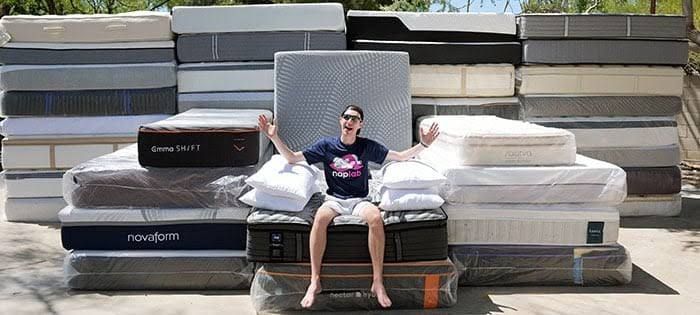
To navigate the bedding industry successfully, we need to master the technical terms and standard foam density ratings that manufacturers use behind the scenes. When you look at specification sheets, you are likely to see various foam densities listed alongside confusing acronyms.
The most critical distinction to make is between the overall density of foam and its firmness rating, which is measured by Indentation Load Deflection (ILD).
“Firmness measures how hard or soft a foam feels when you lie on it. Density measures how many pounds of material exist in a cubic foot. You can manufacture a high-density foam that feels incredibly soft, and a low-density foam that feels stiff as a board. Firmness is immediate feel; density is long-term durability and skeletal support.”
— Mind Body Dan Sleep Lab Insights
Let’s look at how ILD and the density in foam interact:
- Indentation Load Deflection (ILD): This metric tells us how many pounds of pressure are required to compress a four-inch disc of foam by 25%. A low ILD (e.g., 10 to 15 lbs) means the foam is soft and plush. A high ILD (e.g., 30 to 40 lbs) indicates a firm surface.
- The Density Correlation: When reviewing foam density ratings, remember that a high-density, low-ILD foam is the gold standard for pressure-relieving comfort layers. It allows your shoulders and hips to sink in comfortably while the sheer mass of the polymer prevents bottoming out.
Why Standard Step Trackers Miss This Metric
Most basic step trackers and generic smartwatches are incapable of capturing the subtle, physiological stress caused by an unsupportive bed. They simply note when your arm moves, grouping your sleep into generic blocks.
But our autonomic nervous system does not lie. When your mattress sags—due to a degraded low density of foam—your heart must beat slightly faster to maintain blood flow while your skeletal system is twisted out of alignment.
This subtle, continuous stress state reduces your vagal tone, lowering your overnight Heart Rate Variability (HRV). By switching to a dedicated wellness biometric tracker, such as the Herz P1 Smart Ring, you can observe daily recovery scores and pinpoint exactly whether a mattress upgrade or sleep environment tweak has actually improved your nervous system’s state of rest.
Bridging the Gap: How Foam Surface Integrity Protects Your Recovery and Cardiovascular Metrics
We live in an era where sleep is often treated as a luxury. Yet, scientific research continues to emphasize that sleep is the absolute foundation of cognitive health, metabolic regulation, and emotional resilience.
When the structural foam density of your mattress comfort layers begins to degrade, it creates microscopic depressions. These depressions trap your body in one position, making it incredibly difficult to toss and turn naturally.
Normally, a healthy individual shifts position 15 to 30 times a night. If you are stuck in a valley of low-density foam, changing positions requires intense physical effort. This effort causes brief, unconscious micro-awakenings that tear you out of deep sleep and disrupt your memory consolidation in REM sleep.
Decoding Your Sleep Architecture with Herz P1
Understanding how your body transitions through Light, Deep, and REM sleep cycles is crucial. Instead of using bulky smartwatches that require daily charging and light up your bedroom with irritating screen notifications, the Herz P1 Smart Ring offers a screen-free, distraction-free alternative.
This elegant titanium smart ring operates seamlessly on a subscription-free model. That means you buy the device once and own all your sleep-stage data, HRV metrics, and recovery algorithms forever, with zero recurring monthly costs. Its advanced medical-grade biometric sensors measure:
- Sleep Stage Splits: See if your time in Deep Sleep is suffering due to tossing and turning on a sagging mattress.
- Heart Rate Variability (HRV): Monitor how your autonomic nervous system reacts to your sleep surface. A rising HRV trend indicates effective nervous system recovery.
- Daily Activity & Recovery Scores: Receive simple, actionable metrics every morning to understand how prepared your body is for physical or mental exertion.
If you want to take a holistic approach to your wellness, start by paying attention to the surface you sleep on and backing up your lifestyle adjustments with objective data. Whether you choose to invest in a premium, high-density foam mattress or implement targeted lifestyle adjustments, let biometrics guide your path to deeper, more restorative sleep.
Disclaimer: Results may vary depending on individual physical activity levels, unique health conditions, and daily tracking patterns. The insights provided by our team at Mind Body Dan and the biometric trends recorded by the Herz P1 Smart Ring are for wellness tracking purposes only and should not be used as medical advice. Always consult a healthcare professional for persistent sleep disorders or chronic back pain.
